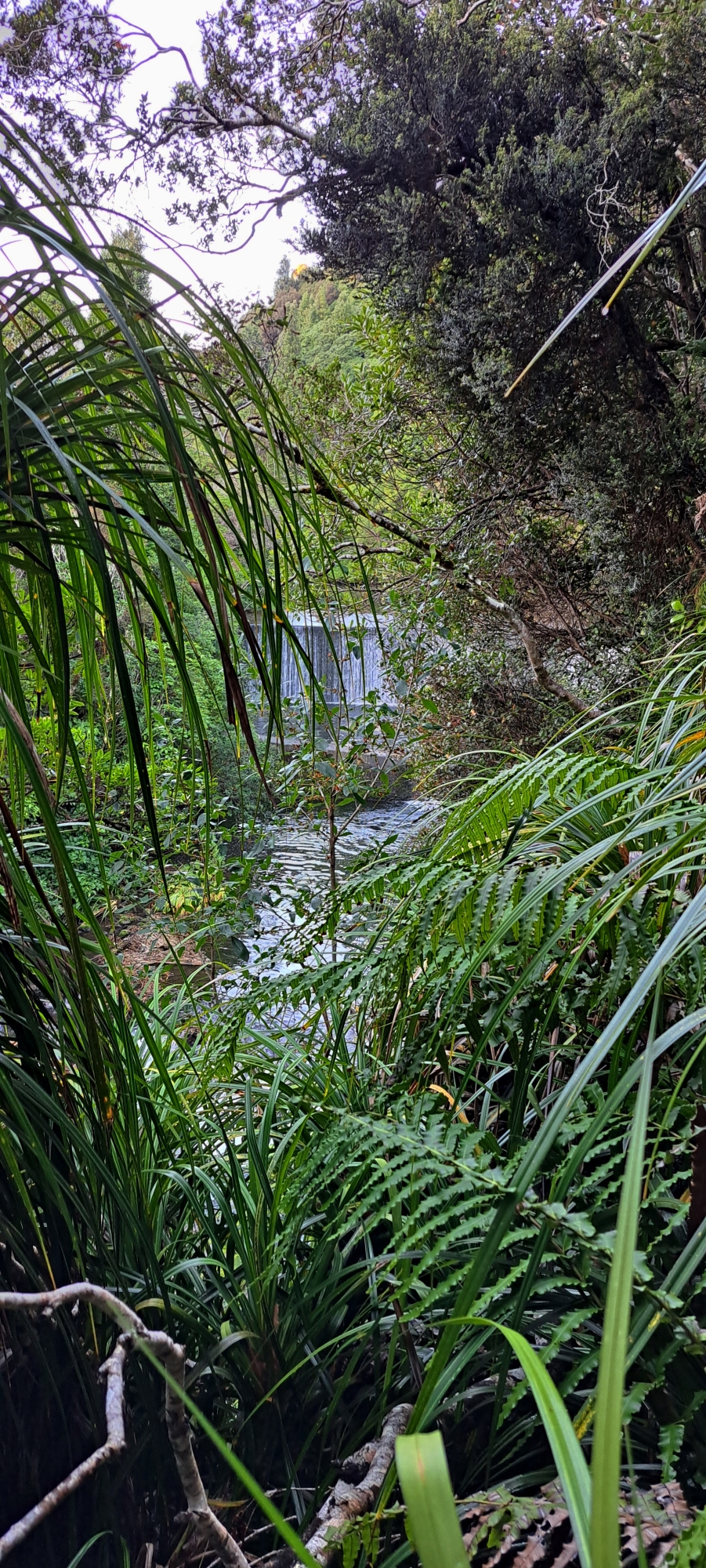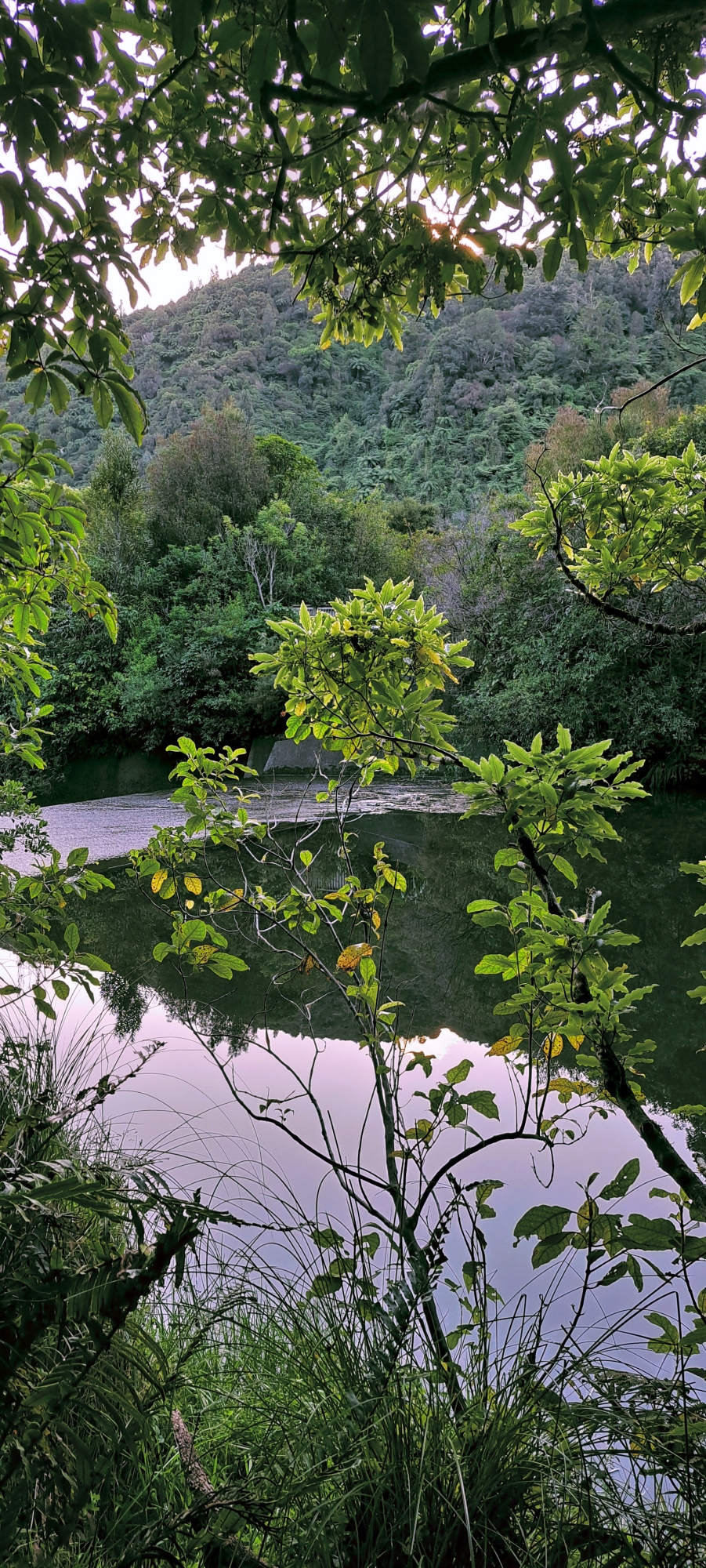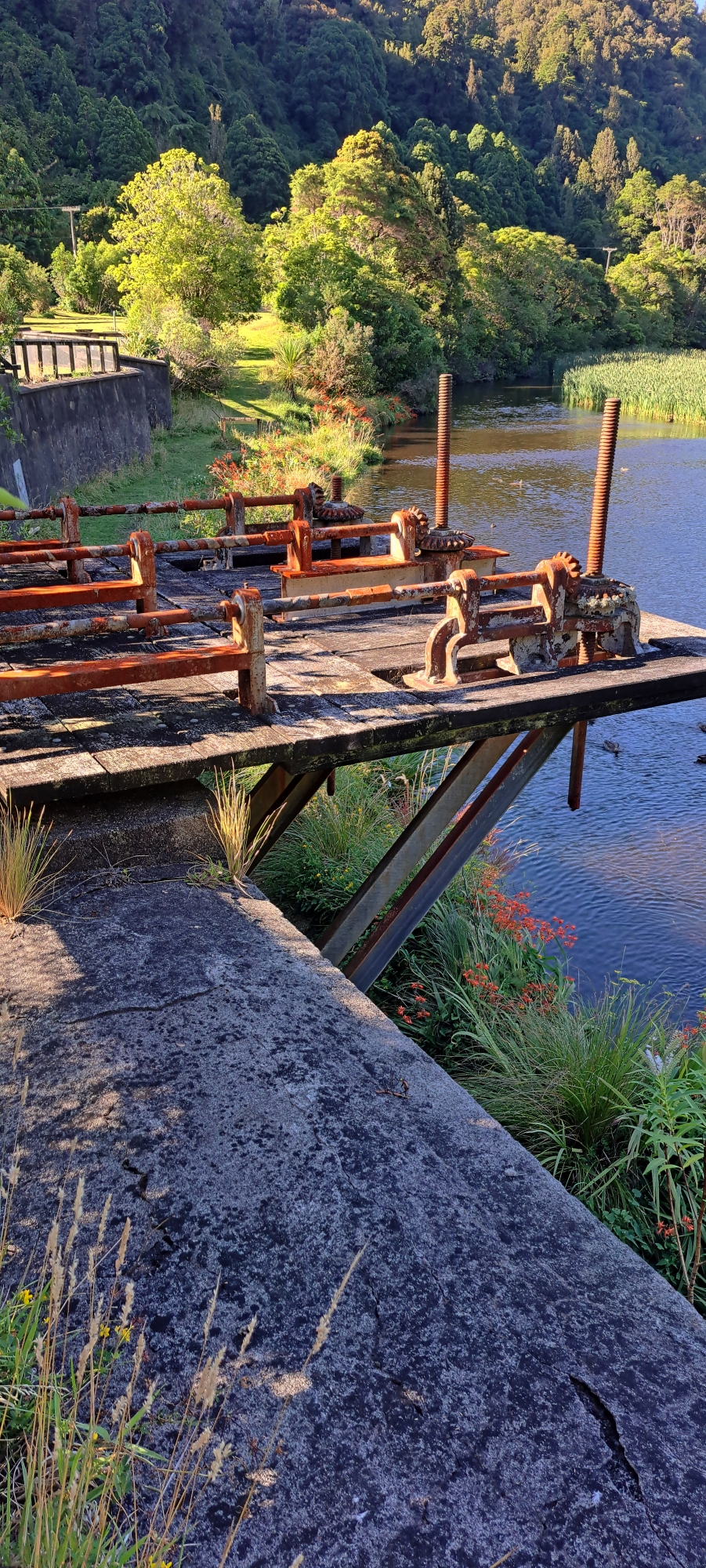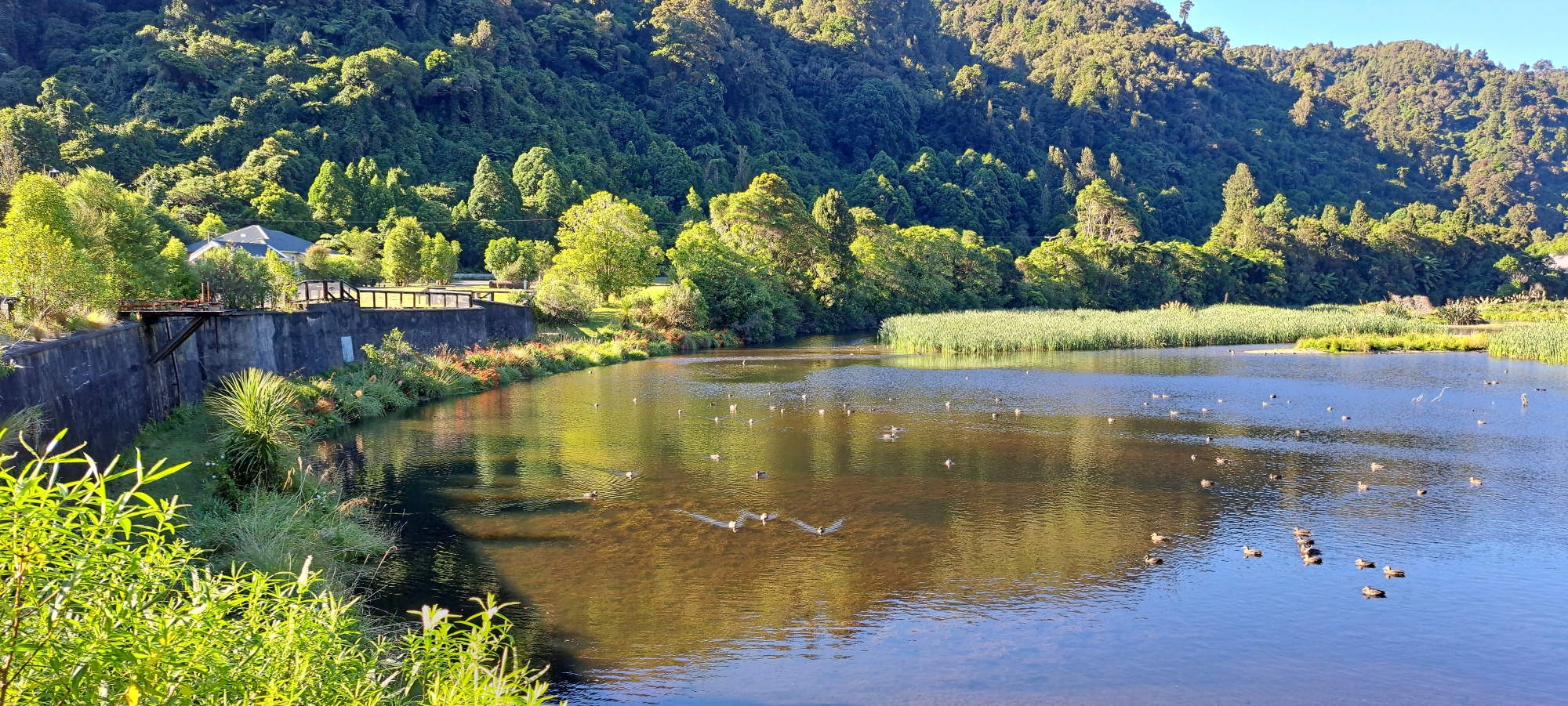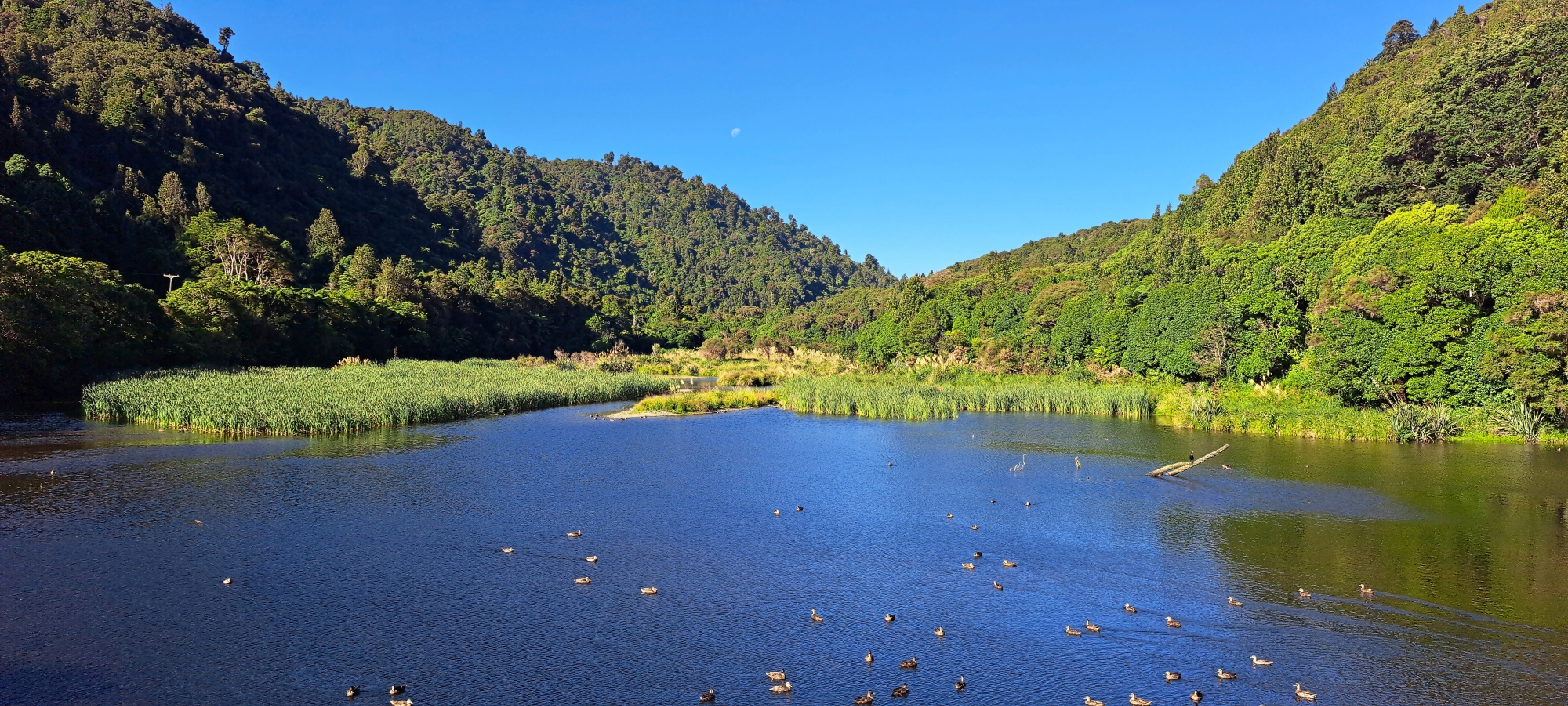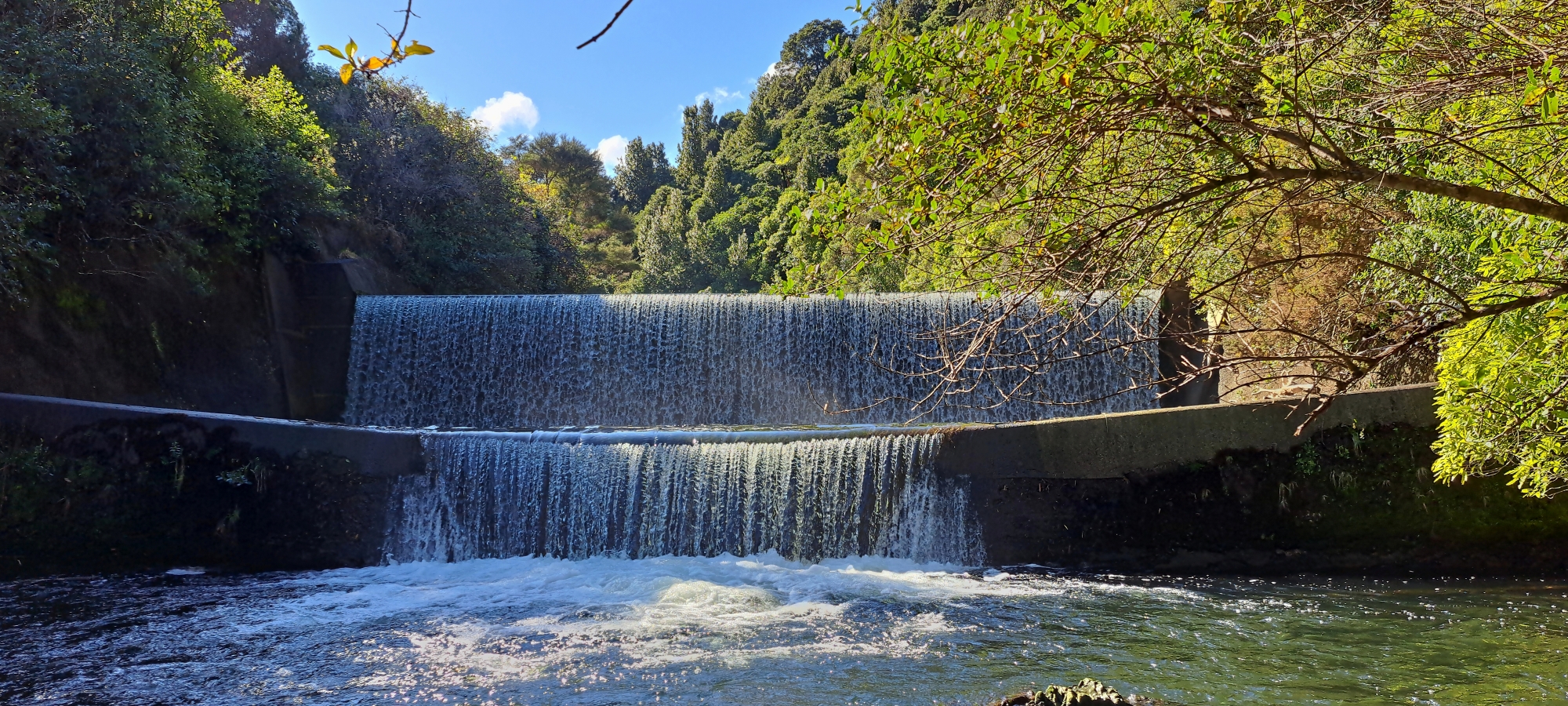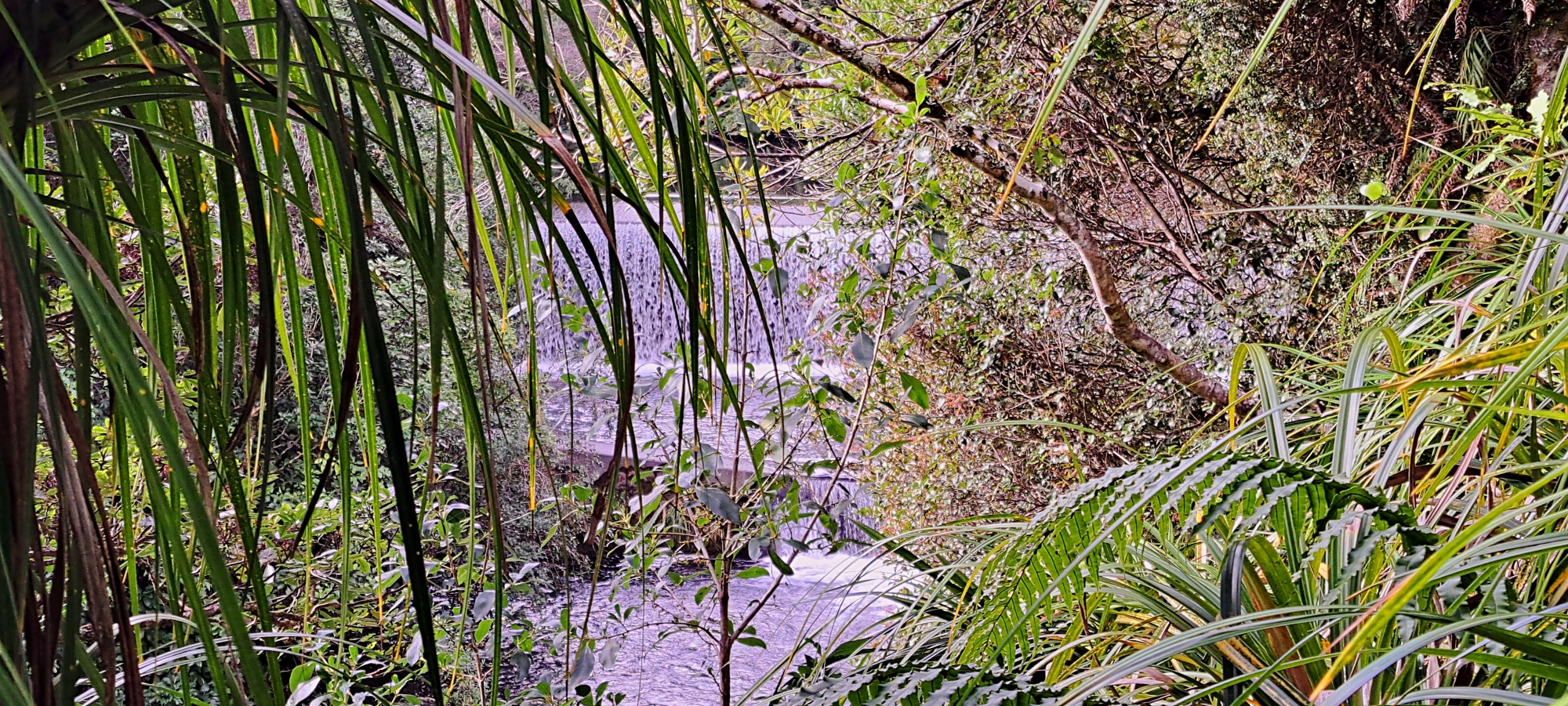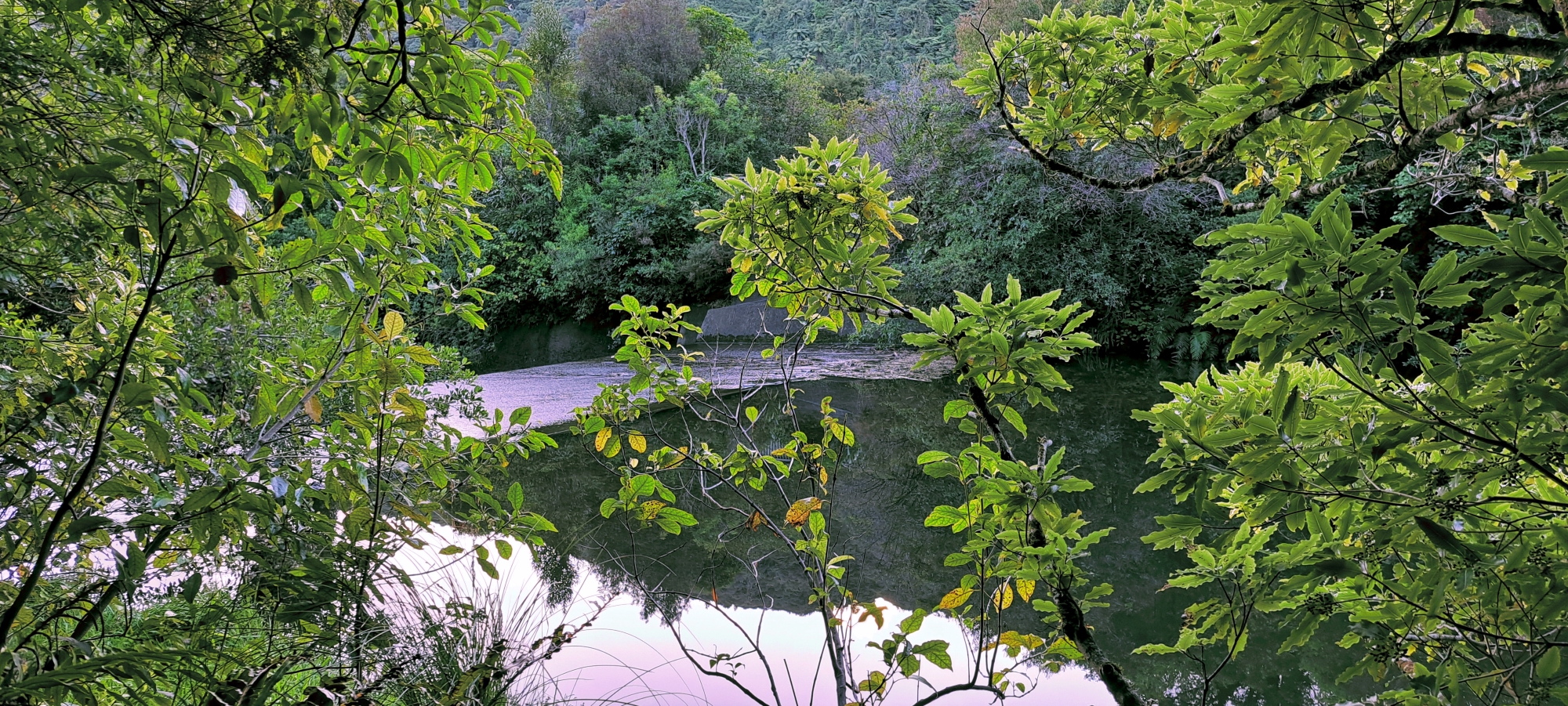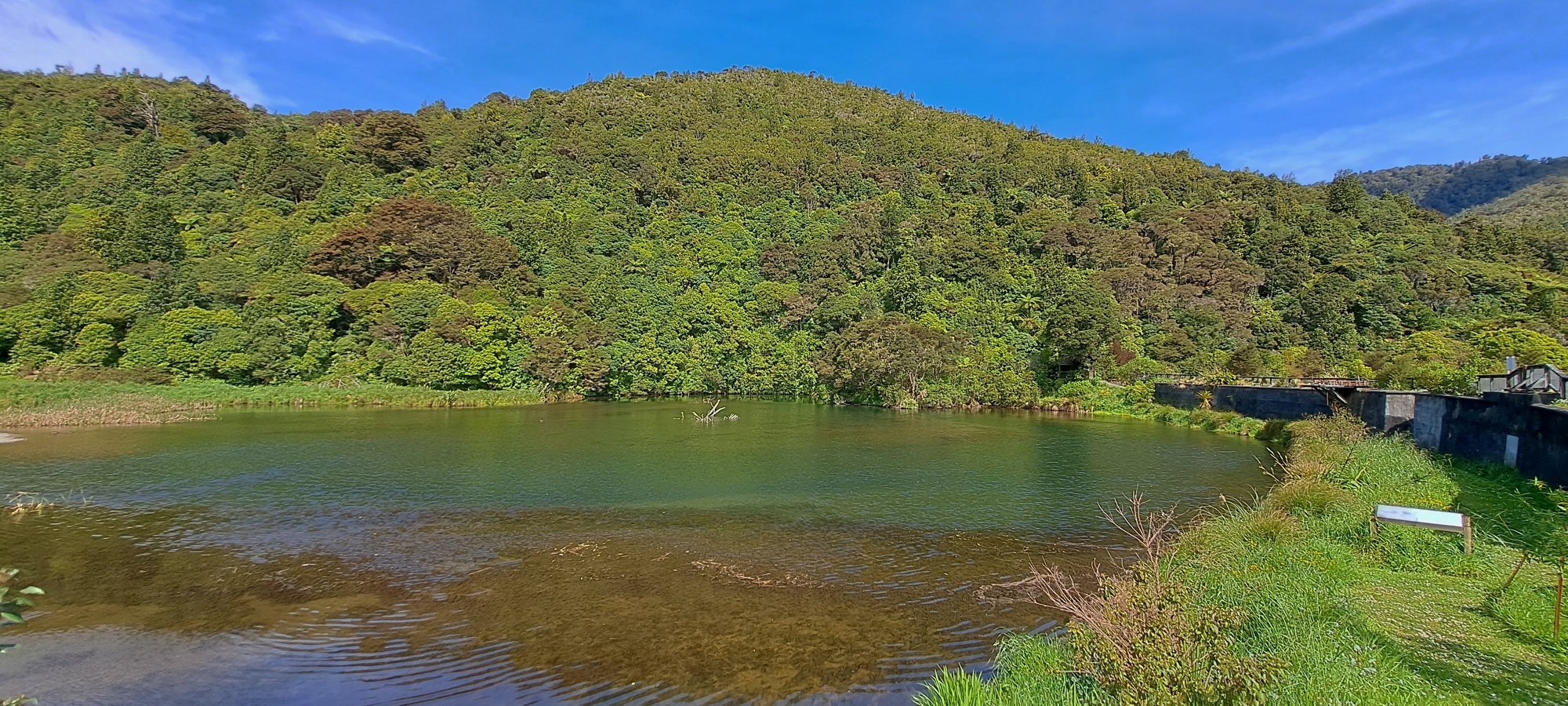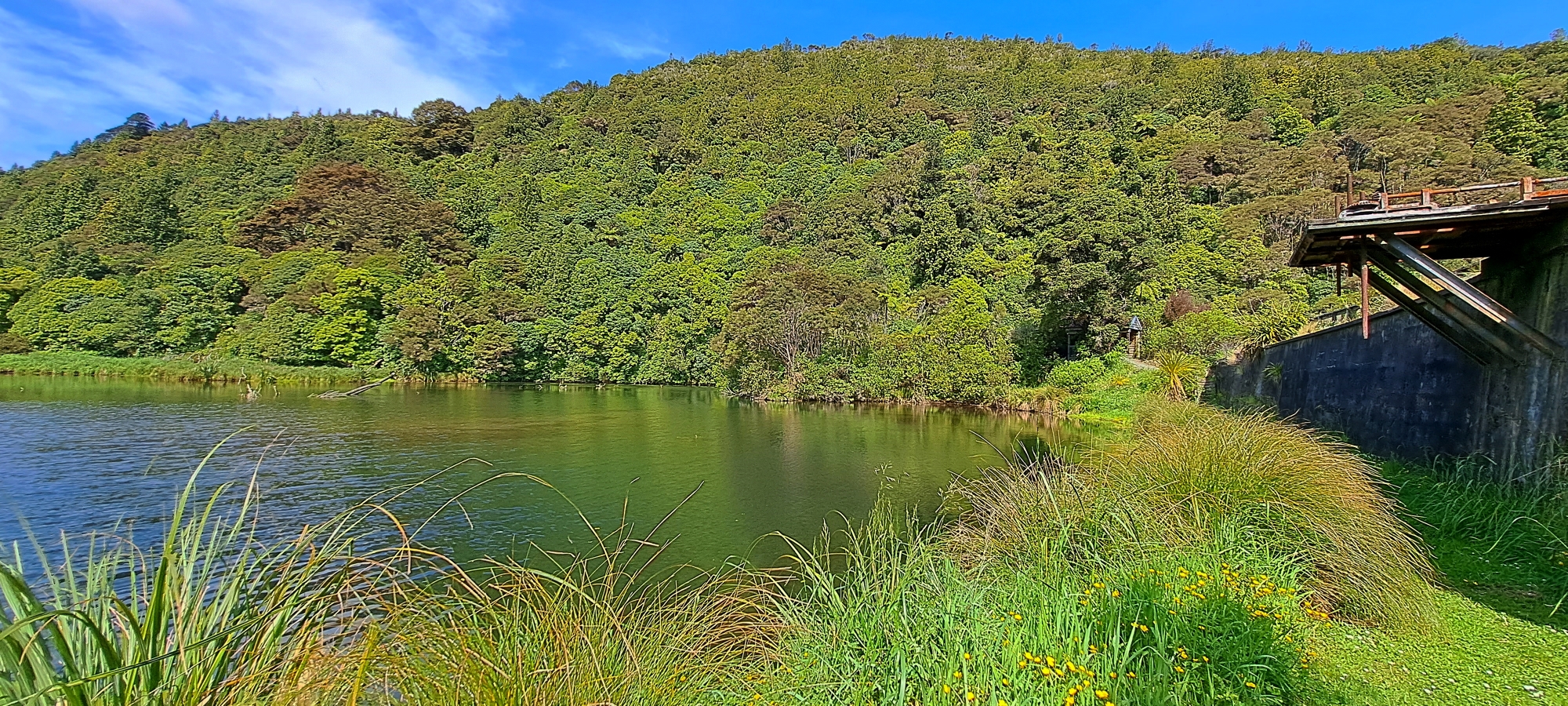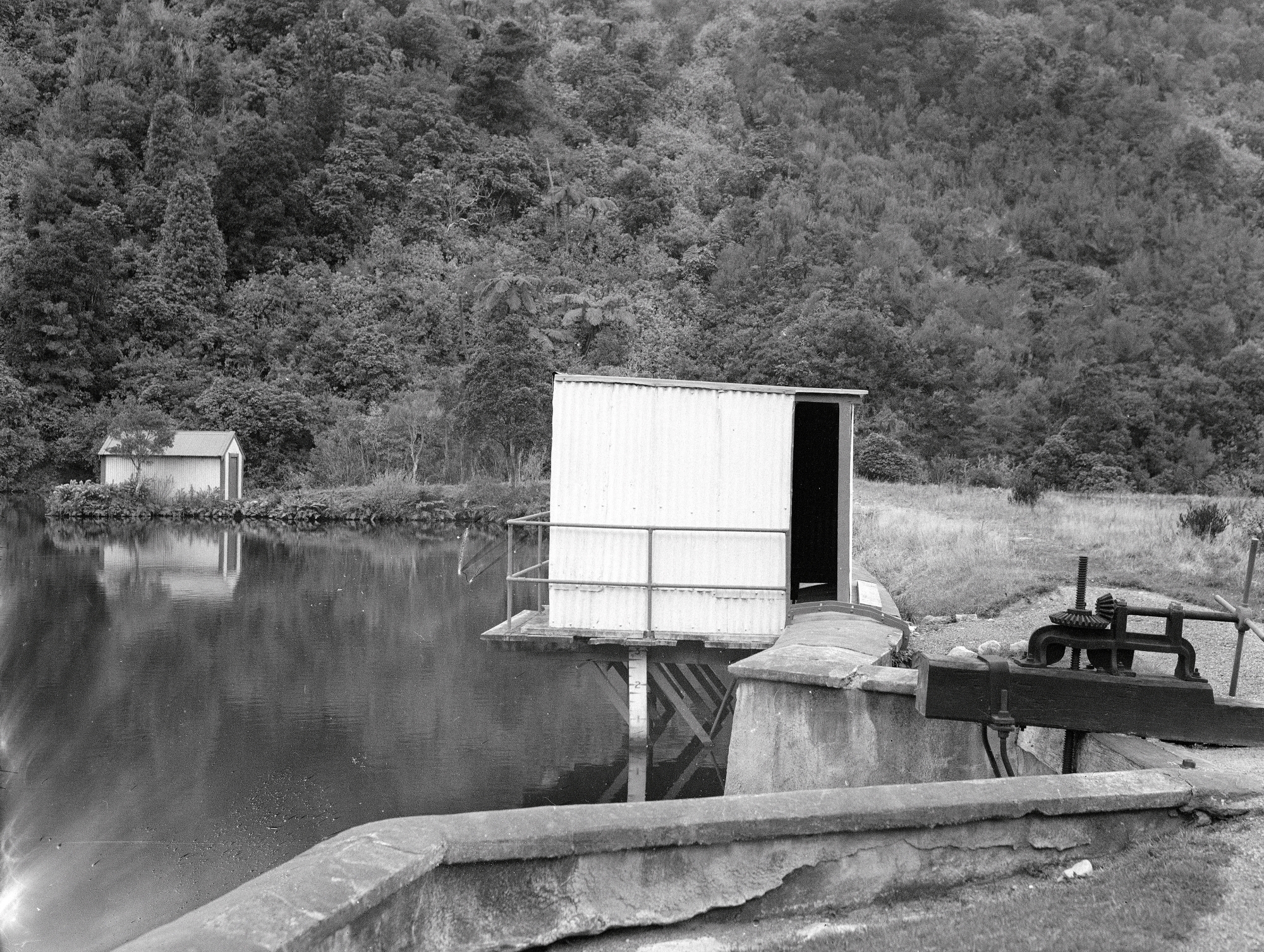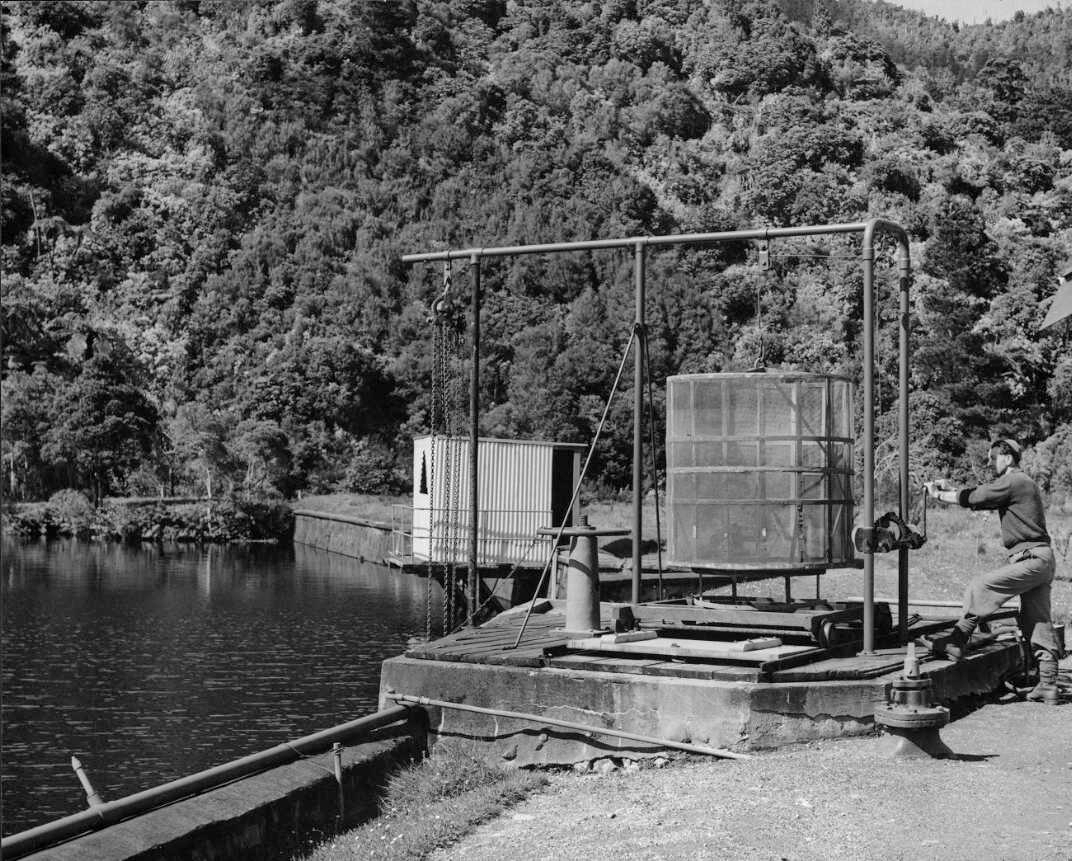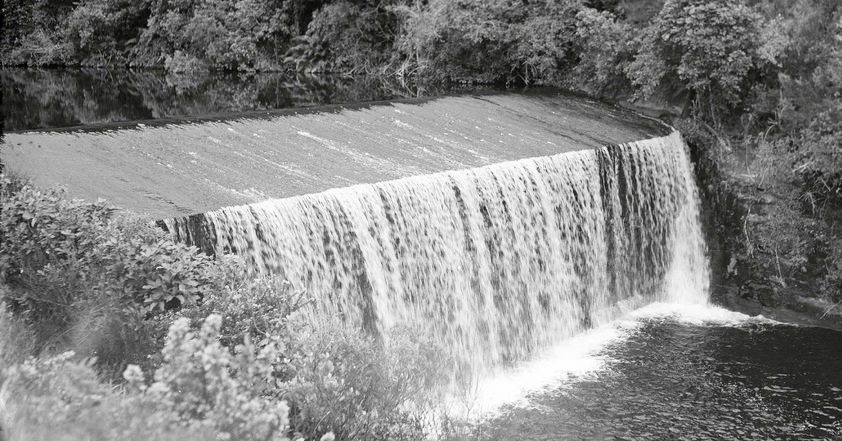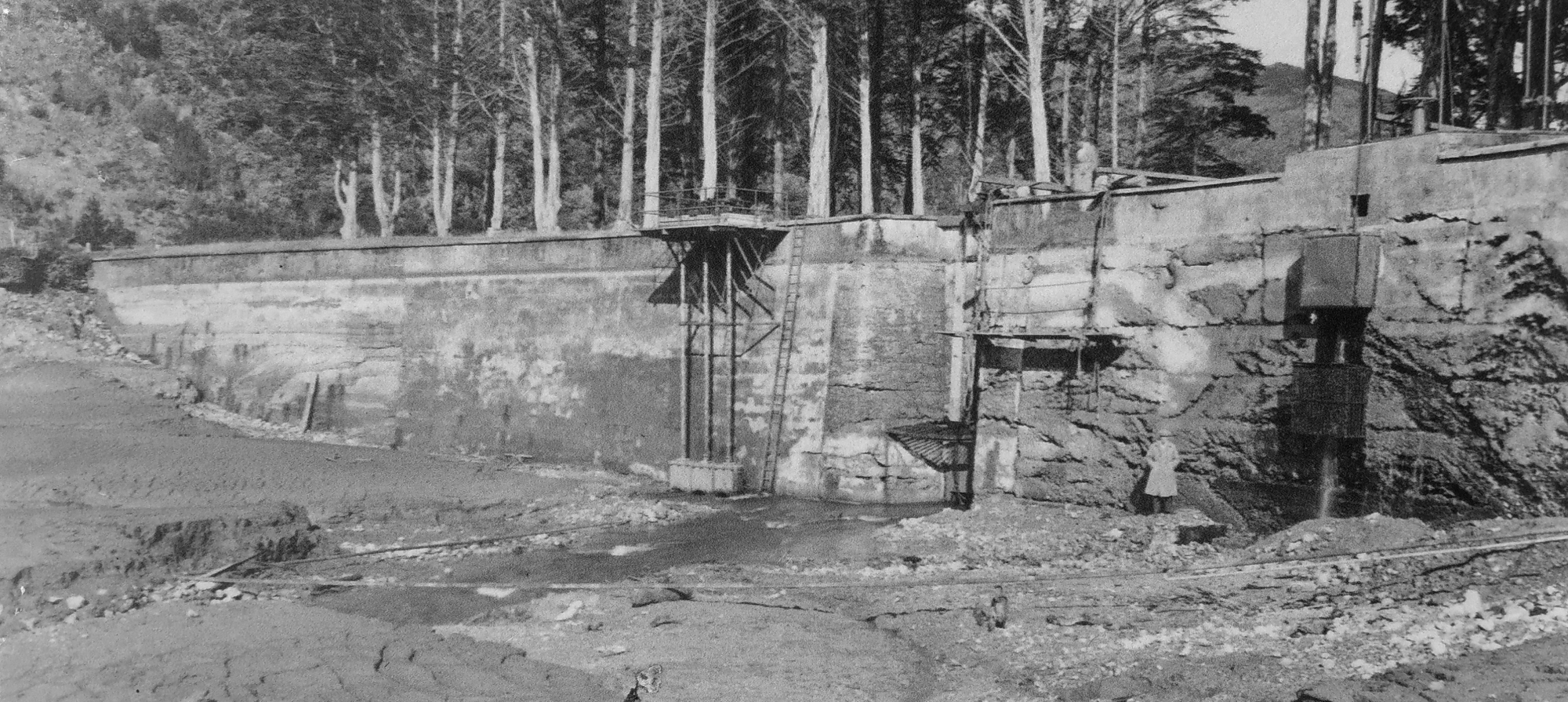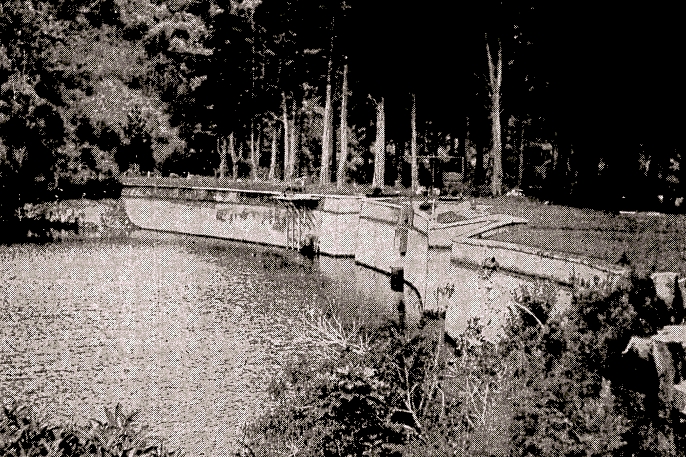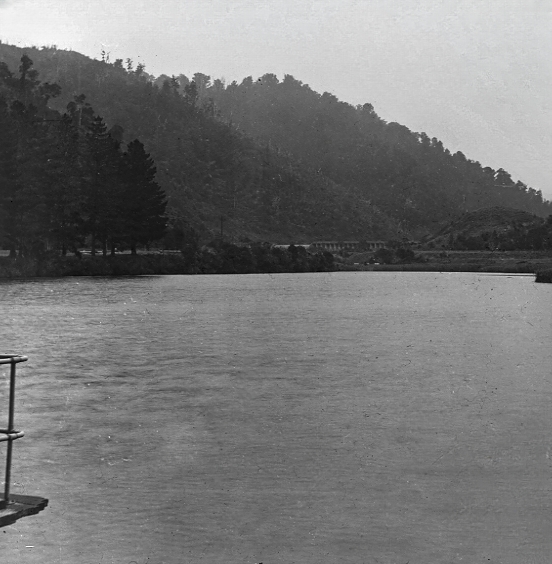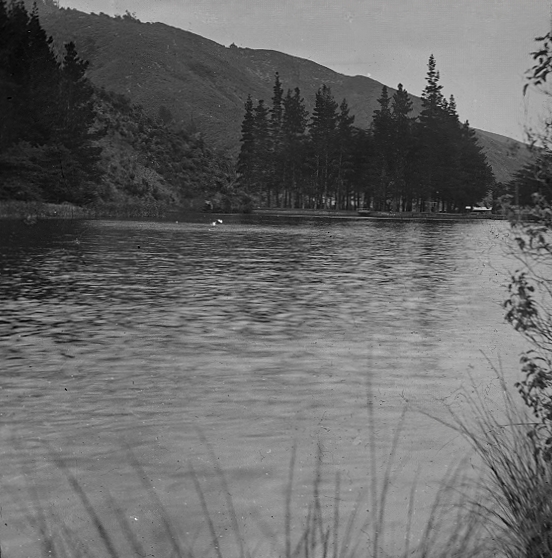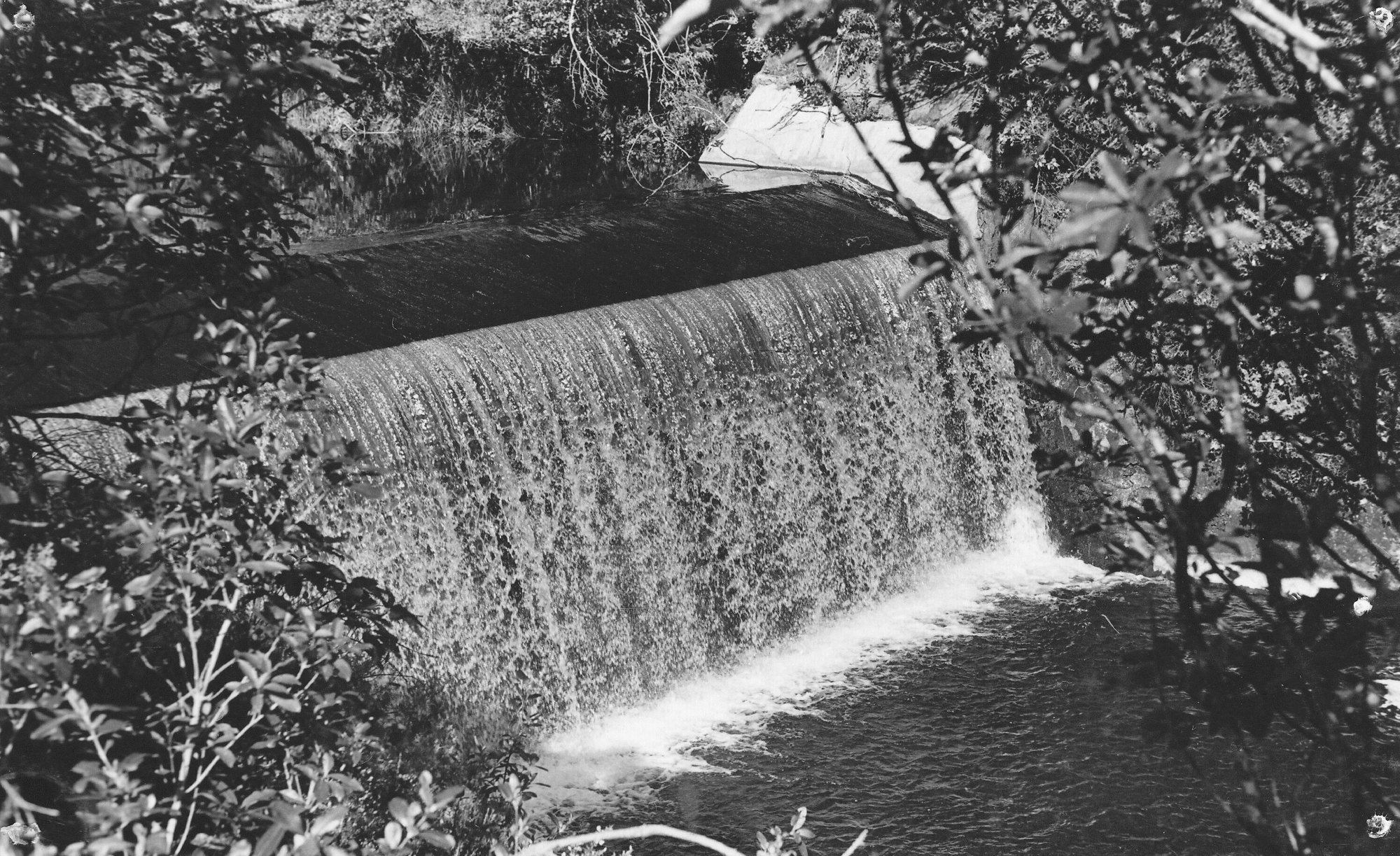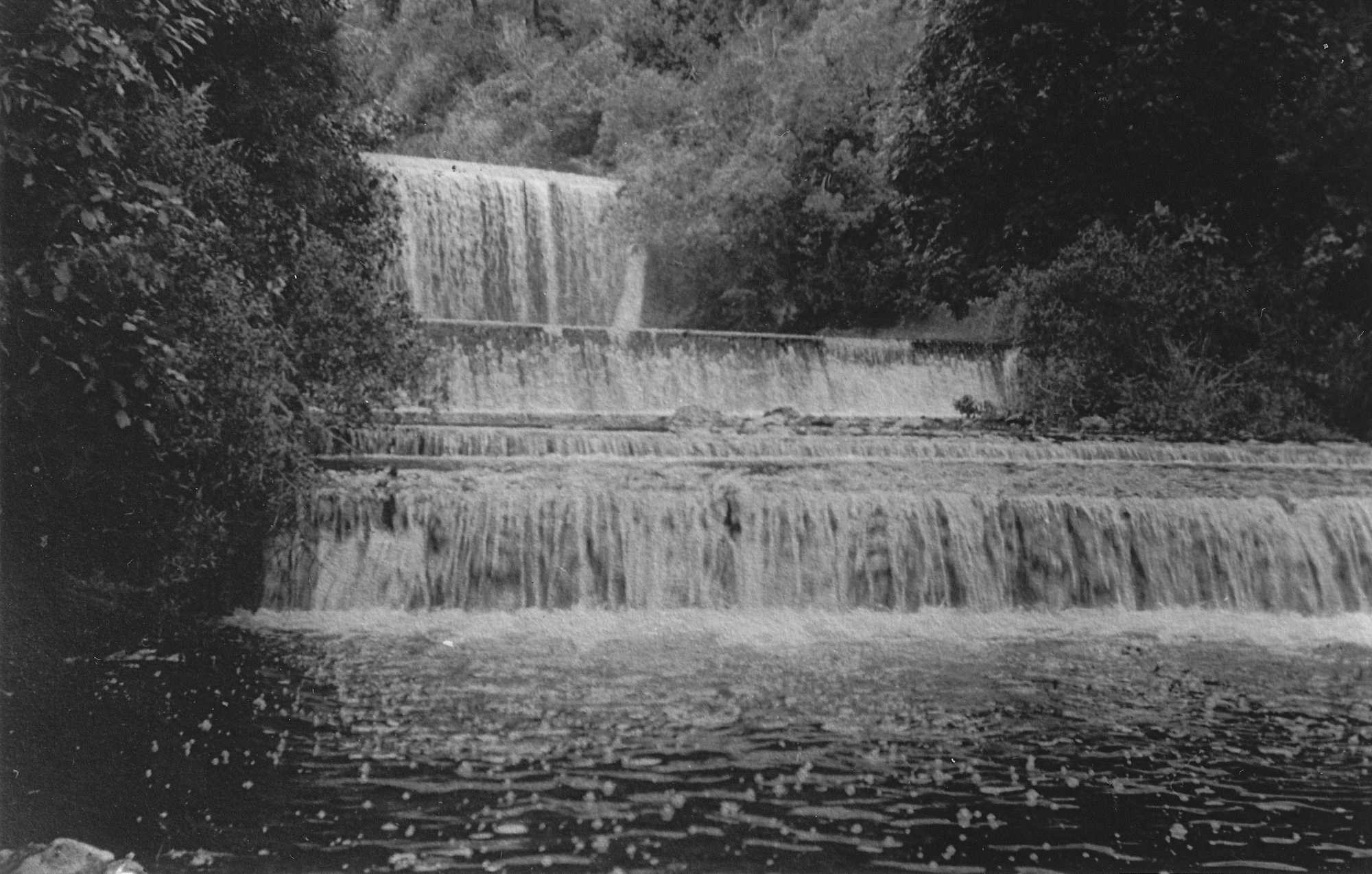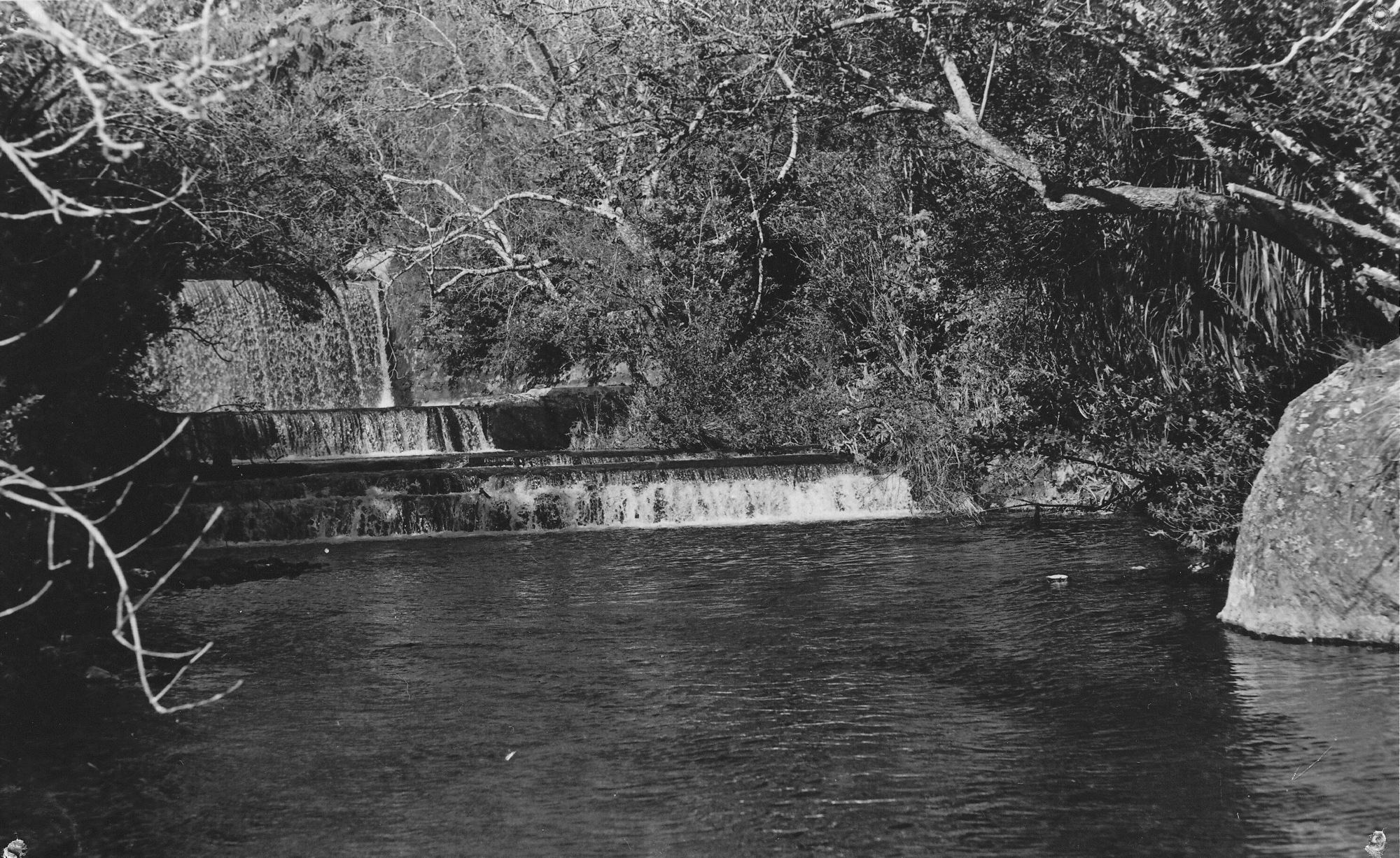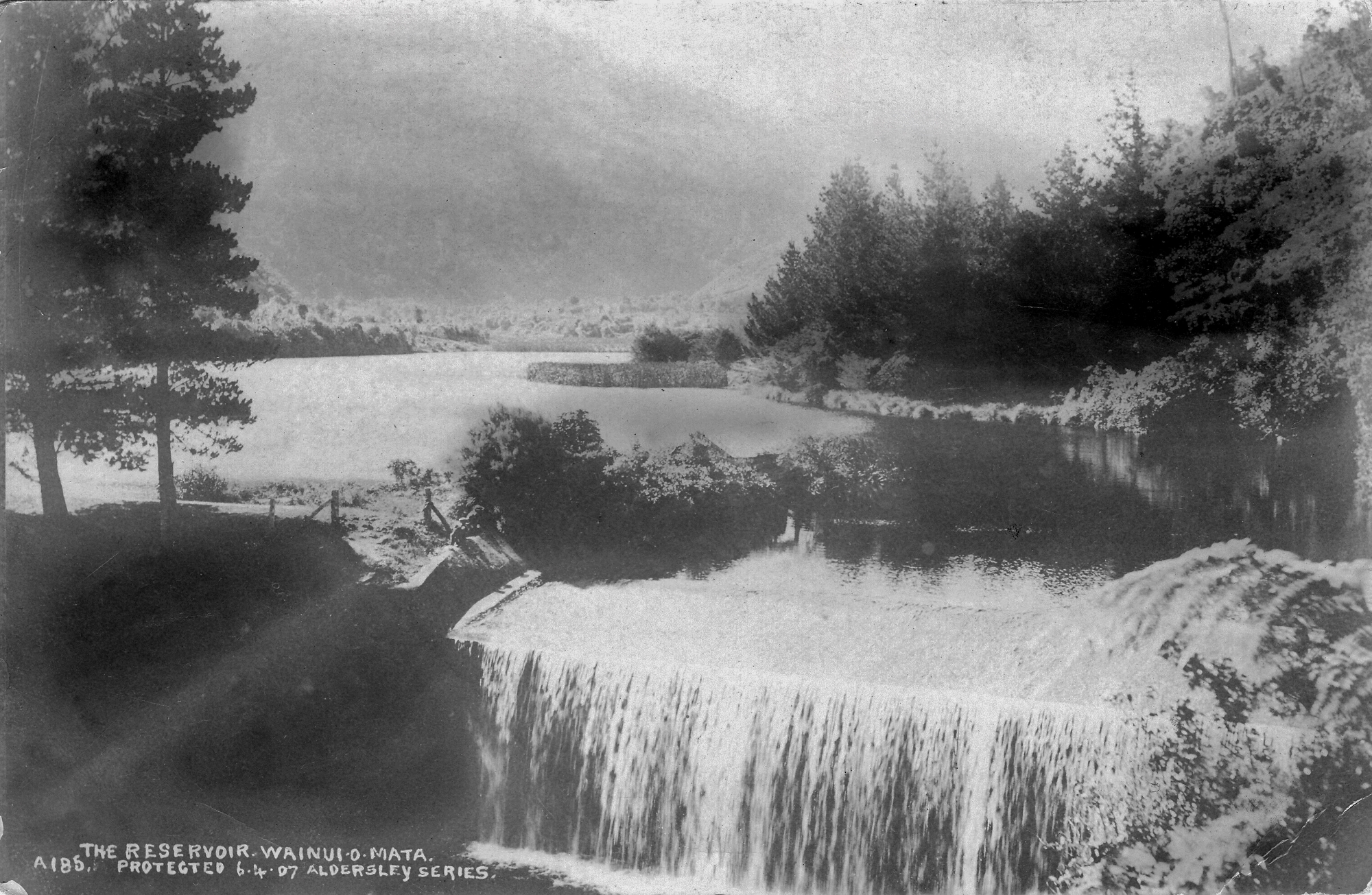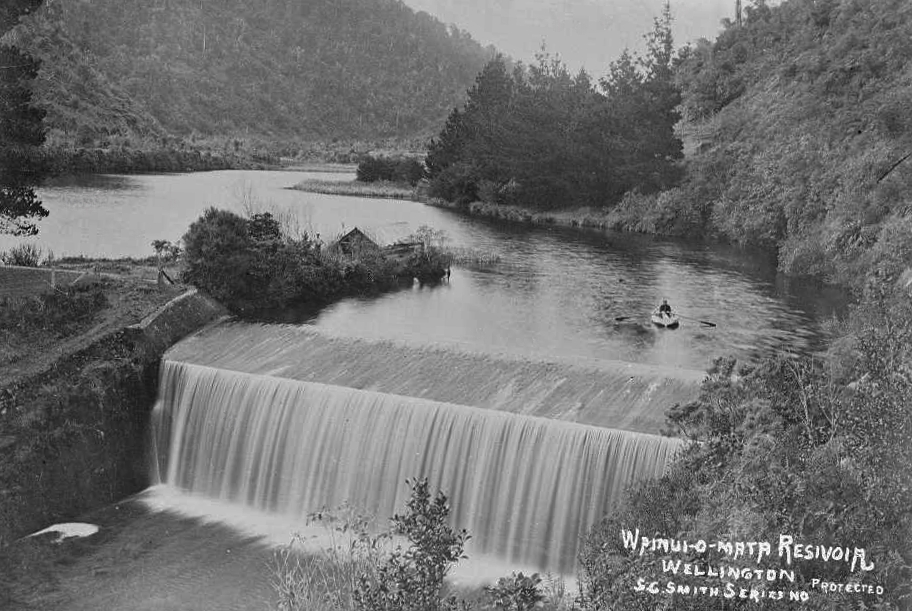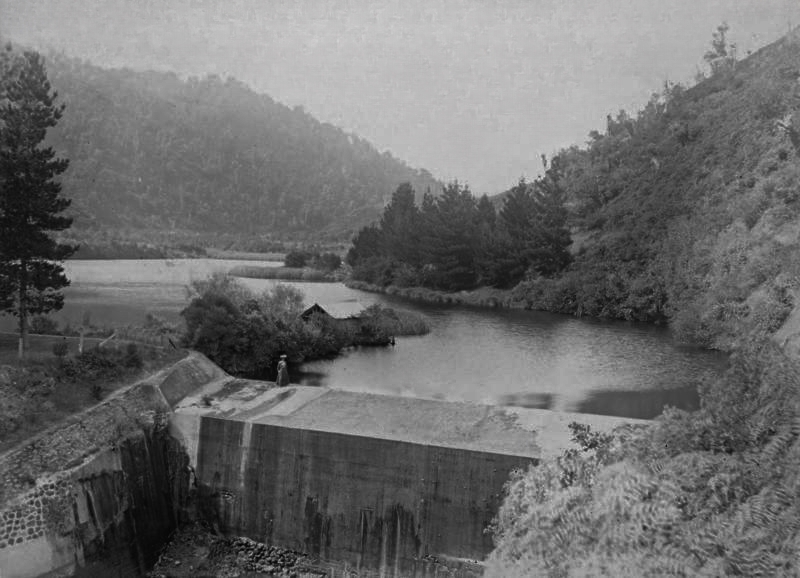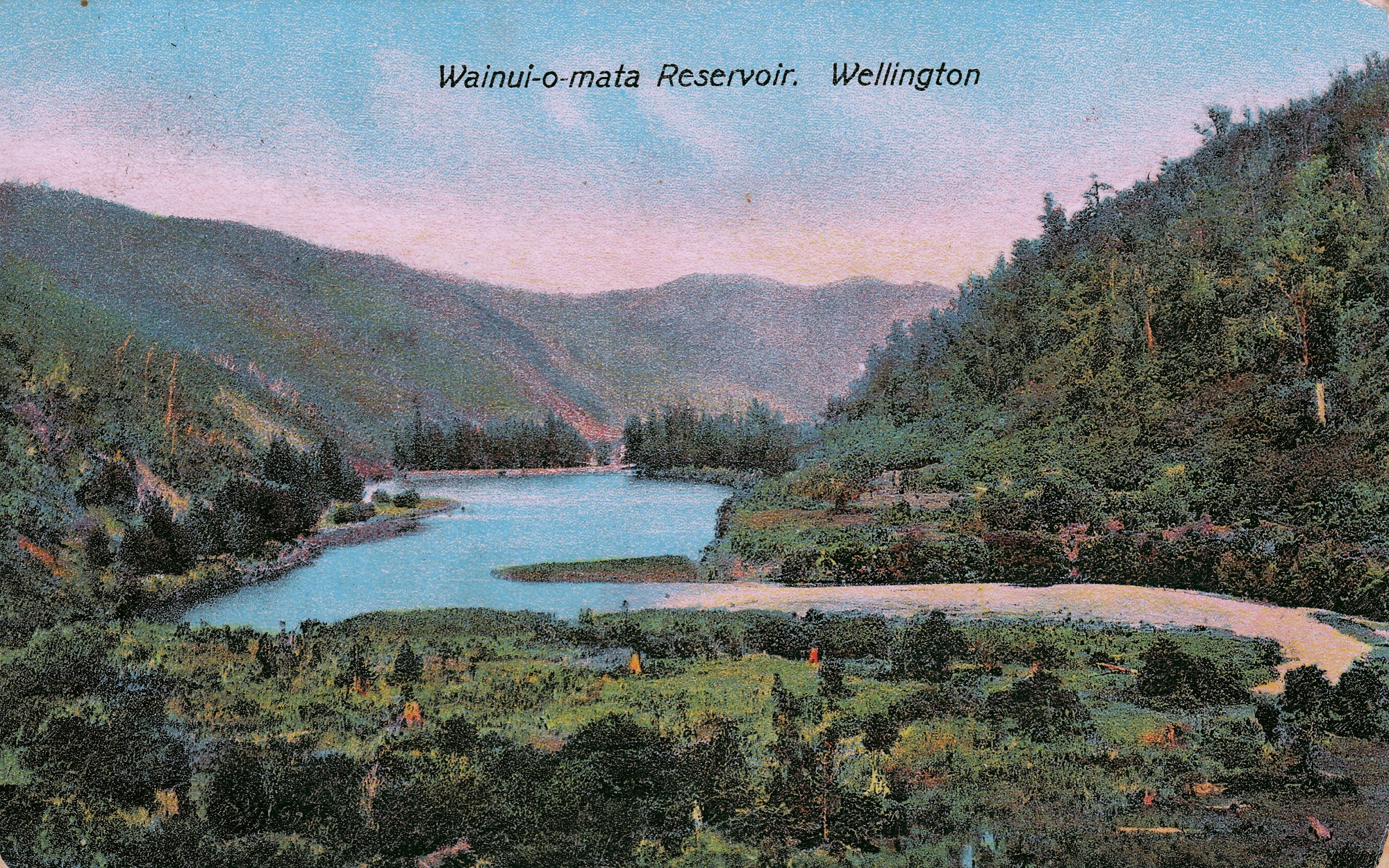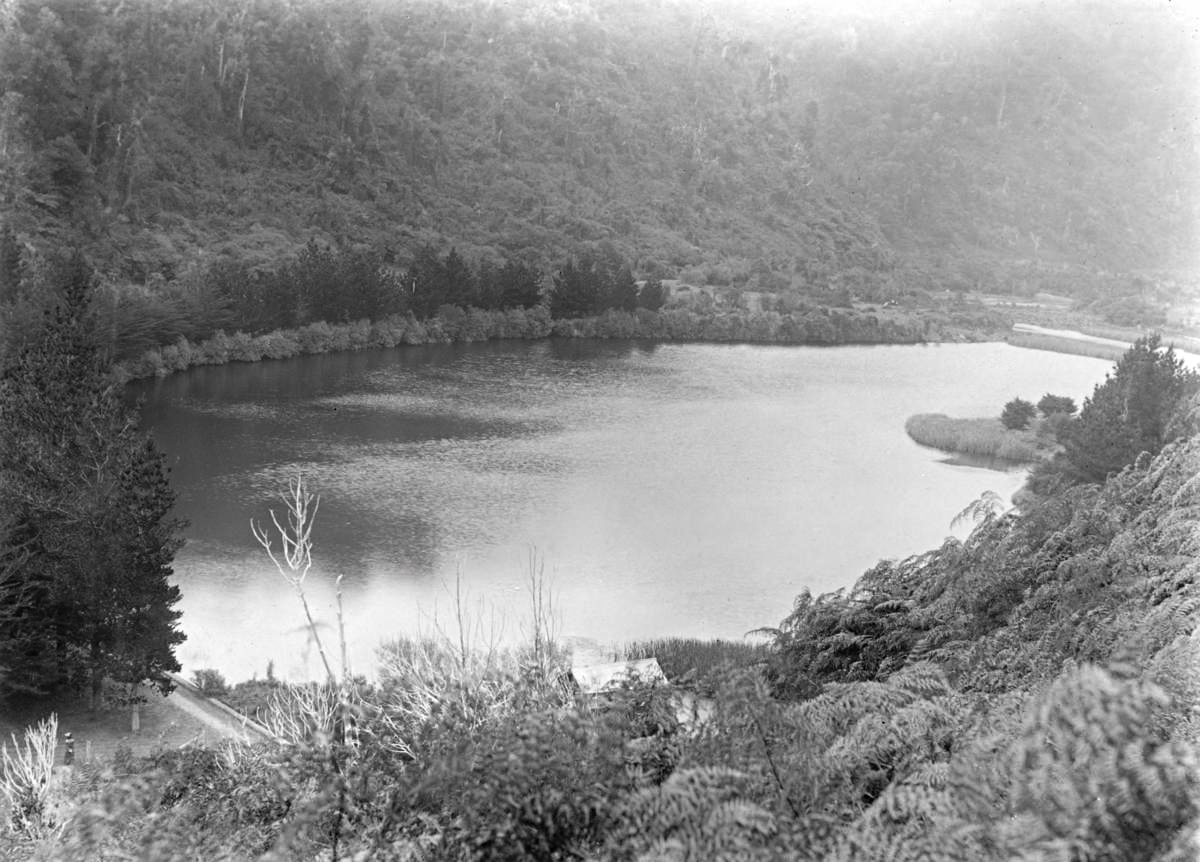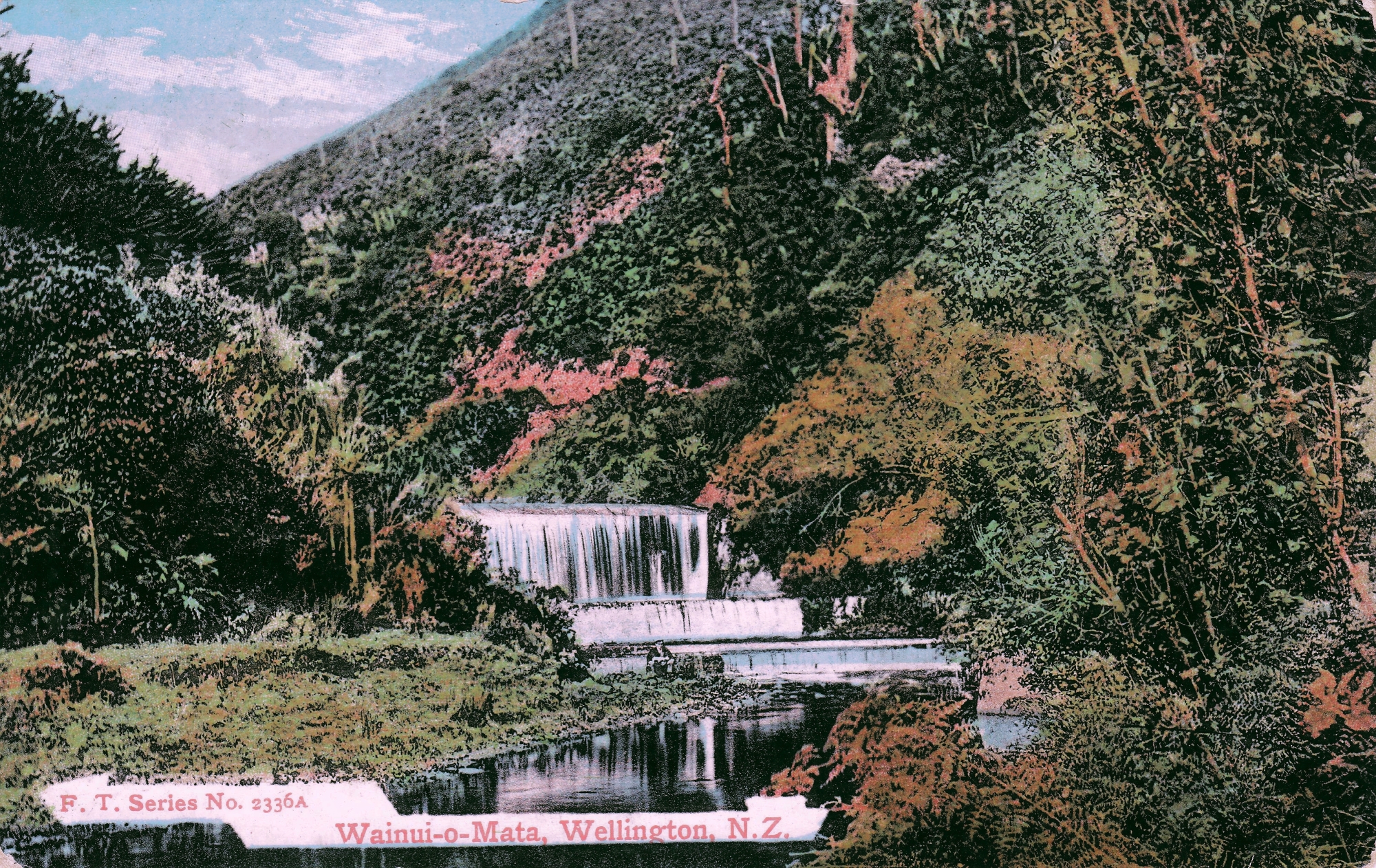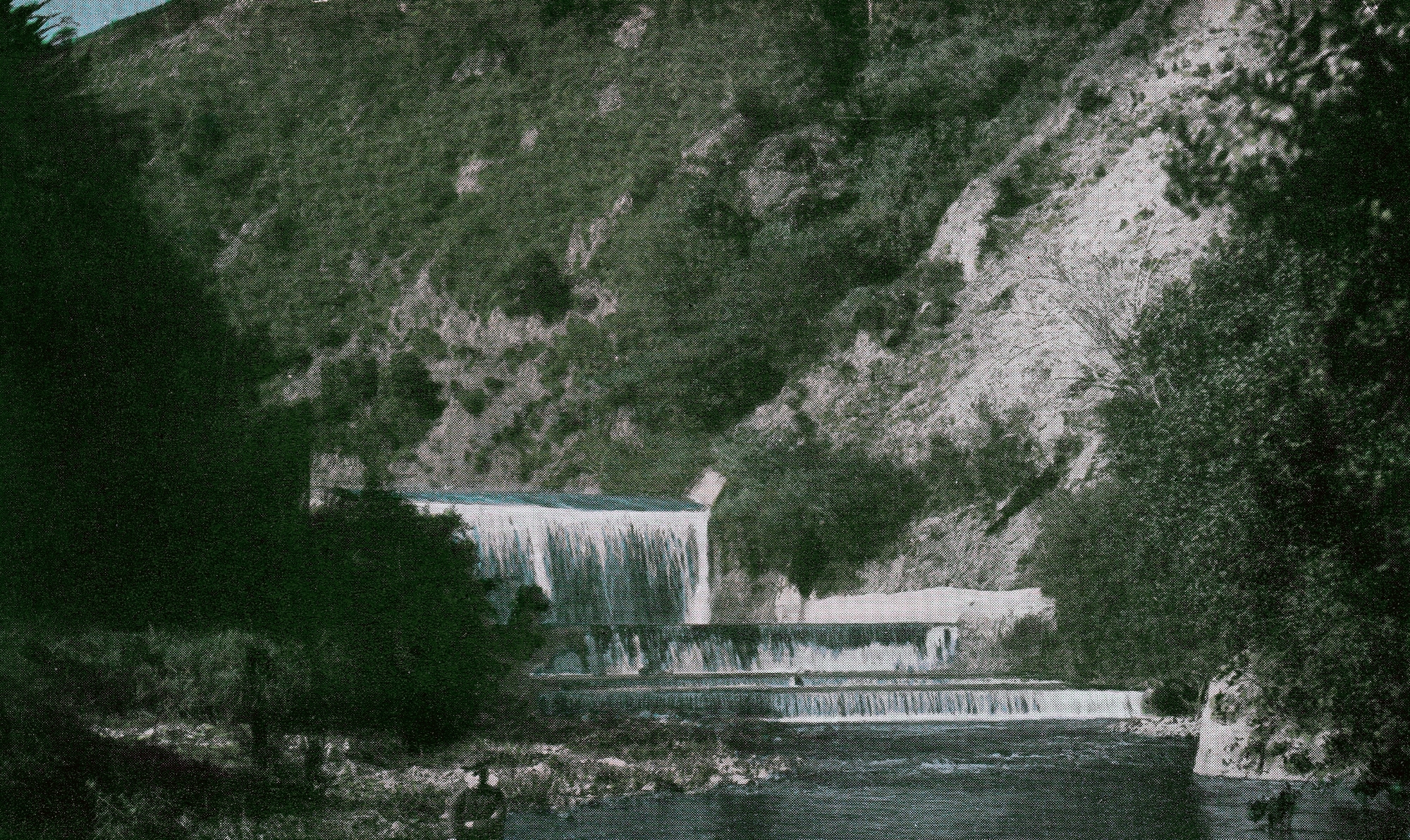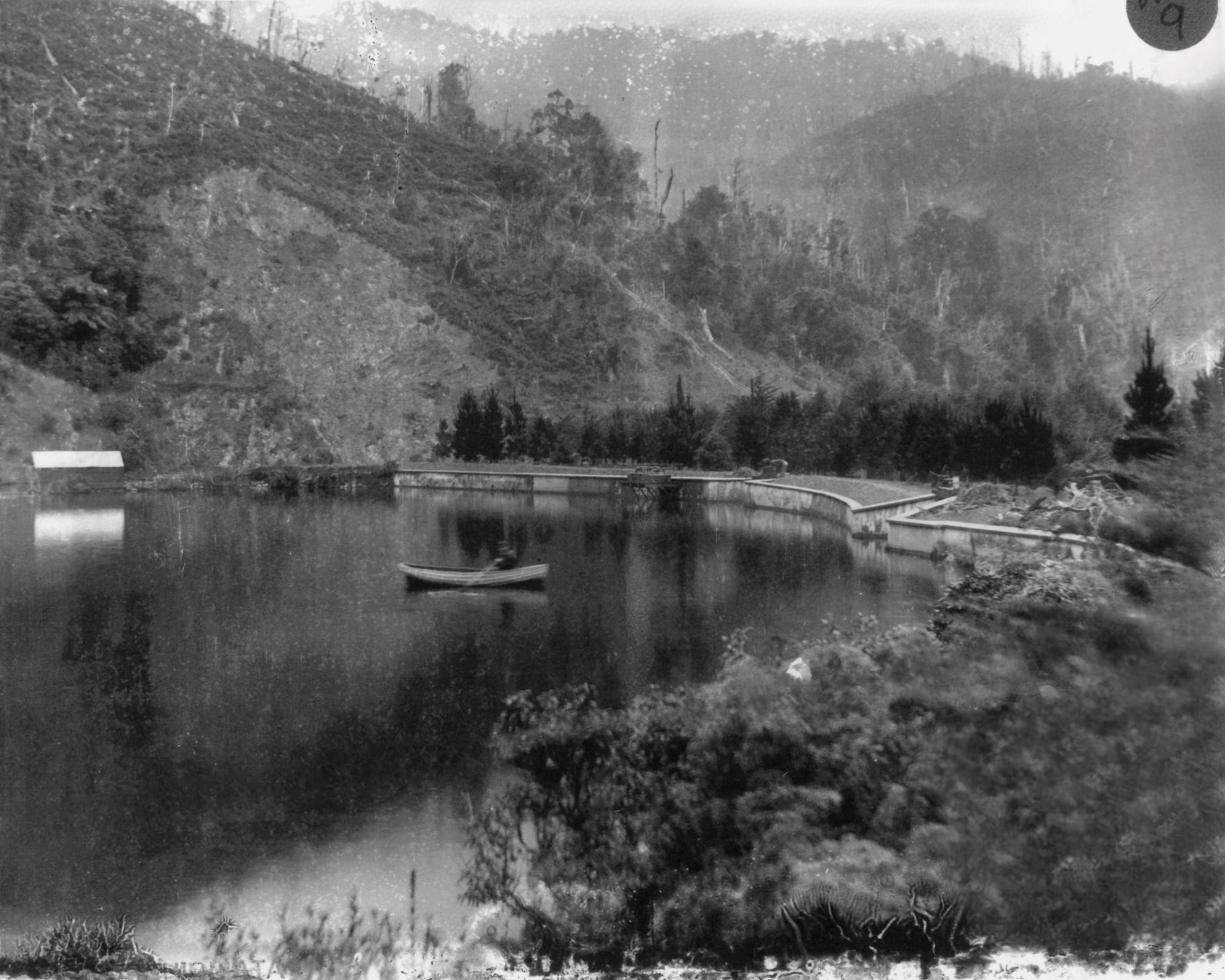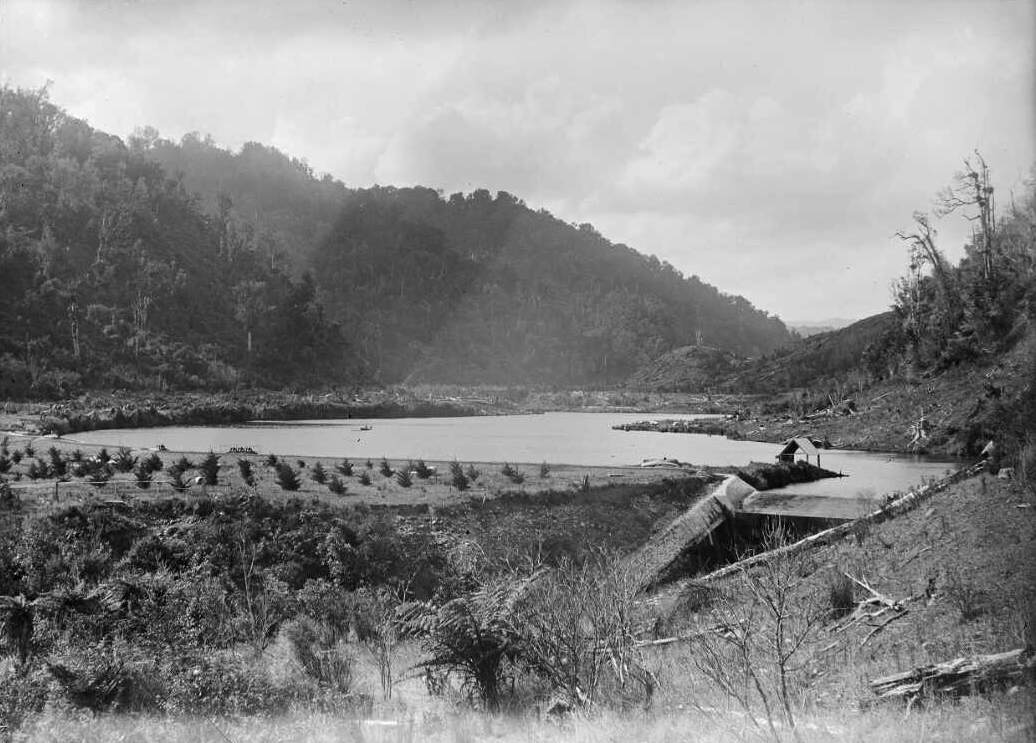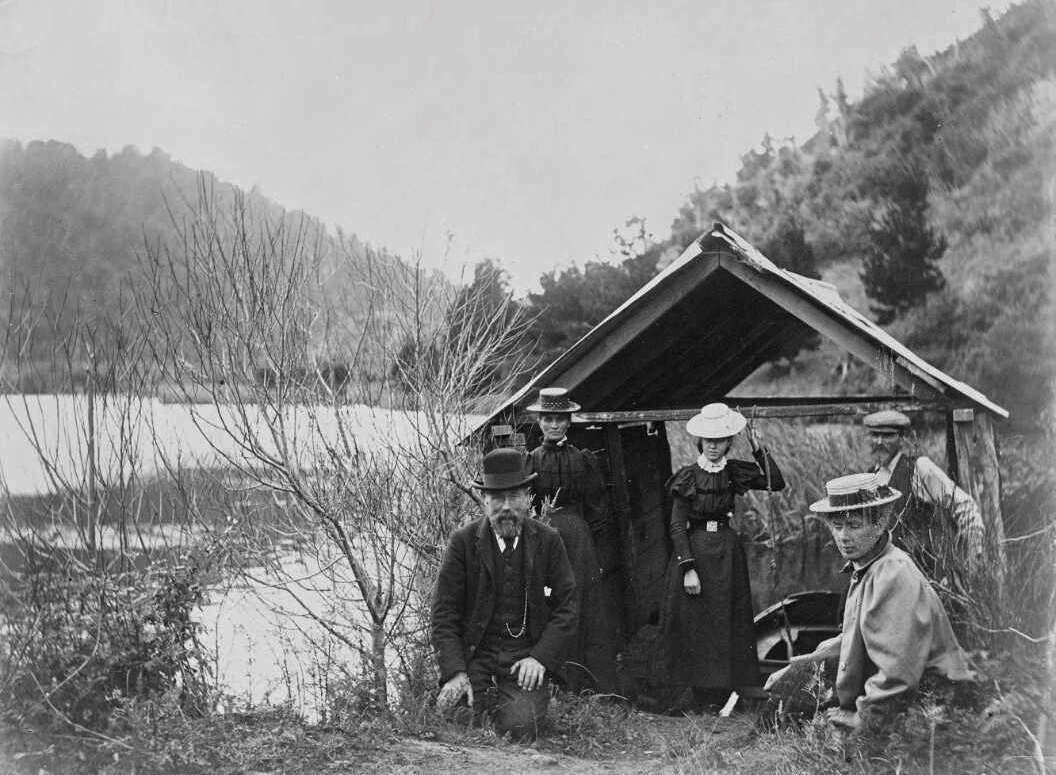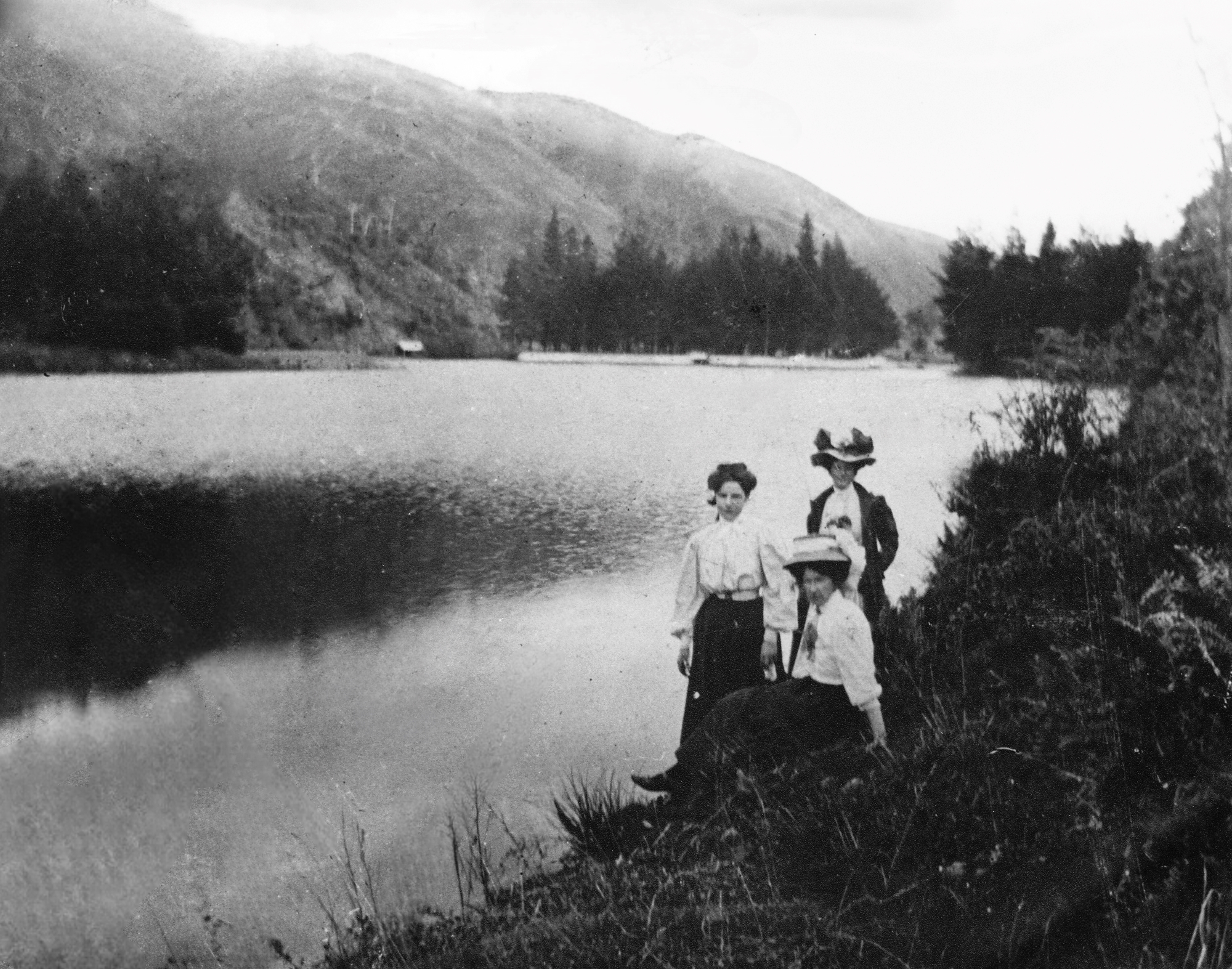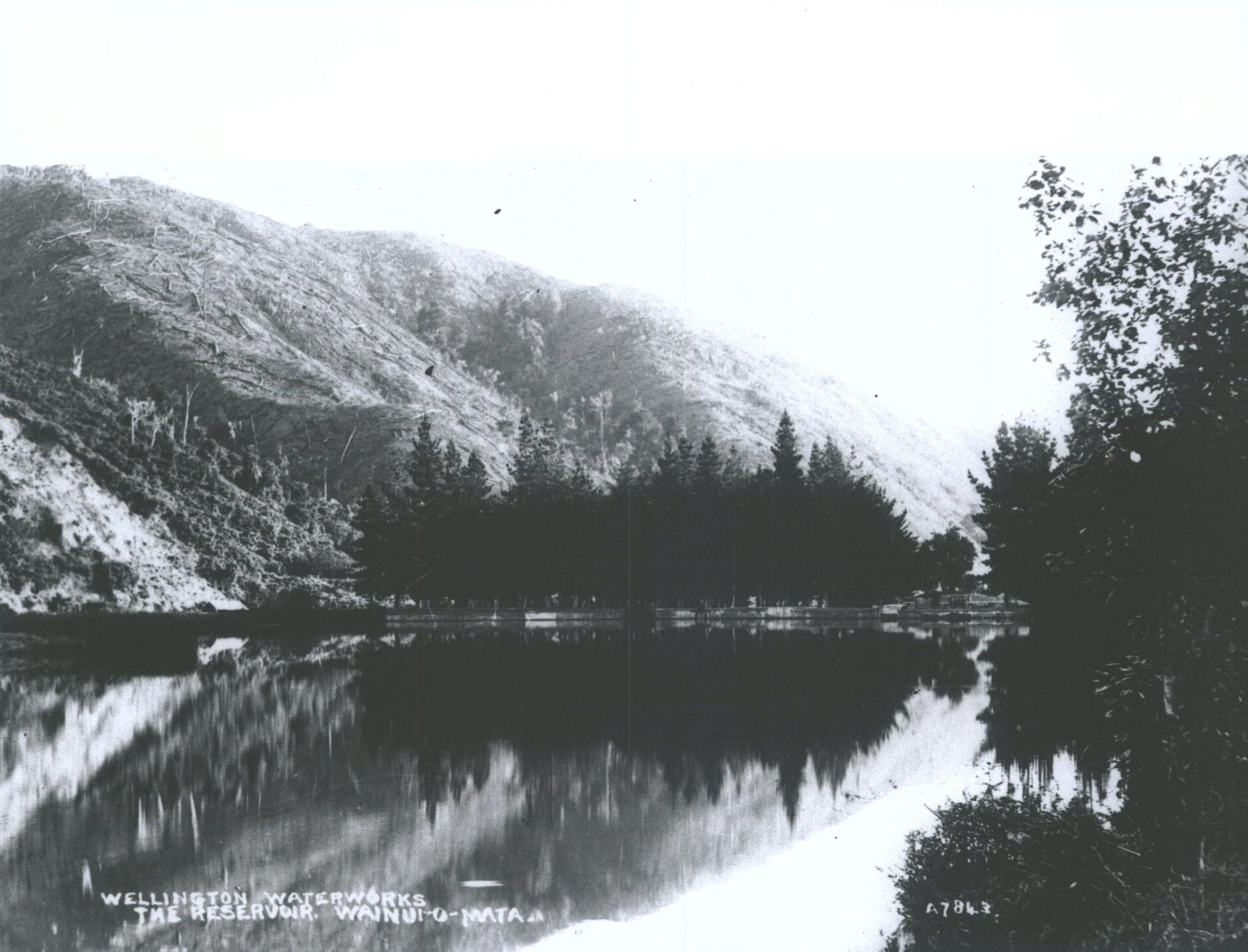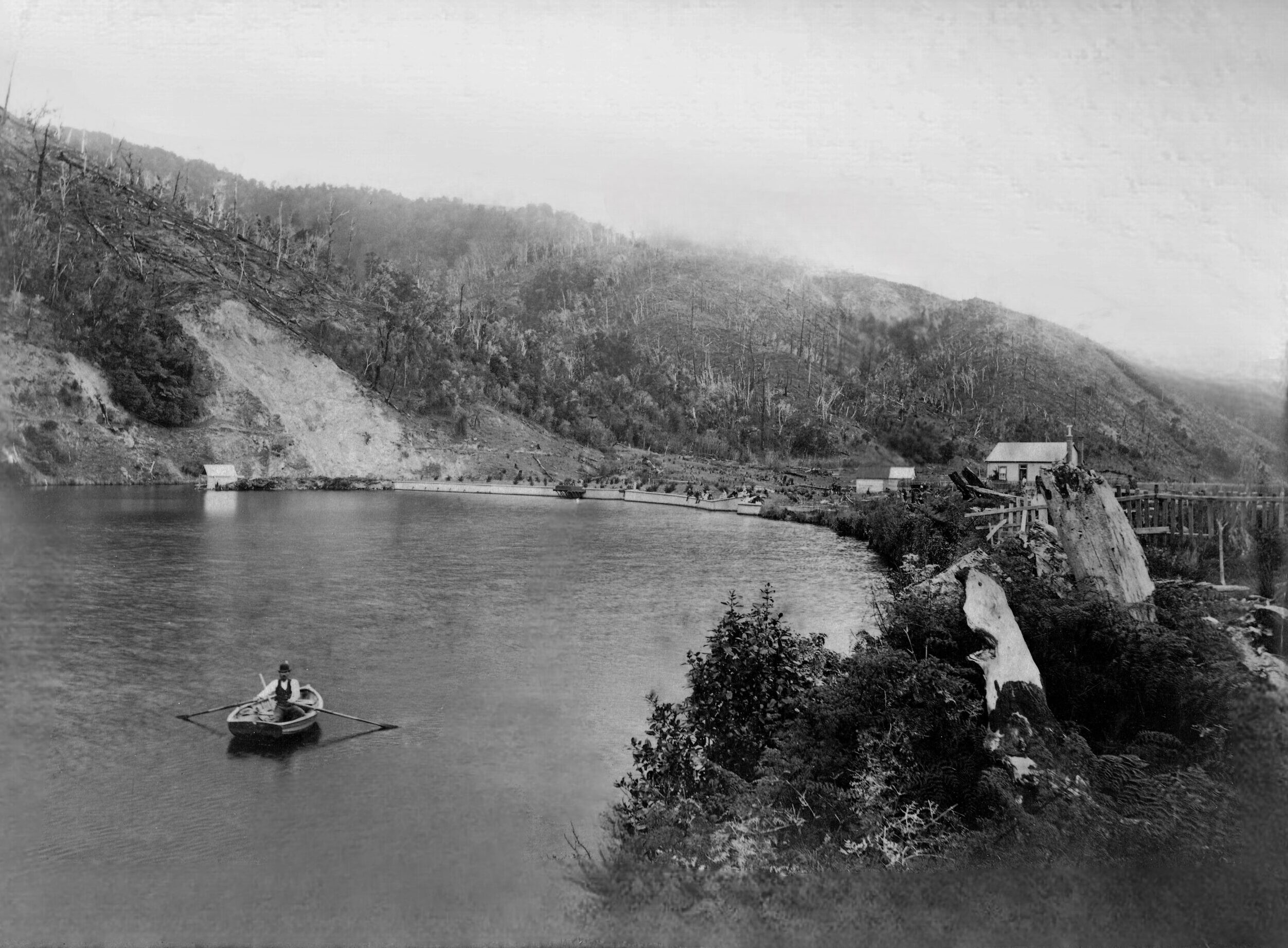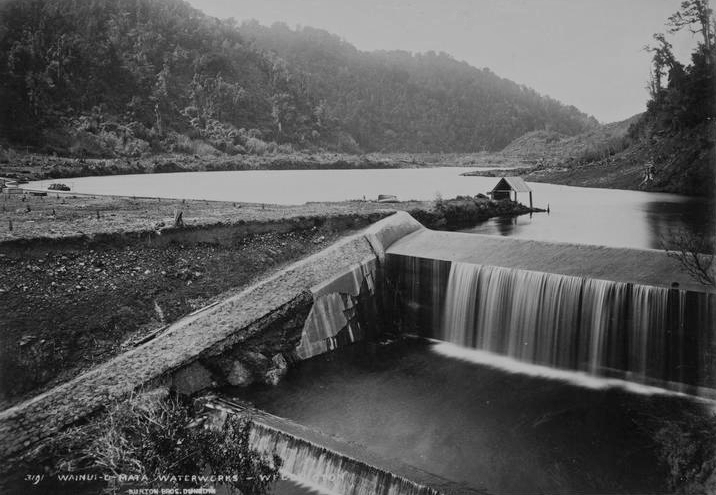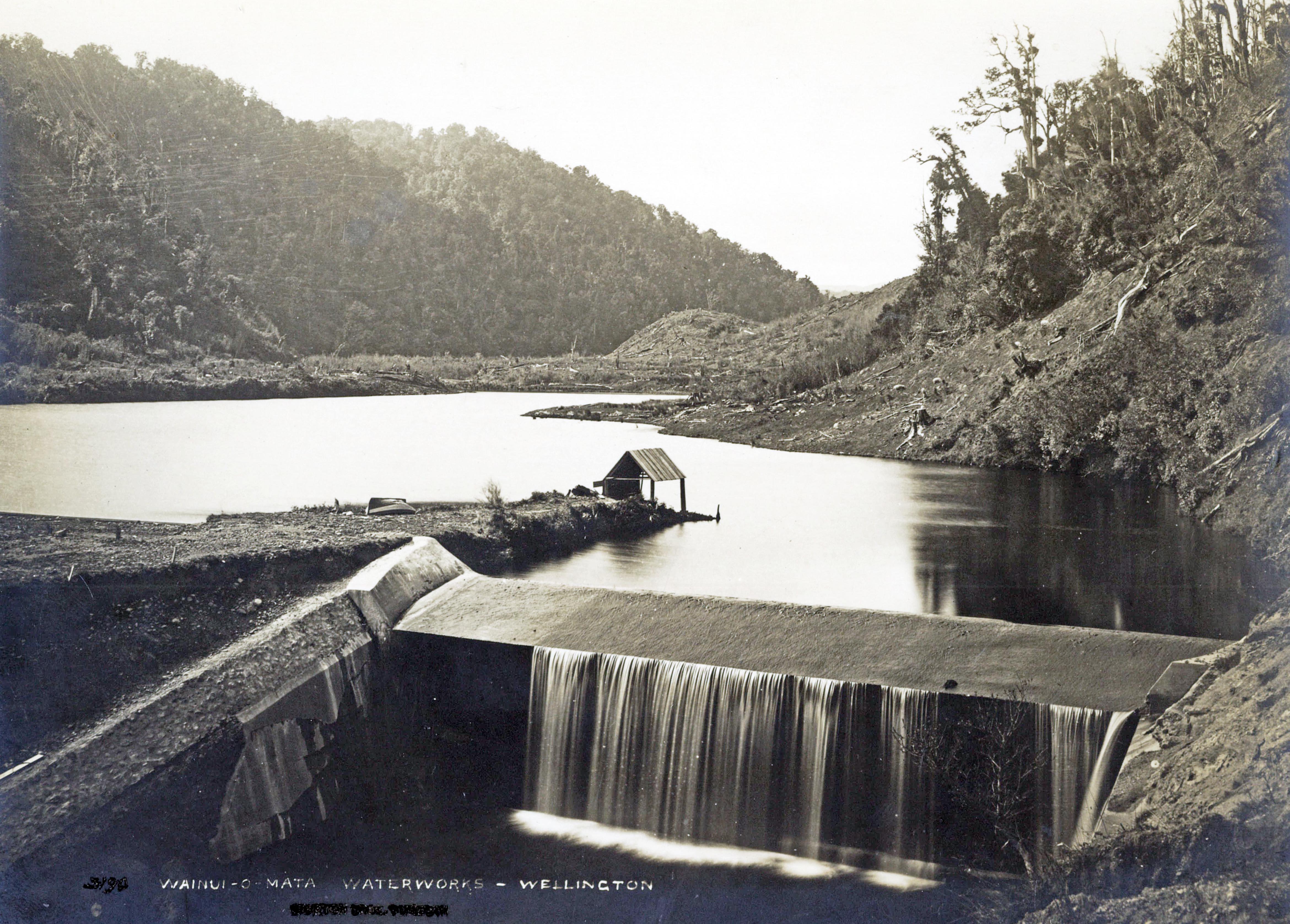
Originally referred to simply as “the dam,” it later became known to some as “Lower Dam” following the construction of Morton Dam further upstream. (Photo circa 1900.)
Lower Dam’s location was chosen in 1878 and construction began the same year. The site was strategically chosen for its natural suitability. The riverbed expanded at this location before narrowing into a gorge, making it an ideal spot for the planned 60-foot-wide concrete wall. The positioning of the reservoir maximised natural water collection and storage, further improving the efficiency of the system.
Completed in 1884, this dam stood as one of the oldest in the country and served as a crucial water supply for Wellington until the 1950s. Included was 27km of pipeline to Wellington City.
The concrete dam facilitated the conveyance of water to Karori, a Wellington suburb that housed a smaller dam. By 1887, the implementation of the Wainuiomata Scheme yielded an output of 176 liters per day, meeting the water needs of approximately 26,000 individuals.
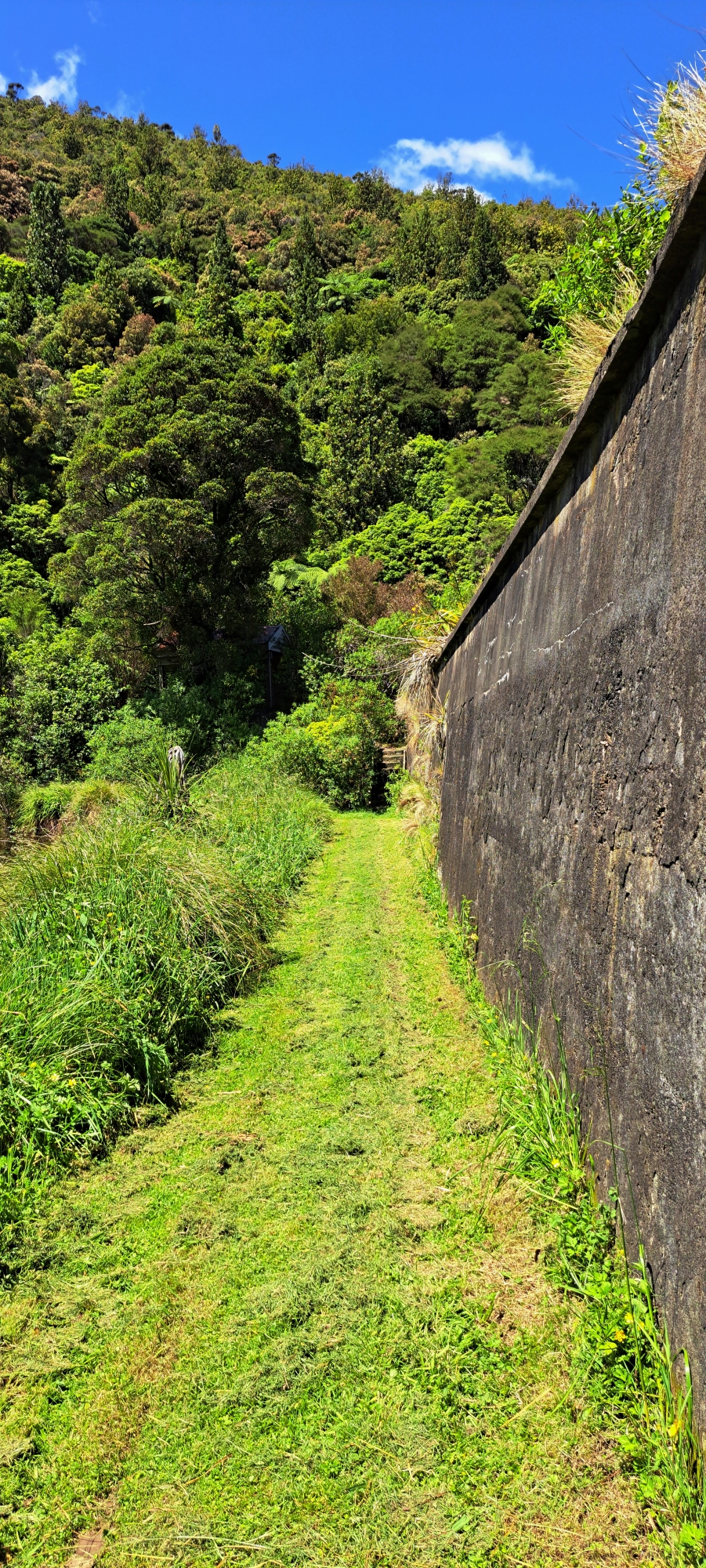
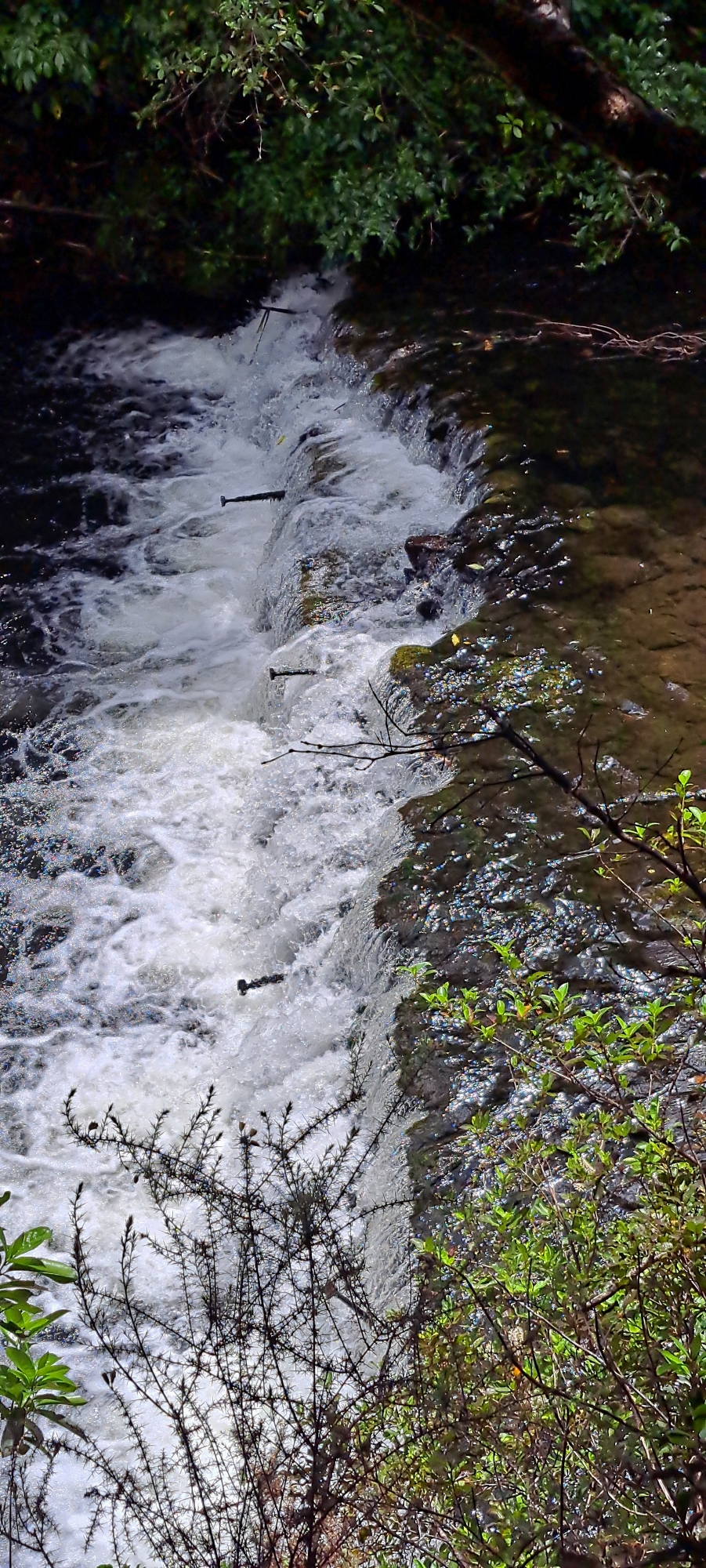
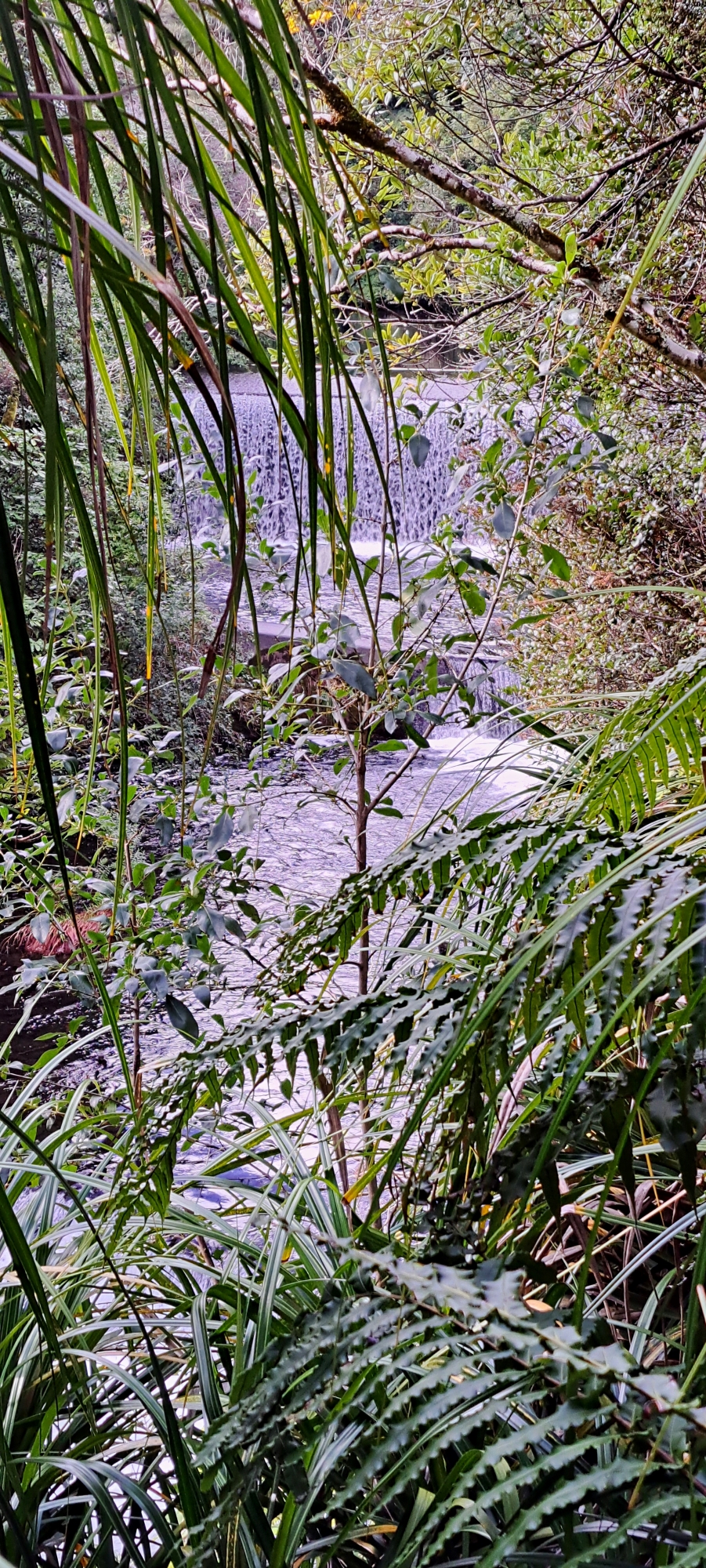
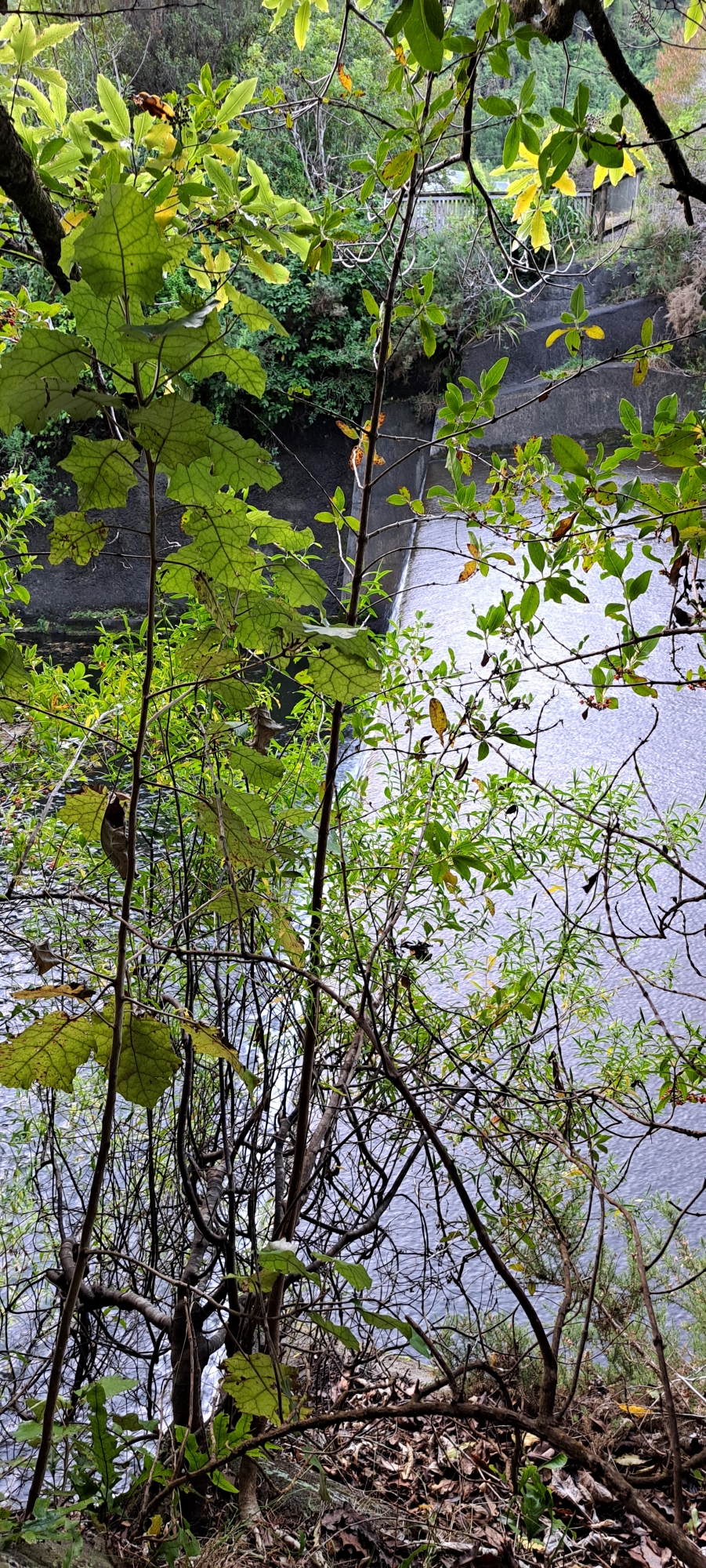
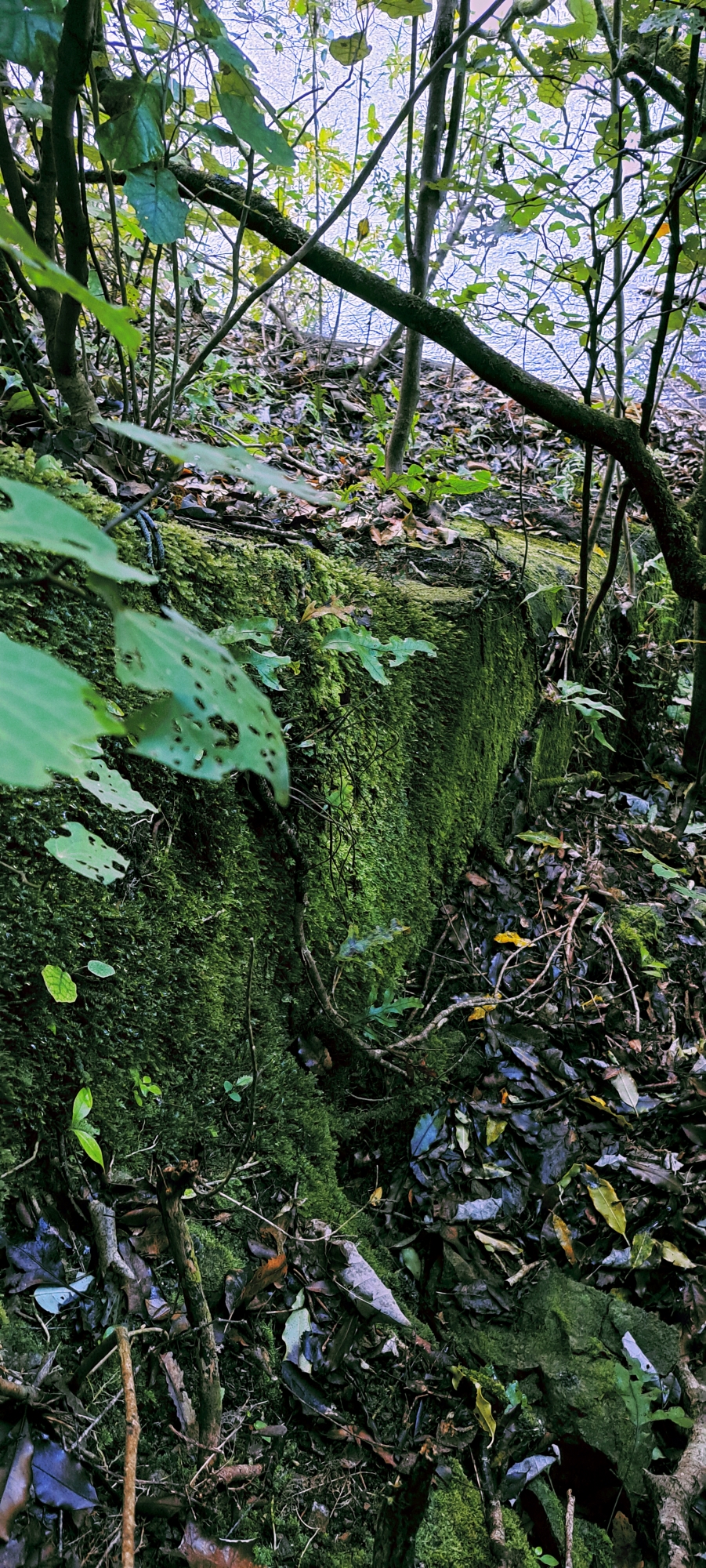
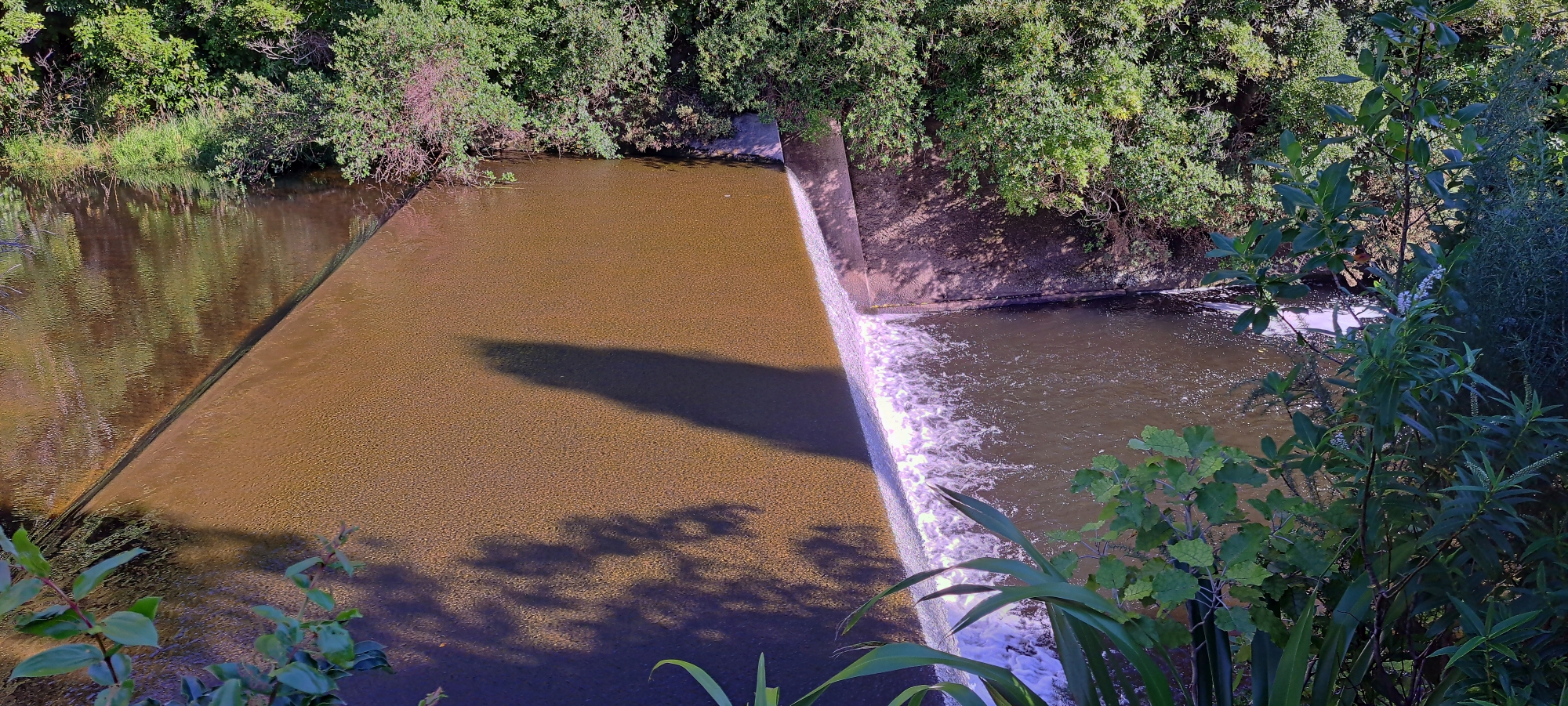
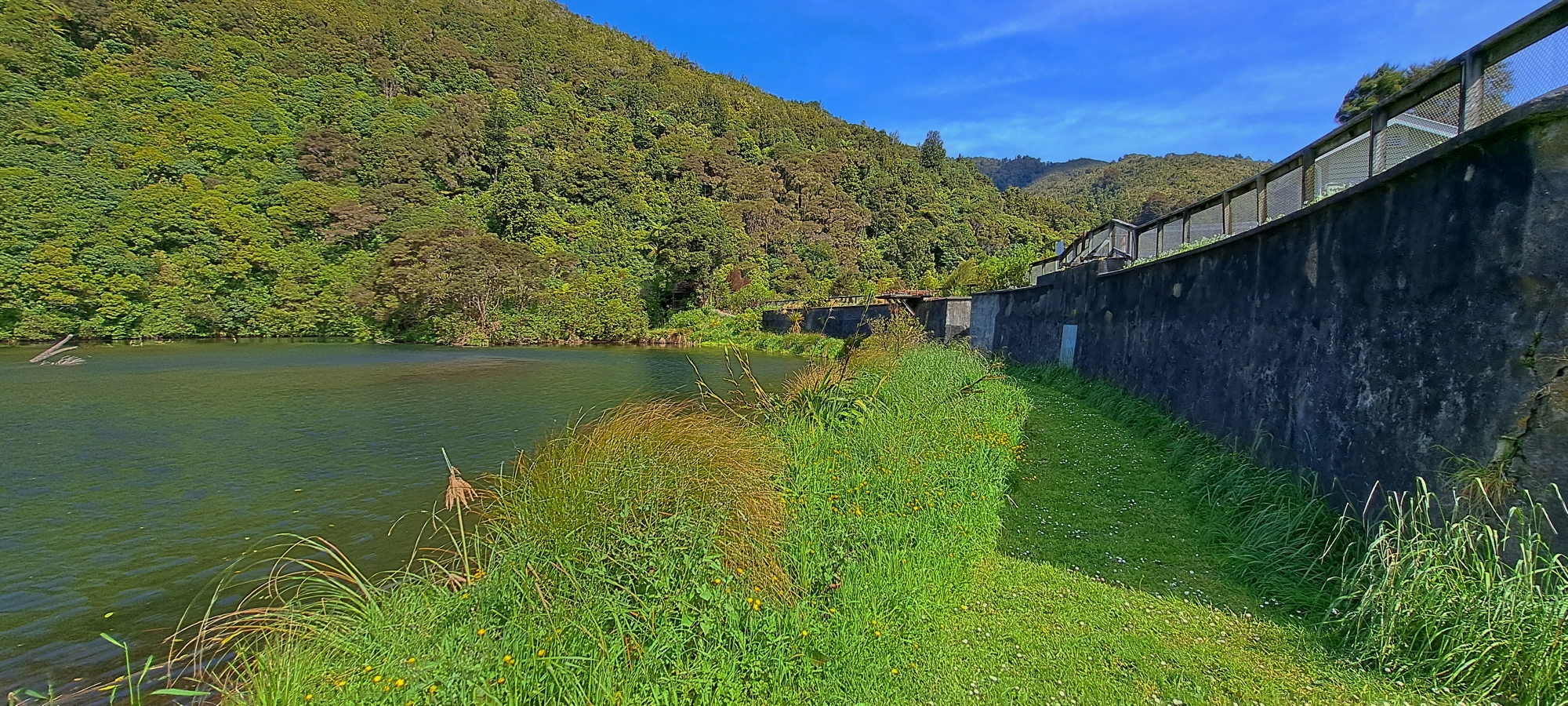
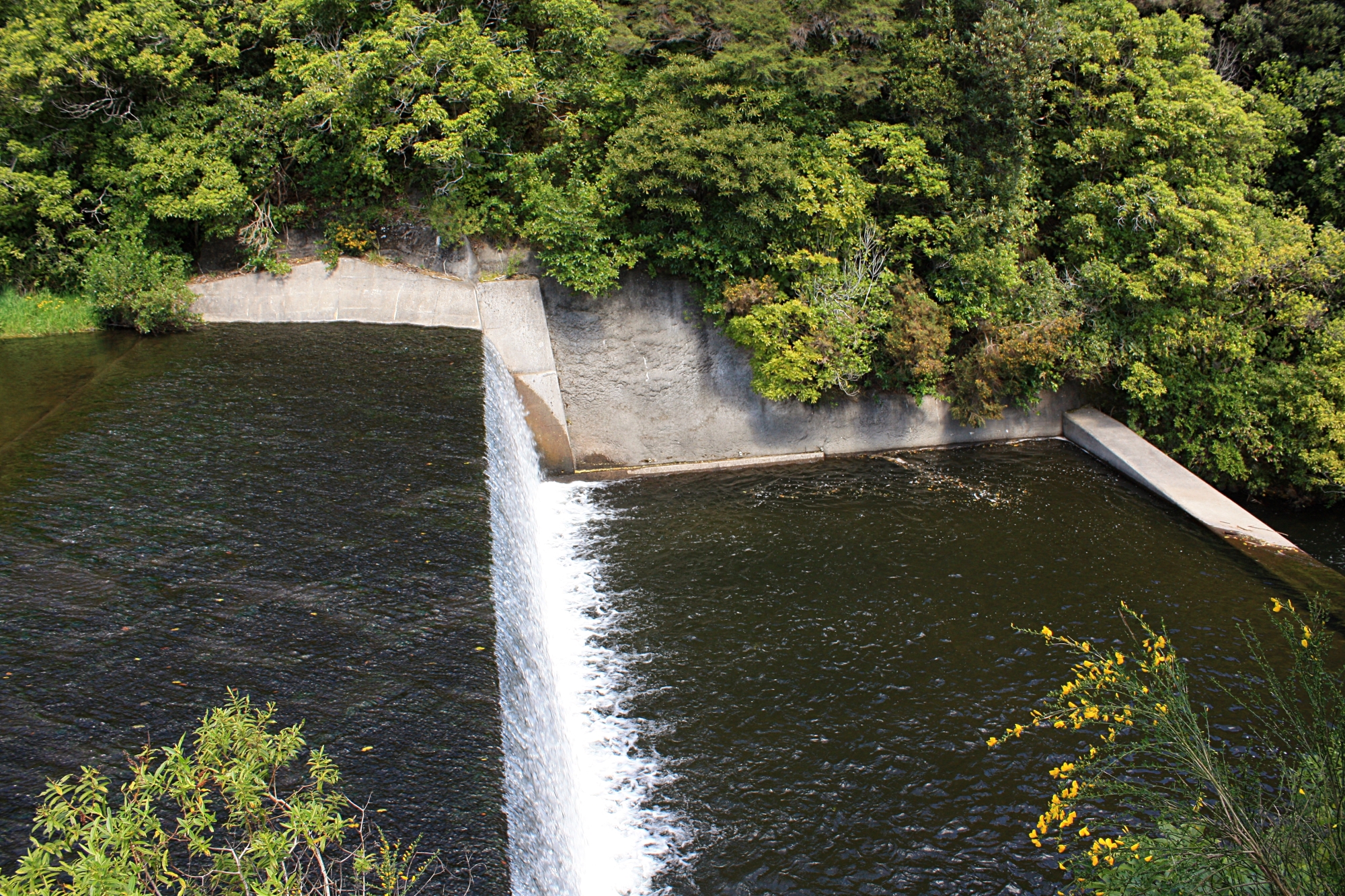
The dam featured a unique design, standing at 10 meters tall and comprising an earthfill embankment. What set it apart was its almost vertical concrete wall on the upstream side, a characteristic not commonly seen in similar structures. Additionally, it had an overflow spillway situated in the former river channel on its left abutment. Another distinctive aspect of this dam was the exceptionally wide crest width of its earthfill embankment, deviating from the norm for dams of its kind. The combination of the near-vertical concrete wall on the upstream face and the unusually broad crest width underscored its atypical design.
Damage to the dam
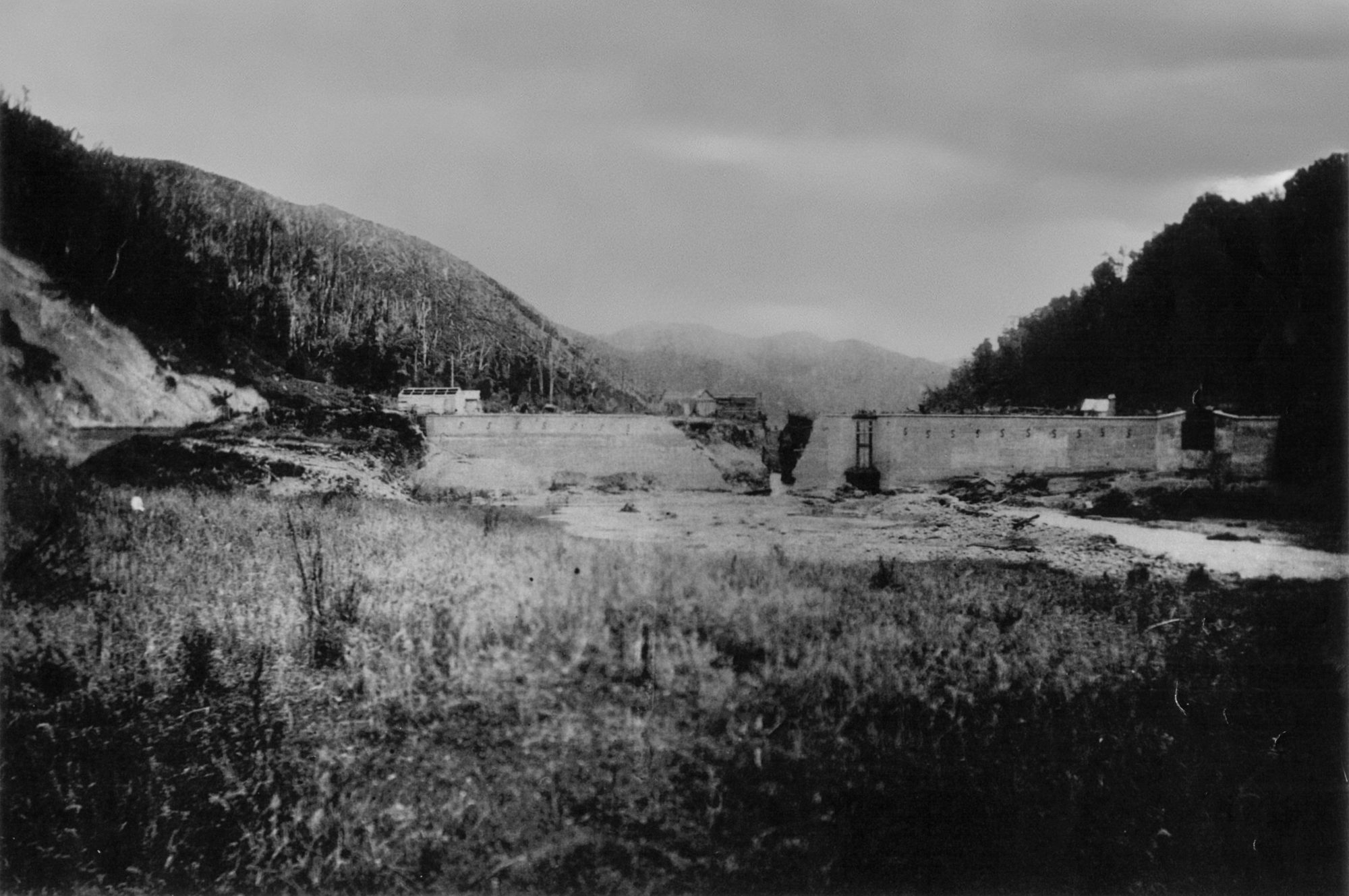
The flood of 1883 caused serious damage to the Wainuiomata waterworks, particularly at the dam. Floodwaters washed away a large section of the concrete face wall and completely scoured out the unfinished filling behind the overflow area before it could be protected with boulders set in cement. The force of the water cut several feet into the solid rock at the base of the dam and nearly swept away the workers’ huts. Repairs were immediately required and were expected to take at least a month, but the damage proved only the beginning. Two further floods followed in quick succession, culminating in an exceptionally severe flood in February 1884 that overtopped the dam, destroyed newly completed sections, caused widespread damage throughout the valley, and came close to washing away two workers’ huts.
Decommissioning of the Old Dam
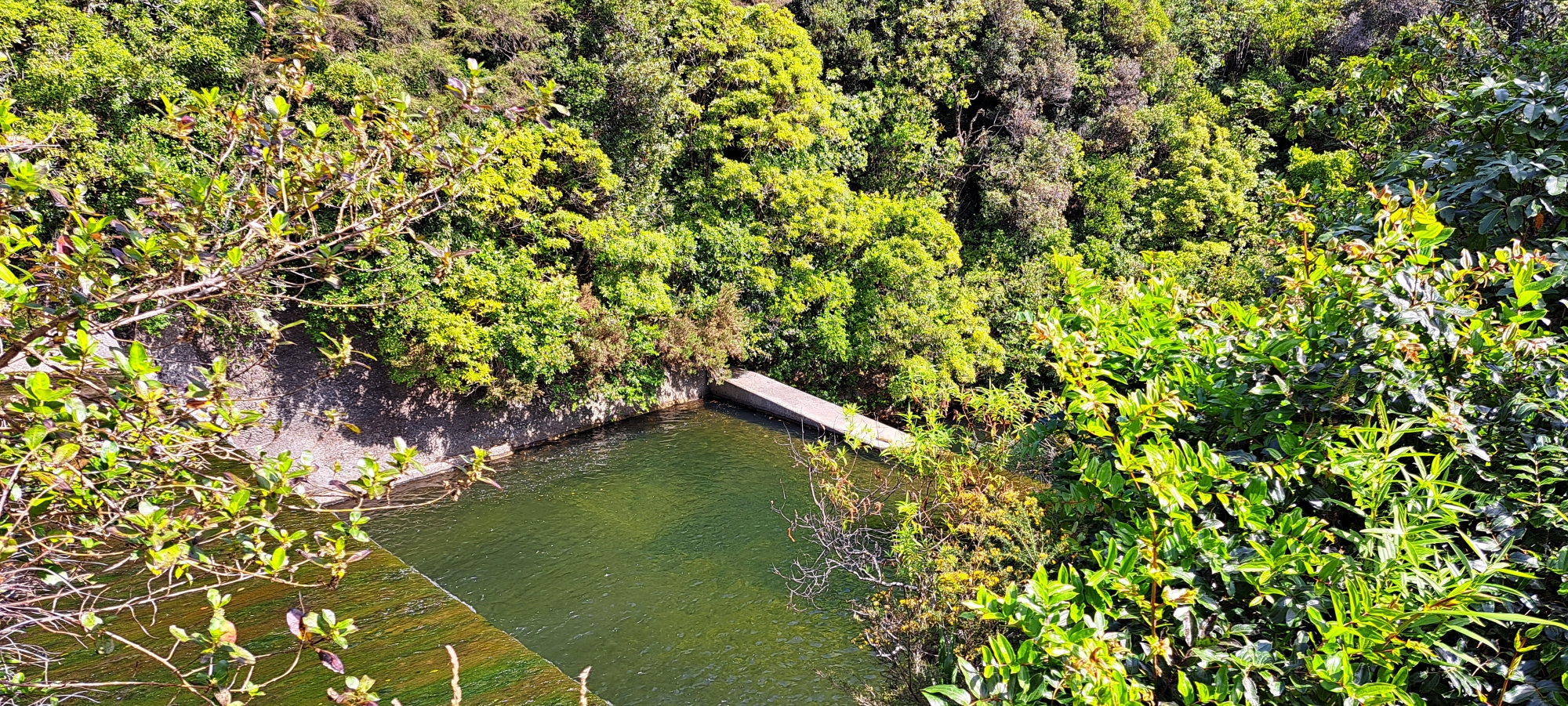 A 2004 safety review, prompted by stricter dam safety guidelines, found the dam had a low potential impact, meaning a breach wouldn’t significantly endanger the downstream population, and the spillway capacity was sufficient. However, the upstream concrete wall was highly vulnerable to earthquakes and needed reinforcement. This instability made the current operation, with the lake usually dewatered, unsustainable, as an earthquake could cause the embankment behind the wall to erode.
It was decided that upgrading the dam was necessary to meet safety guidelines, and the solution chosen was to lower the spillway. This kept much of the original structure intact and ensured that, even if the dam wall failed in a major earthquake, the low water level would reduce risks.
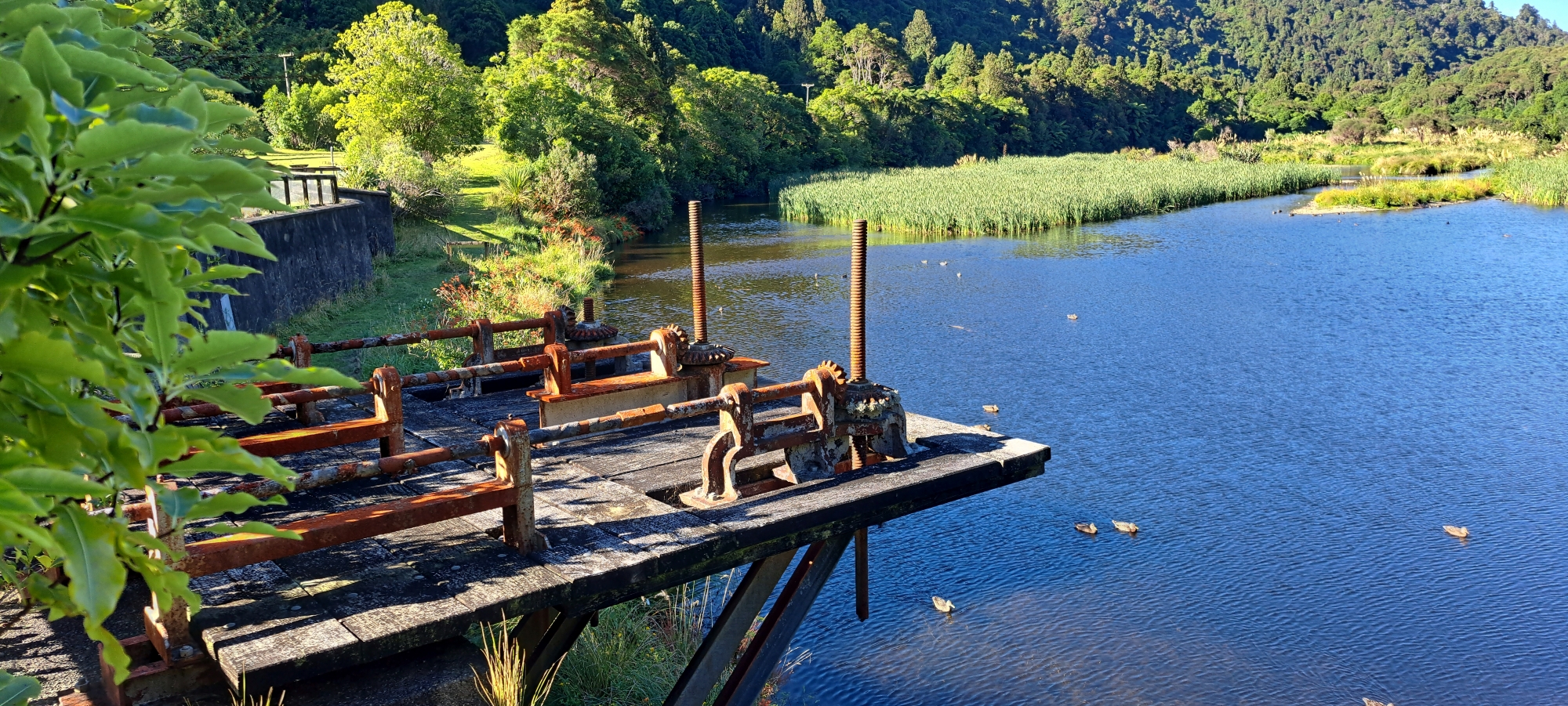
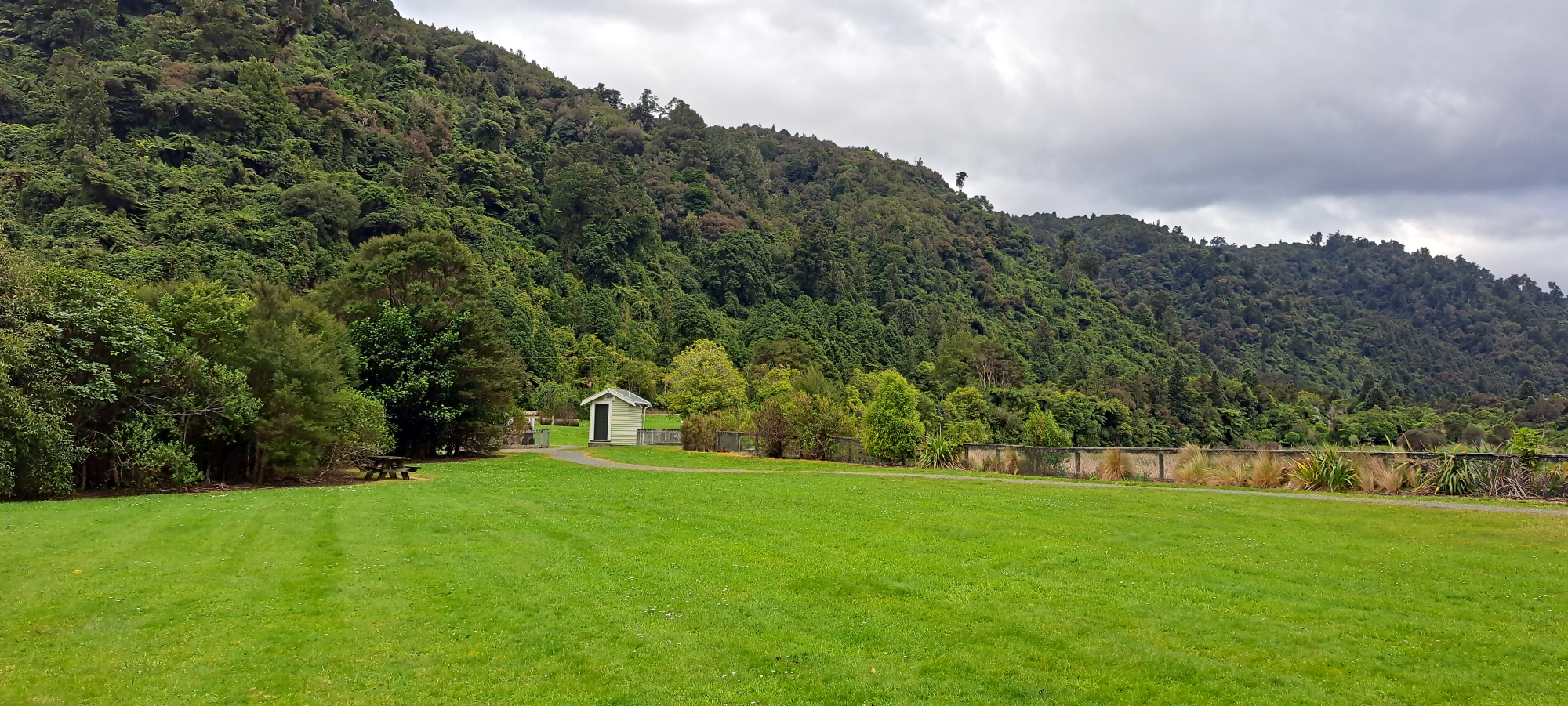
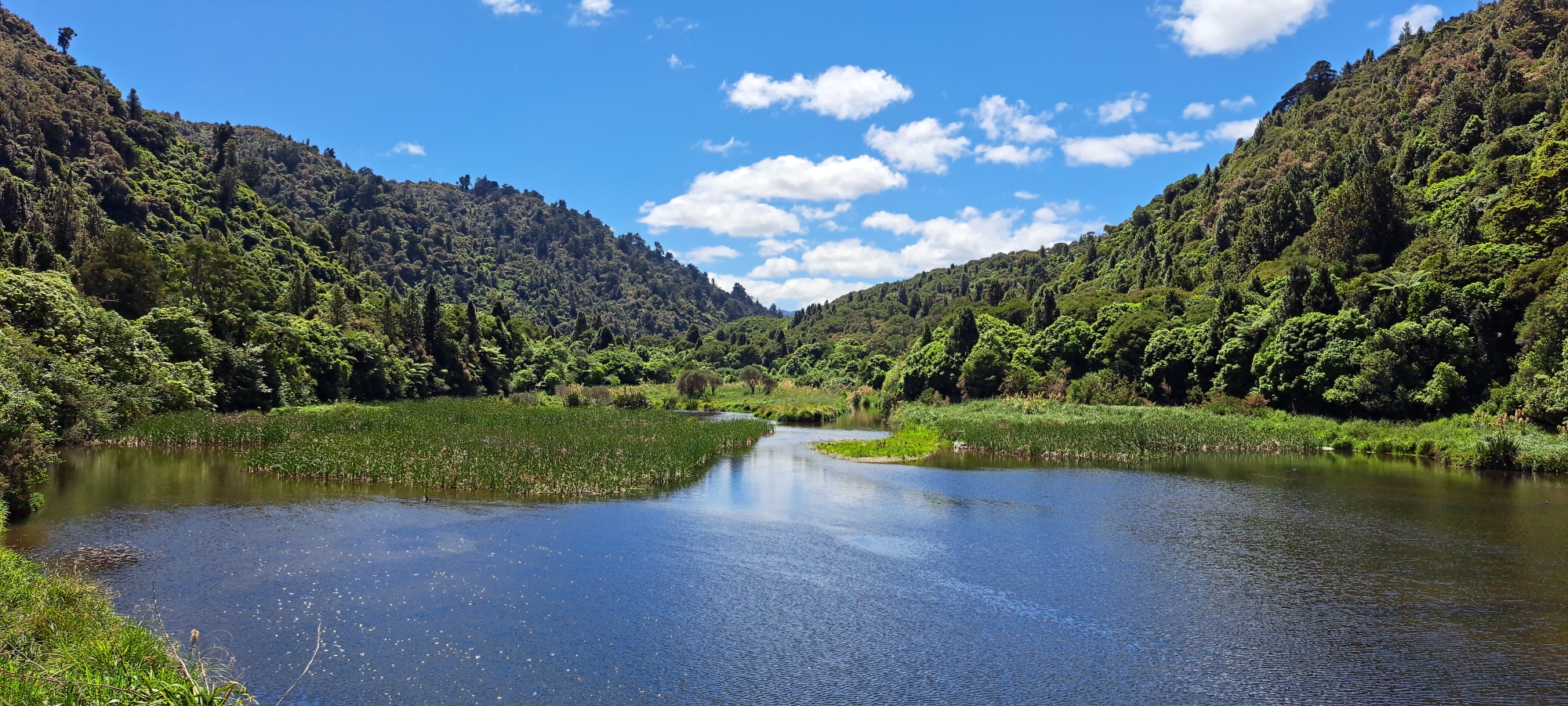 Decommissioning the dam turned the reservoir into a shallow lake and wetland, now home to native birds like kereru, bellbirds, tui, and paradise ducks. After 129 years of restricted access, the public was allowed to visit in March 2013, following regeneration efforts by the Greater Wellington Regional Council.
More information
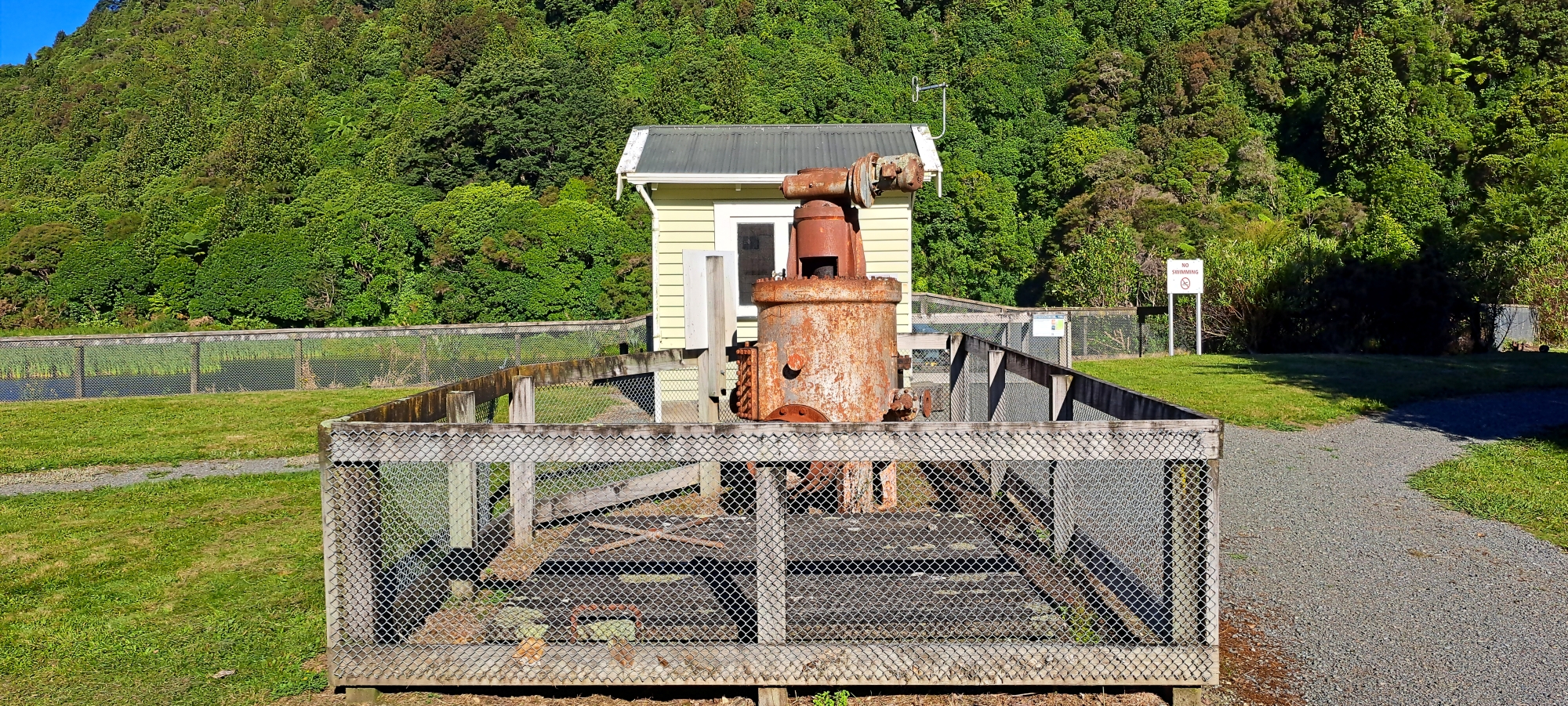
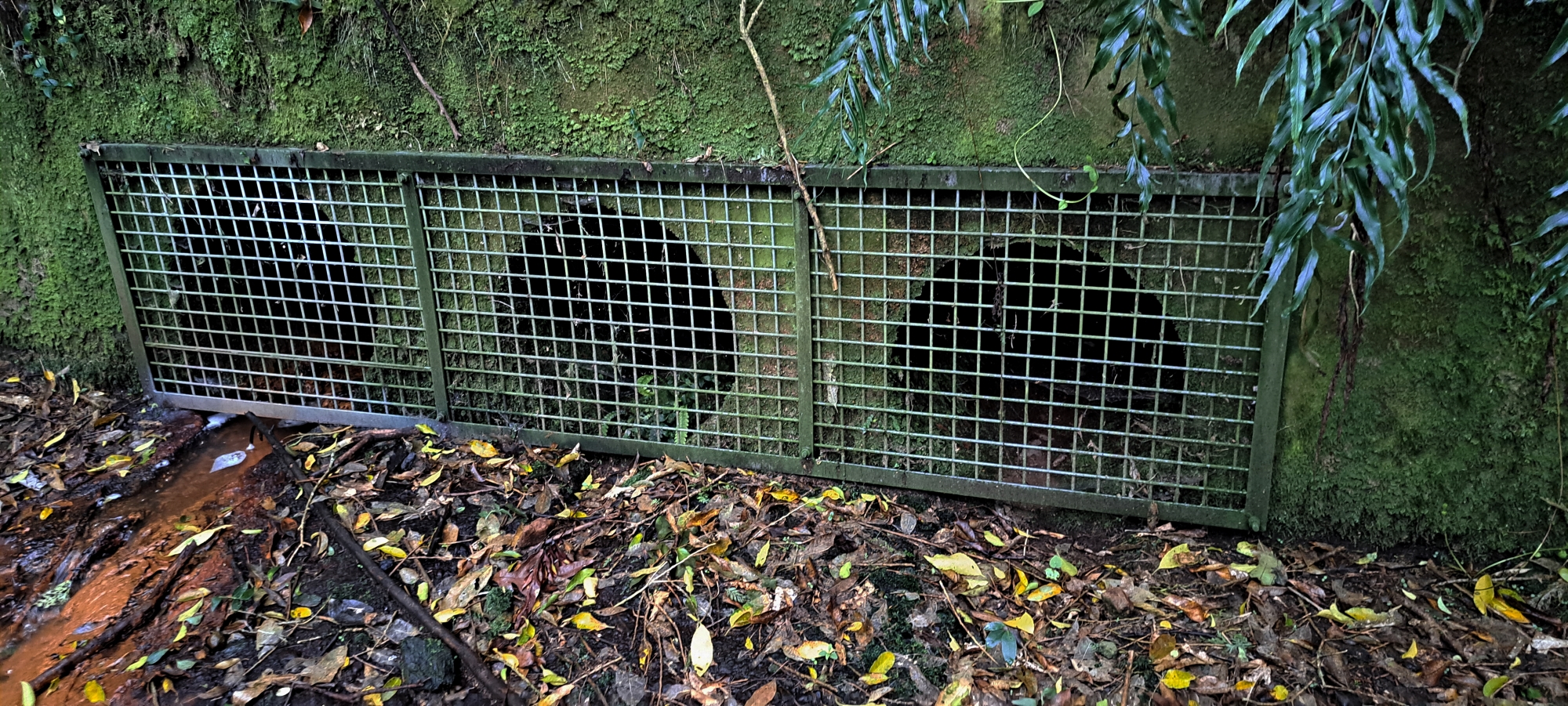
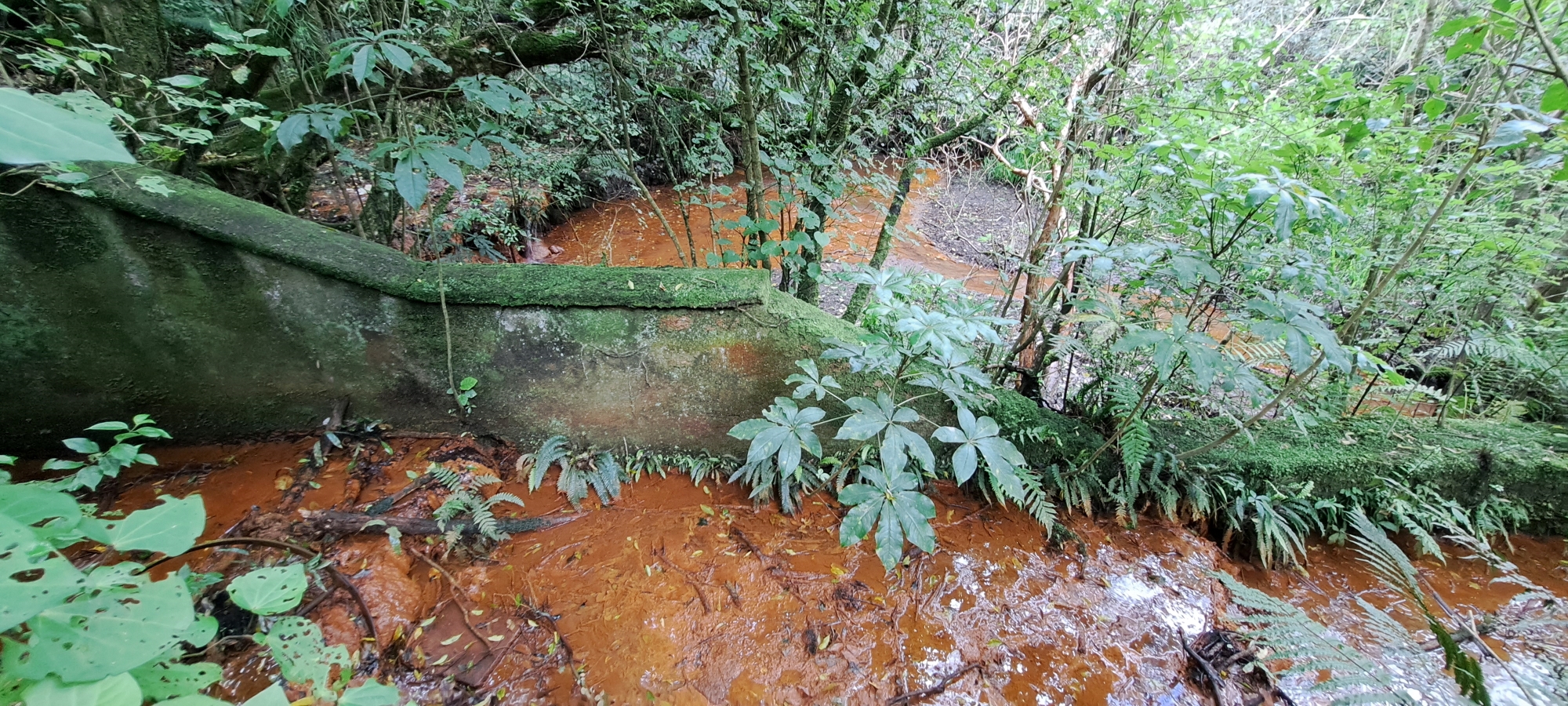
To learn more about the old dam and its supporting infrastructure, including tunnels, pipes, and raceway, refer to these old newspaper articles: