Wainuiomata news, photos, and history
Wainuiomata .Net is a platform designed to honour the suburb’s rich history and chronicle the present. It also, has a special focus on the natural environment with information on parks, rivers, and bush walks. The content includes an array of professional photographs aiming to vividly portray the history and beauty of the area.
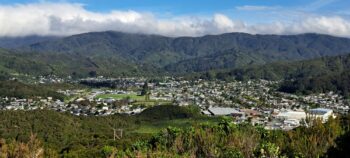
Wainuiomata is surrounded by the eastern Hutt hills, the Orongorongo range, and a rugged coastline. The resulting seclusion from the Hutt Valley gives Wainuiomata a town like feel rather than a suburb. Visitors come to enjoy nature at its finest. Activities include bush walks, mountain biking, swimming, and fishing.
The history of Wainuiomata starts with the topography of the land. The isolation, wetlands, and dense forests made it a difficult for settlement. However, an earthquake in 1855 elevated much of the swamp. The first pioneers came for logging and agriculture, then water management. Post WWII, housing swiftly reshaped the area into a working class neighbourhood.
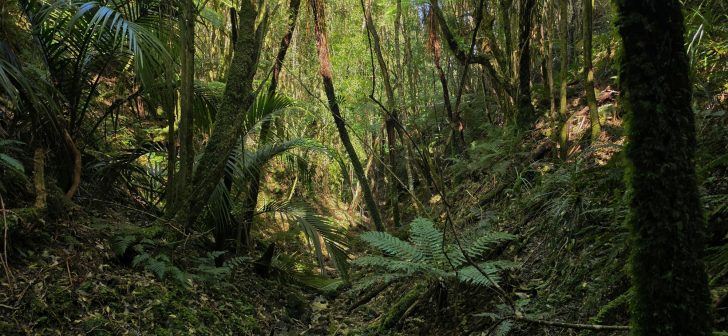
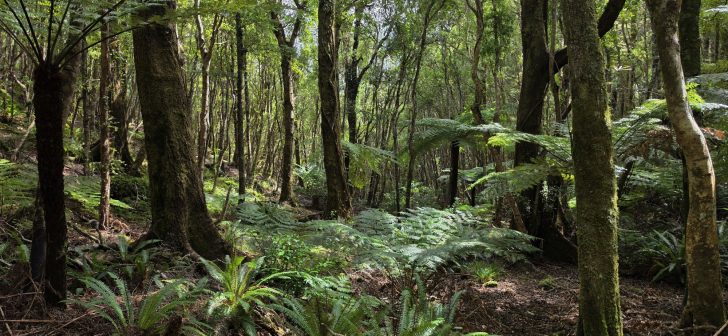
Scenic reserves in Wainuiomata safeguard the distinctive podocarp forests that cover the encompassing hills. Exploring these forests is the ultimate escape from city life to serene wilderness. Destinations such as Wainuiomata Regional Park, Remutaka Forest Park, and several smaller parks are conveniently within reach for visitors.
Wainuiomata tracks and walks showcase the extensive native podocarp forests and rivers that exist here. Walks vary from easy to difficult which often just means they traverse flat or mountainous terrain. Numerous other tracks scale the hills over to the Hutt Valley and Eastbourne including some of the best mountain bike tracks in the region.
Wainuiomata rivers and creeks are plenty. Being encircled by steep hills, moisture is trapped resulting in streams and creeks that merge together to form rivers and wetlands. The Wainuiomata River is the primary waterway and is a significant water source for the Wellington region. More notable creeks include Black Creek and Wainuiomata Stream.
The Wainuiomata Waterworks has an interesting history. It was the area where Wellington city’s water was sourced, but has been scaled back today to supply around 15% – 20% of the region’s water requirements. Part of this area is now open to the public and is a popular riverside destination offering picnicking, bushwalking, and biking opportunities.
Wainuiomata Articles
Wainuiomata Through the Years: Historic headlines, photos, and local stories.
The Oxbow Loop Track at Baring Head and Ōrua-pouanui in East Harbour Regional Park takes its name from two former river meanders.
Looking across the bush clad slopes of Skerretts Gully and Skerretts Creek above Sunny Grove in Wainuiomata.
This view from the Harry Todd Track in the Harry Todd Recreation Reserve shows Hine Road in the foreground.
A view of the wetland area and the historic dam in Wainuiomata. This wetland was formerly the reservoir for water storage.
The regional council is investing over a decade in building a large perimeter fence to shield a vast area of native bush.
Bryan Heath Park is a large open sports ground used for cricket and football, and serves as the home ground of the Wainuiomata Cricket Club.
View of a former classroom block at the old Wainuiomata College campus, a remnant of the school prior to its closure and relocation.
Looking across the Olympic sized pool at the Wainuiomata Baths, also known as the Wainuiomata Summer Pool.
View of Willis Street near Hine Road in Wainuiomata. This short street is backed by the Harry Todd Recreation Reserve.
Looking from Mount Crowther on the Mount Crowther Track near the transmission station in the Harry Todd Recreation Reserve.
A major pest control operation in the Wainuiomata and Orongorongo area reduced possum numbers to zero, setting a 20-year record.
View across Remutaka Forest Park at Catchpool Valley from the Ōrongorongo Track. This outlook is reached approximately ten minutes into the walk offering an early sense of the valley’s scale and natural setting.
Grace’s Stream is a minor forest waterway within Remutaka Forest Park, south of Wainuiomata where it flows through areas of native bush.
This older fire ban sign is nailed to a tree in the now abandoned Grace’s Stream Campsite in the Remutaka Forest Park in Wainuiomata.
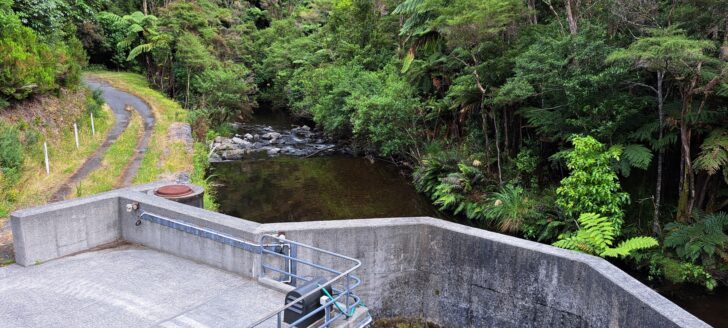
Looking down on the Wainuiomata River near the old dam, where the view has opened up slightly, following a 2024 landslide.
These pipes run beneath the old dam and were built to reduce pressure on the dam wall during major floods.
Looking inside the Wainuiomata Water Race. This two-kilometre concrete tunnel was built in the early 1880s and decommissioned in 1902.
Three ducks on the Wainuiomata River just downstream from Ultimate Pool, a popular local swimming and recreation spot.
Wainuiomata contains several old concrete structures built to house meters, filters, and pumps connected to pipelines that transported water.
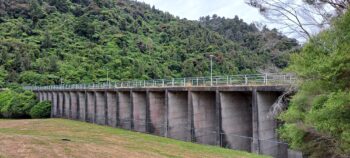
The old dam and its spillway was part of the original 1880s water supply system in Wainuiomata that served Wellington.
The Wainuiomata Native Plant Nursery is a community-run project located within Wainuiomata Regional Park on the edge of the water catchment.
While Hine Road is best known for its brilliant autumn colours, spring brings a vibrant display of its own.
The Greater Wellington Regional Council is moving ahead with plans to fence off thousands of hectares of native forest east of Wainuiomata.
Wainuiomata Regional Park is seeking Dark Sky Place accreditation, set to become the closest recognised dark sky site to any world city.
At the base of the spillway at Lower Dam in Wainuiomata Regional Park, the Wainuiomata River is channelled through Reservoir Valley.
Looking down onto Main Road in Wainuiomata, with a section of the Coast Road valley visible in the distance.
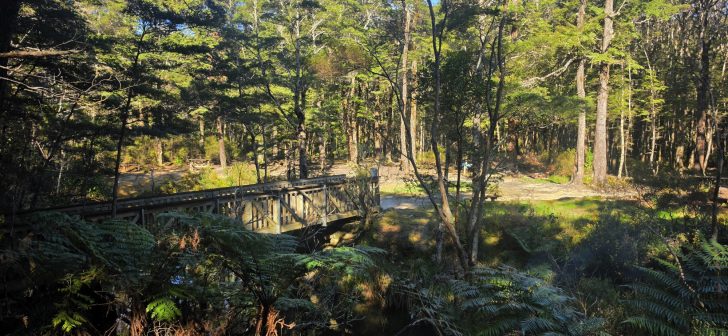
A new bridge has been built at George Creek in the Wainuiomata Catchment after a 2023 flood destroyed the previous one.
A warm, reddish light spills across the Wainuiomata Valley, casting long, drifting shadows that stretch over the landscape
View of the valley through which Coast Road winds its way. Once dominated by early timber milling, the valley is now a patchwork of farmland.
Sugarloaf Hill near Coast Road in Wainuiomata takes its name from the traditional sugar loaf, a solid cone of unrefined sugar.
This old farm building at 864 Coast Road features artwork bearing the words ‘Wainui Coast’, a nod to the nearby coastline.
Each day, motorists travelling on Wainuiomata Road over the Wainuiomata Hill can pull over at the lookout to take in the spectacular view.
Given the topography of the land in Wainuiomata, its surrounding hills often trap mist, creating a still, atmospheric landscape.
Wainuiomata has a long history of tunnel construction, central to Wellington’s developing water supply which still exist today.
New Zealand’s only parasitic flowering plant has been discovered in Wainuiomata, more than a century after wild populations were last seen.
This gate blocks public access to Maintenance Road, which runs parallel to Reservoir Road and higher up the hillside.
The Wainuiomata Mitre 10 store is a recent addition to the local community, officially opening its doors on Saturday, 10 May, 2025.
In the early 1910s, nestled within the secluded reaches of Sinclair Valley in Wainuiomata, a short-lived but bustling work camp sprang up.
A concrete wall running below Reservoir Road has long been something of a mystery. Here are some theories that may explain its origin.
Mortgagee sale of retail and residential site in Wainuiomata’s Homedale Village, with eight shops and a dwelling on 2,746sqm.
The Greater Wellington Regional Council has successfully purchased a 1366-hectare parcel of land in Gollans Valley Wainuiomata.
Mitre 10 is set to open its new store in Wainuiomata in May 2025. The store occupies the former Warehouse building.
This view over eastern Homedale, including Richard Prouse Park, has been a popular vantage point for photography since the 1880s.
The Wainuiomata Community Water Station serves as a crucial component of the region’s emergency water supply network.
View of Hine Road Recreation Area as seen from a hill behind Reservoir Road. Sunny Grove (once known as Skerretts Gully) is also in view.
A recently discovered rectangular concrete slab in the Wainuiomata bush features a small metal door engraved with the letters “W W”.
This recently discovered drainage pipe, dating back to the 1880s, was constructed to channel a creek beneath an earth bridge.
This gravel beach ridge marks the shoreline as it was approximately 2,300 years ago. Beyond this, there are 2 additional gravel beach ridges.
Nikau Creek Terrace is a plateau located on the opposite bank of Nikau Creek, running parallel to Nikau Creek Track.
In Nikau Valley lies this strand of young Kahikatea trees standing gracefully amidst the lush surroundings.
A tract of regenerating forest on a slope in Nikau Valley within Wainuiomata Regional Park and accessible via Nikau Creek Track.
Looking down upon Richard Prouse Park from the top of a ridge, behind Sunny Grove. You can see both sections of the park.
View from a car park and grass field in Wainuiomata’s water catchment area, looking toward Morton Dam in the distance.
The ranger’s office in Wainuiomata Regional Park was originally constructed to accommodate waterworks staff.
At the lowest level of the old dam spillway, large metal spikes are visible jutting out of the water. Could these have supported a bridge?
Sledge Track Pool also known as Discreet Pool and Hidden Pool is a natural swimming hole in the Wainuiomata River.
Mitre 10’s plans to relocate into the former The Warehouse building are progressing well, with nine job vacancies currently advertised.
Majestic trees dominate the landscapes of Wainuiomata’s forest parks, such as Remutaka Forest Park and Wainuiomata Regional Park.
A view of Richard Prouse Park and the Wainuiomata AFC clubrooms, with Hine Road also visible. You can also see Harry Todd Recreation Reserve.
The Gawler Reservoir has a capacity of 3.9 million litres, while the larger Konini Reservoir holds 5.1 million litres.
View of Sunny Grove, Hine Road, and Hine Road Recreation Area as seen from a ridge in Wainuiomata Scenic Reserve.
From a ridge above Moores Valley Road, looking westward, you can spot Moohan Street, Bryan Heath Park, Fitzherbert Road, Wainuiomata College.
A view of the Wainuiomata Stream joining the Wainuiomata River. The stream notably boosts the river’s flow.
View of Richard Prouse Park on the western side of the Wainuiomata River with a water pipe just visible in the background.
Cliff Pool, also known as Black Pool, is located at Richard Prouse Park, where the Wainuiomata River splits the park and meets a steep bank
Pylons near the top of Wainuiomata Hill show the location of the ECNZ Power Pylon Track where you can walk from Seaview to Whitemans Valley.
Work is well underway on the expansion of the Garden of Remembrance at Hine Road Recreational Area in Wainuiomata.
A concrete wall aligns part of the Wainuiomata River in Reservoir Valley. Situated on the northern side with Reservoir Road above.
Upper Moores Valley in Wainuiomata located near Whitemans Valley, is a seldom visited area earmarked for high density housing.
Near the top of Moores Valley is this small field where someone has planted a bus stop sign. Photo taken from a shed located in the forest.
On a bright winter day at Richard Prouse Park in Wainuiomata, the clear, crisp air creates ideal conditions for photography.
Looking west at a wetland on the valley floor of Reservoir Valley. This area, near the start of Sledge Track, features a boardwalk.
This recently discovered rusted object has an uncertain purpose, but it could be a log dolly used for moving logs or pipes.
Wainuiomata has emerged as the most leak-prone suburb in the Wellington region, according to recent data from Wellington Water.
A new extension track has been created in Hine Road Recreation Reserve by the Greater Wellington Regional Council.
Evening light bathing Nikau Creek Valley in Wainuiomata Regional Park. This valley has a short walking track alongside a creek.
Swingbridge Pool as the name suggests, is located near a swing bridge. It’s also known as Ford Pool due to its proximity to a ford.
Ultimate Pool as the name suggests, is considered by many to be the best natural swimming hole in Wainuiomata.
A calm winter day at Richard Prouse Park in Wainuiomata. With no wind, the area often becomes quite foggy, as the hills trap the mist.
Looking at Nikau Creek Valley in Wainuiomata Regional Park, as seen on a foggy winter day. Within this valley is a creek and a scenic track.
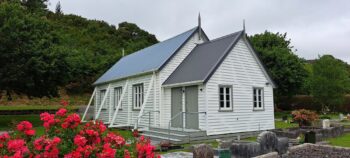
Coast Road Church in Wainuiomata in 2024. This church was built in 1866 and is the oldest Methodist church in the Wellington region.
The lagoon at Camp Wainui in Wainuiomata offers a scenic spot suitable for swimming and kayaking within the camp.
This is a view of the lower reaches of Scholes Creek just before it flows outside the bushland near Camp Wainui on the Coast Road.
View of lower slopes near Mt McKerrow, as seen from Bivy Track. This track starts or finishes at Scoles Creek Track and Camp Wainui.
View from Spear Cut Track of Reservoir Valley in Wainuiomata. Sunny Grove is hidden below the hill to the right.
Trees cast their shadows across the bank of a waterway next to Bryan Heath Park in Wainuiomata. This waterway empties into Black Creek.
The valley’s topography and lack of wind can cause low clouds and mist to become trapped by the surrounding hills and mountains.
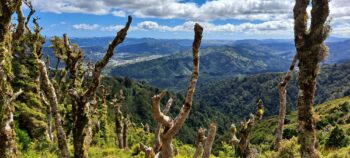
From the Wainui Lookout, perched on the western hills dividing Wainuiomata from Lower Hutt, you can view undulating hills.
Sledge Track Creek flows alongside Sledge Track and then extends further uphill where a less maintained track continues to follow the creek.
View of Tana Umaga Track in Wainuiomata Regional Park. The track is best described as a short and steep firebreak track.
A view of the Wainuiomata River from the Main Road Bridge in Homedale. with deciduous trees in view, adding autumn colours.
A view of the Main Road in the Village on a cloudy autumn day. Mist-covered hills in the background add a sense of wilderness to the scene.
‘Wainuiomata Lookout’ presents panoramas of Wellington Harbour, Wellington city, The South Island, and Lower Hutt including Petone & Seaview.
This view from the southern bank of the Wainuiomata River captures Lower Dam, just before the river cascades down downstream.
Sledge Track Loop is a short walk option from the larger Sledge Track. It starts and ends at Mackay Cottage.
The Pukeatua Bridge crosses over the top of Wainuiomata Hill Road. The bridge links pedestrian and cycling pathways along the eastern hills.
This section of the waterway has been restored with native vegetation and features a public walkway between two new housing developments.
The Morton Dam, out of service since 1988, is being reconsidered for potential reactivation to boost Wellington water supply.
The Morepork is a small owl native to New Zealand. It gets its name from the sound of its call, which sounds like “more-pork.”
Secret Pool (also known as Indian Pool) is a swimming hole in the Wainuiomata River. It is the next swimming area downstream from Top Pool.
Gums Loop Meadow is essentially where Gums Loop Walk derives its name. The meadow contains eucalyptus trees.
Gums Loop Swamp is a wetlands located near Gums Loop Meadow. This wetland is basically hidden away as it is fringed with forest.
This view can be seen from the Old Whakanui Track. The track’s entrance is mostly hidden from view as it is not well maintained.
Typical overcast day in Autumn as seen from the Wainuiomata Hill Lookout. The view here is always good, no matter the weather.
View of lush forest on the McKerrow Track. The track follows a ridge and offers some great views of Wainuiomata and Wellington below.
We know what the pros for wildlife sanctuaries are. But what are the cons for a wildlife sanctuary in Wainuiomata?
On March 25th, a new KFC branch commenced operations in Wainuiomata. Situated at 18 The Strand, it stands opposite McDonald’s.
As dusk falls over Wainuiomata, the setting sun bathes the landscape in its warm, reddish hues, casting shadows across the valley below.
The once bustling shops in The Village, Homedale’s historic commercial heart, now sit in varying states of decline and in some cases.
A fragment of aircraft fuselage, serves as a poignant reminder of a wartime training accident that took place more than 80 years ago.
This cylindrical structure was once part of the Skerretts Creek water catchment. The catchment itself ceased operations in the early 1960s.
Lush rainforest surrounds much of Skerretts Creek, but the vegetation thins out slowly as you head up the slopes of the valley.
This is part of a plane wreck, specifically the landing gear, from a kittyhawk that crashed in 1943. Other parts lie scattered nearby.
At some point, a landslide has moved these trees farther down the steep incline beneath the McKerrow Track.
A misspelling on this sign says ‘Hine River’ when it should say ‘Hine Road’. The river that flows along Hine Road is the Wainuiomata River.
View of a lush forest on the slopes of Skerretts Creek Valley. The forest is beautiful, but not far from here is a steep cliff face.
This view from the Whakanui Track gives an expansive look at Wainuiomata. Immediately below is Nikau Valley and Moores Valley.
From the Whakanui Track, you can enjoy a distant view of Wellington and Wellington Harbour, with the South Island mountains visible.
The aged bench is situated towards the conclusion of the Old Nikau Creek Trail. Beneath it lies a geocache container.
Exotic trees in Wainuiomata were introduced primarily to replace native trees that were logged in the mid to late 1800s.
Looking at Gums Loop Meadow located on Gums Loop Walk in the Wainuiomata Regional Park. The meadow was once farmland.
At the end of Nikau Creek Track are two wooden bench seats. The track is an easy 30 minute walk offering views of Nikau Creek.
View of the Wainuiomata River as it flows into the south coast. This area is rugged and wind-swept, but swimming in the river is pleasant.
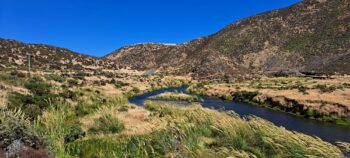
The lower reaches of Wainuiomata River as observed during summer. It traverses arid looking terrain in the month of February.
During the summer months, the southern section of Coast Road appears dry, presenting a stark contrast to the nearby Remutaka Forest Park.
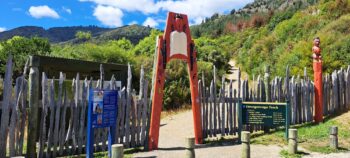
The Orongorongo Track entrance is quite elaborate compared to other walks. However, this entrance is also used for other tracks.
Walking through Remutaka Forest Park is a rewarding experience, offering some of the the region’s most diverse and scenic natural landscapes.
The start of the Middle Ridge Track also connects to the Orongorongo Track in Catchpool Valley, Wainuiomata.
Beech forests in Wainuiomata thrive in the hills and higher elevations, providing vital habitat for native birds.
Looking at Catchpool Stream located in Catchpool Valley. The stream is located at the entrance to a number of walks in Remutaka Forest Park.
View of Bottom Field at Poole Crescent Reserve. The appellation ‘Bottom Field’ originates from its use by Wainuiomata Primary School.
View of Main Street Bridge as seen from the Wainuiomata River at Poole Crescent Reserve. The bridge was once known as the School Bridge.
In a significant win for conservation, the kiwi population has expanded from Wainuiomata to Whitemans Valley in Upper Hutt.
Looking at the side of the Wainuiomata Treatment Plant located near Morton Dam and the waterworks car park.
View from atop Morton Dam looking at what was once the area of stored water. This is what 36 years of natural regeneration looks like.
This area was deforested in the 1880s. This is what re-generated bush looks like some 140 years later. The location is Sinclair Valley.
Water is passed through turbine generators housed in a dedicated building. Inspections of the generator are conducted no more than weekly.
This water pipe is located in the restricted area of the waterworks, near Morton Dam. It transports water from weirs located in the Wainuiomata River.
Podocarps once covered the Wainuiomata Valley. Today, they can still be found in the lower sections of hills and in numerous remote gullies.
Two weirs in the Wainuiomata River have replaced Morton Dam in Wainuiomata. The image shows the smaller of the two weirs.
Top Pool was widely considered the best swimming hole in Wainuiomata until the council filled it with stones in the 1980s to discourage swimming.
This footbridge connects Hine Road Recreational Reserve to Wainuiomata Regional Park. Nearby is Top Pool, a popular swimming hole.
The water catchment that supplied Wainuiomata with water was located in Skerretts Creek in the mid 1950s to early 1960s.
This small foot bridge is located on the Whakanui Track where it crosses Skerretts Creek above Sunny Grove.
A proposed sanctuary in Wainuiomata, akin to Zealandia, but on a larger scale, is currently being considered by the government.
This is one of two weirs that collect water in the Wainuiomata River. Another three weirs exist in the Orongorongo Valley.
The rebuild of Wainuiomata Primary School is ongoing in 2024. Pictured is the demolition site of some old classrooms on the 21 January, 2024.
Example of a buttress root system that helps stabilise trees that grow in shallow soil. This giant is located near the Hair Street.
Scenic view of Wainuiomata River as seen from Poole Crescent Reserve. The reserve is a perfect location for a relaxed walk.
Walking through Poole Crescent Reserve in the Village direction at the Richard Prouse Park end. This walkway traces the Wainuiomata River.
The Greater Wellington Regional Council seeks Government funding for the creation of a bird “super sanctuary” in Wainuiomata called Puketaha.
Looking at the entrance to the Hine Road car park and Hine Road Recreation Reserve. This is a great base for further exploration of the area.
Photo of The Garden of Remembrance in Wainuiomata taken in the year 2023. This cemetery site is located in Hine Road Recreation Reserve.
Looking at Wainuiomata River from the Main Road Bridge with entrance and track to Pool Crescent Reserve just visible to the right.
This short video shows birds flying under the Main Road Bridge that traverses the Wainuiomata River near Rotary Park.
Before the construction of the Main Road Bridge, there was a ford that allowed access across the Wainuiomata River.
This Methodist Church in Wainuiomata stands as a historical building, mirroring the design of numerous early colonial churches in New Zealand.
Most people walking on the Whakanui Track will start at the top of Sunny Grove. But the track use to start just above Sinclair Cemetery.
Looking at both McDonalds and Woolworths at The Strand in Wainuiomata. Woolworths is the largest supermarket in the suburb.
View of the lower end of Queen Street in Wainuiomata. Queen Street is dissected by The Strand which can just be seen to the left.
Two hidden tanks on the track to Crowther Trig. It is not currently known if these two tanks were fed by the Skerretts Creek Catchment.
The idea of a cable car spanning the Wainuiomata Hill has been floated as a bold solution to long-standing transport challenges.
As a kid growing up in Sunny Grove in the 1960s and 70s, I often played in Sinclair Cemetery which was behind our property.
Wainuiomata’s Queen Street serves as a primary hub for various shops and it houses the Community Centre and Public Library.
A timeline taken from the same lookout near the car park at the top of the Wainuiomata Hill. Click photo to activate the timeline.
There is no track here, but trekking up Skerretts Creek involves a lot of rock hopping. Eventually it opens out to this view.
Looking at a V12 Allison Motor from a Curtiss P-40E Kittyhawk that crashed in the Wainuiomata hills in 1943.
Skerretts Creek was the location for a water catchment in the 1950-60s. Water was piped out of the creek to serve the community’s water needs.
Looking at a sign on the Whakanui Track indicating the direction of the track as well as other tracks. In view is Skerretts Creek.
A personal tour of five natural swimming holes inside Wainuiomata Regional Park. All pools are within a 30 minutes walking distance.
This photo shows the Wainuiomata River dividing the Wainuiomata Regional Park to the left and Hine Road Recreation Area to the right.
Looking toward Hine Road with the eastern side of Richard Prouse Park in view.
The Wainuiomata Historical Museum proudly houses a diverse collection of historical exhibits that vividly depict its rich heritage.
This is the site of Hugh Sinclair’s old homestead ‘Moness’ in Wainuiomata, as seen in 2023. Photo shows a newer home on the site.
View of a section of Wainuiomata River that dissects Richard Prouse Park. The river is a popular place for recreational activities.
Burger King in Wainuiomata opened in 2023. It consists of a typical drive through and also has a lobby where you can pick up your order.
Rock Pool is situated in Richard Prouse Park, near the driveway entrance from Hine Road. It gets its name from a large rock / hill nearby.
Image depicting the concrete well captured in 2023. Initially built during 1881-1882, the well now remains concealed.
View of the small settlement associated with the water catchment area in Wainuiomata. In the past, there were more houses here.
Typical view of the hills in Reservoir Valley with a field of toetoe in the foreground. Wainuiomata River runs at the bottom of these hills.
A short video showing the spillway at the Lower Dam in the Wainuiomata Regional Park. the dam itself was decommissioned in the 1950s.
A former student couldn’t journey in time from Sydney across the Tasman to join a 50th school reunion. Instead, he created this video.
A family document their journey through Wainuiomata in the year 2022. They explore the town and further afield.
Ultimate Pool is located upstream from Top Pool. It is arguably the best pool for swimming in the Wainuiomata regional Park.
This part of Wainuiomata River is close to the historic lower dam. Once the water has flowed over the lower dam spillway.
Photo of the Old Dam in 2022. The reservoir was once thirty feet deep but was largely filled when it was decommissioned.
Looking at a wetlands area located behind the old dam. When the dam was decommissioned, the area became an important habitat for birds.
Pre-settlements and a huge earthquake in 1855, much of the valley floor in Wainuiomata was wetlands or swamp.
The Wainuiomata Historical Museum proudly houses a diverse collection of historical exhibits that vividly depict its rich heritage.
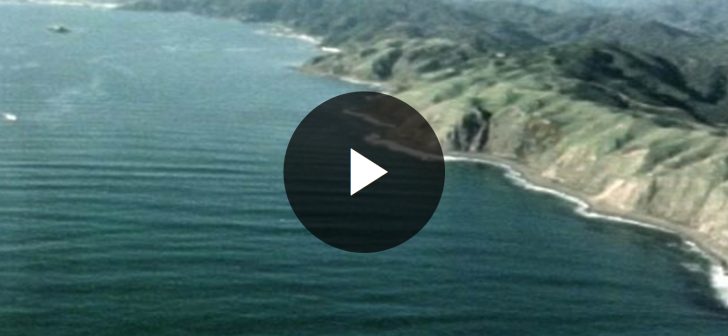
Drone footage looking at the Wainuiomata coastline and Baring Head. This coast is part of the southern coastline of the North Island.
The Gums Loop track at Wainuiomata Regional Park is an easy track walk at any time of the year being mostly flat.
Drone footage looking at the Wainuiomata coastline and Baring Head. This coast is part of the southern coastline of the North Island.
Looking at Woolworths from above in the year 2022. It shows the 3,600 square meters of supermarket space, and other retail outlets.
Morepork is challenging and technical, featuring a gradient of grade 5+ to 6. It’s characterized by steep, rocky terrain.
Super Plus presents a thrilling, rapid-paced mountain bike trail with berms, doubles, and tables. Progressing downward from the top of the Wainuiomata Hill.
McDonald’s opened its restaurant in Wainuiomata, on April 13, 1999. Located on The Strand, it is across the road from Woolworths.
The BeeLine mountain bike trail is a winding track that descends from the peak of Wainui Hill to the base of Waiu Park.
Drone footage taken at Lower Dam in the Wainuiomata Water Collection Area. The footage provides a great view of the surrounding hills.
Phase two of the Wainuiomata Shopping Centre demolition reveals the safe handling of large quantities of scrap metal using a 50-ton digger.
A proposal to fence the Wainuiomata Catchment and restore the biodiversity of the Remutaka Range in the south of the North Island.
2019 footage of a drive starting from Parkway Wainuiomata and arriving at the Coast Road in the year 2019.
Wainuiomata topographical maps from 1950 to 2019. These maps show tracks and other features that have changed over the decades.
This is typically off-limits to the general public with restricted access. The excursion served for drivers to become familiar with the area.
Wainuiomata Mall was a hub for shopping, especially on Friday nights when it opened late & attracted shoppers completing their weekly shopping
This promotional video of Wainuiomata, made in 2018. showcases the landscape, outdoor adventure, and the welcoming vibe of Wainuiomata.
Video taken inside the Orongorongo Tunnel and exiting on the return leg. Constructed during the 1920s, this tunnel remains in active operation.
An assessment revealed the necessity to reinforce the Konini Reservoir to ensure its resilience against powerful earthquakes.
The Pukeatua Range, also known as the Wainuiomata Hill Road, runs through the centre of the image with Wainuiomata to the right.
Driving over the Wainuiomata Hill in 2015 from Gracefield to the roundabout on the Wainuiomata side of the hill.
Looking at Wainuiomata’s rich history and culture. Includes interviews of people who have settled in Wainuiomata from diverse backgrounds.
360 degree view of Countdown in Wainuiomata in October, 2013. The first Countdown supermarket in Wainuiomata opened in 1970.
On August the 14th 2011, In July 2011, an intense polar blast swept through the capital bringing snowfall across the Wellington region for the first time since 1976.
Established in 1857, Wainuiomata Primary School, a state school, resides in Homedale, the oldest suburb in Wainuiomata.
Looking at the valley that contains Nikau Creek and the Nikau Creek Track, (circa 2009). This is where the Whakanui Track once traversed.
Pictured is a meadow on the Gums Loop Track in the year 2009. Gums Loop Track has existed as a track since the 1880s.
View of Clay Ridge in Remutaka Forest Park. Clay Ridge can be reached by taking the Clay Ridge Track. Initially the walk is easy.
Wainuiomata Valley as seen from the summit of Wainuiomata Hill in the year 2009. This is prior to the development of Parkway Rise.
Top Pool in Wainuiomata in the year 2008. This area is a cherished destination for swimming and even picnics.
View of Richard Prouse Park in Wainuiomata. Photo was taken from Moores Valley Road above the Wainuiomata River in 2023.
The Wainuiomata Stream originates in upper Moores Valley and passes beneath Moores Valley Road via a culvert.
In 2007, the area behind the lower dam was reverted to a wetlands. This was the habitat before construction of the dam almost 150 years ago.
Driving over the Wainuiomata Hill back in 1988. The expansion of the road to accommodate four lanes had recently concluded
Photo of Top Pool in Wainuiomata taken in the year 2007. This pool has always been known as a swimming area.
Wainuiomata Garden of Remembrance is a memorial garden at Hine Road Recreational Reserve. It opened in 2004 for ash burials.
Assessment for decommissioning Lower Wainuiomata Dam and exploring options for its future including restoration or partial to full removal.
The Wainuiomata Wastewater Treatment Plant was decommissioned in November 2001 after serving the community since the 1950s.
Photo taken in the mid 1990s of the Pollards building a trench for the installation of a new scour valve at Morton Dam.
Pictured is the dismantling of the Morton Dam strainer facility during the 1990s. Morton Dam was decommissioned earlier in 1988.
The caretaker’s house in the Orongorongo Valley served Wellington’s early water supply system and remained in use until the 1990s.
Old aerial photos of Reservoir Valley reveal a network of firebreaks created for geological surveys assessing the feasibility of a dam.
“Cobb’s Barn” in Wainuiomata was a well-known landmark on the Cobb family’s Coast Road farm, located near today’s Wainuiomata Golf Club.
Looking down upon Wainuiomata in approximately the year 1990 as seen from the top of the Wainuiomata Hill.
View of an under construction Top Pool Bridge with Hine Road Recreation Area in view. The bridge connects the reserve to Top Pool.
In 1989, numerous shops thrived within The Village, creating a lively hub of activity. Today, The Village stands at the brink of change.
Pictured is Gums Loop in 1989. The grass was greener in that year as the trees were younger and let in more light.
Pictured is Hine Road Recreation Area in 1989. You can clearly see the old maintenance road above Reservoir Road.
A view from the year 1989, looking at the tunnel entrance to the concrete well in Wainuiomata with Reservoir Road above.
Pictured is a view that opens up from the McKerrow Track, circa 1989. Looking out toward Wellington with the harbour in view.
Pictured is a view toward Wellington from the Whakanui Track in 1989. In view is the valley where Coast Road is located.
Driving over the Wainuiomata Hill back in 1988. The expansion of the road to accommodate four lanes had recently concluded
In 1988, a new water pipeline known as the green pipe was constructed, running alongside the existing pipelines.
In 1988 at Richard Prouse Park, a new water pipe was constructed next to older pipes that ran across the Wainuiomata River.
In the 1980s, the Morton Dam was decommissioned. The current system features two strategically positioned weirs along the river as catchments.
Gazing down on Sunny Grove from the Mount Crowther Track in 1988, the firebreak and track behind the odd-numbered houses
Aerial photos showing the first intersection upon entering Wainuiomata, where Main Road meets Fitzherbert Road.
Looking down on the Hine Road Recreation Area in 1987, one can see the absence of the Wainuiomata Garden of Remembrance.
The Wainuiomata police yesterday made a breakthrough in their search for dental records to identify positively a pilot killed.
The body of a man killed in a light plane crash near Wellington last month has still not been formally identified.
Looking at the two water pipes in Richard Prouse Park from Reservoir Road toward Wainuiomata River. Today, there is a buried single pipe here.
A light twin-engine aircraft carrying two or three persons crashed on Orongorongo Station, south of Wainuiomata last night.
Looking at Wainuiomata River in flood with Main Road Bridge and the Rotary Park entrance in the background. Date: 28th July,1981.
St John’s Anglican Church is situated on Dick’s Hill, just behind The Village in Wainuiomata. Its exact address is 119 Main Road.
Mr Arnold Heine, says a school outing that ended with 10 children lost in Wellington’s Wainuiomata bush was “completely disorganised”.
A swollen Wainuiomata River flowing under Main Road Bridge with Wainuiomata Primary School just in view. Date: 21st May,1981.
Aerial photograph from the 6th of October in 1980, showing Homedale and Reservoir Valley. Numerous firebreaks are visible.
Photos of Morton Dam, circa 1980. In view is the dam, spillway, and a walkway that went through the reinforced concrete flat slab buttresses.
Norman Willis, a land developer and owner, established a subdivision in Homedale, Wainuiomata in the late 1950s – 1960s.
Photo circa 1970s of the beginning of Reservoir Valley with some pipes to the left and a firebreak visible on the hill above Nikau Creek Gully.
New Zealand Railways Road Services launched the first local bus service in 1941, using Bedford SB3 vehicles that became a familiar sight.
An aerial photograph taken on 30th December 1974 captures the upper Moores Valley of Wainuiomata with Naenae also in view.
This aerial photo, taken on 30 December 1974, showcases Wainuiomata and the extensive firebreaks on its surrounding hills.
The aerial image of Wainuiomata in 1974 is similar to the layout today. But the hills are crisscrossed with well kept firebreaks.
1974 aerial photograph depicting Homedale and Reservoir Valley, showcasing numerous firebreaks present during that era.
Aerial image of Wainuiomata in the year 1974. The image contains numerous freshly cut firebreaks on the surrounding hills.
In 1844, Frederick Weld guided a flock of sheep along the coastal route from Wellington to the grasslands of Wairarapa.
A memory around 1972 of ‘Northbrook’ house in Wainuiomata which was originally inhabited by the Wood family.
A 1971 aerial view of Wainuiomata shows Parkway College, now called Wainuiomata High School, under construction on the far left.
This 5-minute video, filmed in 1971, showcases Wainuiomata and discusses the issues related to suburban sprawl in Wellington.
This photograph looks along Main Road in Wainuiomata around the year 1970. Visible in the scene are several older model vehicles.
Photo of Wainuiomata Road & Fitzherbert Road (circa 1970) taken Todd, Harry Jackson (1918-1993) of the Wainui-o-mata Development Ltd.
Parts of a wartime Kittyhawk fighter which crashed in the Orongorongo Ranges near Wainuiomata 27 years ago were salvaged at the weekend.
In this 1969 aerial image, you can see Hine Road, Sunny Grove, Moores Valley, & Reservoir Valley. See the same photo taken in 2023.
Aerial photo taken in 1969 of Homedale and Moohan Street area in Wainuiomata. A number of interesting features can be seen.
The O-K Kinney Strainer Chamber formed part of the O-K pipeline system, which carried raw water from the Orongorongo catchment.
View of the Main Road Bridge on Main Road, Homedale, Wainuiomata, with several period cars visible in the background.
Explore the history of Whitcher Grove, once home to the Sinclair family, known for their mill operation and stately mansion.
The Morton Dam Strainer Building in Wainuiomata filtered water from the dam before it was piped to Wellington.
Images and memories capturing the essence of the Wainuiomata Waterworks as shared by the Reidy Family, and conveyed by Susan R E Neilsen.
The Wainuiomata Baths is are one of the valley’s most enduring community facilities and have played a central role in local summer life.
A structure containing 4 venturi meters to measure water flow on the O-K pipeline was constructed in the 1960s.
This aerial photo, taken on 7 December 1966, captures Wainuiomata during a period of development. Arakura is shown under construction.
Looking over the spillway of Morton Dam circa 1965. In view is the Morton Dam Strainer Building which was demolished in the 1990s.
Looking at the Morton Dam spillway in action in the year 1924. Morton Dam was once the main source for Wellington’s water.
Aerial image of Wainuiomata Road in 1964, showing Wainuiomata Road over the Wainuiomata Hill summit and into the valley.
A line of vehicles traversing a freshly paved stretch of Wainuiomata Road as it climbs up Wainuiomata Hill.
Willis Grove traces its origins to the time when the valley was transitioning from farmland and bush into a developing suburban community.
Norfolk Street in Wainuiomata is a local neighbourhood retail strip that took shape in the early 1960s. It serves the surrounding community.
Aerial view of Wainuiomata in 1963 showing Queen Street and Arakura. In 1958, Fraser Barton opened the first shop on Queen Street.
The Control Valve Building houses valves and related equipment that regulate the flow and pressure of water within the pipeline system.
The Community Centre was also used as a Plunket rooms & later became the library which is now housed in a more modern building next door.
The Public Hall once stood at the corner of Main and Homedale Roads. It was replaced by the School Hall around the late 1960s.
This aerial photo, taken on 8 February 1961, captures Moores Valley and Reservoir Valley, along with Sunny Grove and Hine Road.
View of Wainuiomata Valley as seen from the summit of Wainuiomata Hill circa 1960. The suburb of Parkway and Parkway College are not there.
Looking at the second section of Queen Street around the year 1960. Photo is taken on The Strand which became the route to the Mall.
Development of houses took place in the 1960s in Sunny Grove. However, this photo from 1958 shows at least one house on the street.
This photograph looks along Hine Road including Sinclair House in 1958. Sinclair House was built in the 1860s.
Looking towards Poole Crescent from The Rock, around 1958. Many photos were taken from this spot, as The Rock offered excellent views.
Moores Valley Road, as seen from The Rock around 1958. The Rock was so named for the large rock that was once quarried.
Photo of Hine Road Wainuiomata in the late 1950s. The hillsides show extensive logged areas overgrown with gorse.
This late-1950s photo of Hine Road, Wainuiomata, shows newly built houses with the hills of Harry Todd Recreation Reserve in the background.
To the above company used in the construction of the Wainuiomata Hill job (now completed):£25,000, worth £25,000.
This photo shows a major road upgrade on the Lower Hutt side of the hill. It also highlights the elevation difference with Wainuiomata.
A glimpse back to 1958 showing a freshly graded stretch of roadway along Wainuiomata Road (Wainuiomata Hill Road).
A color image of the Wainuiomata Valley from the summit of Wainuiomata Hill. While there is housing, Parkway is noticeably absent.
About the history of Sunny Grove in Wainuiomata. The name of Sunny Grove took place on a rainy day by Brenda Shirley Willis.
Looking at the western end of Moores Valley Road Wainuiomata in 1957. Hine Road can be seen in the background.
Looking towards Main Road Wainuiomata and Black Creek Bridge, with Moohan Street still under construction.
View the two abandoned concrete water tanks. They were fed by two water intakes from Skerretts Creek. They were built in the 1950s.
The Community Centre was also used as a Plunket rooms & later became the library which is now housed in a more modern building next door.
This old gate once stood atop Dick’s Hill, or more precisely, on Hair Street Ridge behind Hair Street. It has since been dismantled.
View of the Empire Hotel in 1955. This pub was located on Moores Valley Road just back from the shops in The Village.
Queen Street in Wainuiomata is a central hub, hosting a range of shops, the Community Centre, and the Public Library.
The image of Wainuiomata from 1954 offers a fascinating glimpse into the area’s history, as it predates Arakura and Parkway.
The image of the Waterworks from 1954 shows both the Lower Dam and Morton Dam. You can see homes in a settlement where the museum is today.
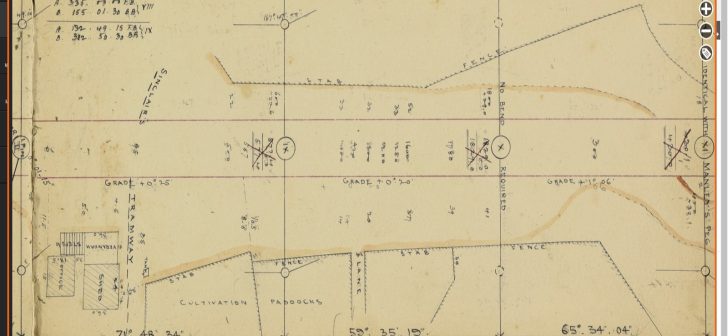
An aerial photograph taken on 30th December 1974 captures the upper Moores Valley and you can see the Strand Brothers’ tramline.
The Strand in Wainuiomata is one of the main commercial streets, complementing Queen Street as part of the central business district.
Lovegrove’s Store, situated at the intersection of Moore’s Valley and Main Road, underwent significant alterations and extensions in 1954.
The Faulkes subdivision, Wainui-o-mata Road, Peel Place and Wood Street, Wainui-o-mata : 31 choice sections. H. Ernest Leighton & Co.
Looking north along Main Road from the south side of the bridge in 1953, a procession of floats makes its way through the scene.
A timeline taken from the same lookout near the car park at the top of the Wainuiomata Hill. Click photo to activate the timeline.
Aerial view of Homedale (circa 1953) showing some interesting features. Inc: Hine Road finishes at the intersection with Poole Crescent.
In the late 1920s, the Wainuiomata Development Company aimed to improve access to the Hutt Valley by building a road through Waiwhetu Hill.
View of the old dam circa 1950, showing the boatshed in the background and visible pipework along the top of the dam wall.
Hair Street branches off Moores Valley Road near The Village. Despite its proximity to shops, the street feels secluded.
The Log Cabin was a hut situated in Catchpool Valley, serving as the starting point for numerous tracks leading to Remutaka Forest Park.
This is a photo of a private hut in Catchpool Valley, Wainuiomata. The valley used to have numerous private huts for accommodation.
Edgar Hine emigrated to New Zealand in 1879. He was a bond holder in the Wainuiomata Development Company as of May 27, 1927.
Looking at Wainuiomata Valley from atop Wainuiomata Hill circa 1949 reveals the absence of suburbs. The valley contains mostly farmland.
Did you know in 1948, plans for the Hine Road and Sunny Grove area had Hine Road extend all the way into Reservoir Valley?
A Norman Willis subdivision plan for the Hine Road and Sunny Grove area. This map shows Hine Road extending into what is now the Gums Loop.
Looking at Sunny Grove when it was farmland in the 1940s. In view is farmland surrounded by hills and a track through the centre.
Aerial view of Homedale (circa 1946) showing some interesting features. They are as follows: 23 houses in Poole Crescent;
This is the original research station established by Internal Affairs to seek ways to control the possum problem. Photo taken in 1946.
Aerial view of Homedale (mid 1946) showing some interesting features. They are as follows: 9 houses in Poole Crescent;
Poole Crescent connects to both Homedale Road and Hine Road, with a reserve situated behind. The street was named after Henry James Poole.
The photo shows a view along Rowe Parade, taken from the area where Stanley Street and Sharp Crescent would later be developed.
Looking down upon The Village in the year 1946. The outlook encompasses Moores Valley Road, Main Road, and various intersecting streets.
View of Homedale in 1945. Housing development had just begun, with several older farmhouses still visible.
Hine Road, nestled in the heart of Homedale in Wainuiomata, extends from Main Road and culminates at Hine Road Recreation Area.
The surveyed subdivision plan from 1945 outlines the development of Hine & Homedale Road, as well as Poole Crescent.
Aerial view of Homedale (circa 1945) showing some interesting features. Inc: old school buildings and Main Road Bridge.
A group of American GIs from Hutt Park Camp, together with local lads and Maisie Burt, pictured at Wainuiomata during a pig hunting trip.
That Sergeant Pilot Thomas Victor Marchant died from injuries suffered in a crash at Wainui-o-mata on May 1.
This photo shows the Williams General Store on Main Road, around 1939. The building was originally part of McIlvride family home.
Sergeant Thomas Victor Marchant, P-.N.Z.A.F. lost his life on Saturday afternoon. when the aircraft in which he was the sole occupant crashed.
History of Kittyhawk 3031, a plane that crashed in the hills in Wainuiomata in 1943. Includes photos of the wreckage and crash site location.
Learn about Wainuiomata’s own water supply schemes that drew from local sources like creeks and water tanks.
An aerial photograph taken in 1942 Moores Valley and Reservoir Valley, extending up to the old dam. Both valleys were predominantly farmland.
In the past, Skerretts Creek used to wind through both sides of the Sunny Grove valley. However, the creek was altered by the land developer.
Farmland in Homedale, looking north towards the village from Coast Road. In view are the school, the school house, and the hall.
View of The Village, circa 1941. The Wainuiomata Transport building to the right, was known as Claude’s shop.
A bus fills up at the only petrol pump in Wainuiomata in 1941, located at Claude Williams’ shop, which also served as the Post Office.
Circa 1941, looking towards Wainuiomata Primary School on what was then known as Wainuiomata Road (now Main Road).
Video footage during World War II that showcases the Wainuiomata River from 1941 compared to 2021. The video also includes footage from the 16 Feb 2004 Flood.
A 1941 aerial photograph of Reservoir Valley, taken before Hine Road was established. The image captures huts that once stood in the area.
This aerial photograph of Homedale in Wainuiomata taken on 16 of January 1941 shows a number of interesting features.
The Black House was a hunters hut that may have housed a ranger or caretaker who looked after the water catchment area at Skerretts Creek.
The erection on the western side of the path which leads on to the Morton Dam of a new home for the chief caretaker, Mr James Brown.
Homedale Road is named after Homedale, the oldest area in Wainuiomata. The name signifies a house located in a dale or valley.
Photo of Homedale taken in 1940, showing the school block surrounded by farmland. Substantial housing started in the 1950s.
Aerial view of Homedale (circa 1940) showing some interesting features. It show:The School block when it was farmland;
This photo shows the Williams General Store on Main Road, around 1939. The building was originally part of McIlvride family home.
Lower Dam in Wainuiomata or the original dam as it was also known was drained in 1939 for maintenance. It reveals the dam wall in detail.
Photo of Fitzherbert Road and Wainuiomata Roads (circa 1939) taken by the Wainui-o-mata Development Ltd; Todd, Harry Jackson (1918-1993).
Photograph taken in October 1936 showing the Lower Dam and the original intake where water was diverted into the main supply system.
Early residents of Wellington drew their supply of drinking water from wells, springs, and running water, or from tanks and barrels.
Pictured is Dick Wootton, a woodcutter and post splitter from Orongorongo Station. He’s working on a 2-meter diameter Totara tree.
View from the Five Mile Track at the top of Gut Buster in the year 1933. In the distance, Clay Ridge can be seen.
This historic photograph shows Opossum Lodge / Possum Lodge and its external convenience (longdrop) as it appeared in the 1930s.
The works referred to herein are the tunnel and approach roads proposed to be built to provide improved access into the Wainui-o-mata.
Wellington’s 1930s water plan compares future supply options from Wainui, Orongorongo, Whakatikei, Akatarawa, and the Hutt River.
Family stories suggest there were long-standing feuds among several McIlvride siblings. The following are two letters between sisters.
During the day Burns followed his dog down a gully after a goat, which he secured. When he came back his two mates had disappeared.
St Albans House, located on Coast Road in Wainuiomata, was built in the late 1920s for Maurice James Burdan (1883–1961).
One of the regulations states that a trapper may not set up a camp within the watershed of either stream mentioned.
1928 locality plan for Wainuiomata from Graham. P. H (town planner / architect) of the Wainui-o-mata Development Ltd.
On the Orongorongo side, there are very flourishing glow-worm colonies all the way through the hill but can be seen in only one direction.
At the inquest concerning the death of Dr. Pigeon, who was drowned on Thursday while fishing at Wainuiomata.
The Orongorongo Pipeline, constructed between 1921 and 1926, played a crucial role in supplying untreated water to Wellington.
The proposal was that the water from the intake at Orongorongo should flow by direct main into the lower dam at Karori on gravity.
With the exception of three short lengths, the new steel pipeline from the municipal reservoir at Wainuiomata is now laid and jointed.
This elevation anticipates the future Morton programme, which includes constructing another dam a mile downstream from the Wainui dam.
The death occurred of Mr John Sinclair, at the age of eighty-one years. Deceased was born in Wellington and was a son of Mr Hugh Sinclair.
From this point the pipe-line will be carried on along the flat past Semple’s camp to a spot about 15 chains further on
The proposal to bring water from the Orongorongo did not originate with Mr Morton. It was brought forward by Mr Baird.
In the early days, said Mr. Morice, the sources of water supply were springs, streams, wells, and roofs of buildings.
The first load of pipes for the Orongorongo water main were discovered on the bush track leading from the Morton dam to the tunnel mouth.
A large party of friends accompanied members of the club to the Wainui Reservoir, where a most enjoyable day was spent.
There is a Venturi meter at the intake on the large main at Wainui-o-mata, and for the new Orongorongo main.
Digital version of an old map, showing the pipeline from the weir to the tunnel, in the Orongorongos, circa 1924.
Orongorongo Meter House was erected no later than 1926. Today, it’s hidden in native bush inside Wainuiomata Regional Park.
The City Council last evening granted authority for the purchase a Venturi water meter for the Orongorongo-Karori main.
Proposals made by the Wellington Acclimatisation Society for thinning out deer at the Wainui-o-mata waterworks reserve.
The increase in the number of deer in the Wainui sanctuary was such that the undergrowth of the native bush was beginning to suffer.
Aerial view of Morton Dam in the year 1924. You can see the spillway, tower with gantry, and reservoir lake.
Looking at the Morton Dam spillway in action in the year 1924. Morton Dam was once the main source for Wellington’s water.
Views of the Orongorongo pipeline bridges that carries the Orongorongo Water Pipe across the Orongorongo River.
The increase in the number of deer in the Wainui sanctuary was such that the undergrowth of the native bush was beginning to suffer.
From the day power was supplied on the Wainui side, the time occupied in making the 7 ft. square drive was two years and four months.
Early on Tuesday morning the tunnellers working on the Orongorongo side heard, for the first time, shots fired on the Wainui side of the job.
Mr Morton conceived the idea of converting the whole of the valley below the two existing dams into a vast lake, or conservation area.
Several complaints have been made about the possibility of drainage from the tunnelling camp at Wainui polluting the Wellington water supply.
On the Wainui side there is ample level ground for a camp site, but the Orongorongo has carved out a steep-sided V valley.
The erection on the western side of the path which leads on to the Morton Dam of a new home for the chief caretaker, Mr James Brown.
The supervising engineer, mention Easter as the outside date, by which everything will be ready so far as the tunnel is concerned.
At Wainui-o-mata both reservoirs are practically full, but they are no longer overflowing, and the ground in the catchment area is very dry.
The caretaker’s house in the Orongorongo Valley was built around 1922 to 1923 during construction of the Orongorongo water tunnels.
Authority has been given by the City Council for the purchase of 153½ acres of land at Wainui-o-mata for waterworks purposes.
The party is now being moved to complete the survey of the Wainuiomata route, work on which was suspended during the war.
George Creek Road was built in 1922. It runs from Morton Dam to the Wainuiomata entrance of the Ōrongorongo Tunnel.
Boring operations have been commenced and preparations are being made for the establishment of a permanent camp for the tunnellers.
Little Tunnel in the Ōrongorongo Valley is a small but significant piece of infrastructure related to the water supply system for Wellington.
This hidden site in Wainuiomata is believed to have housed a power generator used during the construction of the Morton Dam.
Maintenance Road is an unsealed track that once provided access to the Orongorongo pipeline, from the Orongorongo catchment.
The gang has now returned to the main camp at the tunnel mouth on the Wainui side of the hill, and the workers are busy preparing trucks.
Tucked away in a gully two miles from the Morton Dam in Wainui-o-mata, Semple’s Camp served as the central base of operations.
At the top of a gully two miles from the Morton Dam at Wainui-o-mata, eight huts, besides a kitchen and dining-room, are admirably sheltered.
The progress being made with the tunnel boring contract at Wainui-o-mata, by means of which the city’s water supply is to be augmented.
(Mr. W. H. Morton), the town clerk (Mr. J. R. Palmer), and Press representatives, visited the works on the Wainui slopes of the Orongorongo.
Scout Hut, also known as Pearson Hut, stood from 1912 until 1995 in Reservoir Valley. It eventually succumbed to a fire.
The Orongorongo Tunnel, also known as Semple’s Tunnel, is a landmark in New Zealand’s water infrastructure history.
The tunnel, which is being constructed on the co-operative system by a gang of eight men under Mr. Robert Semple, is to be a 7 ft. by 7 ft.
The progress being made with the tunnel boring contract at Wainui-o-mata, by means of which the city’s water supply is to be augmented.
In 1921, the construction of weirs on the Orongorongo River and its two smaller tributaries began. Simultaneously, a tunnel was initiated.
The sawmill which the late Mr Sinclair ran at Wainui o Mata was one of the first in the North Island and was at that time the largest.
Photo of the Wainuiomata River, Main Street Bridge, and Wainuiomata Primary School, circa 1920. You can see the second classroom.
What I suggest to the City Council is this: that Mr Morton does not put in the proposed third eight-thousand-million-gallon dam at Wainui.
Any railway line in connection with any proposed deviation of the Wairarapa line should not pass over the council watershed at Wainui-o-mata.
Four men were charged at the Lower Hutt Court with taking indigenous birds, to wit, 27 pigeons and 1 tui and trespassing on private lands.
Briefly, Mr. Phillips’ old proposal was first to throw the Orongorongo supply into the Wainui Reservoir (which is about to be done).
This afternoon members of the French Mission are the guests of the Mayor and the City Council on a motor trip to the city waterworks.
With the acquisition of another 25 acres of land, the securing of the whole of the Wainui-o-mata watershed will have been completed.
The Acclimatisation Society proceeded against Henry Gilbert Black and John Charles Dick today for breaches of the Animals Protection Act.
An offer, in terms of the value submitted by the City Valuer, is to be made for the settlement of a claim for land taken by the City Council.
Charles Seymer Whitcher constructed a single-lane concrete bridge across the Wainuiomata River in the year 1916.
This 1916 Wainuiomata map is part of a larger Wellington District Map. It includes its own index, featuring many early Māori place names.
An exchange of land in the Wainui-o-mata water catchment area is to be effected by the City Council in terms recommended by the City Valuer.
A group gathered for a photo at Morton Dam. Among them, the Mayor, Sir John Luke, and Lady Luke are positioned sixth from the left.
The proposal was that the water from the intake at Orongorongo should flow by direct main into the lower dam at Karori on gravity.
Ōrongorongo Bridge constructed in April 1914 for Eric L. Riddiford of Wainuiomata’s pioneering Riddiford family, spans the Ōrongorongo River.
To the proposed demolition of the insanitary buildings at Wainui-o-mata, where eight cases of diphtheria were reported last year.
“That, in reference to the proposed demolition of the insanitary buildings at Wainui-o-mata, where eight cases of diphtheria were reported…
Since 1912, a swing bridge has spanned the Wainuiomata River near todays Gums Loop Track in Wainuiomata Regional Park.
Mackay Cottage was built around 1912 for Morton Dam workers and was removed in 1980. During the war, Mackay often hosted servicemen.
The last batch of concrete was placed on the crest of the Solomon’s Knob dam yesterday. The contractors are now engaged in constructing a wall
Rechristened the “Morton Dam” in recognition of the city engineer, under whose guidance the work has been carried out.
The City Councillors’ visit of inspection to the Solomon’s Knob dam was postponed yesterday owing to the boisterous weather.
City councillors will pay a visit of inspection to the newly constructed Solomon’s Knob reservoir at Wainuiomata tomorrow.
The completion of the Wainui-o-mata dam formed the subject of congratulation to the Wellington City Engineer, Mr Morton.
The Solomon’s Knob dam at Wainui-o-mata has been practically completed by the contractors. The scours have been shut down.
The consumption of water from Wainui, as recorded by the Venturi meter, was 917,000,000 gallons during the year.
A visit to the new dam at Wainui, all the scouts walked across the overflow, a feat that will be impossible as soon as the dam is filled.
The construction of Solomon’s Knob dam at Wainui-o-mata is nearing completion and will be handed over to the council by the contractors.
The Mayor and City Councillors will drive to Wainui tomorrow to inspect the reservoir which is being built at Solomon’s Knob.
WANTED, several good Bushmen, used to hill country preferred. Apply Strand Brothers, Lower Hutt. WANTED to Purchase, Iron Saw Bench.
The Naenae Tramway was used between 1906 and the 1910s to transport logs from Upper Moores Valley in Wainuiomata.
The office of Messrs Martin, Hurrell and Snaddon, contractors, who are carrying out extensive work at the Wainuiomata reservoir.
Wild dogs, writes “Sanitas” to the Post, are causing problems in the hills behind Wainuiomata. They appear to be hunting in packs.
Fire at sawmill. A fire broke out at Strand Brothers’ sawmill and workshop, Lower Hutt, early yesterday morning.
Mr Morton, in a report to the Council on the present pipe-line, advised that the main would be sufficient for five or six years.
Water for Wellington: Building the Solomon’s Knob Reservoir at Wainuiomata — The Weekly Graphic and New Zealand Mail, 24 November 1909.
A Camp Cook, Bush Sawmill. Apply Strand Brothers, Lower Hutt.3094. PHOENIX AERATED WATER COMPANY, LIMITED.SPECIALLY prepared Soda Water.
Good navvies, used to concrete work, are difficult to obtain. Such is the testimony of the contractors of the dam at Solomon’s Knob.
Yesterday’s trip to the big reservoir was made under the perfect conditions of a bright sun and a soft breeze.
In a 1909 photograph capturing the lower dam spillway, an intriguing detail emerges in the corner: a self-portrait of Albert Percy Godber.
Wainuiomata was responsible for Mr. F. Whitley getting a basket of fifteen fish, the largest weighing 1½ lb, all in good condition.
The 30-inch steel mains in connection with the Wainui dam contract for Wellington’s new auxiliary water supply will be made.
For the construction of the Solomon’s Knob Dam, it was made a condition of tender that contractors should make a deposit of £500.
The Jansen Home on Fitzherbert Road, circa 1908. The Jansen family, of Scandinavian origin, arrived in Wellington under the Vogel Scheme.
Tenders will be called for the construction of the big reservoir dam at Solomon’s Knob, Wainui. It will be used as a storage reservoir only.
There is no Venturi meter installed at Karori, and therefore the figures cannot be given with the exactness possible in the case of Wainui.
In the early 1910s, deep within Sinclair Valley of Wainuiomata, a temporary but vibrant settlement emerged called Navvy-town.
The Morton Dam pipeline was a key part of Wellington’s early 20th-century water supply system. Constructed between 1908 and 1911.
They walked up the valley to Solomon’s Knob, where a hill spur juts out, as if for the very purpose of forming part of the dam.
The City Council, accompanied by the leading officials, made their annual visit of inspection to Wainuiomata reservoir yesterday.
Wainuiomata Primary School (circa 1987), a state school, resides in Homedale, the oldest suburb in Wainuiomata.
John Coleman was a contractor in the late 19th century who played a vital role in developing the region’s early water supply infrastructure.
Anxious time at Naenae: saving a sawmill. Many sleepless nights as fire reaches Wainui-o-Mata bush. For many days past, Messrs. Strand Bros.
While reports have been coming to hand of devastation and suffering from bush fires where men are in a desperate struggle to avert disaster.
It is doubtful if many people in Wellington are aware that bush-felling is being earned out in the heart of the virgin forest.
This photograph shows Morton Dam in Reservoir Valley Wainuiomata, under construction, likely taken between 1907 and 1908.
What the whole scheme means is best shown by a report drawn up by the City Engineer in November 1904. In it he gives the following estimates:
Built from 1908 to 1911, the Morton Dam in the Wainuiomata River catchment was named after William Hobbard Morton.
A slight accident occurred at the tunnel where some men were engaged repairing the Wainuiomata water supply.
A flood in the Hutt River swept away last night a portion of the pipe bridges used to carry the Wainuiomata mains.
Great Volume of Water in Hutt River. Wellington Water Supply Seriously Affected. Portion of Wainuiomata Main Carried Away.
The ridge upon which this tramway has been constructed is between two gullies, which converge at the foot of the ridge into the gully.
The spread of the Fire was, in our opinion, due, firstly, to the failure of the Wainui water supply; secondly, the time that elapsed.
The City Engineer (Mr W. H. Morton) proceeded to Ngahauranga yesterday afternoon to examine the break in the main.
The “Venturi” meter at Wainui showed a loss of 250,000 gallons per hour, but Mr Morton could not account for the break.
View of the Wainuiomata River circa 1906. The scene may depict a swimming hole resembling either Swing Bridge Pool or Secret Pool.
Mr. Joseph Saunders, a contractor, well known all over the colony in connection with several large public works, shot himself .
The average water consumption of the City thoughout the day was between 130,000 and 140,000 gallons per hour.
Application has been made to the Hutt County Council by William Thomas Strand, John Norris Strand, and Charles Strand, of Lower Hutt.
Mr Morton recently visited the Wainuiomata reservoir to inspect the repairing work that was carried out some months ago to stop the leakage.
The extension of the Parliamentary franchise to the election of every local body, and the carrying out of public works by day labour.
Construction of a new storage reservoir at Wainui-o-mata with concrete dam and all necessary contingent works.
Postcards featuring this picturesque view of the spillway date back to 1905. They were widely circulated, along with other scenic spots.
Construction of a new storage A reservoir at Wainui o mata with concrete dam and all necessary contingent works.
£190,000 for the construction of a new storage reservoir at Wainui extension of 30in main from the existing dams there to the new reservoir.
The city engineer has laid a scheme before the council for improving the water supply, estimated at £150,000 to £200,000.
The annual Corporation picnic to the waterworks at Wainui-o-mata took place yesterday. Favoured by fine weather, the outing was a success.
The Public Works Committee recommended that the City Engineer repair the damage at the Wainui Waterworks caused by the late storm.
The river was swollen to many times its usual size, and the outlet from the dam was insufficient to cope with it.
The old race along the side of the hill has been replaced by a new race tapping the dam at a much lower level.
Discover the history of the venturi meter installed around 1902 near Reservoir Road, used to measure flow in Wellington’s new 30″ pipeline.
A Venturi meter has been attached to the system and a river wall has also been built adjoining the reservoir road.
A new pipeline between the old dam and Coleman’s Tunnel in Wainuiomata was constructed between 1899 and 1902.
The work of replacing the original and very defective water-race between the reservoir and the well at Wainui-o-mata has been completed.
The old covered race being defective, is, in accordance with the Council’s decision, being replaced by 30-inch diameter cast iron pipes.
1,526 yards of new mains were laid and 971 yards, the old covered race at Wainui-o-mata being replaced by 30in diameter cast-iron pipes.
I visited this work again on Wednesday last. The whole of the pipes have been laid up to the valve at a distance of about thirty feet.
A river wall was constructed at the same time as the pipe replacement works for the former water race and a Venturi meter.
I visited this work again on Wednesday last. The whole of the pipes have been laid up to the valve at a distance of about thirty feet.
Reports to the Council last night disclosed that the dam of the Wainuiomata water supply reservoir is in a condition calling for attention.
A new pipeline between the old dam and Coleman’s Tunnel in Wainuiomata was constructed between 1899 and 1902.
It is understood that a Venturi meter has been obtained by the City Council, and is about to be installed upon the water-main at Wainui.
The Venturi water meter will be installed once the new meter house, which is currently being built, has been completed.
Karori must be looked to for the high levels, and Wainui for the bulk supply, the engineers proceed to deal with the latter.
The first sod in connection with the improvements to the_water supply from Wainuiomata was turned to-day by the Mayor.
It is intended to do away with the present water race, from which there is a tremendous leakage, and to substitute line of pipes.
So the telephone was set a-ringing, hangers back were rounded up, and about 10 o’clock a party of twenty-six set out for Wainui in six cabs.
Application having been made to have a trial line run for a route by way of the Wainuiomata Valley, instructions have been issued.
The pipes ordered are to replace the rotten wooden race that conveys water from the dam to the well from which the present pipes are filled.
This pipe may have functioned as a scour pipe from the Orongorongo pipeline. It is hidden in the bush near the old maintenance track.
Along a short section of Maintenance Road, an old track parallel to Reservoir Road, there is an earth bridge.
A 1900 Wainuiomata map showing Swamp Road, flax harvesting, Sinclair land later owned by John Wakeham, huts, the river, tributaries & peaks.
Map (9th September 1899) showing the deviation of the Wellington Napier Railway via Wainuiomata and Wairongomai Valley.
Among the proposals to get rid of the Rimutaka railway incline is a line via Wainuiomata Valley. A short tunnel would lead into this valley.
Fires are raging on the hills all along the western side of the Hutt Valley and are also raging in Wainuiomata Valley, and Cape Terawhiti.
A sad case of accidental shooting happened in the Wainuiomata district yesterday morning. Herbert Palmer, aged 27, was out pigeon shooting.
An Act Of Heroism Rewarded. As Mr Cecil Adams was standing looking over a rushing stream at Wainui-o-Mata…
The Prouse family settled on Old Porirua Road, where they began timber cutting in Johnsonville, before relocating to Wainuiomata in 1844.
Sir—I wish to draw attention to the very brave and intelligent rescue of a man from drowning last Sunday week at Wainui-o-Mata.
Before 1958, Main Road in Wainuiomata was known as Wainuiomata Road because this area was the focal point of Wainuiomata.
Old Rustic Bridge was a historic bridge that spanned the Wainuiomata River along what is now Reservoir Road and close to the Morton Dam.
Unidentified men and women at Lower Dam, Wainuiomata Reservoir, circa 1890s. The man in foreground is possibly Arthur Thomas Bothamley.
Wainuiomata Road that opens out to four / five lanes and goes over the Wainuiomata Hill. The road rises 189 metres above sea level.
This 1888 view of the original Wainuiomata dam shows the spillway on the right, newly planted pine trees in front of the dam wall.
The Council after some correspondence with the Messrs. Sinclair, agreed to give £6 an acre in lieu of the £5 which the Council had offered.
A fisherman and possibly his son, is pictured along what is likely Wainuiomata River. Could be near Reservoir Road or Smiths Whare.
Aerial photos from 1941, 1942, and 1954 reveal up to four Sinclair family homes, including Glenhill, Northbrook, Moness, and Sinclair House.
The McIlvride family are pictured on their property. Elizabeth stands beside the fishing basket, while John is on the opposite side.
The Sinclair Sawmill Hut in Moores Valley is visible in the background. This photograph was taken by Frederick James Halse on April 1, 1888.
Moores Valley Road Bridge on Moores Valley Road was built in the 1860s and replaced in 1967 with a road laid over a large iron pipe.
A whare at Wainui-o-Mata, occupied by a party of telegraph linemen, was destroyed by fire about 1 o’clock yesterday.
Smith’s Whare, a fishing hut near Moores Valley Road and Whitcher Grove, was likely once a logging worker’s hut.
Sir, I have to acknowledge receipt of your letter of the 29th ult. enquiring the cost of the repairs to the Wainui-o-mata water race.
Three humorous drawings depict the Wainuiomata Water Race under the theme “Fact and Fiction”.
Further correspondence from Mrs Isabella McIlvride, in reference to her claim for compensation for losses sustained.
Messrs Baird and Ward have forwarded to the City Council their reply to the last paragraph of the Waterworks Inquiry Committee.
The first, a crack in the 30in main in Coleman’s tunnel, at Wainui-o-mata, on 18th September, 1883, and which was repaired on that and following days.
City Surveyor to do away with the well and race and substitute cast iron pipes at an estimated cost of £7,000, a proposal they object to.
It would have been much better had the cast-iron mains been laid direct to the reservoir, thus dispensing with the race and well.
He is of opinion that the damage to the race has been the result of careless treatment and work badly put together.
The committee are pleased to be able to report that there is no grave defect in any part of the Wainui scheme.
I had little opportunity of examining the reservoir works or the interior of the race, owing to both being partly full of water.
Mr Higginson, C.E., who was selected by the committee of the Wellington City Council to inspect the Wainui-o-mata waterwork.
Substituting a well—only intermittently full—and a concrete race for continuous iron mains has already been adverted to.
The question whether the concrete race and well were not in themselves, as implied by Mr Marchant, a grave error in design.
The great fire has been the main topic of conversation here since its occurrence, or rather fire and water has.
I went through the race from one end to the other, and found that the race for about three-fourths of its length will require repairs.
Mr Loughrey gives a deplorable account of the condition of the concrete race, and states that to repair it would involve shutting off supply.
Mr Nicholas Merchant, C.E., has made a special inspection of the Wainui-o-mata Waterworks. Read his his report on the race and reservoir.
He condemns the adoption of a “well” instead of an iron standpipe, and of a concrete race instead of continuous iron mains.
Fresh leaks were discovered and signs of careless workmanship. It is estimated that two million gallons of water have been lost daily.
That an independent report be obtained: As to whether the race has been fairly constructed according to specification.
The Wellington City Councillors paid an official visit to the Wainui-o-mata waterworks on Saturday and closely examined the race.
The city councillors paid an official visit to the Wainui-o-mata works and closely examined the race in which the leaks were found.
The ‘crack’ in the Wainui-o-mata water race is 26ft long and two or three inches wide. Wanganui Chronicle 01 Mar 1887.
The city councillors paid an official visit to the Wainuiomata works yesterday and closely examined the race in which the leaks were found.
The anticipated arrival of the Wigtonshire with another consignment from Glasgow will prevent the necessity of even the slightest delay.
Whoever informed our representative that the 25-feet crack in the water-race at Wainui- o-mata was known to the Corporation, had misled him.
A crack existed a long time back, and it was also known that the work was defective when the Council took it over from Mr. Oakes.
As far as they could gather the race had been leaking for some time—he would say for about six or seven months.
It is said that over millions of gallons leave the Wainui reservoir daily for distribution in Wellington, or more than 100 gallons per inhabitant.
A crack existed a long time back, and it was also known that the work was defective when the Council took it over from Mr. Oakes.
I went through the race from one end to the other and find that the race for about ⅞ths of its length will require repairs.
With reference to the recent complaints as to the sudden stoppage of the Wainui-o-mata water supply, the City Surveyor explained,
The daily flow to be 4,320,000 gallons; practically speaking, the whole of this quantity passes through the concrete race.
The water-supply of this city is obtained from two sources – one from the Kaiwarawara Creek and the other from the Wainuiomata.
Securing a block of 2000 acres of land above the reservoir, so as to prevent the destruction of the timber upon it.
The locomotive was built in Tasmania for the Messrs Sinclair, late of Wainui-o-mata, but was never used by them.
Beneath the old dam in Wainuiomata lie three large twenty four inch sluice pipes that were installed during the major reconstruction works.
The Wainui waterworks, he said, had been a positive failure, and he pointed out that in this matter he had taken a determined stand.
Reservoir Road, a private route for waterworks and council staff, doubles as the Lower Dam Walk on the Gums Loop Walk.
Temporary box fluming maintained water flow during construction of the main dam and apron wall, ensuring a reliable supply despite repairs.
Mr J. D. Climie succeeded in covering and mapping nearly a quarter of a million of acres, completing our knowledge of the country
A singular mishap befell a member of the Fire Brigade named White during the progress of the trial of the Wainui-o-mata water supply
Owing to a burst having occurred in one of the water-pipes in the long tunnel in connection with the Wainui water supply
Owing to one or two more “bursts” in the pipes along the Hutt-road, the Wainui water has again had to be turned off
The water is very thick and muddy at present, but will have run itself clean in the course of a couple of days.
The Wainui water has not yet reached the city owing to a burst in the pipes, about a mile on the other side of Ngahauranga.
It is expected that the water will reach town from Wainui-o-mata this evening, should no accident occur in the meantime.
Mr J. Saunders, contractor, of this city, is, we regret to hear, at present confined to his house through illness.
The two-foot flume was adopted on the report of the City Engineer, and was the only one that could be carried in the Council.
As an old miner allow me to endorse Mr Travers’s plan of a flume from the river to the pipes, and to protest against the delay
There have been great complaints to-day about the insufficiency of the water supply, on which subject we have received several letters.
Is not intended to be a “reservoir,” the object being merely to raise the level of the water to the height necessary for filling the pipes.
On Thursday evening, the City Council went into committee to consider tenders for the Wainuiomata dam repairs.
Locomotive Engine for Sale, built by John Clark, of Hobart. This Locomotive was recently in use at the Te Aro Reclamation contract.
Will you kindly permit me a remark and a little more on Mr S. Brown’s letter addressed to you, in so far as it bears on the financial position
The race at first was intended to be an open channel, but is now covered in to prevent debris from the hills getting in.
It is understood that the plant is also claimed on behalf of the creditors of Messrs O’Malley and Pepperill.
An engineering correspondent has favoured us with the following interesting notes on a recent private visit of inspection he made
The trustees in the estate of Messrs J. and D. Sinclair wrote, offering to sell the Council a locomotive engine for £300.
We should say that, in the deep water filling, the little engine, with its half dozen trucks, will be able to do little more than make good.
The heavy and long-continued storm of rain from Sunday night till Tuesday noon caused another disastrous flood at Wainuiomata.
In 1883, the Wainuiomata dam sustained significant damage due to flooding, prompting an inspection by members of the Wellington City Council.
The official visit of the City Councillors to the scene of the Wainui-o-mata disaster took place yesterday, instead of to-day as arranged.
A special meeting of the City Council was held yesterday afternoon in reference to the damage to the Wainui Waterworks.
The Acting City Engineer, Mr J. D. Baird, returned last evening from his visit of inspection to the waterworks at Wainui-o-mata,
Dr Hector’s analysis failed to discover payable gold in the Wainuiomata quartz. — The Christchurch Press.
This was an action brought by the trustees in the estate of Sinclair Brothers to recover from the City Council the sum of £100.
The action brought by Messrs McKenzie and Waters against the Corporation for the recovery of £100 as damages sustained.
The inefficient water supply to the higher parts of the city was again alluded to at the meeting of the City Council held last evening.
Messrs Waters and McKenzie allege that during the time the engine was in possession of the Corporation it suffered considerable injury,
Councillor Petherick asked the Engineer when the Wainui-o-mata waterworks were expected to be completed…
The little locomotive works fairly, bringing four or five trucks of “stuff” at each trip from the Clyde Quay cliffs.
Messrs Buckley, Stafford, and Fitzherbert wrote on behalf of the trustees of Messrs Sinclair, claiming £100 damages.
Mr Bayliss, contractor for the construction of the Wainuiomata dam, having asked the City Council to compensate him for losses.
The contractors for the Te Aro reclamation have started work with the engine, Pio Pio, formerly belonging to Messrs Sinclair, of Wainuiomata.
The claim of Mr G. H. Bayliss, contractor for the construction of the Wainui-o-mata dam, for compensation on account of damage sustained.
We have been lately shown a sample of good-looking stone from a quartz reef in a new neighbourhood, that of Wainuiomata.
The heavy rains of last week did a considerable amount of damage to the Wainuiomata dam. A higher flood than had been known for some years.
A claim for compensation in connection with the accident to the Wainui-o-mata dam was preferred by Mr G. H. Bayliss, contractor.
Several members of the City Council proceeded to Wainuio-mata yesterday for the purpose of inspecting the damage.
At last night’s meeting of the Public Works Committee of the City Council, Mr G. H. Bayliss, the contractor for the dam at Wainui-o-mata.
This map (Block 17 Belmont) made on the 9th of June, 1963 is an approved copy of a map by chief surveyor (Sgd) J.W.A Marchant.
That the purchase of 1000 acres of the Wainui-o-mata water-shed from Messrs Johnston & Co. be completed on the same
In reference to the works at the reservoir, Wainui-o-mata, we learn that during the heavy rain which fell up the country a few days ago
The Wainui-o-mata Waterworks are all but completed. The whole of the pipes have been laid in position, and Mr Bayliss has almost finished
Mr Damant’s valuation of the property lately held by Messrs J. and D. Sinclair was approved and accepted, and transferred in the rating-book.
I had permitted the sum of £240 to be paid over to the Messrs Sinclair on receipt of a release of the area of the reservoir alone.
Allow me, through the medium of your valuable paper, to call attention to the most daring instance of wanton larrikinism I have yet heard of.
The only item in dispute is the one of £94.10.0 under the schedule for extra work. This claim should be £25.0.0.
This 1883 example survey section, reconstructed from field notes, uses Mt Grace on the Coast Road as a primary trig point.
At Messrs Luke, Sons and Williams was a locomotive engine, and this was also seized under the impression that it belonged to the contractor.
Tenders are invited till Noon, the 19th instant, for the conveyance of from 19-20 tons of Sawmill Plant from Messrs J. & D. Sinclair.
A line of tramway across the harbor from that locality is now in course of construction. About 100 spans have been laid down in the water.
Tenders required for the Conveyance of about 18 Tons Sawmill Machinery from Wharf at Lowry Bay to Waitara.
Mr Damant was authorized to make a valuation of the properties formerly belonging to Messrs J. and D. Sinclair, in order to apportion rates.
The usual fortnightly meeting of the City Council took place last night, and was attended by the Mayor (Mr G. Fisher), Councillors
The committee beg to report… That one half the penalties incurred in Mr D. Sinclair’s contract for tunnel at the Wainui-o-mata be remitted.
Tenders will be received at the office of the undersigned, up to 4 p.m. of Thursday, the 26th instant, for Laying about 40 chains of 30-inch
We learn that Mr G. H. Bayliss, contractor for a portion of the Wainui-o-mata Waterworks, met with rather a serious accident
That the contract for formation, &c., of the long tunnel, Wainui-o-mata, is about completed, and tenders called for laying the pipes.
We are instructed to advise you that the purchaser is not likely to be in a position to return the sale of Sinclair’s property.
That Mr A. E. Russell has declined the offer of the Council relative to the proposed purchase of the portion of the Wainui-o-mata water-shed.
The tender of Messrs G. H. Bayliss & Co. has been accepted by the City Council for the construction of a dam at Wainui,
A claim for compensation on account of the strip of land taken for the water-race, under proclamation of 17th May 1881, has been preferred.
In reference to the piercing of the Wainui-o-mata tunnel, a correspondent, signing himself “Fair Play,” sends us a letter,
The handy little locomotive procured by Messrs Sinclair, of Wainui-o-mata, from Tasmania, to work on the Wainui-o-mata tramway,
To-morrow Messrs T. Kennedy Macdonald and Co. hold a sale which includes six sections in Fitzherberton, in the estate of J and D. Sinclair.
Unreserved sale of the Properties of J. and D. Sinclair. T. Kennedy Macdonald & Co. are favoured in the Estate of J. and D. Sinclair.
The estate of Messrs J. and D. Sinclair. The steel rails (lifted) realized £5 per ton, and (fixed down) £3 10s per ton.
The application of the Mayor of Wellington that section 94, Wainui-o-mata, might be reserved from sale again came up for consideration.
The sale of sawmill plant, steel rails, machinery, rolling stock, and live stock in the estate of Messrs J. and D. Sinclair.
The Waste Lands Board not to sanction the alienation of section No.94, Wainui-o-mata, which has been “applied for” by Messrs Sinclair.
Known as Messrs J. and D. Sinclair’s. Unreserved sale of sawmill plant, steel rails, &c.On Thursday, 22nd Feb, 1883, at 1.30 o’clock p.m.
That the Council form a road from the mills to the proposed reservoir, the road to be formed on a gradient suitable for a railway.
The report of the Public Works Committee of the City Council, to be presented at the next meeting of the Council, is unusually brief.
Visit to the Wainui-o-mata Waterworks. The completion, after nearly three years’ continuous labour, of what is known as the “Long Tunnel,
The Waiwhetu Tunnel was constructed in the 1880s as a brick-lined passage to transport water from Wainuiomata to Wellington.
Mr Oakes, the contractor for the Wainuiomata waterworks, has invited the officers of the Japanese man-of-war Riujio to pay a visit.
On the premises at Wainuiomata, known as those of Messrs J. and D. Sinclair, an unreserved sale of sawmill plant, steel rails, and more.
The long tunnel in connection with the Wainuiomata Water Works has been completed, and it is intended to celebrate the completion to-morrow.
The Wainui-o-mata Waterworks – Completion of the Long Tunnel An important stage in the progress of the Wainui-o-mata Waterworks was reached.
At the ordinary fortnightly meeting of the Waste Lands Board held this afternoon, there being present Messrs J. G. Holdsworth,
Sale of a farm, timber lands, and sheep-run, at Wainui-o-mata, in the estate of Messrs J. and D. Sinclair, provoked somewhat spirited bidding.
The balance of the stock of Messrs J. and D. Sinclair, consisting of 14 draught horses, many of them cost £40 each.
The Assigned Estate of J. and D. Sinclair. Unreserved sale of the whole of the moveable sawmill plant: 50 tons steel rails, 5 tramway trucks.
On the premises Wainuiomata known as Messrs J. and D. Sinclairs’. Unreserved sale of sawmill plant, steel rails, &c…
Wainuiomata estate of 4115 acres, and sawmill in estate of J. and D. Sinclair sold to Mr A. E. Russell for £6500.
Messrs T. Kennedy Macdonald and Co. offered for sale by auction this afternoon, at the Exchange Land and Mercantile Auction Rooms,
Includes the landed estate of Messrs J. and D. Sinclair, which, owing to the bankruptcy of the proprietors, is to be sold without reserve.
From this point the pipe-line will be carried on along the flat past Semple’s camp to a spot about 15 chains further on
The tunnel is nearly completed, with only 52 feet separating the workmen at each face. The sound of the picks can be distinctly heard.
Succeeded in inducing the Government to reserve the whole of the watershed excepting about 1500 acres within the catchment area.
On Tuesday, 6th February, 1883, at 2 o’clock p.m. In the Estate of J. and D. Sinclair. Sale of the whole of the valuable landed estate.
To sell by public auction, as above all that valuable block of land, being the allotment No.10 on a plan of the sub-division.
Sales by Mortgagees Act 1870 all that valuable farm, situate in the Wainuiomata District, containing about 370 acres.
In the Estate of J. and D. Sinclair – Sale of the whole of the valuable landed estate by order of the Registrar of the Supreme Court.
Purchasers of prize cattle, sheep, and horses should attend the sale in the estate of Messrs J. & D. Sinclair, to be held at the homestead,
Important to Sheep Farmers, Agriculturalists, Dairymen, Carters and Others. Absolute Unreserved Sale of Pure-bred Stock &c.
A meeting of Messrs John and Duncan Sinclair (of Wainui-o-mata, sawmill proprietors) creditors was held at the Supreme Court House.
1880s view of the site where Richard Prouse Park in Wainuiomata is located. This view shows a number of old homesteads.
Messrs J. and D. Sinclair, of- Wainuiomata, have assigned their estate. It is understood that the liabilities are about £1100.
Messrs J. and D. Sinclair, have assigned their estate. Their liabilities are about £11,000, while their assets set at £25,000.
In the matter of the deed of conveyance and assignment in trust for benefit of the creditors of John Sinclair and Duncan Sinclair,
No. 44653 Conveyance Jones to Sinclair and another 13 Dec 1882 see Deeds Vol 70/532. No. 45141 Conveyance Waters to Sproule.
Evening Post 22 Nov 1882 Advertisement. Wanted, a Man, for the circular saw. Apply to J. and D. Sinclair, Wainuiomata.
Sinclair’s Mill, there is a considerable drop and a large concrete well sixty feet deep. From here, a continuous covered concrete culvert.
The tender of Messrs Luke, Sons and Williams, for the purchase of old iron was accepted, and that of Mr D. Sinclair for making the tunnel.
Any railway line in connection with any proposed deviation of the Wairarapa line should not pass over the council watershed at Wainui-o-mata.
The old tunnel beneath the dam wall in Wainuiomata was constructed as part of the original dam project, completed in 1884.
Tenders will be received up to 4 p.m. on Thursday, the 14th instant, for Driving and Lining a short Tunnel at Wainui-o-mata
A lively account of a side scene which occurred during the recent visit of the deputation from the Ratepayers’ Reform Association
He then went on to criticize at some length the engineering in connection with the Wainui-o-mata waterworks, especially the long tunnel.
This 1882 map shows the topography of the land in Wainuiomata. It outlines peaks, ridges, rivers, homesteads, etc.
The Committee recommended that Messrs Sinclair be paid £8 per acre for the land taken for the Wainuiomata reservoir…
The committee considered the amount of compensation to be given to Messrs J. and E. Sinclair for the land taken for the reservoir.
The Clerk was instructed to write to Messrs Sinclair, Wainuiomata, to fill up the roadway to the level of the rails on their tramway.
The destruction of a large number of fish in the Wainuiomata last week has illustrated this issue in a way that filled anglers with regret.
The Committee recommended that Messrs Sinclair be paid £8 per acre for the land taken for the Wainuiomata reservoir…
This well and tunnel in Wainuiomata was built during the 1880s. It is concealed from public view today, due to forest cover.
The party were transferred into a truck, which, drawn by a single horse, conveyed them along a tramway nearly two miles in length.
From Constable Mackay, the officer in charge of the Lower Hutt station, Mr Superintendent Shearman received a telegram,
The contractor who took the contract for the Wainui-o-mata tunnel at 12s 6d per foot sub-let it at 22s 6d. £5000 had been needlessly spent.
Had to return to port owing to damage caused to ship and cargo by the shifting of the large pipes for the Wainui-o-mata water supply.
A visit of inspection to the Wainuiomata Valley waterworks, now in course of progress by the City Corporation, was paid on Saturday.
The following tenders were received by the City Council for the construction of the Wainuiomata water-race:- Brown and Farrell £6,387 9s;
Wanted, at once, 50 first-class Pick and Shovel Hands. Apply at the Wainui-o-mata Tunnel, or W. F. Oakes, Lower Hutt.
Tenders will be received at the office of the undersigned up to 4 p.m. of Thursday, 30th instant – For the Formation of a Track,
The plaintiff sought to recover £6 10s 10d, balance of wages alleged to be due at the rate of 9s per day. He failed to establish his claim.
The clause recommending the lining of the Wainui-o-mata tunnel, the City Surveyor said the extra cost thus involved would be upwards of £5000.
Looking down on the Dick family property in the 1880s, with their home nestled among the trees in the background.
Tenders will be received till noon on Saturday the 14th inst., for the formation of 26 chains of Tram Line.
A short time ago a portion of the large tunnel in connection with the Wainui-o-mata waterworks caved in and it was found desirable to line it.
This view of Homedale, likely taken from The Rock on Moores Valley Road, captures the old Wainuiomata School.
The following tenders have been received by the Corporation:- Laying 30-inch water-mains in the Wainui Valley.
Mr R. J. Duncan has received instructions to sell by public auction, on Saturday next, at Mr Cudby’s Family Hotel,
Laying 30- inch water mains between Black Creek and the Long Tunnel (about 140 chains) in the Wainui-o-mata Valley.
Who desire to fish for trout in the River Hutt and its tributaries, except the Pakuratahi and Wainuiomata, must take out a licence.
This map shows the land taken for the purposes of the Wainuiomata water supply (1881). Shown in green is the land for the pipe track.
The anticipated arrival of the Wigtonshire with another consignment from Glasgow will prevent the necessity of even the slightest delay.
Looking towards the west along Moore’s Valley Road (in the foreground) and the Wainuiomata River, where the Main Road crosses.
The fenced Sinclair Cemetery stands out in this photo with its perimeter of trees. At 5-7 Sunny Grove you can see an entrance.
This view captures a fenced-off Hine Road Recreation Area in the 1870s or 1880s. In that era, the reserve area was farmland.
The old dam known as the lower dam including this spillway was constructed in the 1880s and was decommissioned in the 1950s.
Tenders for laying water mains from Petone to the Hutt River (about 2 miles), will be received at the office of the undersigned.
The Black Creek Tunnel, (Dicks Tunnel), was constructed in the 1880s in Wainuiomata with the accepted tender submitted by John Coleman.
This old log arch cart lies hidden in the bush of Reservoir Valley, serving as a historical relic of the area’s past.
Mr. J. R. George attended as a deputation from the Wellington Racing Club to urge that the Council, in erecting a bridge over the Hutt River for the Wainuiomata water supply,
For the formation of the tram-line and race-track for the Wainui-o-mata waterworks. For clearing the site for the reservoir the tenders were:
Mr. Coleman’s tender for the construction of the smaller Wainuiomata waterworks tunnel, has been accepted by the Corporation at £283 10s. 6d.
The probability of the Harbor Board charging the Council dues in connection with the landing of the waterworks plant at Wainui-o-mata.
The tender of W. F. Oakes, for the long tunnel in connection with the Wainui-o-mata water works, has been accepted.
The following tenders were received by the City Council for the Black Creek tunnel in connection with the Wainuiomata water-works:
Tenders will be received for: Clearing site for Reservoir, about 15 acres. Formation of 50 chains of tram line, and 18 chains of race track.
There were five tenders for the construction of the smaller tunnel at Wainui-o-mata, and that of J. Colman was accepted.
Wainui-o-mata Waterworks Extension – Tunnel Contract – To Contractors. Tenders will be received at the office of the undersigned.
The City Surveyor having reported that the specifications, &c., for the tunnel in connection with the Wainuiomata water supply.
A circa 1860 Crown Grants Map showcasing the first land block purchases in Lower Hutt, Wainuiomata, and the Wellington Harbour eastern bays.
For the construction of the Wainui tramway, the following tenders wero received: The lowest— that of M. Duggan — was accepted.
To Contractors. Tenders for the Formation of about 70 Chains of Tram Line up the Wainui-o-mata Valley will be received at the office.
Contract for the Wainuiomata Water Race. Mr W. F. Oakes’ tender of L 7,440 for the Wainuiomata water race has been accepted.
The following tenders have been received by the City Council:- Cartage of pipes for Wainui waterworks – Accepted:
Tenderers for the contract in connection with the Wainuiomata waterworks. Mr C. McKirdy at 9s 7d per ton all round, tender was accepted.
Gums Loop Swing Bridge provided access to at least four huts on The Terrace, an elevated strip of land next to the Wainuiomata River.
1880s view of Wood Farm in Upper Moores Valley in Wainuiomata. The land has been logged making way for farming activities.
The following tenders have been received by the Wellington City Council:- … Wainuiomata Water-race: W. F. Oakes £233 15s (accepted);
Tenders will be received at the office until 4 p.m. of Thursday, for the formation of a Water-race Track in the Wainuiomata Valley.
A view of Dick’s Hill (also known as Dick’s Ridge) in Homedale during the 1880s. Before this time, it was referred to as Sulky Hill.
We regret to learn from the Sydney Morning Herald of the death of Mr William Clark, C.E., the well known hydraulic engineer,
In 1880, W.F. Oakes won a tender to construct a water race between the old dam and a pipeline connection near Richard Prouse Park.
A dam and a tail-race were to be constructed here, and the water would enter the pipes, as at present arranged, near Captain Mowlem’s.
The ‘difficulty’ consisted of Messrs Sinclair’s new locomotive engine, “Pio Pio”, which had been dragged out here with great labor,
An engine constructed by Mr Clark, Hobart Town, was landed on the wharf on Jan 23 for Messrs J. & D. Sinclair, Wainuiomata.
The committee beg to report that they have examined the various tenders, and find that the total amount for each tender is as follows:
Opening of Tenders by the City Council for the Wainuiomata water supply scheme… The tenders were then read by the Town Clerk as follows:
It is generally considered that the loan of £130,000 is wholly inadequate for the completion of the Wainuiomata works as proposed.
Wellington City Council. Tenders for Waterworks Plant will close on the 26th inst., as advertised. Charles C. Graham, Town.
From Hobarton – Cato 31 cases fruit; 1 Locomotive; From Dunedin – 85 cases whisky Press & Co. 1 bale, 1 octave;
Tararua ss, 563 tons, Muir, from Melbourne via South. Passengers cabin: from Melbourne – Miss Douglass, Mrs Ogden, Messrs Shallcross,Bartlett,
S.S. Tararua for New Zealand. Passengers from Hobart Town – Mr and Mrs A. Barrett, Misses Douglas, Chambers, Allen, MessrsBrown and Marshall.
The engine was constructed at the engineering establishment of Mr John Clark, New Wharf, for an enterprising firm at Wellington, N.Z.
In 19th-century Wainuiomata, a steam locomotive named Pio Pio revolutionised the Sinclair Tramway, helping transport logs from the bush.
Tenders will be received for about 150 tons of Rails. We believe that it is the intention of Mr Sinclair to replace the wooden tramway.
I would submit that the estimates as given were in sufficient detail for all practical purposes. They, of course, were those of the Engineer.
Sir – Among the many arguments in favor of the proposal to obtain a supply from the Wainui in preference to that from South Karori,
Mr Geo. Knight came into town yesterday with some excellent specimens of gold from somewhere near the Wainuiomata Valley.
Wellington, June 5. An attempt is being made to get the watershed at the source of the Wainuiomata reserved from sale.
Splendid samples of plumbago and some shotty gold have been brought in from the Wainuiomata Valley, between the Hutt and the Wairarapa.
A deputation consisting of the Mayor, Councillors Hunter, Logan, and Young are about to wait on the Government to urge again the request.
The Waterworks Committee met yesterday, and decided to recommend that an additional water-supply should be obtained from Wainui-o-mata.
I have the honor to draw your attention to the necessity that exists for taking immediate steps for increasing the water supply.
Moore, who has been prospecting for gold in the Wainuiomata valley near Wellington, states that he has found several auriferous reefs.
Tenders will be received: Kerosene and other articles for street lighting.Pipes, lead, oil, plugs, coals, rope, &c., for water works…
Accounts amounting to £6239 6s 4d, including £3375 for progress payment to Mr E. W. Mills on account of waterworks plant just landed.
Tenders will be received up till noon of Wednesday, 12th March, for removing about 440 tons of Waterworks Plant, now landing ex ‘Loch Fergus’.
The question now under consideration was not the desirableness of utilizing the Karori or Wainui-o-mata streams.
BIRTH: Sinclair.—On the 18th February, at Wainuiomata, the wife of D. Sinclair of twin daughters ; all well. Father delighted.
A prospector named Cooper reports finding encouraging quartz prospects at Wainuiomata. Gold has frequently been reported.
Gold is reported as having been found in encouraging prospects in the Wainuiomata, near Wellington – Wanganui Herald.
The City Engineer presented his reports on the alternative schemes for an extended water supply from Wai-nui-o-mata or Karori.
The open water-race route is shown in plan and section on four sheets, and also is shown on the general plan of the Wainuiomata District.
The Wainui-o-mata is estimated to yield 15,000,000 gallons daily. The Karori stream, which would be conveyed by a tunnel about a mile…
Two huts known through oral history were said to exist on The Terrace in Reservoir Valley, but they were gone by the 1930s.
Mr Clark, C.E., has asked the Corporation to have his reports on the water supply printed in London and to pay him his fees.
The body of the man recently found drowned near the mouth of the Otaki River has been found and identified as that of Mr. Prouse.
Councillor Dixon requests us to state that he signed the memorandum in reference to Mr Clark’s telegram, yesterday, by mistake,
The following telegram was received this afternoon by His Worship the Mayor from Mr Clark C.E.:- “Auckland, 19 June.
Mr Clark started again to-day for Wainui-o-mata, with some men to construct a temporary weir across the stream about two miles above Mr Sinclair’s mill
Giving an account of my proceedings in connection with a scheme for obtaining a supply of water from the Wainui-o-mata.
Narrative of a walking tour from Seatoun through Wainuiomata and around the coastline to Lake Wairarapa in the year 1878.
Mr Clark, C.E., and the City Engineer, Mr Baird, returned from Wainui-o-mata last night. The result of their expedition is satisfactory.
We mentioned yesterday that Mr Clark, C.E., and the City Engineer were about to proceed to Wainui-o-mata today to inspect a stream.
For Wai-nui-o-mata to examine a stream in that locality which has been recommended as very suitable as a source of extended water supply.
Mr Clark, C.E., and the City Engineer have decided that as the work preparatory to the publication of the drainage report is so nearly finished.
Mr Clark, C.E., and the City Engineer, Mr Baird, returned last evening from their expedition in search of an extended water supply.
Required for the purpose of ascertaining the altitudes of the various possible sources of extended water supply.
To furnish the City Council with a report on the best available means of extending and augmenting the water supply of this city.
Sir William Fitzherbert to sell by public auction, several valuable allotments of land on the Wainuiomata Estate.
The Finance Committee made an interim report. After advising that arrears of rates, not recoverable, amounting to £306, be written off.
Mr Duncan Sinclair, of the firm of J. & D. Sinclair, of Wainuiomata, stated that the cheque was not signed by either himself or his brother.
Notice is hereby given that William Frank Oakes, of the City of Wellington, Contractor, was this day adjudicated a bankrupt.
The donation of £41 14s 4d, by Messrs J. and D. Sinclair, as a contribution towards making the Moore’s Valley Bridge, was accepted.
Evening Post 07 Mar 1877. The Hutt Show… the prizes for 4-tooth ewes were taken by J. and D. Sinclair and A. Braithwaite respectively.
It was resolved that the contribution in aid of rates of J. and D. Sinclair of £4 18s towards repairs of the Wainuiomata road be accepted.
A letter was read from Messrs J. and D. Sinclair, enclosing a cheque for £7 3s 6d, as a contribution towards the Wainui Road.
Finding the stream on the Wainui-o-mata side, had proceeded with the investigation there. There is no indication of an alluvial lead.
It is believed that alluvial gold has been discovered in a creek at Wainuiomata, about ten miles from Wellington.
Nothing more about the Wainuiomata gold discovery; it is believed to have been a hoax – Wairarapa Standard.
It is believed that alluvial gold has been discovered in a creek at Wainuiomata, about ten miles from Wellington.
Lost from the Wainuiomata Hill Road, a Bay Horse, branded H with ) over on near shoulder, white feet and star on forehead, no shoes.
The Riddiford family has been a prominent part of New Zealand’s history since Daniel Riddiford arrived in 1840 in Wainuiomata.
New Zealand Times 05 Jan 1875. Death. On the 1st inst., Isabel, the wife of J. Sinclair, at Wainuiomata, aged 29 years.
1875-1876 Hutt Electoral Roll. John Sinclair, Freehold, Wainuiomata house and land, Section 74, 100 acres.
The history of the Main Road Bridge is interesting. The bridge connects The Village with Homedale, the oldest part of Wainuiomata.
Wanted, a Bullock-driver for the Wainuiomata Saw-mill. Apply to J. Sinclair, at the mill; or D. Sinclair, Courtney Place, Wellington.
Young Blackleg proved himself a sure foal getter. Further particulars by card, at Family Hotel, Hutt; or the proprietors, J. & D. Sinclair.
The stallion Young Blackleg did not bring so high a price as was anticipated, probably owing to so many horses in the market lately.
For sale on application at the Crown Lands Office in the country lying between Wainuiomata and the Wairarapa Lake.
Wellington Independent 31 Jan 1874 Advertisement. Wanted, a Bullock Driver, Wainuiomata Saw Mills. Apply to J. and D. Sinclair.
We learn that Messrs J. and D. Sinclair, of Wainuiomata, have recently erected a planning, tongueing, and grooving machine.
W.F. Oakes was a notable contractor in the late 19th century, recognised for his contributions to infrastructure projects in Wainuiomata.
Tararua s.s., 524 tons, Pearce, from Melbourne via Nelson. Imports in the Tararua… 1 engine, 1 boiler, 4 packages, John Sinclair
Tenders will be received by the undersigned for the carriage of say one hundred thousand feet of timber from the Wainuiomata Saw Mills.
Wanted: A Bullock Driver, for the Wainuiomata Saw Mill, to commence work on Friday, 5th inst. J. & D. Sinclair.
Hugh Sinclair, an old and much-respected settler of the Valley died from congestion of the brain having been subject to attacks of giddiness.
The Proprietor of the Wainuiomata Steam Saw Mill is ready to receive orders for any quantity of Rimu, Hinau, or Red Pine.
Sinclair Cemetery serves as the final resting place for one of Wainuiomata’s pioneer families. It was commemorated with a memorial plaque.
The following document is a coroner’s inquest report on the death of Hugh Sinclair, who passed away between 10 -11 of November.
Advertisement: Wanted, a man to Drive the Engine, &c., at the Wainuiomata Saw Mill. Apply to John Sinclair, Wainuiomata.
The Sinclair family conducted logging operations in Homedale, covering Moores Valley Road, Hine Road, Sunny Grove, and Sinclair Valley.
Report of an Exploration by Mr John Rochfort, with a view to finding a practicable Railway Line to Wairarapa via Wainuiomata.
The Sinclair Tramway in Wainuiomata was built in the 1870s. It was used primarily for logging and transporting timber.
A fatal accident occurred at Haslam’s Wainuiomata Saw Mills on Tuesday afternoon. It seems that Haslam and a man named John Stack…
1869 Jan – John Stack – commenced employment at Haslam’s Sawmill. Evening Post: 19 Jan 1870.
Wellington Independent 13 Apr 1869. Birth. On April 7, at Moness, Wainuiomata, the wife of Mr John Sinclair, of a daughter.
30 chains including seven chains of rock in Wainuiomata Valley – Mr Haslam and H. Sinclair will show the work on the ground.
Wellington Independent: 02 May 1868 Crown Grants Crown Grants: – Grant No.2681 John Sinclair, Wainuiomata, 105 acres.
On leaving Sinclair’s, we followed a track up the valley to the Wainuiomata for six miles to the point marked A on plan.
Originally built in 1867 by John Mowlem, the property transitioned to brothers-in-law Duncan and John Sinclair.
700 Acres of Land, situated in Moores Valley, Wainuiomata District. There is an abundance of timber of the finest quality on the land.
In 1867, John McIlvride, the postmaster, is believed to have constructed the Wainui-O-Mata school masters house.
The Hutt Rifle Volunteers met at the Taita target on Thursday last, to compete for the above prizes. The day was very fine.
Board of Wardens for the next two years: Messrs George Allen, John Crowther, George Wood, John Sinclair, J. C. Dick and W. A. Fitzherbert.
William Hobbard Morton (1866–1923) was Wellington’s Chief Engineer, overseeing key infrastructure projects, including the Morton Dam.
Collis House, built in the early 1860s, is named after the Collis family who settled in Wainuiomata. The house is located at 202 Coast Road.
Thomas Scholes (1839–1923) constructed this cottage around 1865 on Coast Road, and it remains standing at 103 Coast Road today.
The McIlvride cottage on today’s Moores Valley Road was later expanded to include a store and post office.
This historic Church, situated in Wainuiomata’s oldest churchyard, held its inaugural service on February 6, 1866.
This document records the final wishes of Hugh Sinclair. His wife Agnes did not receive ownership of his principal property or assets.
A photograph of Brookfield taken during the 1920s or 1930s. The Crowther home, built by John Crowther around 1863-1866, is visible.
The old homestead, Willow Bank, Wainuiomata was built in 1862. Willow Bank was on the west bank of the Wainuiomata River.
Constructed in the early 1860s, Sinclair House was the home of Isabella Sinclair (1803 – 1882). Subsequently renamed Dyers Whare.
Partial plan of the Wai-nui-o-mata and O-Rongo-Rongo Districts – 31 Oct 1860. There are some interesting names and spellings in this map.
Coast Road in Wainuiomata, connects suburbia (Homedale) to the rugged southern coastline of the North Island.
Fitzherbert Road, originally known as Swamp Road before 1959, extended to the base of the hills leading to Naenae in the Hutt Valley.
Moores Valley Road connects the oldest shopping area to a valley that epitomises the rural charm of Wainuiomata.
Established in 1857, Wainuiomata Primary School, a state school, resides in Homedale, the oldest suburb in Wainuiomata.
The McIlvride family holds a notable place in the early European settlement history of Wainuiomata. Their roots trace back to Scotland.
The story of Moness begins with Hugh Sinclair’s arrival in New Zealand in 1839. About nine years later, he purchased land in Wainuiomata.
Glenhill was the family house of John Sinclair, located around 136 Hine Road today. Glenhill means a narrow valley enclosed by hills.
Mutuihe Farm was the homestead of William Bertram White, one of the earliest European settlers in Wainuiomata.
A map from 1848 of the Hutt Valley showing the first track to Wainuiomata in a location different from the present-day Wainuiomata Road.
The interesting detail in this 1846 map of Wainuiomata is that the hills are labelled the Pukeatua Ranges.
Ōrongorongo Station in Wainuiomata was established around 1846 when Daniel Riddiford occupied the land after arriving in Wellington in 1840.
Gollans Valley, located in the hills between Eastbourne and Wainuiomata is the only property in Wainuiomata with an Eastbourne address.
Adventure
Exploring the bushlands and tracks of Wainuiomata
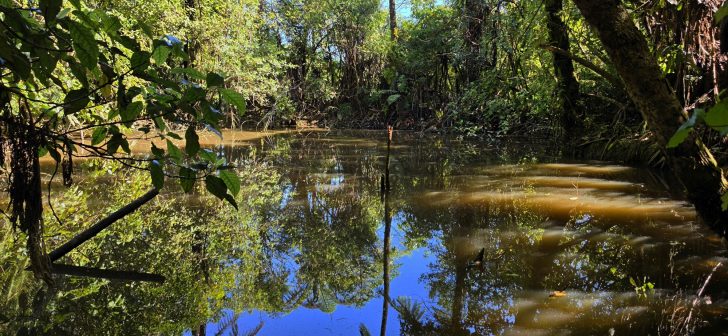
An exploration of Skerretts Creek with friends in search of the Kittyhawk wreckage, tracing aircraft debris through bush and creek bed.
Exploring a secluded Harry Todd Reserve gully reveals a historic weir and early water pipe system likely built to supply Sinclair House.
Today I ventured into an area I have visited many times, which I refer to as the Nikau Creek Plateau and followed a creek up the hillside.
A challenging bush bash from the Harry Todd Track into a hidden gully near Willis Grove, ending with a hard-earned swim.
I began near the start of Hine Road in Wainuiomata, where the Harry Todd Track enters the Harry Todd Recreation Reserve.
Retracing familiar ground to uncover overlooked historical features, rather than venturing into new areas for deep bush exploration.
Today I headed to Catchpool Valley and spent time exploring the bush in and around Grace’s Stream in the Remutaka Forest Park.
I returned to the hillside to search for another section of the two kilometre water race, beginning near a pipe and abutment.
Further exploration of Wainuiomata’s concrete huts, water race, and pipelines, uncovering their history and connections.
Explorations to documents remaining Wainuiomata Water Works concrete huts to better understand their purpose and history.
I entered Tana Umaga Track and walked to its highest point, where a creek runs down a gully. From there, I climbed up the hillside.
A short side adventure along the southern bank of the Wainuiomata River, exploring old farm tracks and relics from the 1970s.
Today I set out to explore the hillside between Sledge Track and a mystery bench track I came across during a previous bush bash.
With three hours to spare in the Hutt Valley, I set out for a short trek on the hillside above Wainuiomata Road on the Hutt side.
A mission to rediscover Solomon Track, a forgotten trail in Wainuiomata that once linked to the original Whakanui Track.
I needed a dose of wilderness and I needed it quick. So I explored some gullies and hillsides near Nikau Creek.
A short suburban bush bash offering a light adventure on the fringes of Wainuiomata, blending residential edges with pockets of greenery.
A Throwback to My First Bush Bash, almost the same location and conditions. I made my way up a hillside near Sunny Grove.
I set off towards the Tawa Grove Walk in the Remutaka Forest Park to further investigate a missing person case, but found something else.
I began my trek by parking at the Wainuiomata Mountain Bike Park, and not far up the hill from there is the Waiwhetu Tunnel entrance.
Margaret Kaye Stewart vanished in 2005 after a short walk in Wainuiomata’s Catchpool Valley, despite receiving directions from DOC staff.
Tracing the last unexplored section along the Wainuiomata Water Race Track below the Orongorongo Maintenance Track.
In the late 1960s & early 70s, the Sinclair Cemetery wasn’t known about. Us kids simply called it “The Bush” and it was behind our property.
Today I checked out the final visible section of the water race and explored the area around the old Chlorine Plant.
In this bush bash, I set out to explore the area between the first visible section of the water race and the scour pipe.
Today, I hiked a steep bush-covered slope tangled with supplejack, to discover more sections of the 1880s water race.
This was going to be more of a history tour than a bush bash. Nevertheless, it would require bushbashing to see the sites I wanted to visit.
Today, I set out to find more evidence of the water race first discovered on my previous bush-bashing adventure.
My latest bush bash: I unearthed three artefacts from the 1880s, then nearly became one myself after being attacked by wasps.
I decided to revisit the scour pipe area, believing it held more discoveries since I had never fully explored the terrain.
Following a creek to the top of the hill behind Sunny Grove I connected with the Whakanui Track then descended into the head of Nikau Valley.
Today, I tackled the hill behind Sunny Grove again, but in a different location by following a creek up the hillside.
Starting at Sinclair Cemetery, I climbed the hill behind Sunny Grove to capture photos of the surrounding landscape.
My first destination was a concrete platform near Skerretts Creek followed by a trek alongside Wainuiomata Stream.
I planned to explore an area east of Sledge Track Creek that I had left out on previous treks. It was time to mark this area off my list.
Today, I set out to explore the last few outlying areas of Sledge Track and Sledge Track Creek that I hadn’t covered in previous trips.
I followed a stream that flows down a gully on The Rock to a ridgeline that runs atop the Wainuiomata Scenic Reserve.
The goal today was to locate the site of Smiths Whare (an old fishing hut) and an old track located near the Wainuiomata Stream and River.
Today, I explored below Sinclair Cemetery to investigate a concrete platform that existed before housing in Sunny Grove.
Today’s expedition was to complete the tramway track that once ran from Naenae to Moores Valley in Wainuiomata and locate any artefacts.
Today’s hike was set to be a bit different. The plan was to trek over the eastern hills at Naenae and end up in Moores Valley in Wainuiomata.
Today’s adventure involved searching for evidence of an old tramway in Reservoir Valley, dating from the mid to late 1800s.
With a couple of spare hours up my sleeve, I did a small trek in the bush alongside the Wainuiomata River and below Reservoir Road.
Today, I found further evidence of an undocumented hut that existed prior to the 1930s in Reservoir Valley.
In this episode, I uncover the exact location of Pearson’s Hut and find scattered remnants of building materials that once belonged to it.
I explore The Terrace in hopes of finding two undocumented huts that were gone by the 1930s. Did I find them?
Today, I explored the gum forest between Ultimate Pool and Swingbridge Pool where I found and followed an old track.
I revisited an old trench and pipe concealed in the bush near the old waterworks track, an unsealed road used to service the water raceway.
Today, I explored Reservoir Valley / Sinclair Valley by deviating from Gums Loop Walk to follow the old track through the valley.
Today, I went off the beaten path in Reservoir Valley to try and find an old track to Lower Dam in Wainuiomata.
I headed east of Nikau Creek and met a special guest whose presence added a touch of enchantment to my adventure.
I headed up the hill behind Top Pool, reached the ridge, then dropped down to Nikau Creek Valley.
I followed an unnamed creek up a steep hill, got stuck in a ravine, then lost my shirt. Today was a bit of a mixed bag.
I checked out the Old Whakanui Track and then crossed over Nikau Creek and bush bashed behind a swamp near Gums Loop Walk. What did I find?
I mapped the location of the probable Kittyhawk crash site, & scoped out 2 other potential sites.
This bush bash was planned as a revisit of the Kittyhawk plane crash site as discovered in my previous adventure called Bush Bash 12.
At long last, the day had arrived to discover the wreckage of the Kittyhawk, the plane that went down in the Wainuiomata Hills in 1943.
A stroll along Nikau Track, then delving deeper into the historic Whakanui Track before venturing into the bush.
I walked through the Hair Stream Storm Water Pipe under The Village and captured photographs along the way.
Today, I participated in the Wainuiomata Water Walk, a complimentary excursion open to all, but limited to 40 people.
Another look at Wainuiomata Scenic Reserve in the hope of discovering remnants of an old water catchment dating back to the 1940s to 1960s.
With a couple of hours up my sleeve and harbouring a foot injury, I embarked on a series of smaller expeditions into the bushlands of Wainuiomata.
I embarked on the Old Forest Walk, an off-limits to the public area and primeval realm, surrounded by ancient rātā and rimu.
I complete my exploration of the lower Skerretts Creek area, with no new discoveries – just more awesome nature.
A spontaneous bush-bashing adventure sparked by a sudden decision to explore a Wainuiomata scenic reserve.
In this bush bash adventure, I find another site with remnants of an old hut and explore more of Skerretts Creek and surrounding area.
My first bush bash for 2024. On this journey, I traced two unnamed streams and stumbled upon an old abandoned hut.
Read about my fourth bush bash adventure into the wilds of Wainuiomata near Sunny Grove. I discover remnants of an old hunters hut.
During this impromptu adventure, I navigated along a river, leaping from one moss-covered rock to another, then finding a plane wreck.
Read about my second bush bash adventure. This time I follow a creek to see where it starts. Did I succeed? Read on.
Read about my first bush bash adventure. Bush bashing is what is sounds like, but without damaging trees. I walk and crawl up a steep hill.


![By Department of Conservation - [New Zealand Department of Conservation www.doc.govt.nz], CC BY-SA 4.0, https://commons.wikimedia.org/w/index.php?curid=47509285](https://wainuiomata.net/wp-content/uploads/2025/05/Dactylanthus_taylorii_in_flower-e1747717390161-728x328.jpg)


![Wainuiomata River and School, Circa 1920 [Public Domain]](https://wainuiomata.net/wp-content/uploads/2024/01/Wainuiomata-River-School-728x524.jpg)