Detailed investigation identifies a new section of the water race
Today I set myself a mission to locate a new section of the water race. I had already searched the entire hillside and know of seven visible sections, yet I also remained convinced there were still more parts of this two kilometre buried concrete tunnel waiting to be found.
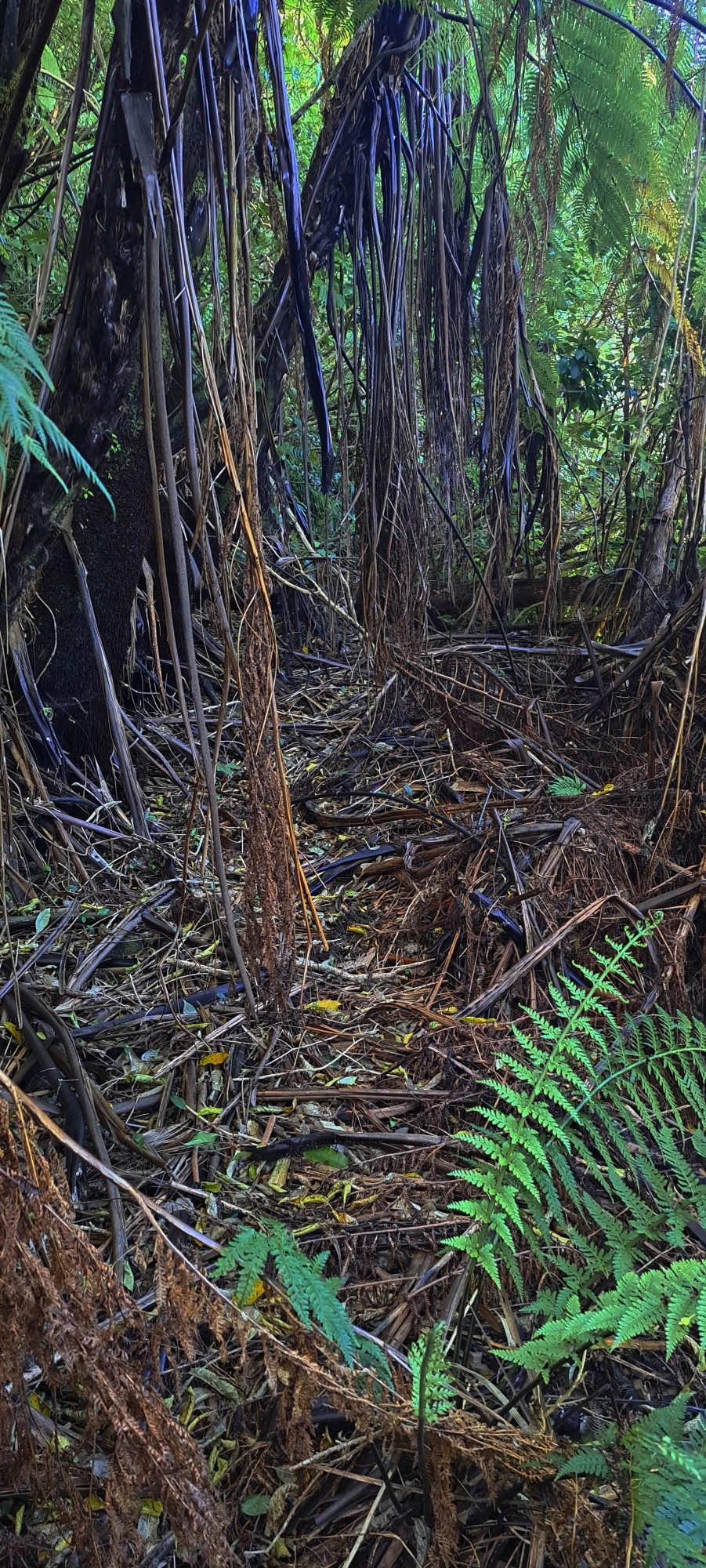
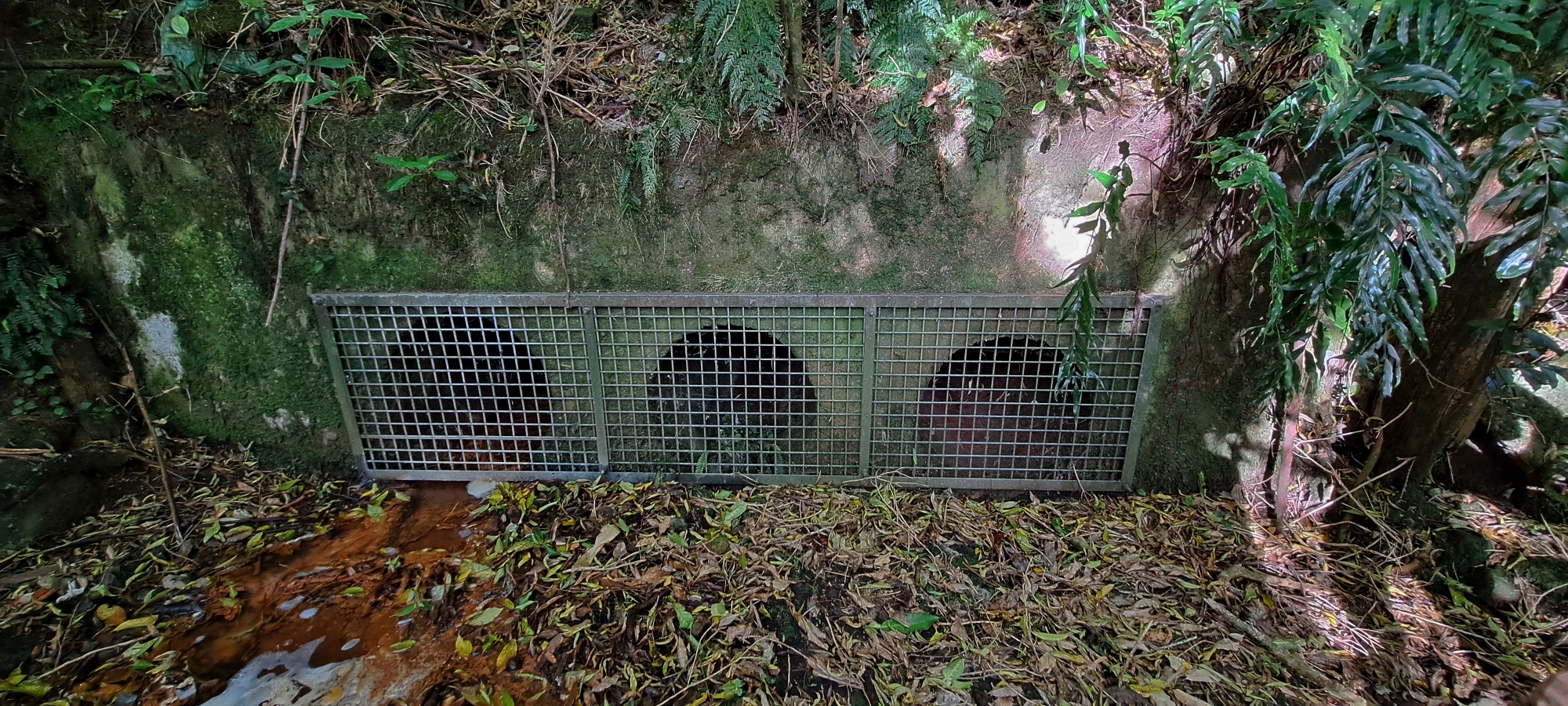
I began today’s search at a drainage pipe and abutment closer to the dam not the drainage pipe and abutment near the scour pipe. From past experience, I knew this area offered an easier route up the hillside than other access points in this difficult section of terrain. Starting here also gave me a chance to locate a shaft that could be feeding the pipe below. I climbed the slope above the pipe and abutment and noticed recent damage where part of the brick abutment had broken away and slipped down the bank. As I continued upward I found no sign of a shaft or any opening where water might be entering the pipe. There was, however, a damp flat area that might have concealed something but it was covered in thick dirt, and I was not willing to dig.
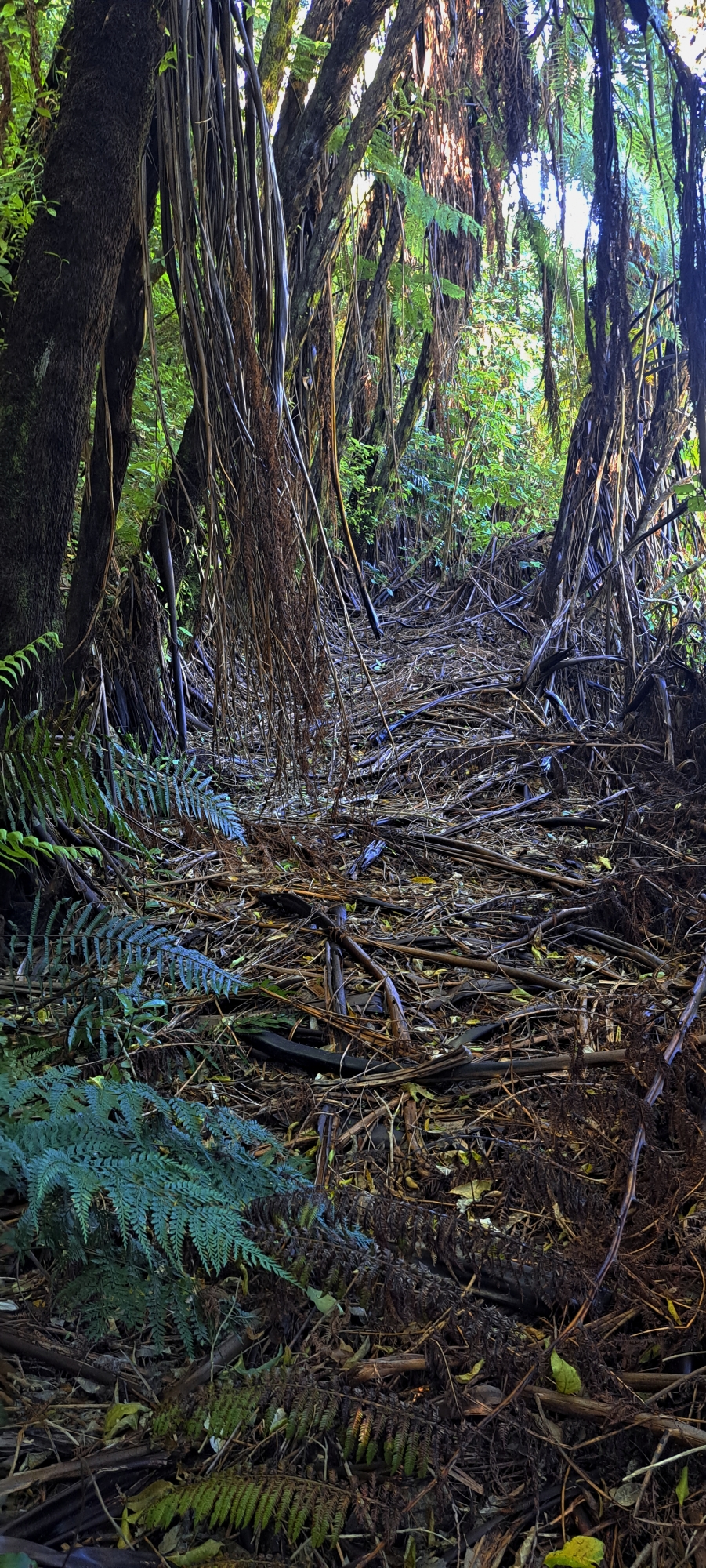
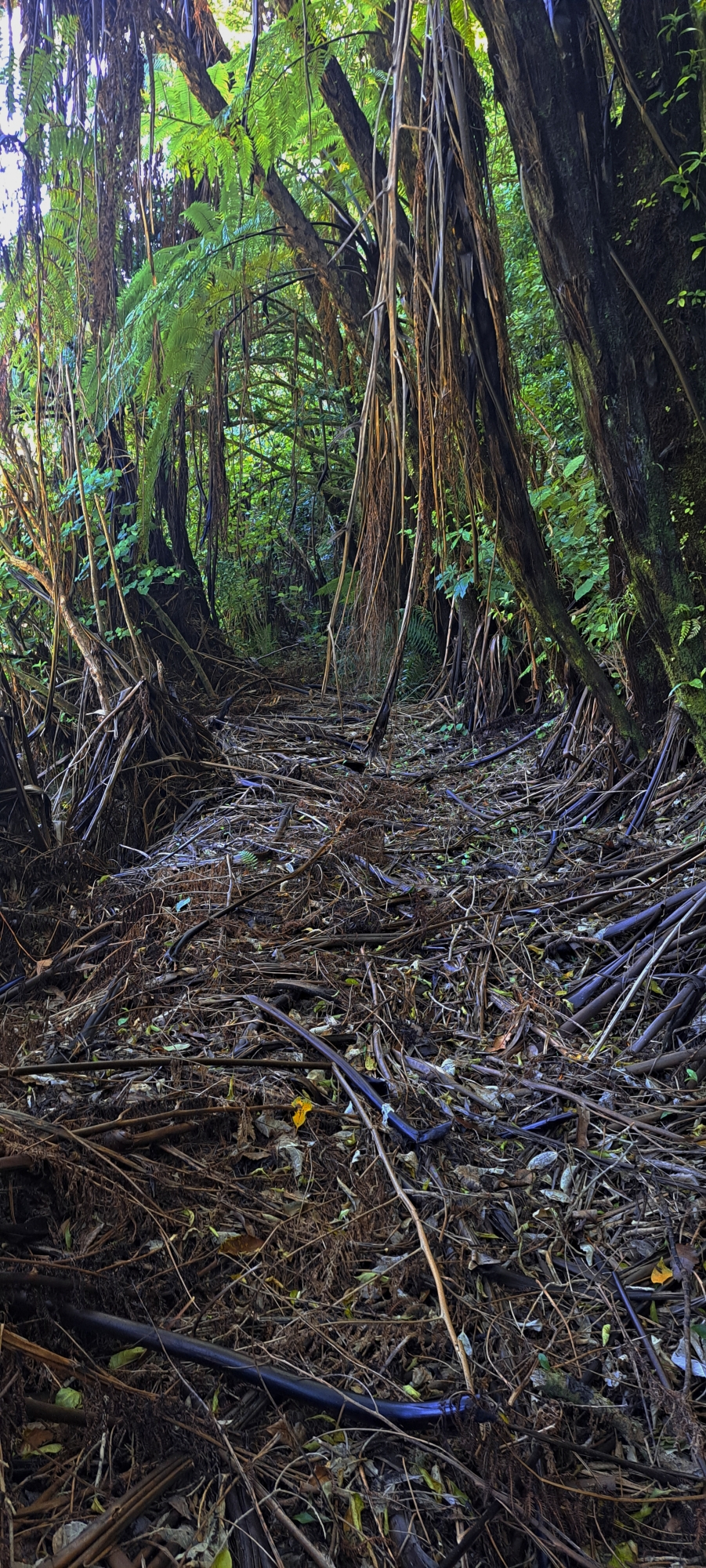
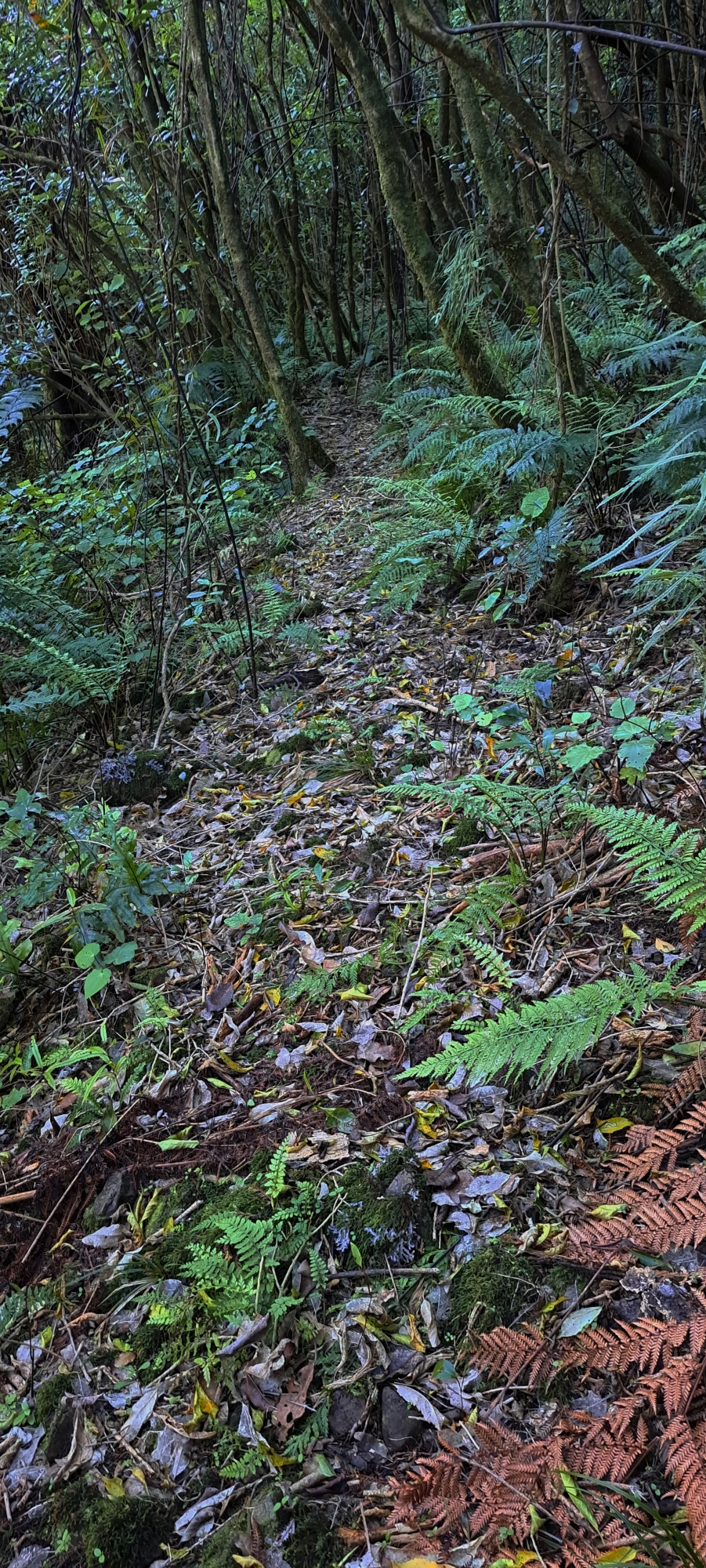
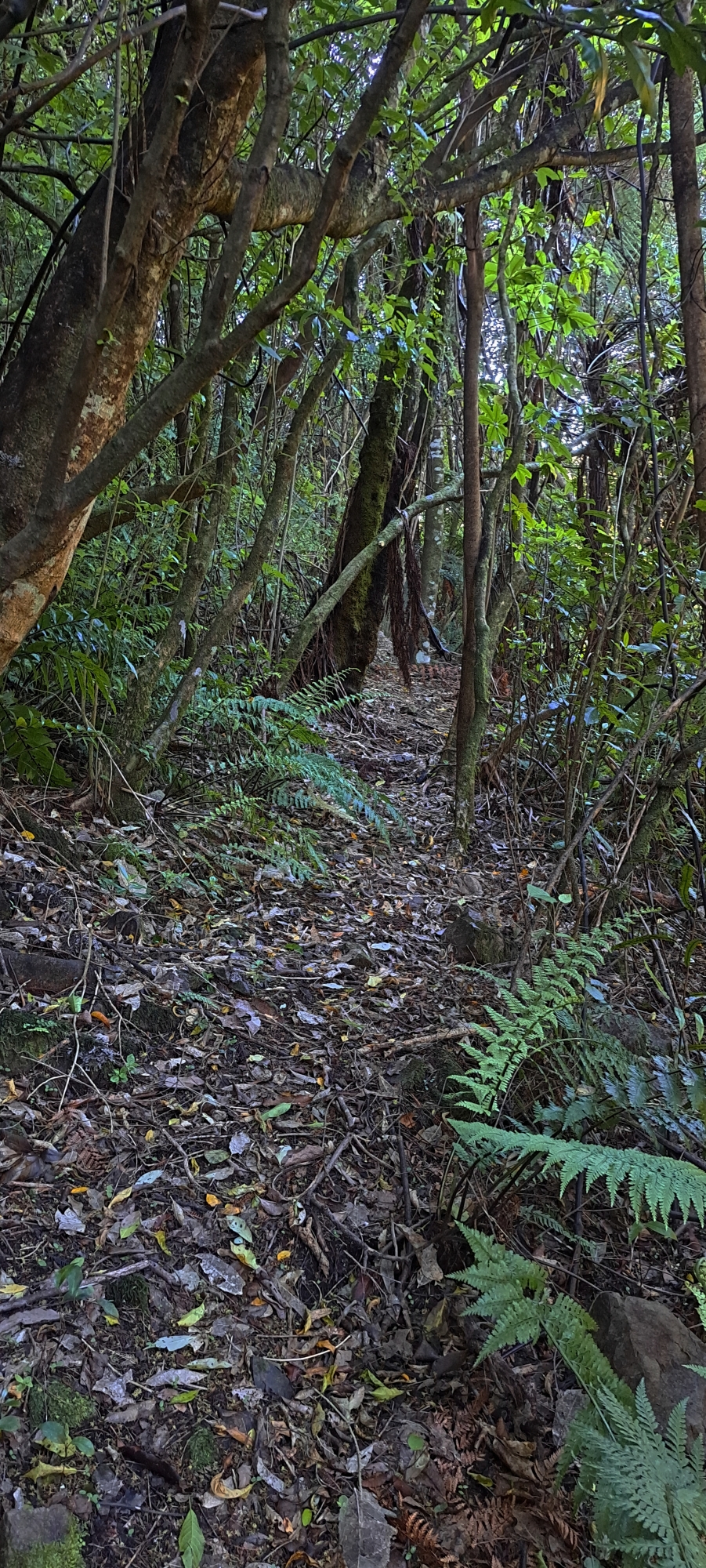
I then headed west along what looked like an old service track, that I call Water Race Track that I suspect was used to access and maintain the water race. But the area felt unfamiliar to me, and I began to question whether I had somehow overlooked this part of the hillside during earlier searches. Although I believed I had already explored the entire slope over time, it now seemed possible that I had missed a few pockets, and this could have been one of them.
Travelling west took a couple of hours. The terrain shifted often, with steep rocky sections followed by easier flatter ground but tangled in supplejack, though there were occasional stretches that were surprisingly easy to cross. I eventually reached the known exposed section of the water race, confirming that I had re-entered previously explored territory and reinforcing that there is nothing visible between the exposed race and the pipe and abutment.
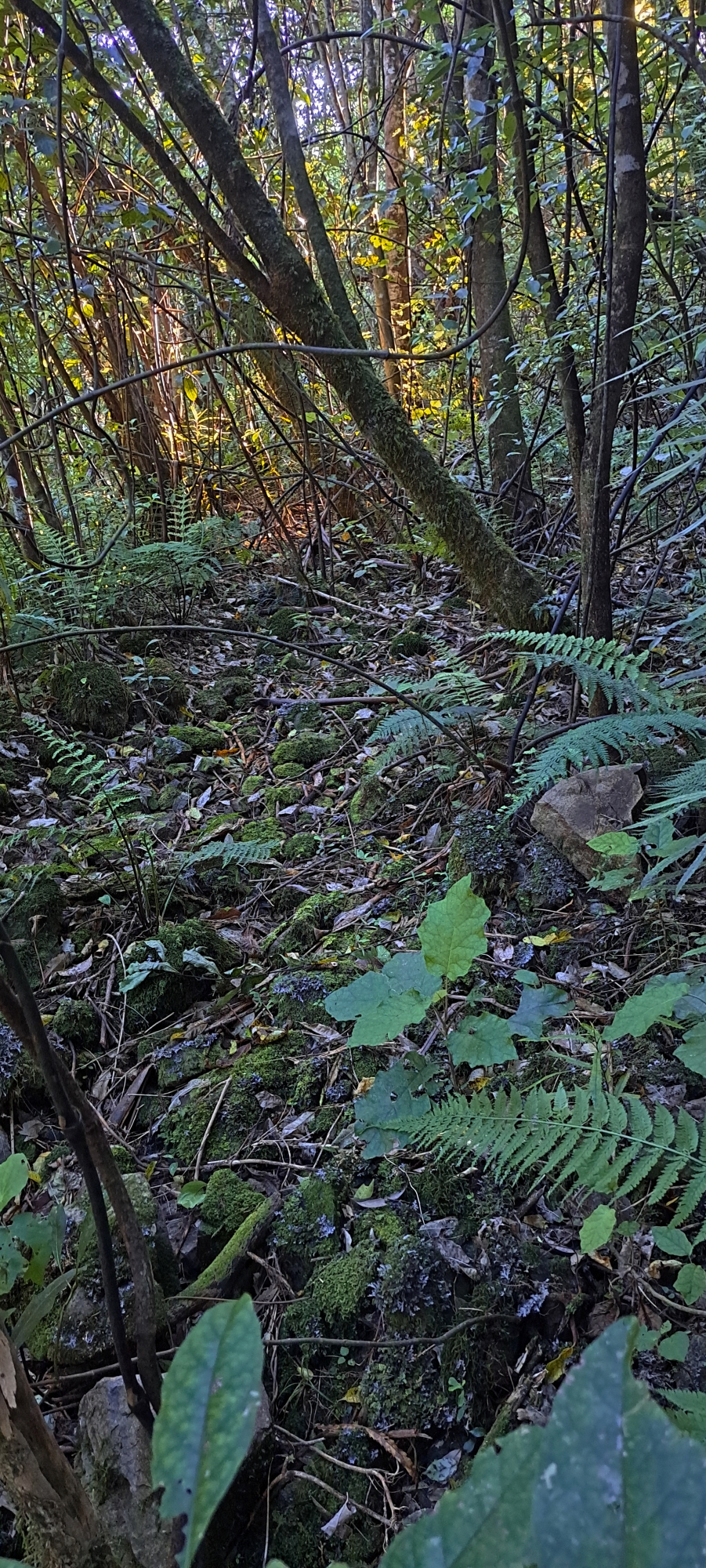
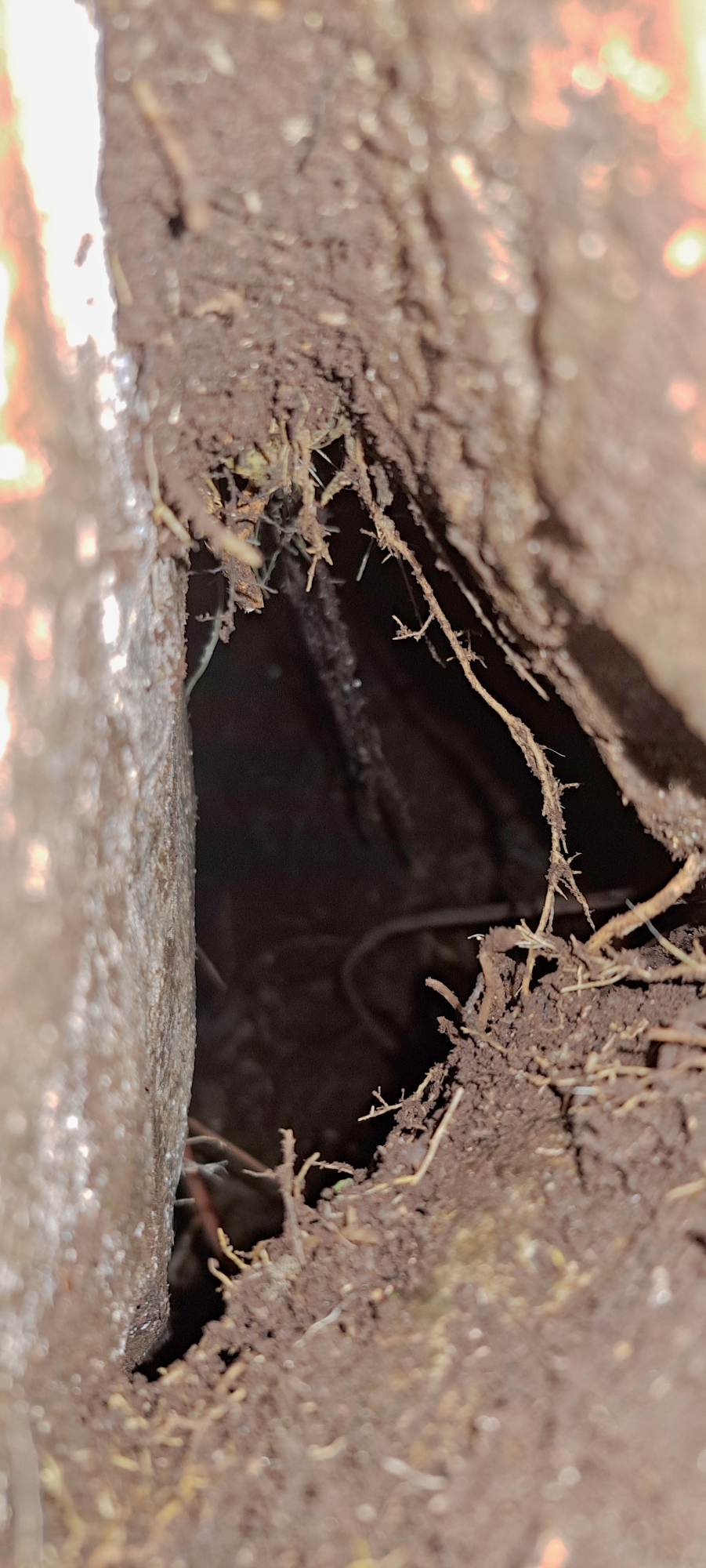
With that area eliminated, I returned toward the pipe and abutment to shift my focus to the east. I already knew of three manhole entrances east of that pipe, but I wanted to see if a fourth could be found. Instead of heading directly to the pipe and abutment however, I was drawn off course by a bench cut slightly above the base of the hillside and I followed it east for some time. It petered out so I decided to go higher up the hillside and bush bash there till I crossed above the pipe and abutment. I arrived and then continued east and soon after, I noticed a shallow depression in the ground. I removed several rocks, but the more I uncovered, the less convincing it appeared to be anything of significance, so I moved on. Shortly after that, I came across another possible site. Clearing stones by hand exposed what appeared to be a deep, tight opening between three large rocks wedged together. I photographed it with my phone using the flash, but the images were inconclusive as the camera focussed on the foreground rocks. The opening could have been a natural void or the race itself. The rocks were too large to shift, so I dropped a stone into the gap. It struck something that sounded like concrete, followed by an echo. That was enough to strongly suggest I had found what I was looking for, but I could not investigate further on my own.
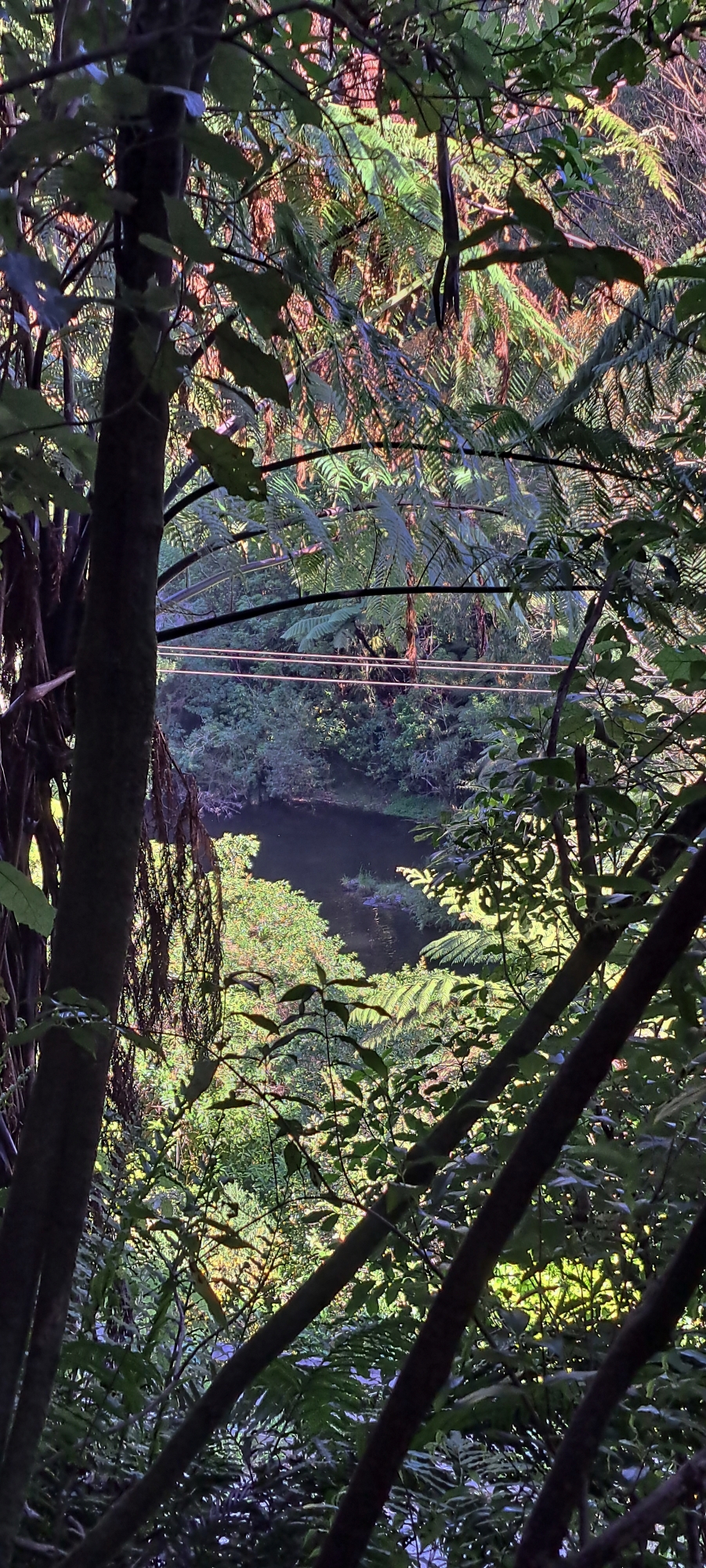
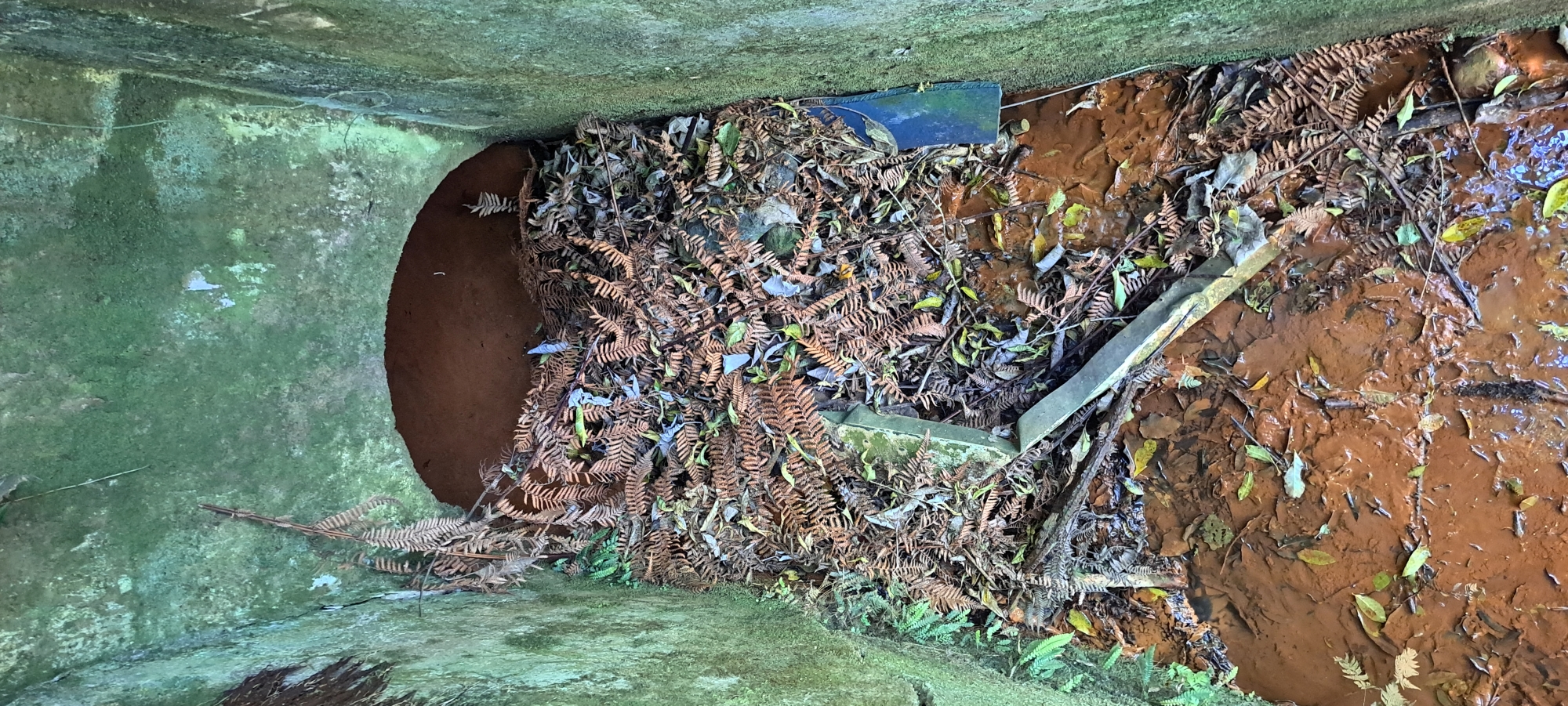
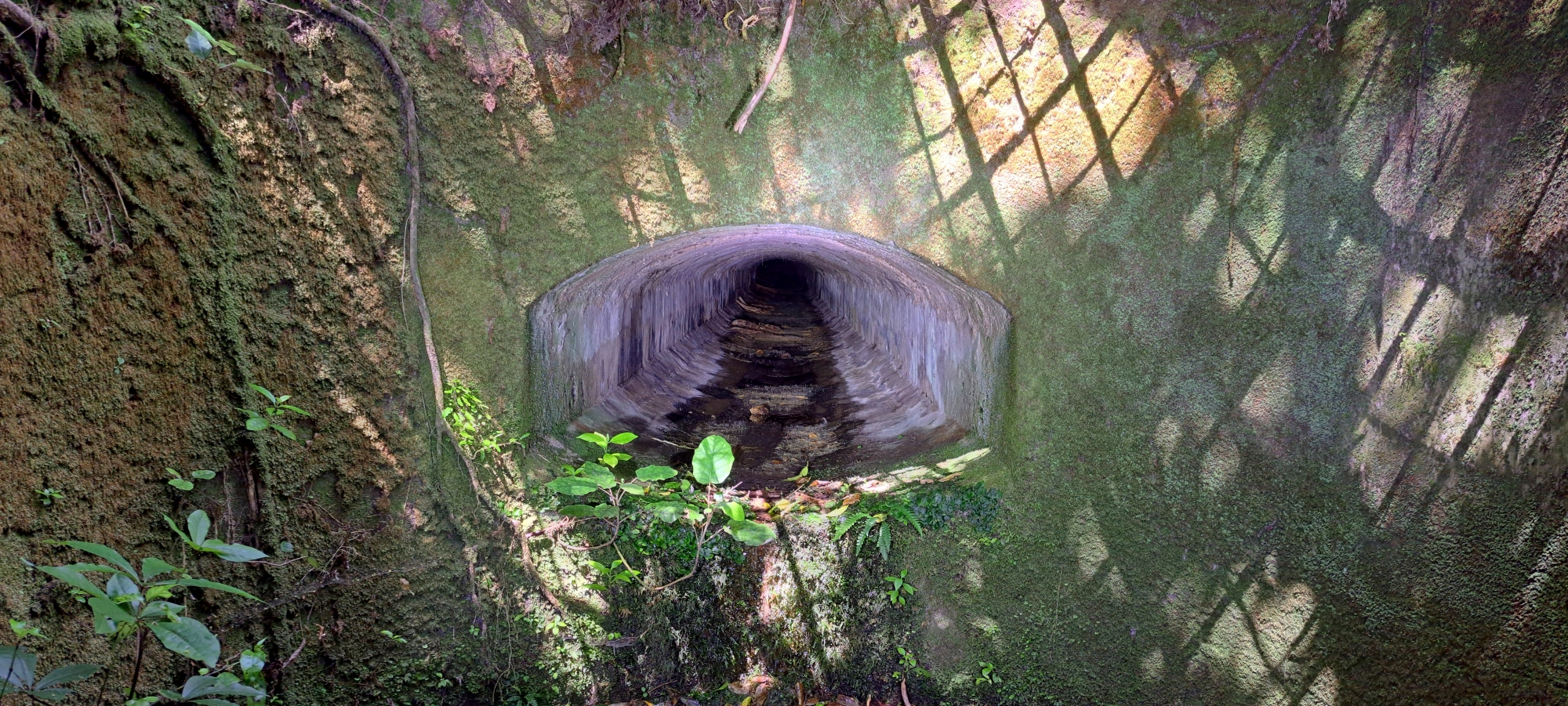
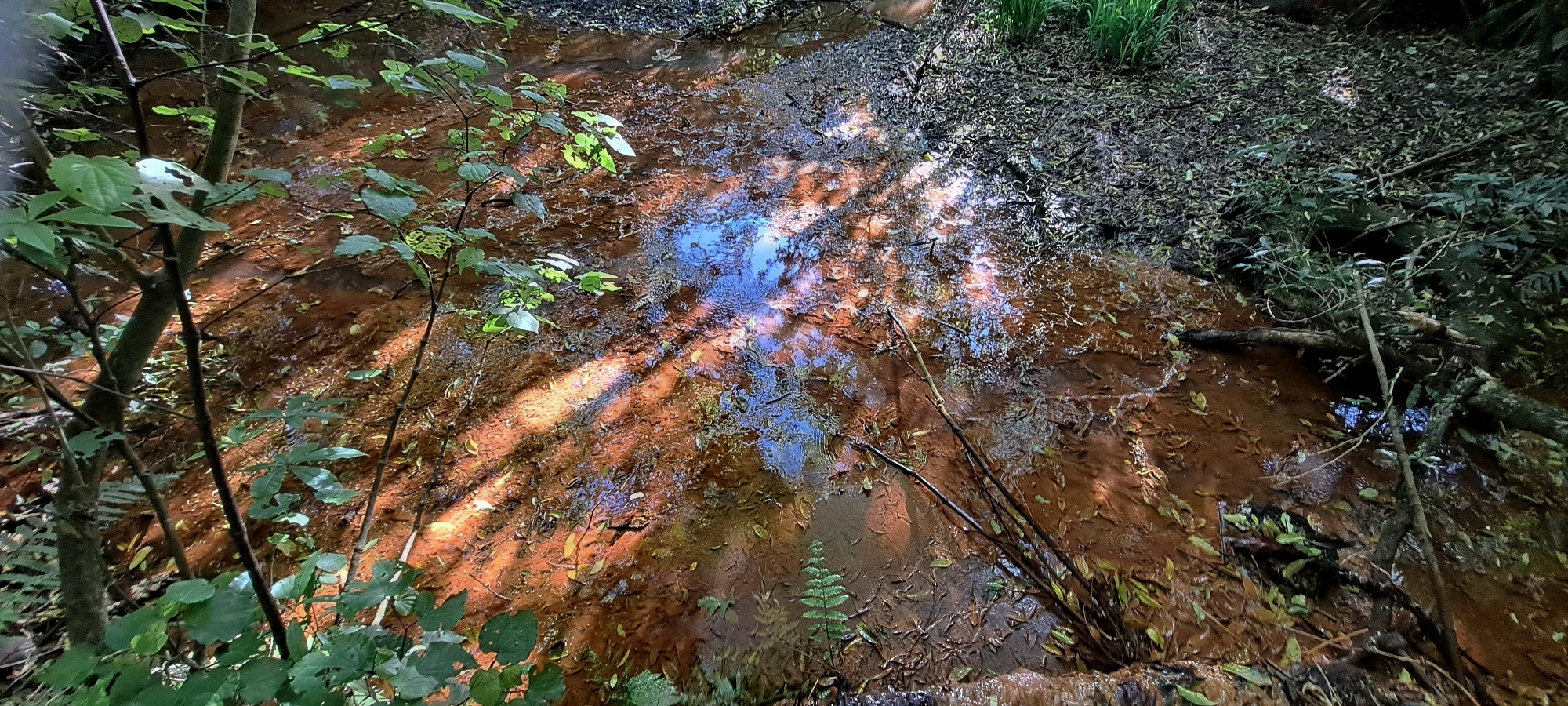
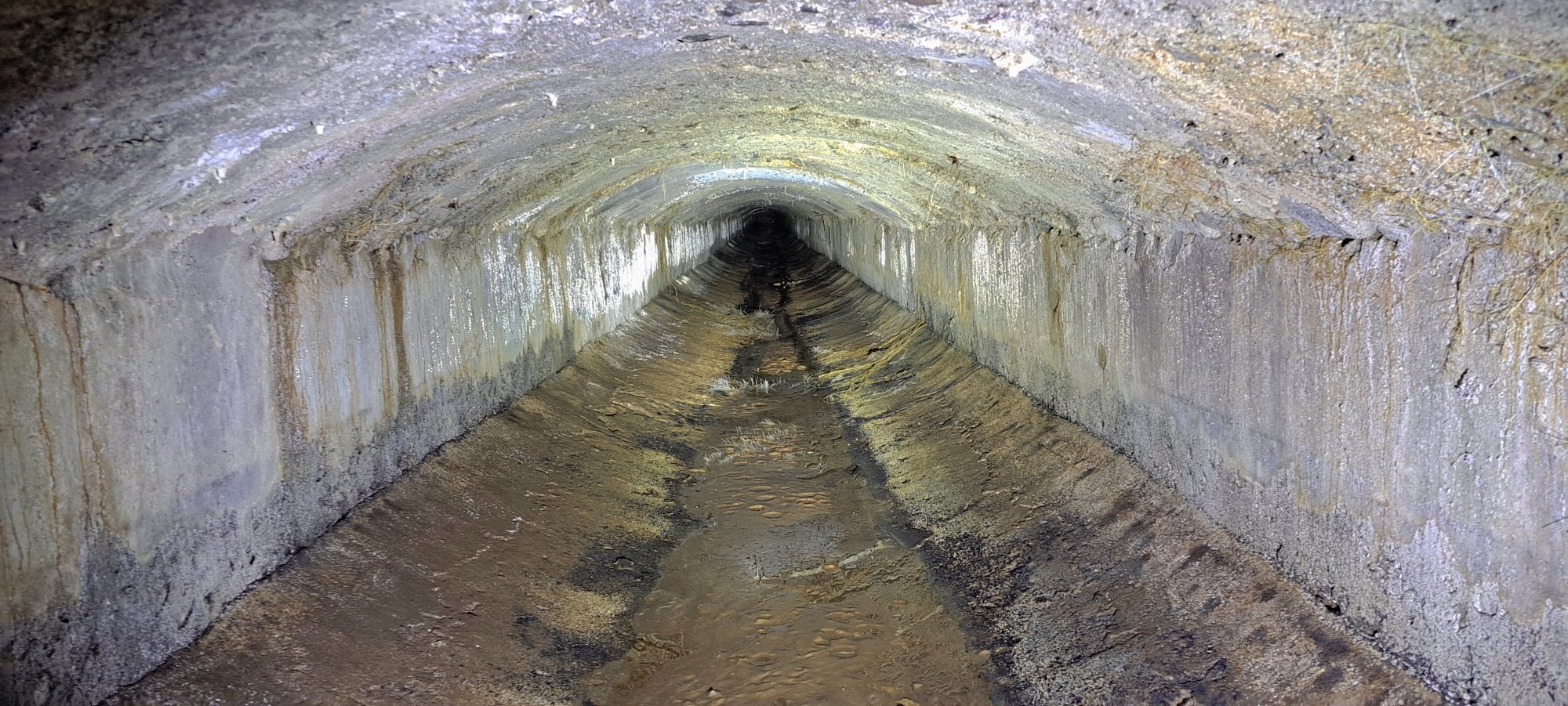
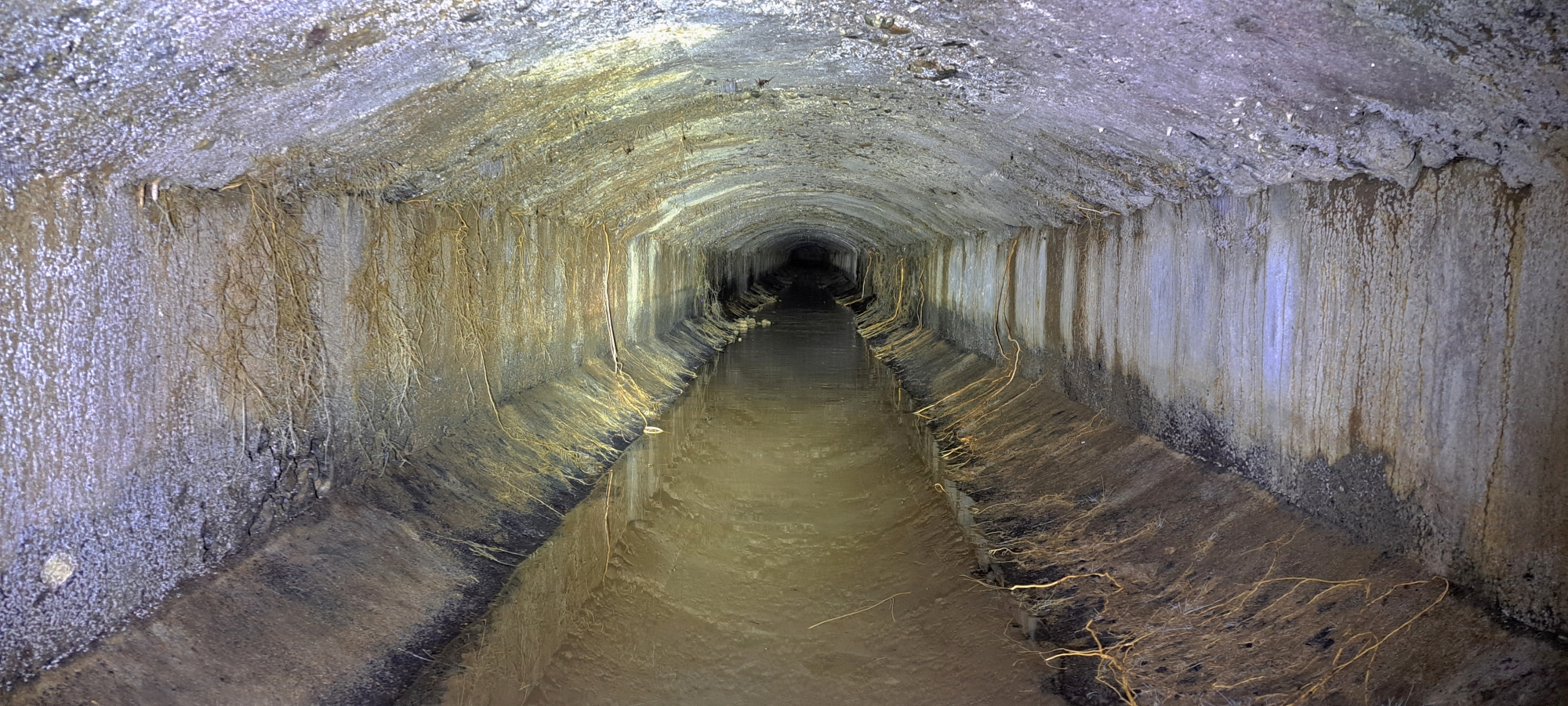 The next day I returned with some friends, and together we were able to move the three rocks and look directly down into the opening. Sure enough, it was a new section of the water race. We took photographs that are likely the clearest interior images to date. We also visited the outlet of the race at Coleman’s Tunnel and located Sinclair’s Tunnel too with a short rest at the wetlands behind the old dam.
It turns out the old saying holds true: ‘seek and you will find’.