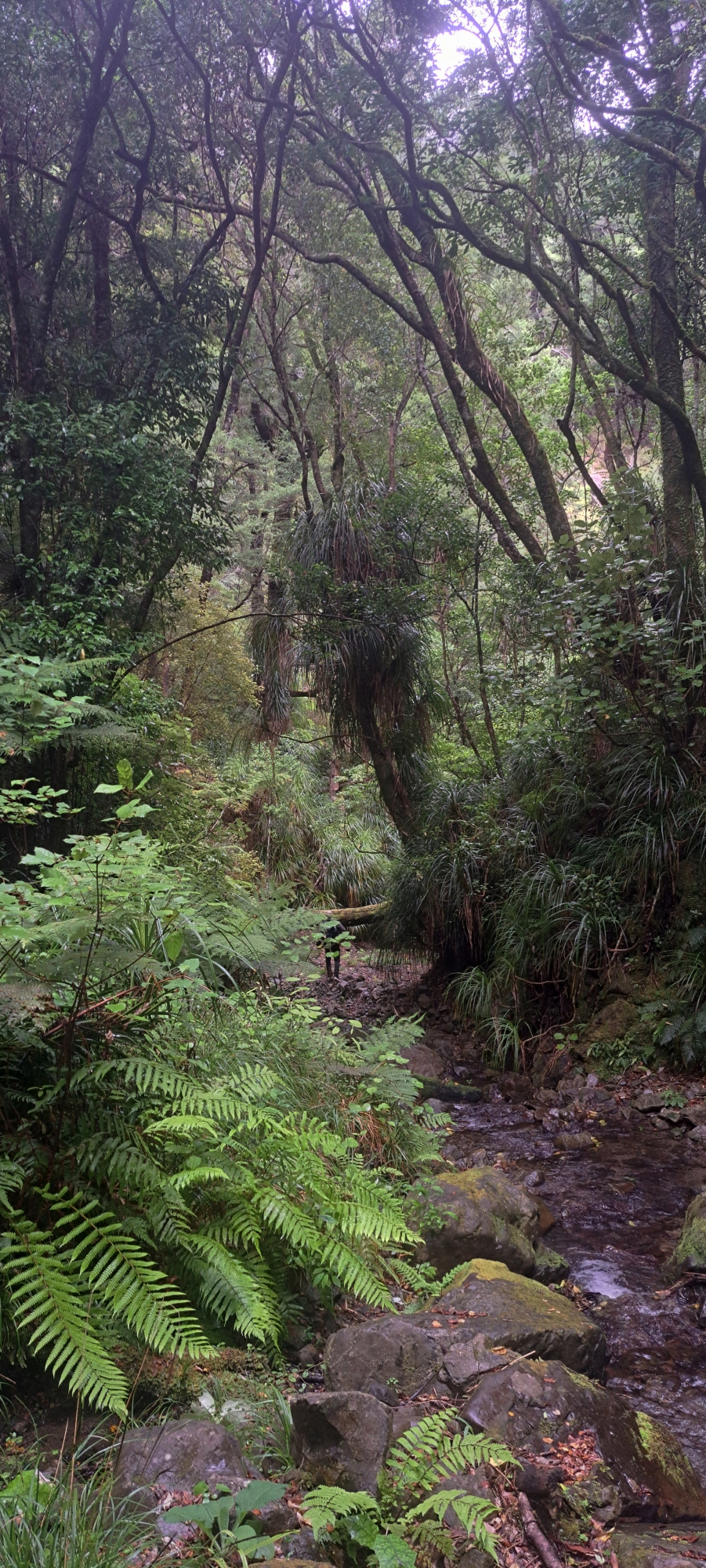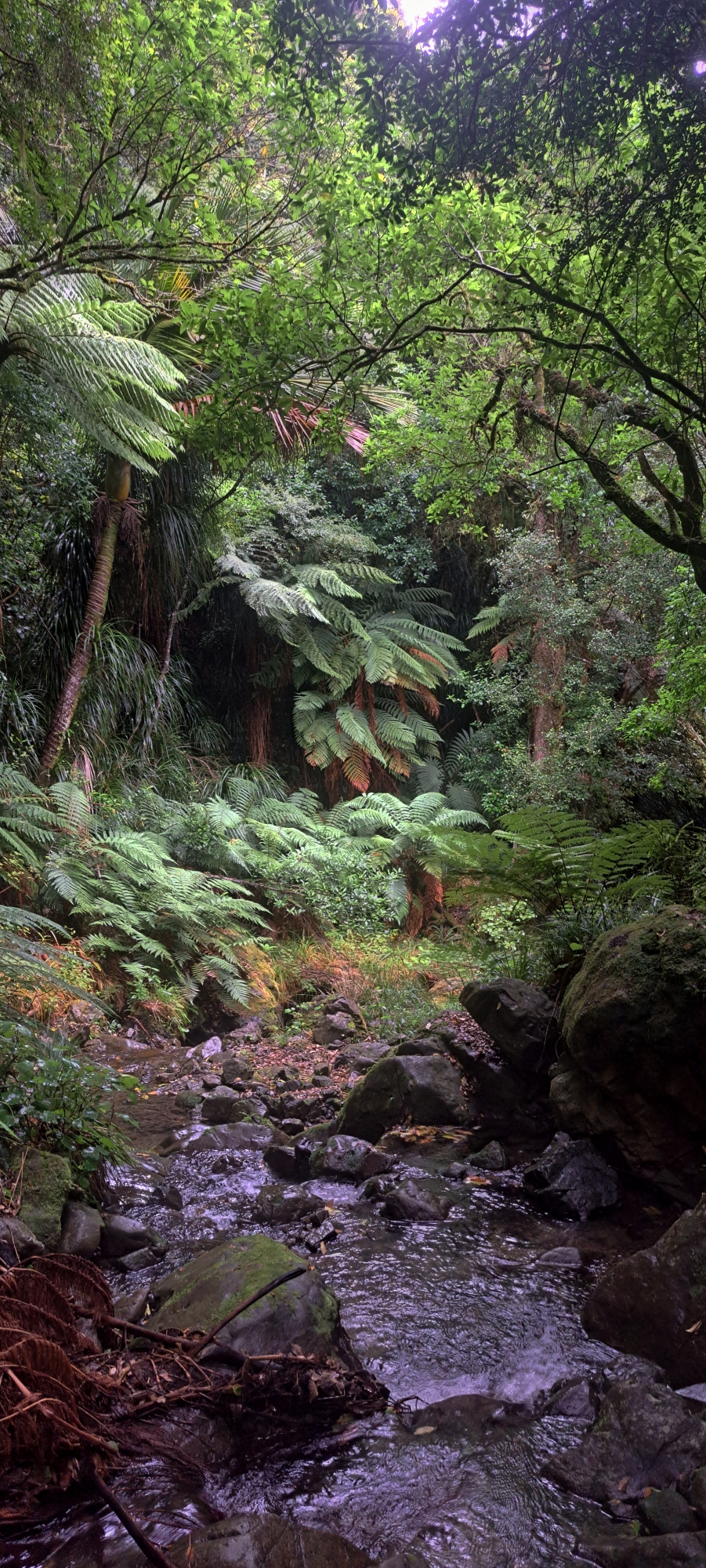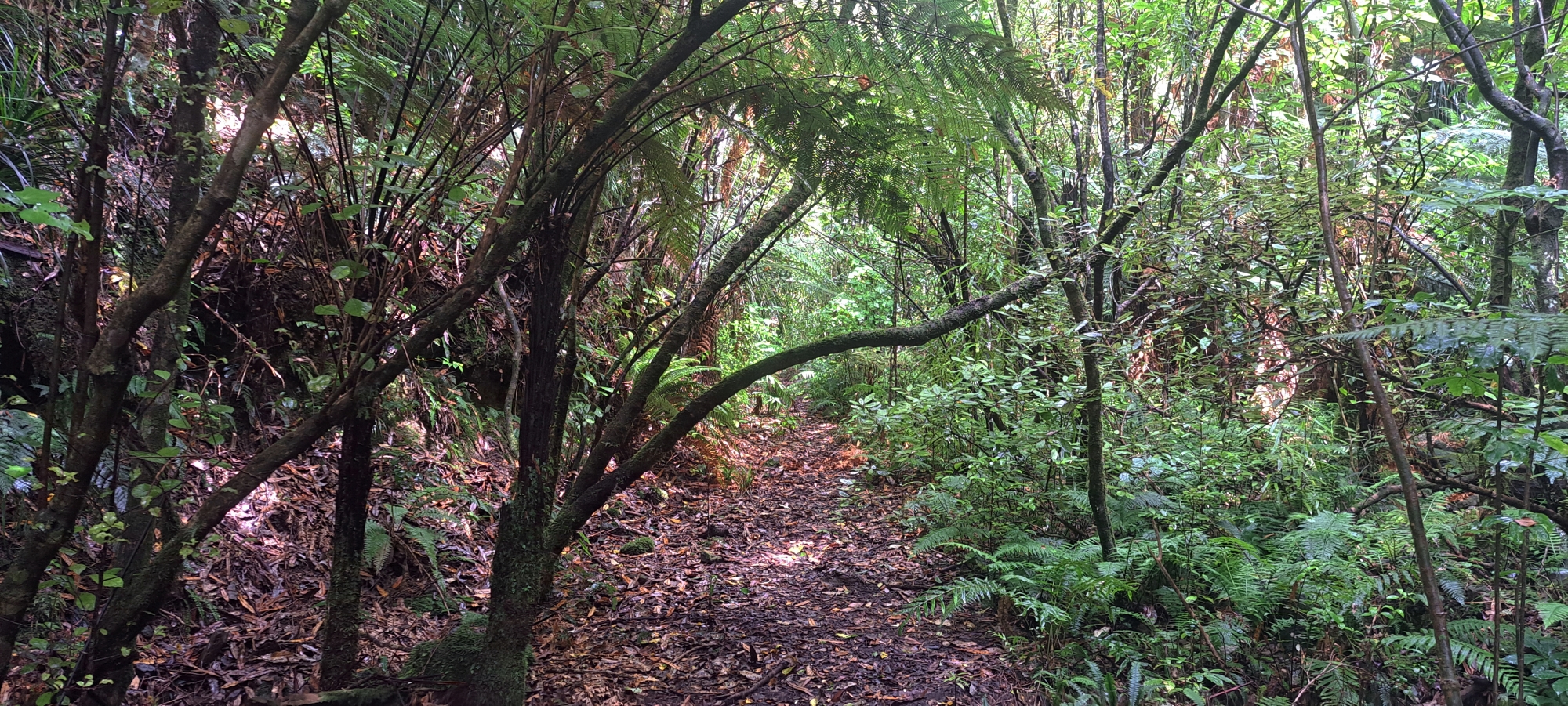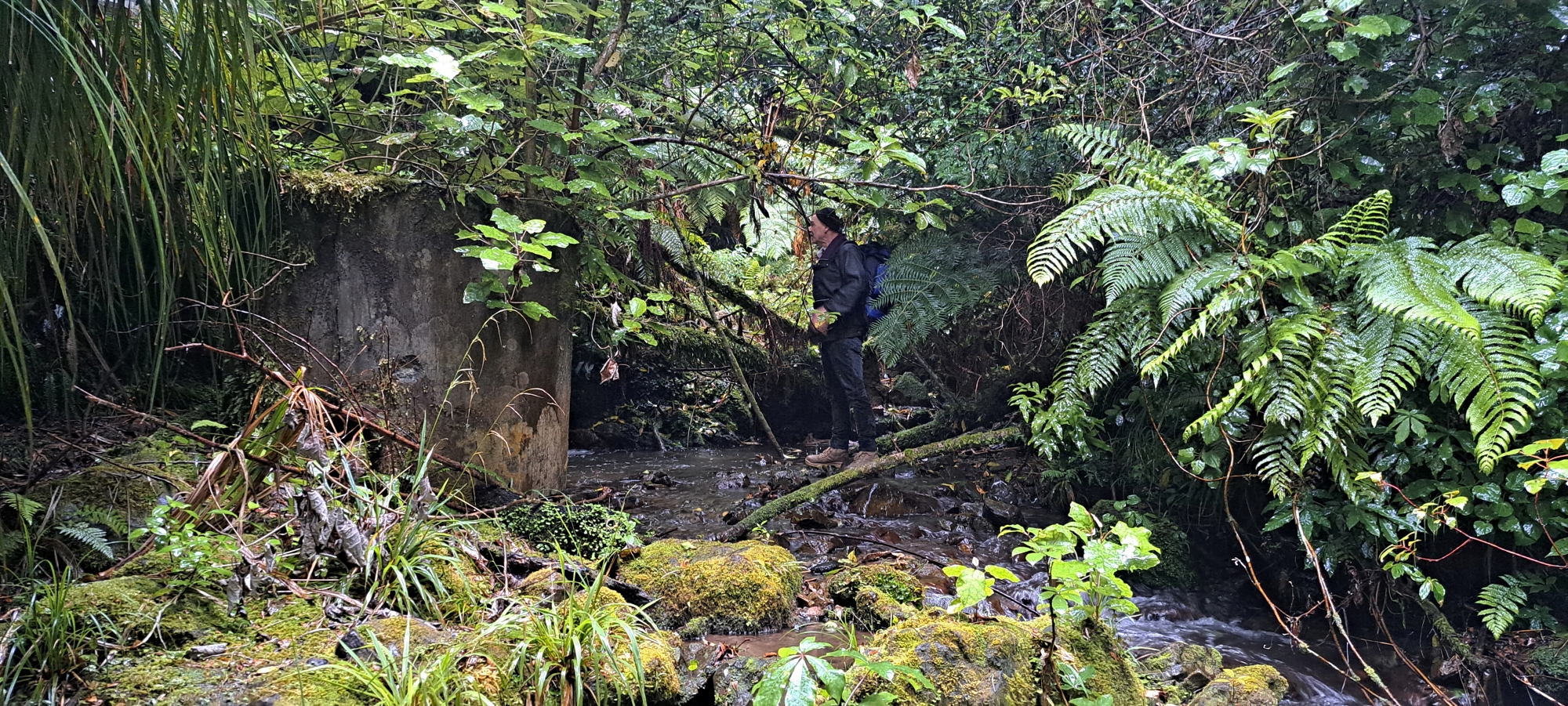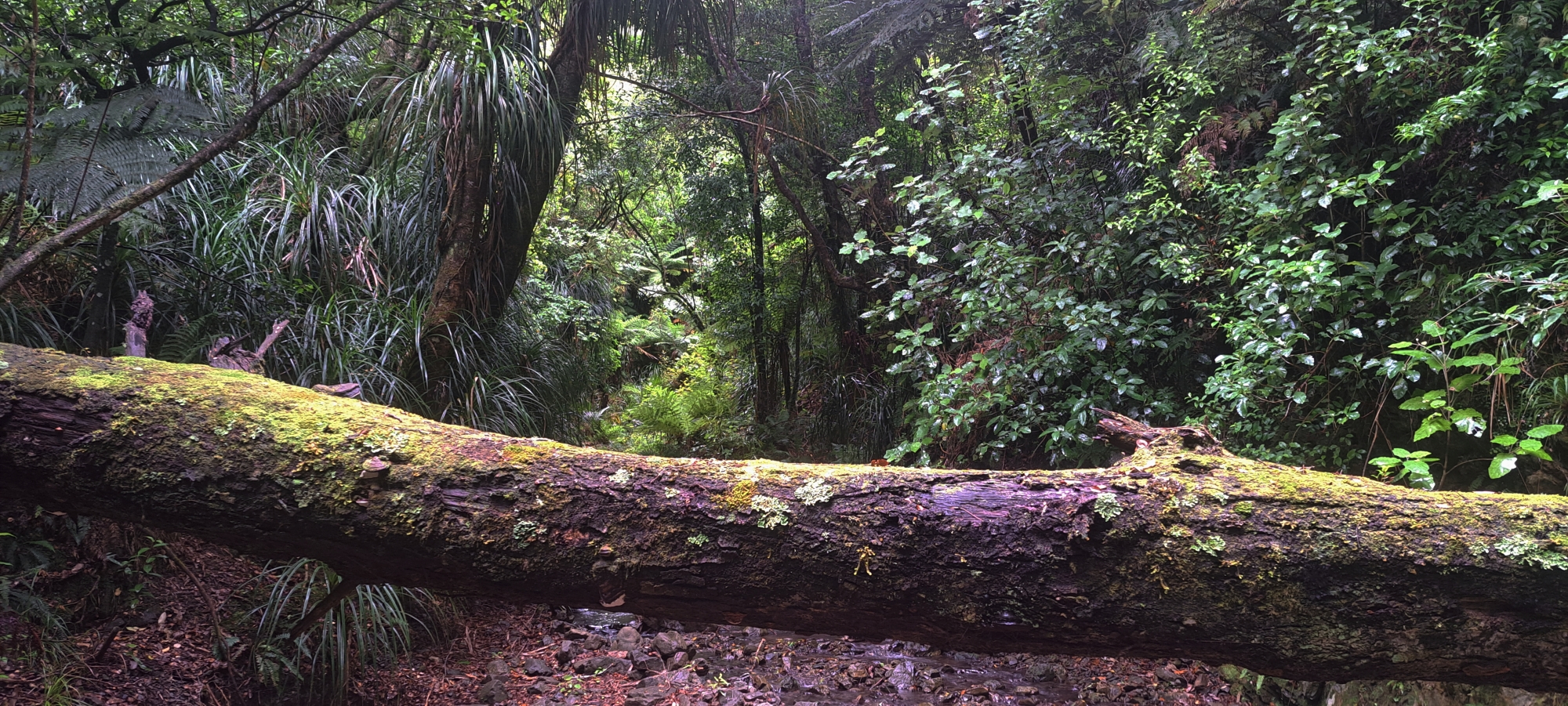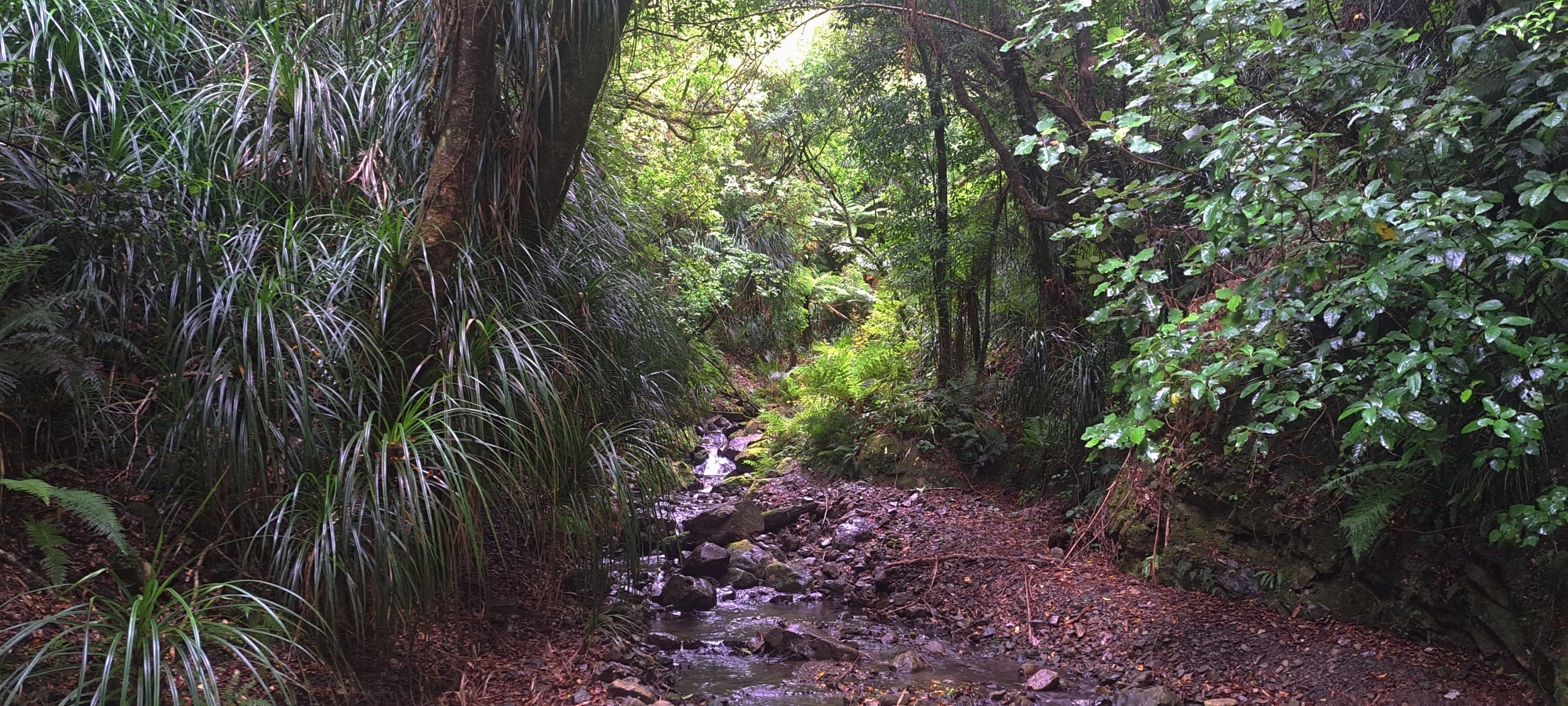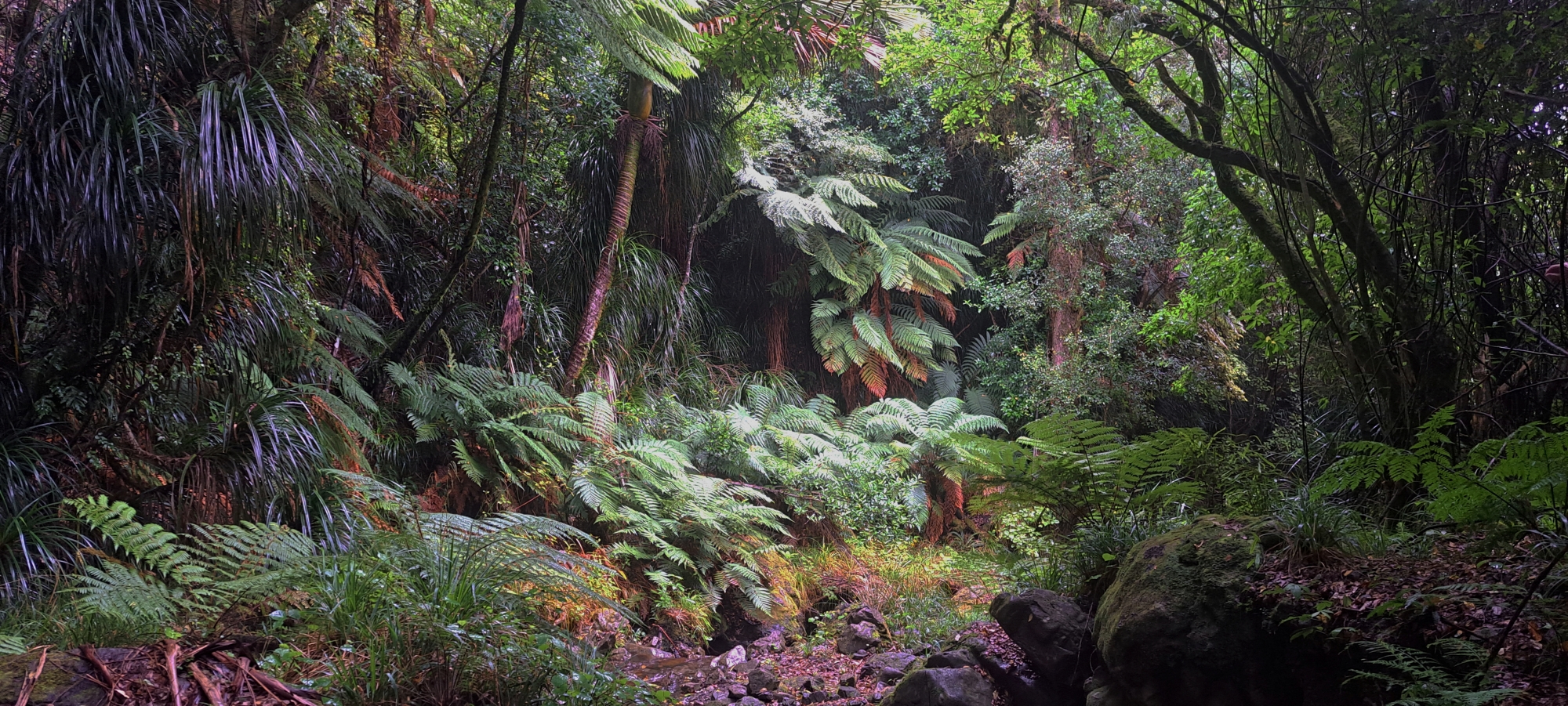
I explored Skerretts Creek with friends in search of the Kittyhawk wreckage.
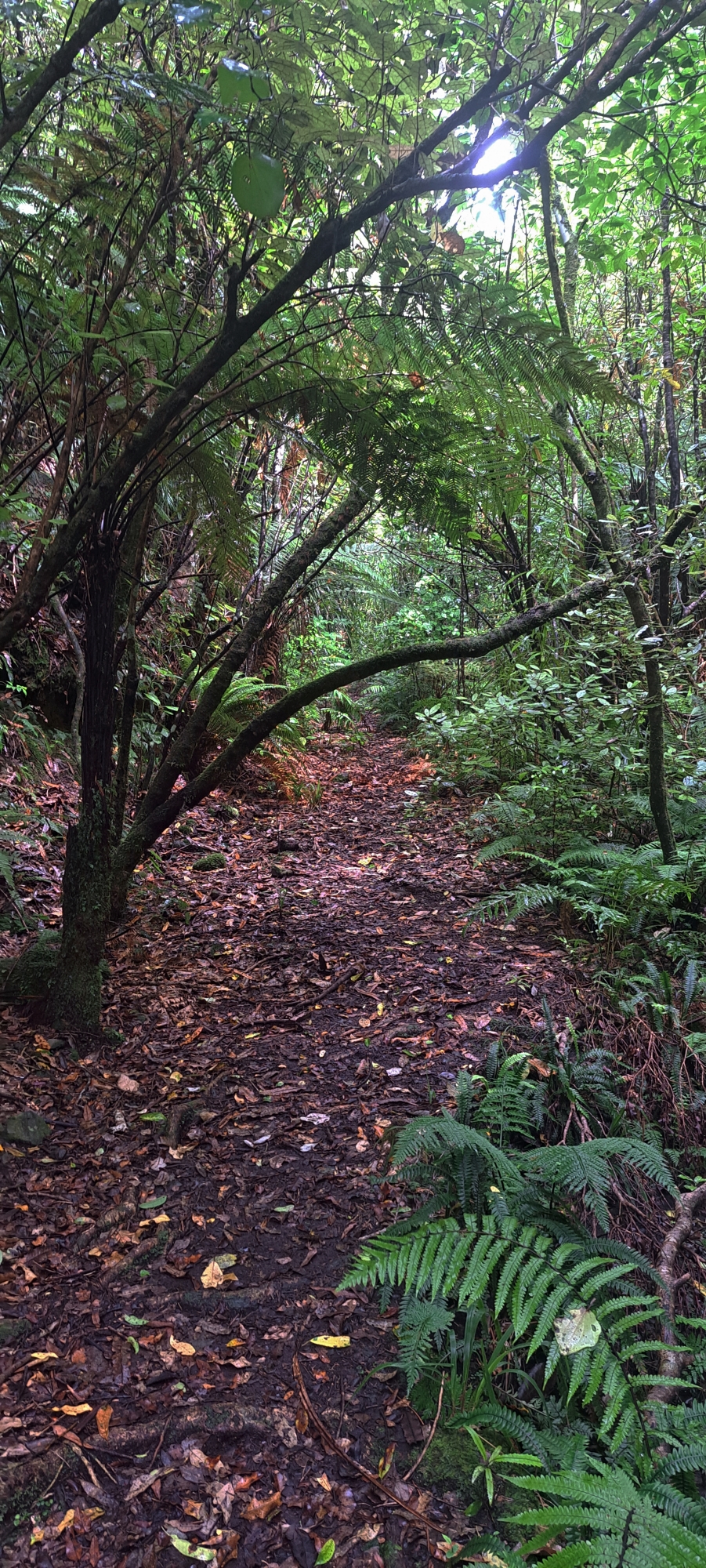
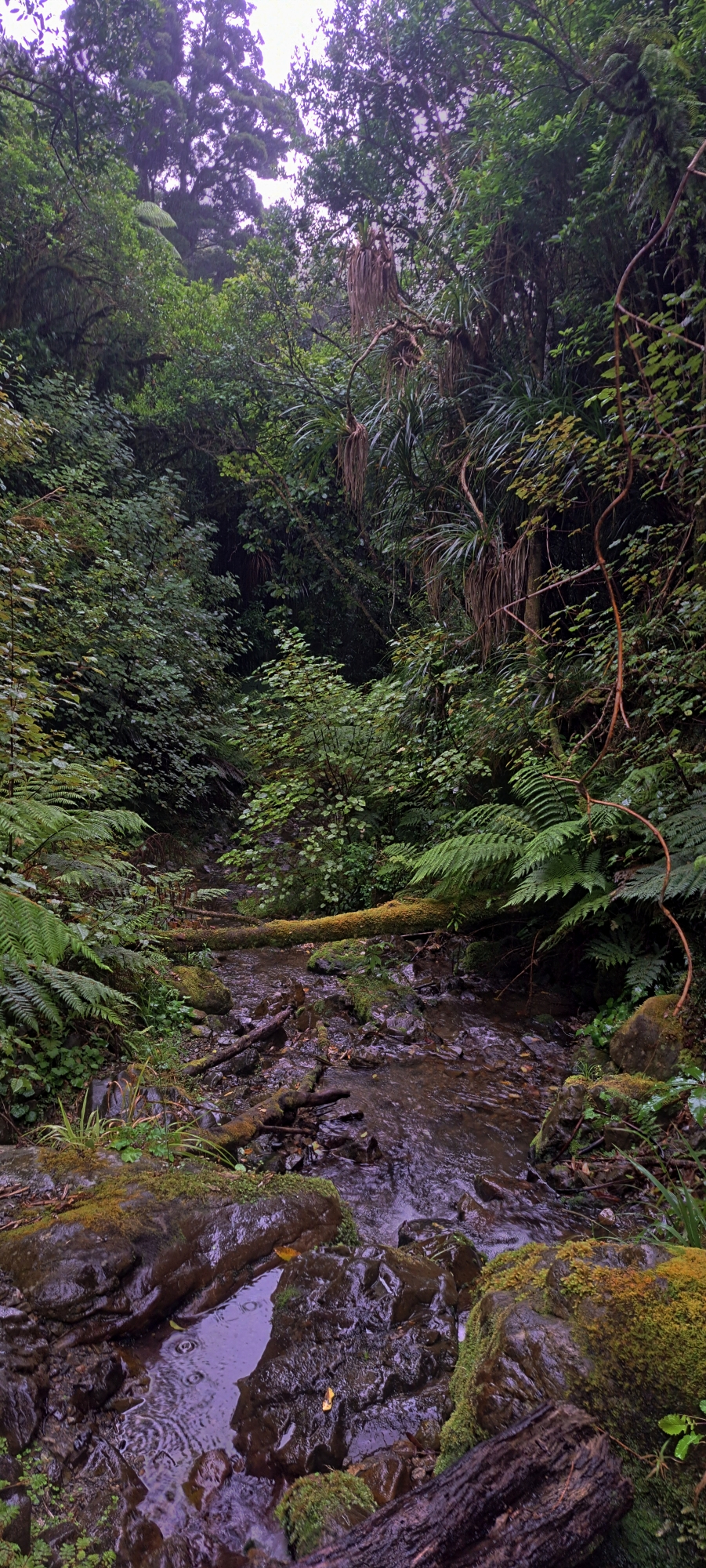
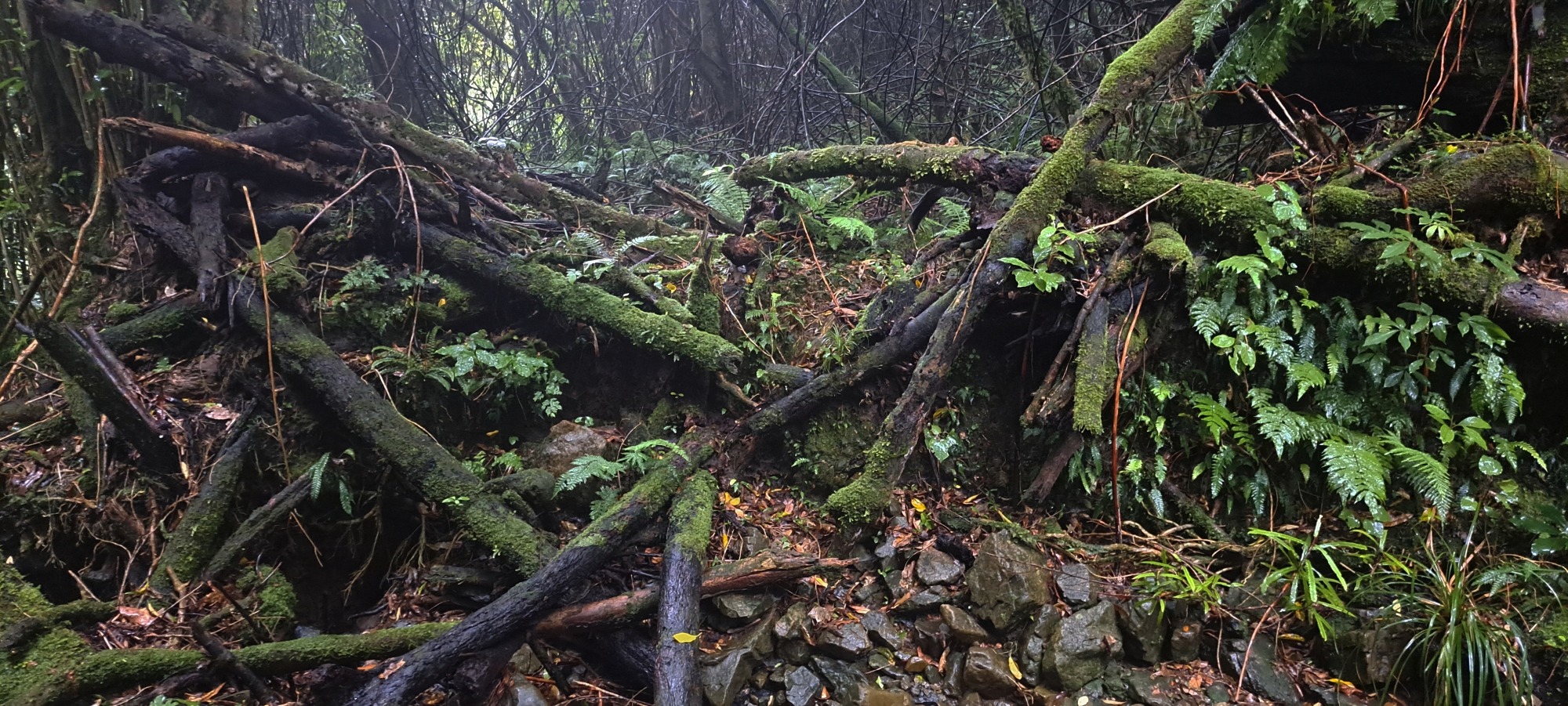
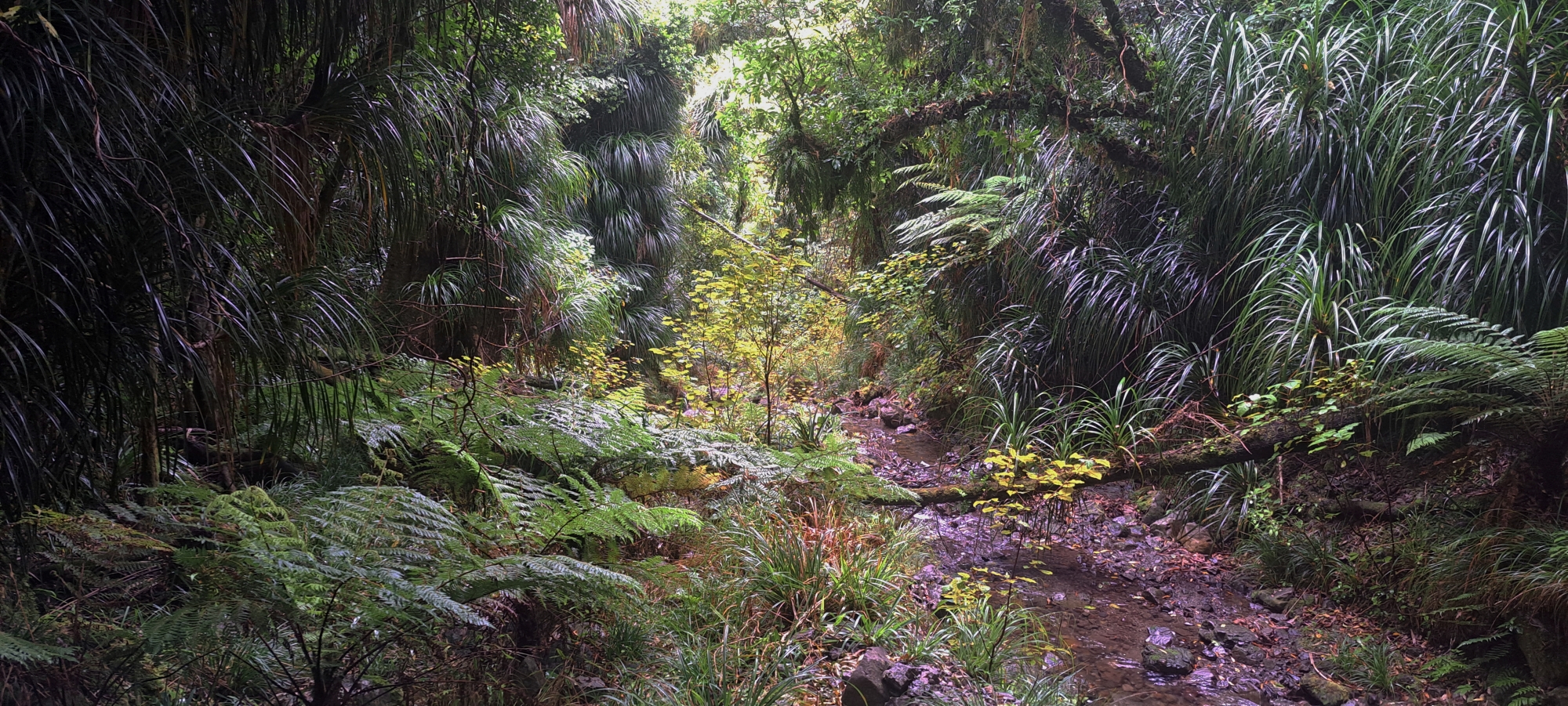
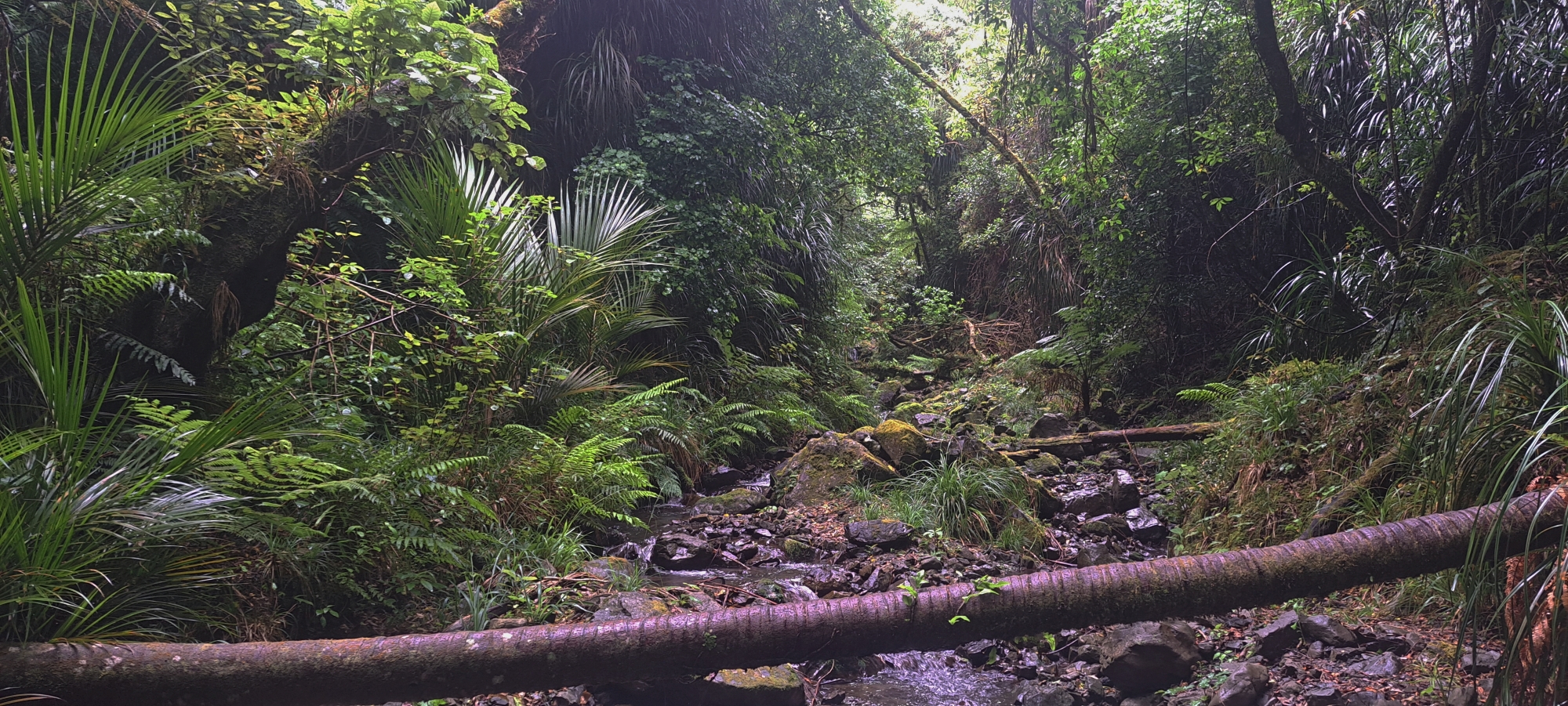
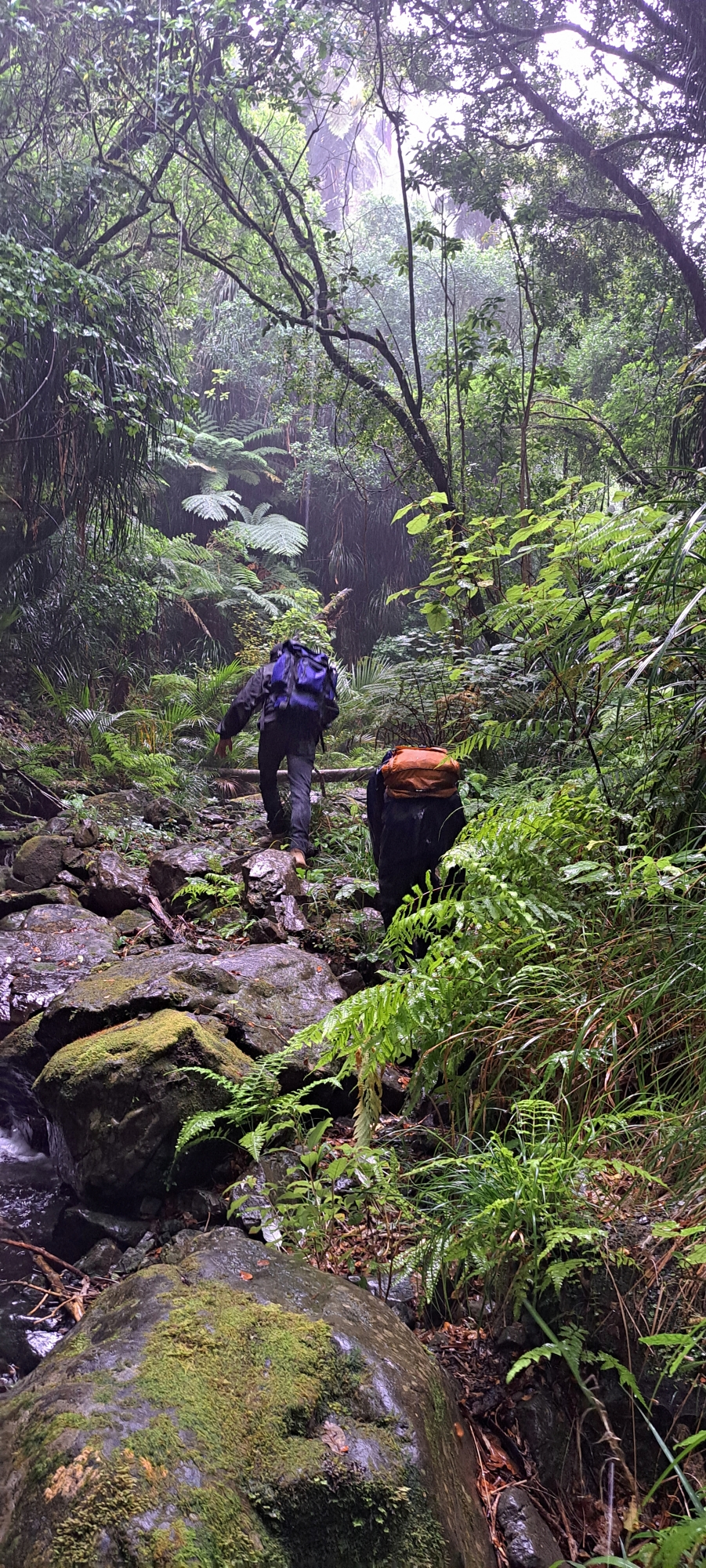 Today I ventured up Skerretts Creek with two friends to learn more about the Kittyhawk wreckage and, hopefully, discover new remnants. Rain had been forecast for the afternoon with fine spells in the morning, unfortunately the rain fell early, leaving the afternoon clear, so it was a wet walk. In light of this, we set off from the top of Sunny Grove and headed toward the creek wearing rain gear.
Water was running down the track leading toward the Whakanui Track, indicating that Skerretts Creek was most likely flowing higher than it had been in recent days. We passed two remaining water tanks, and one of the party explained that this route was once used by Land Rovers accessing the small water catchment further up the valley, where a worker once lived onsite. My guess was that the dwelling may have been the Black House. Where the track now branches toward the Whakanui Track bridge, a track continues onward for a bit, forming part of the old access road used by vehicles travelling to the catchment. This information was based on this person’s own experience when visiting the Kittyhawk wreckage multiple times in the early 1960s.
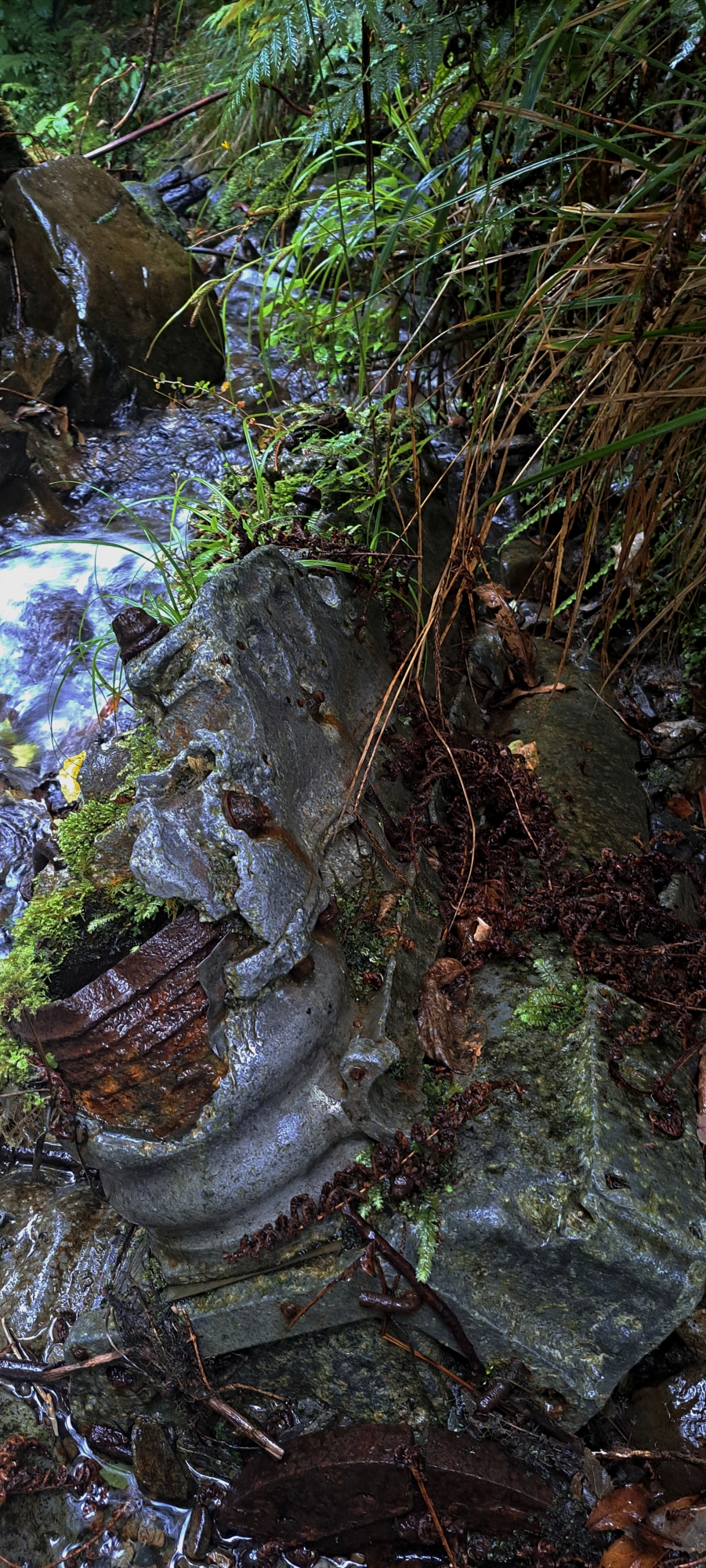
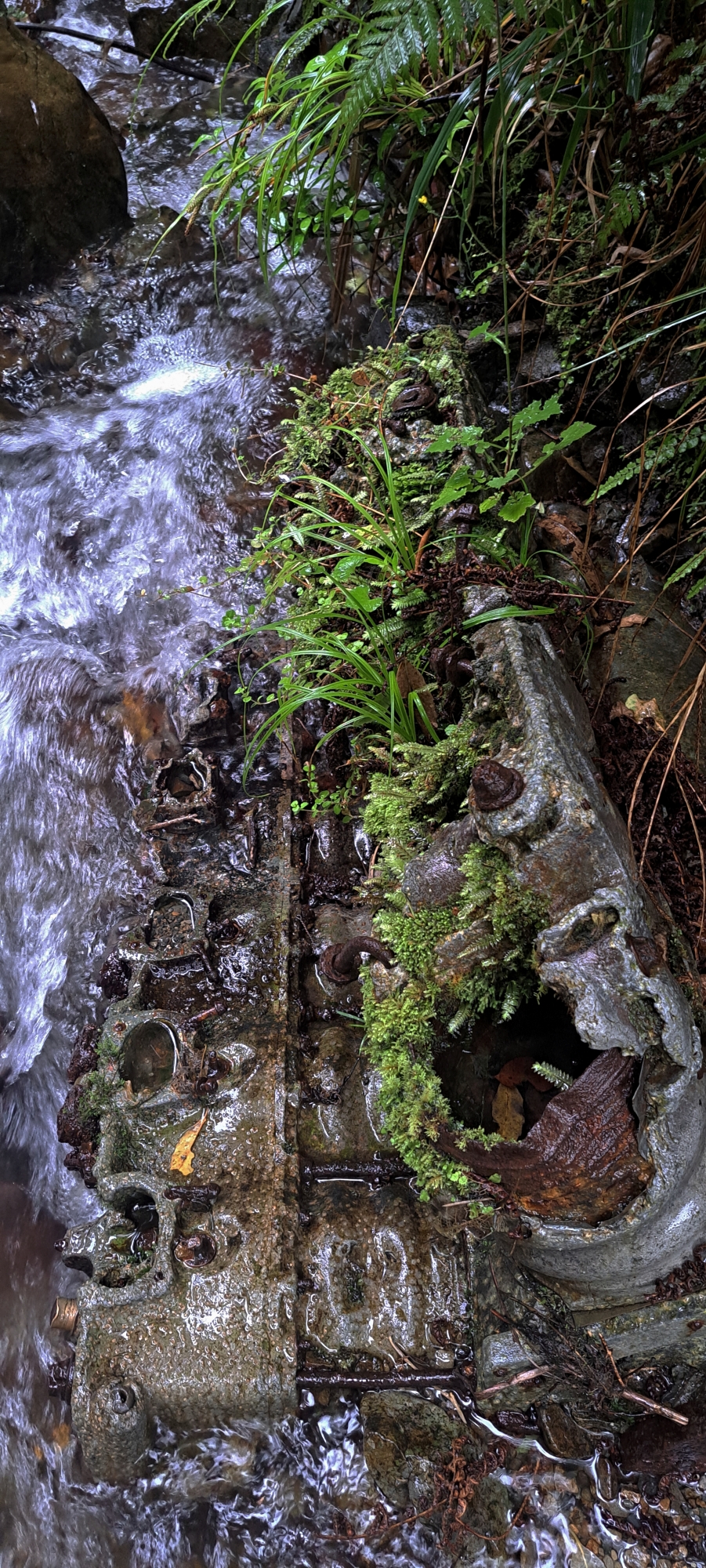
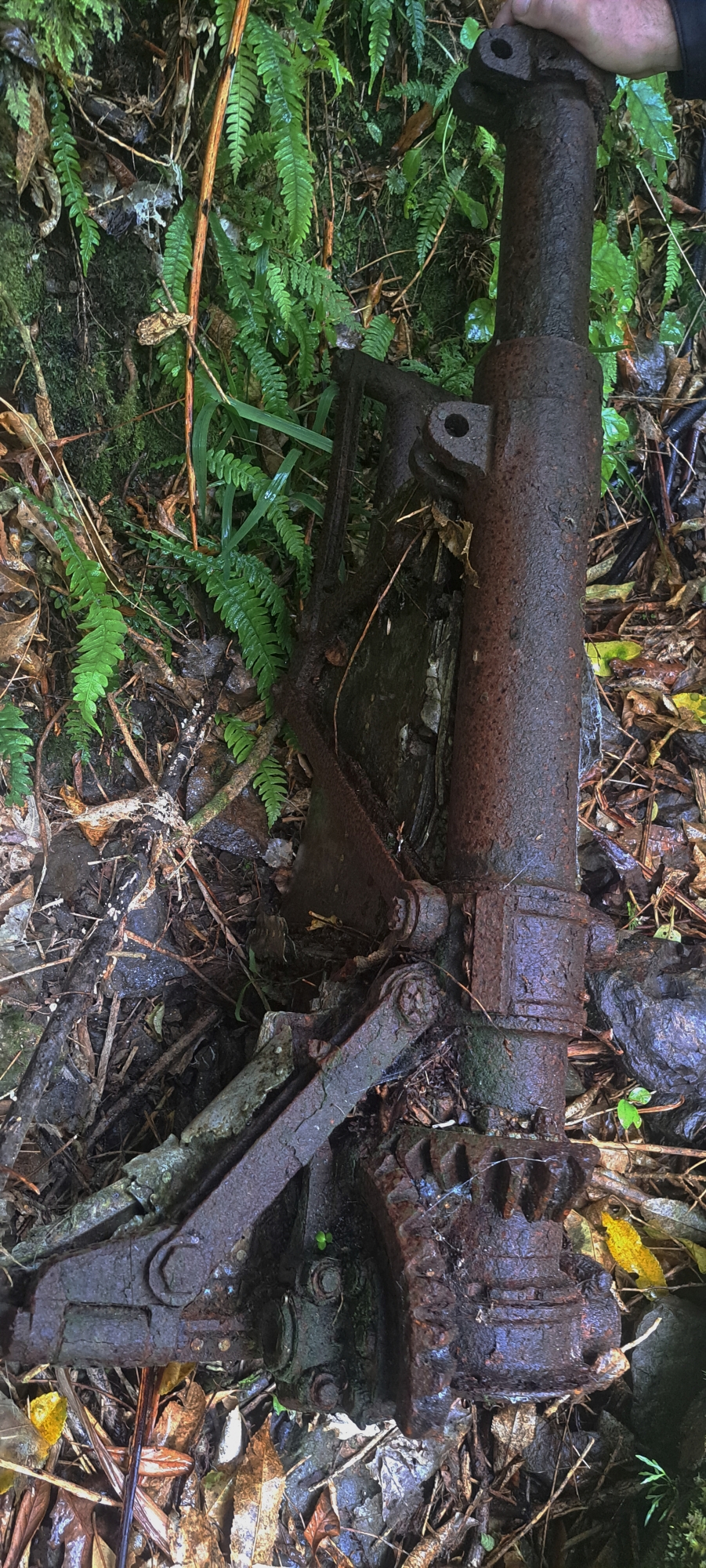
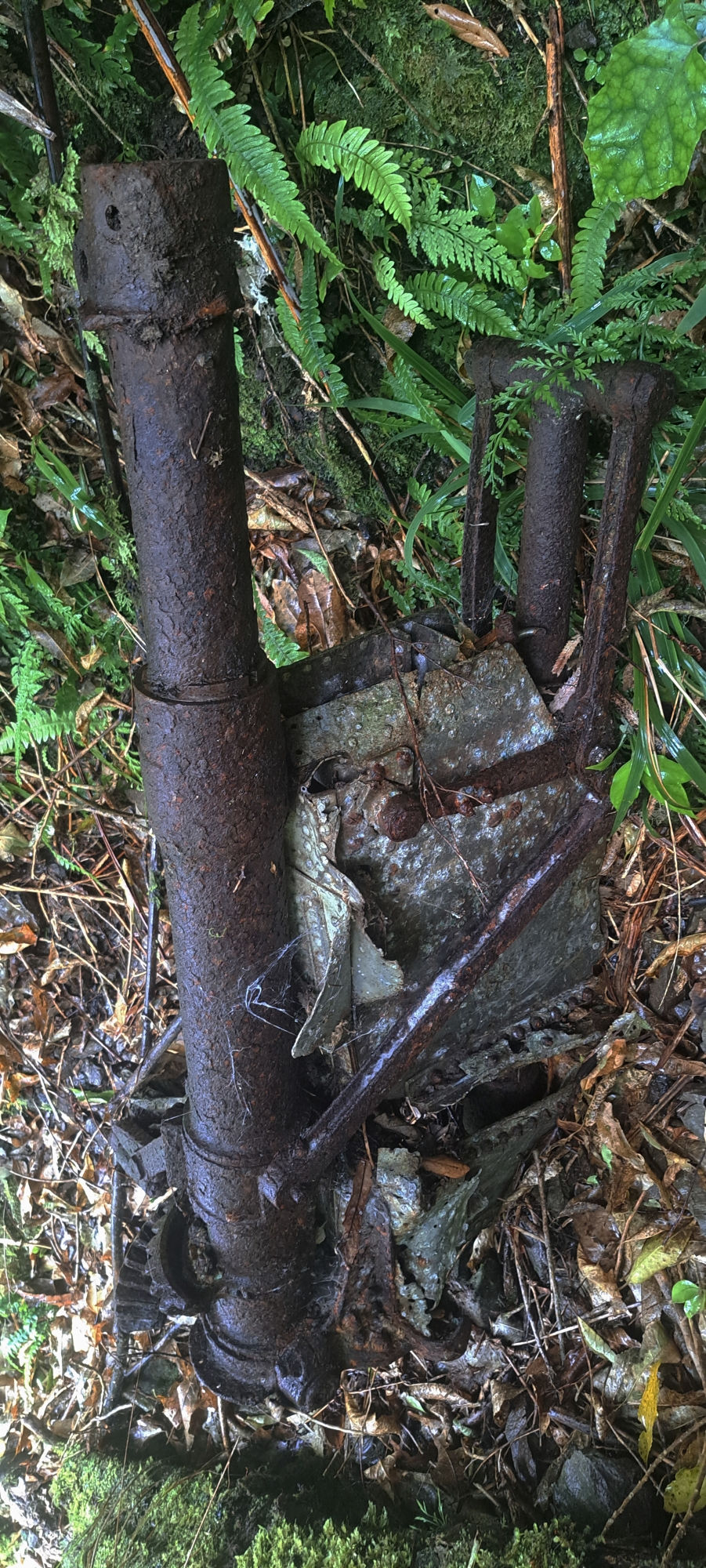
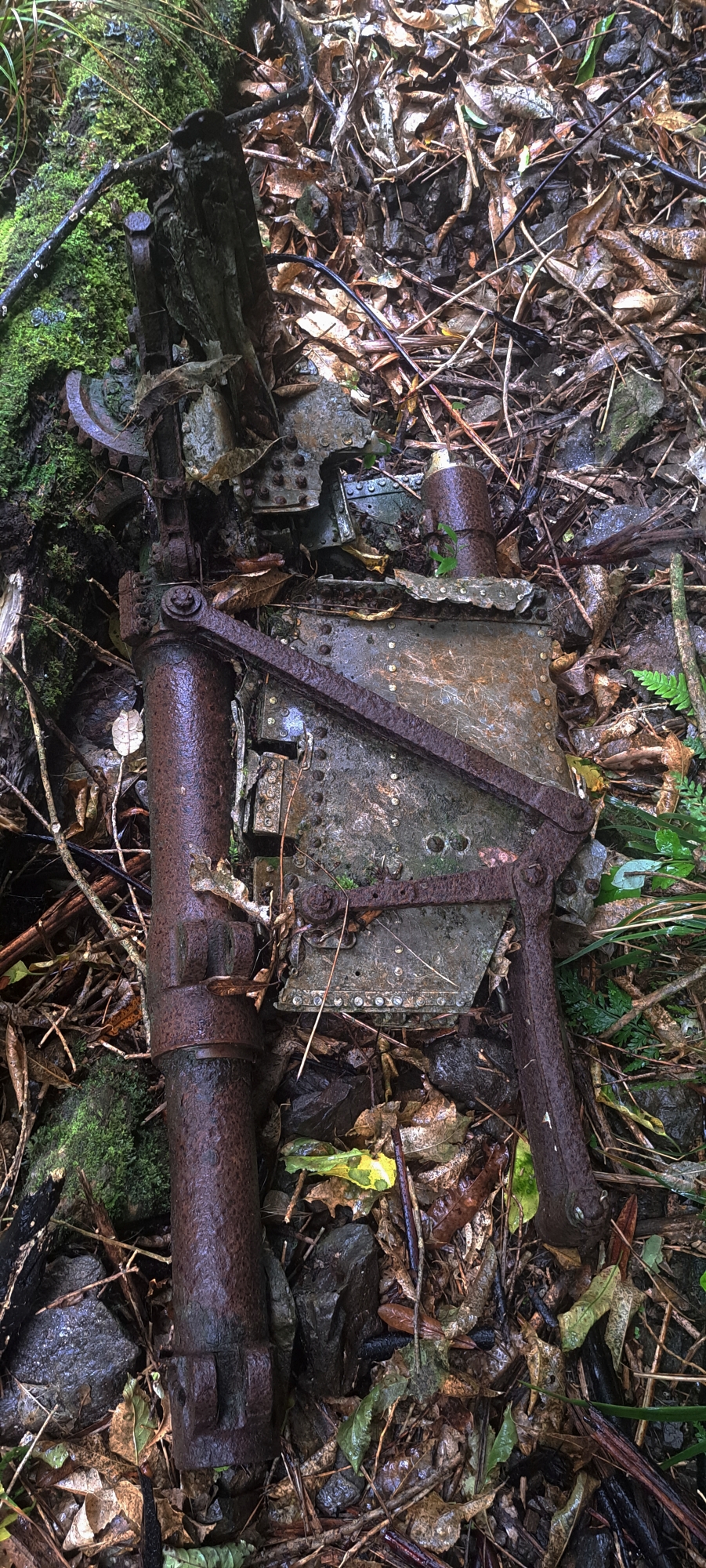
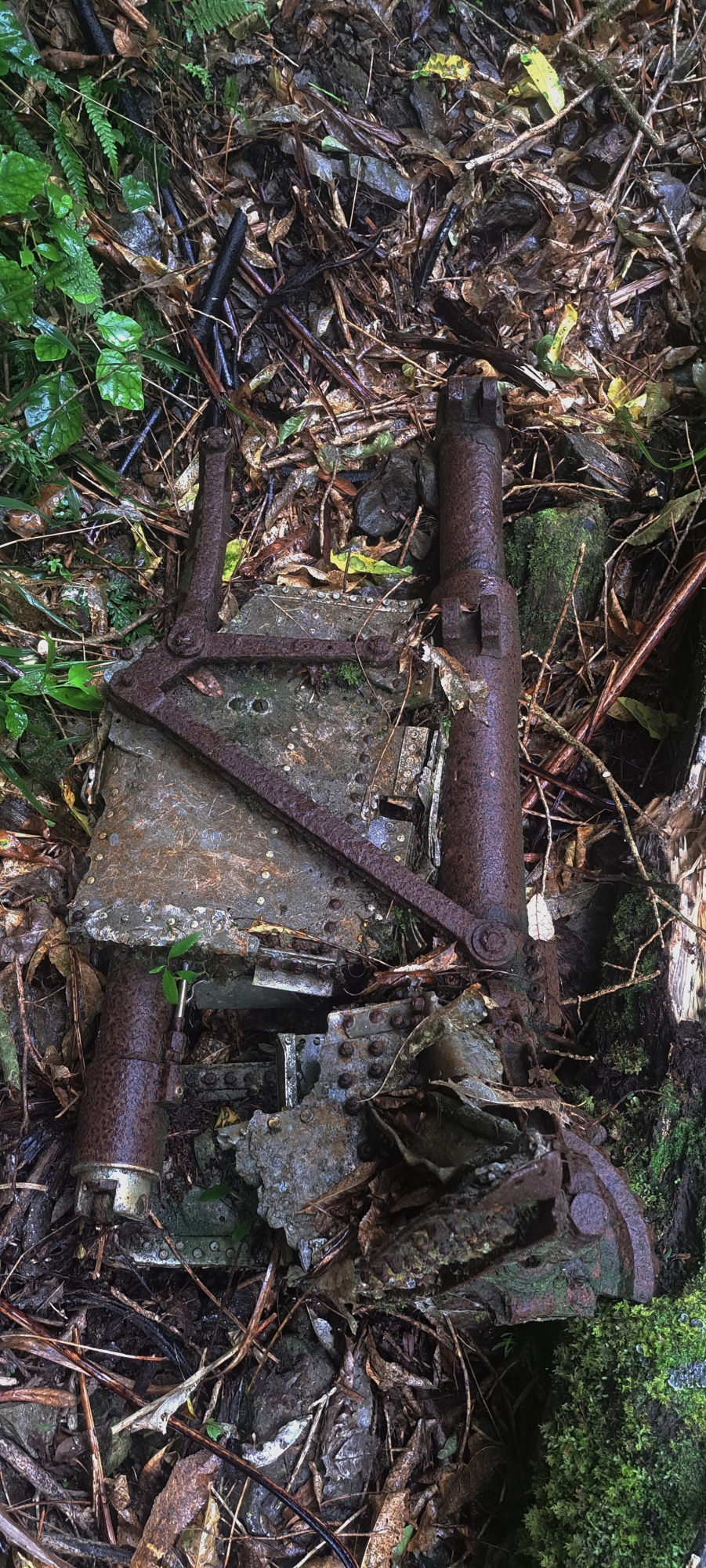
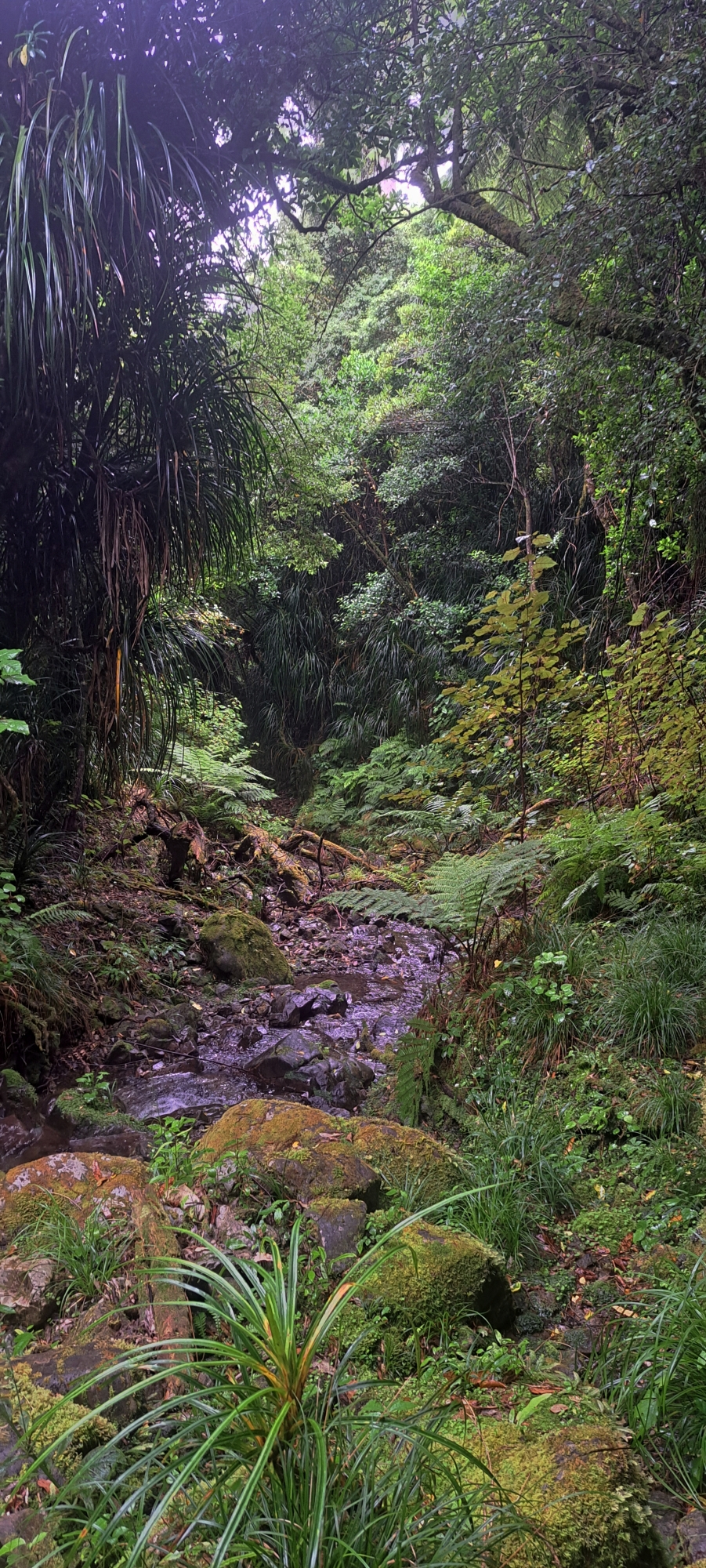
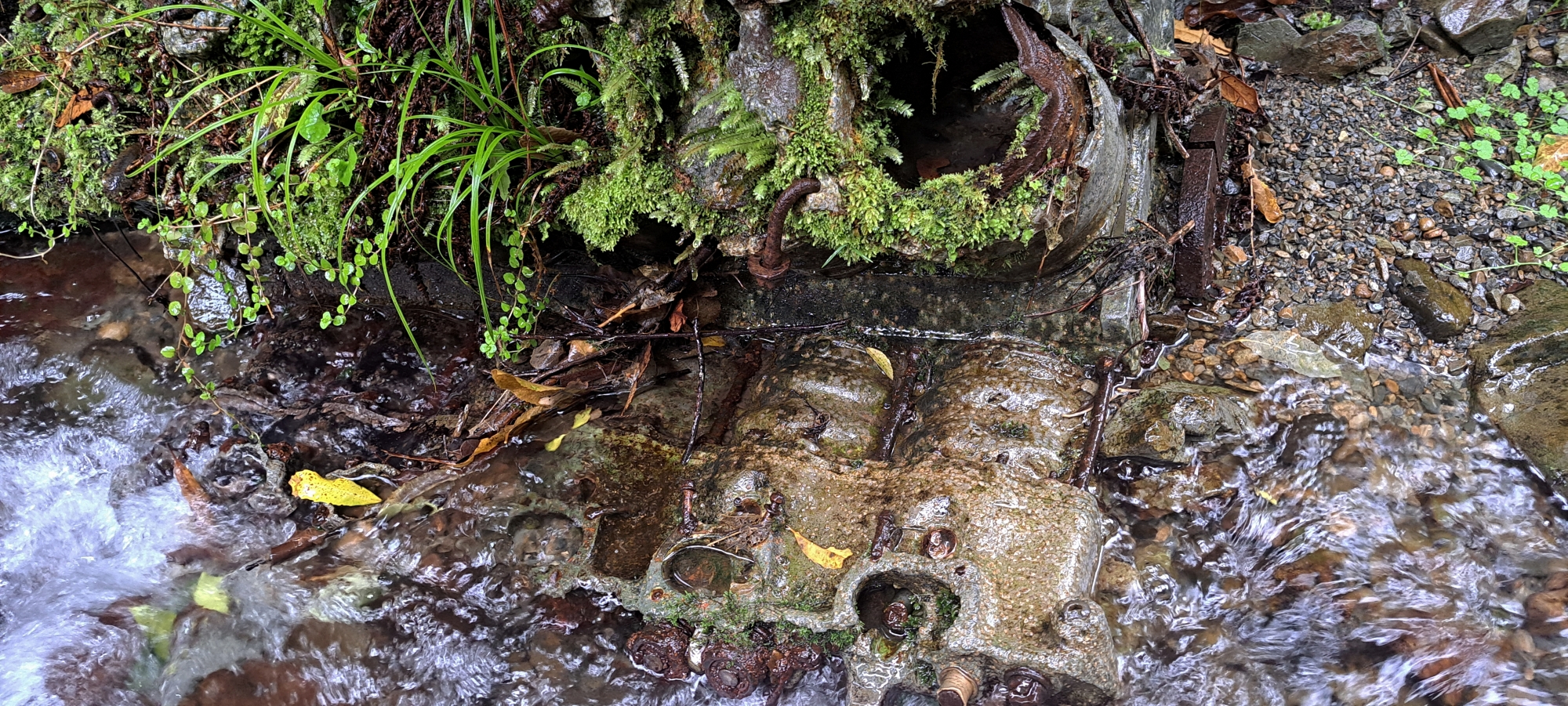
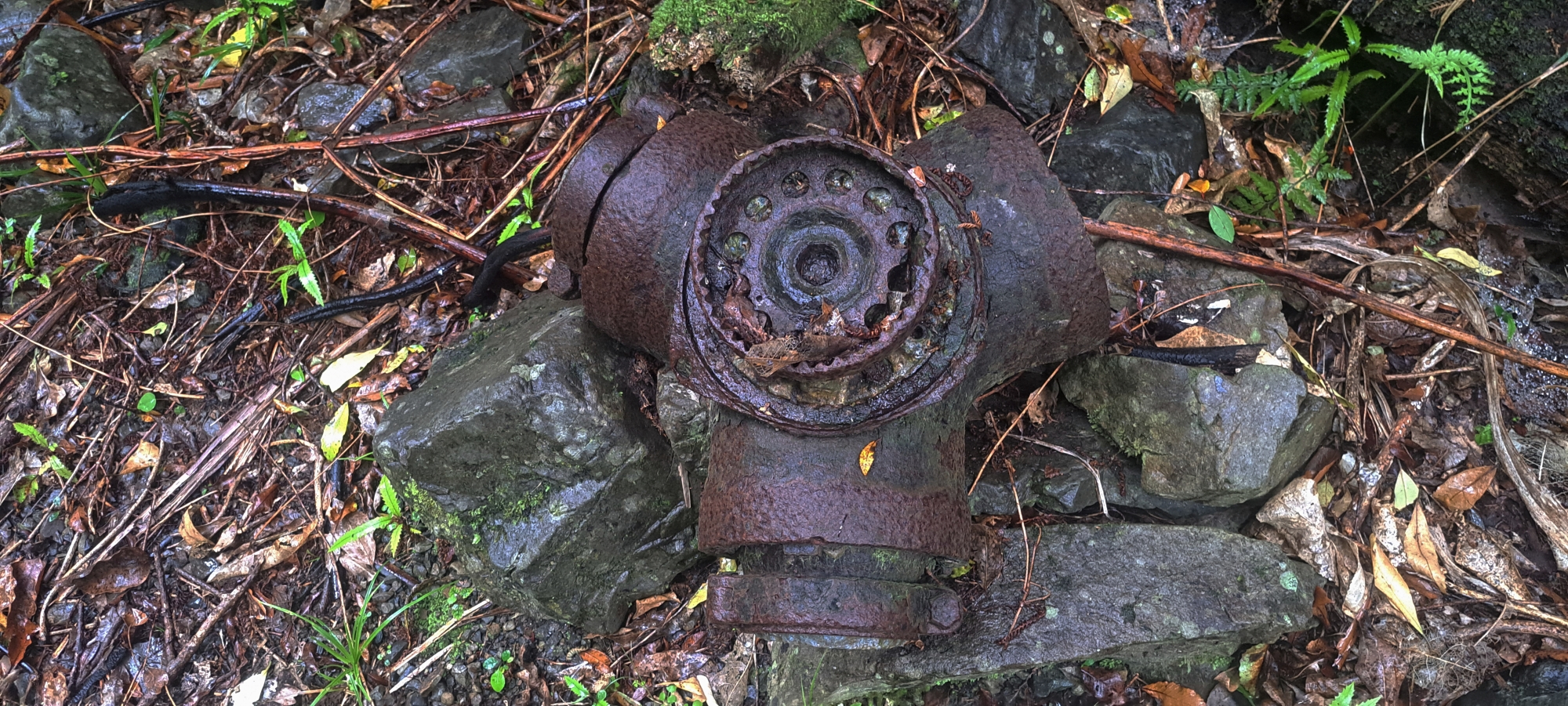
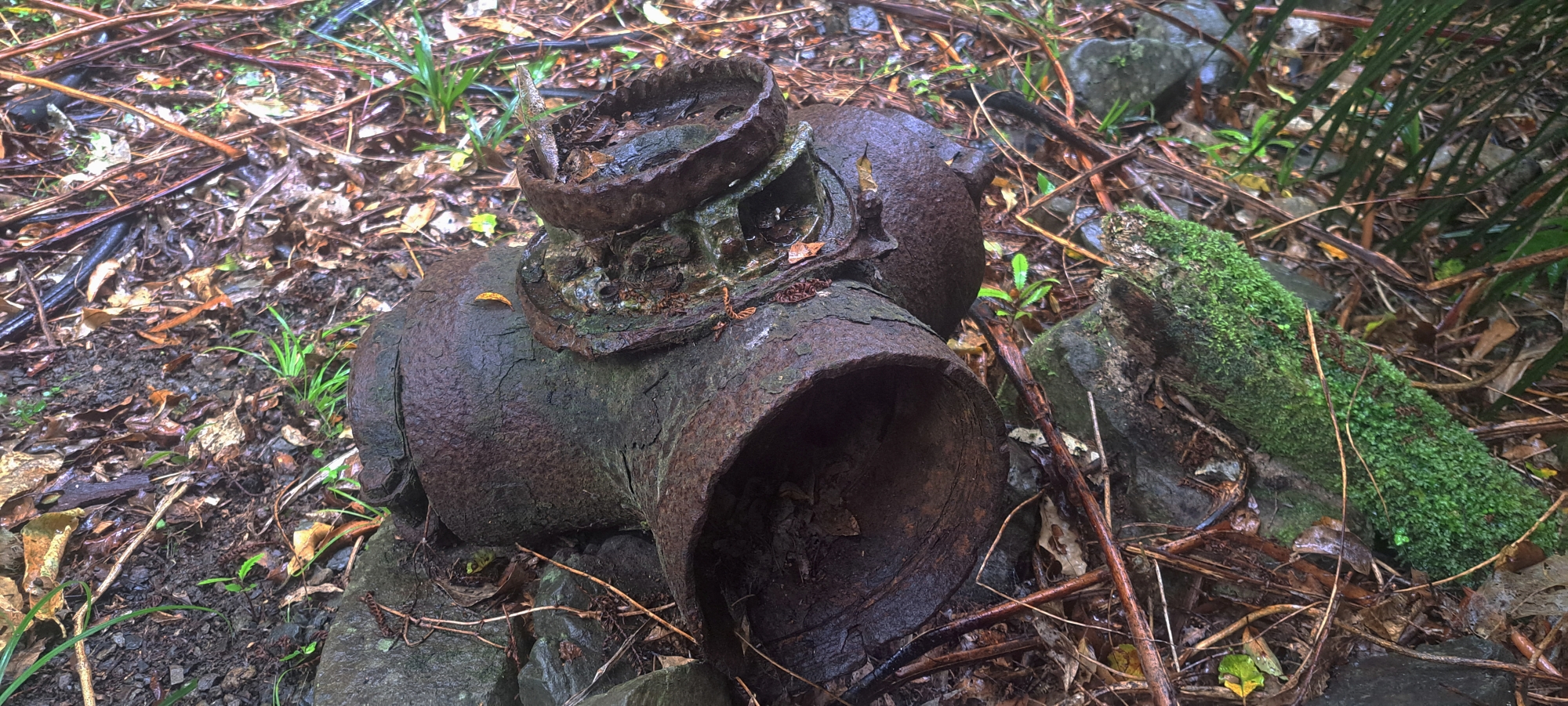
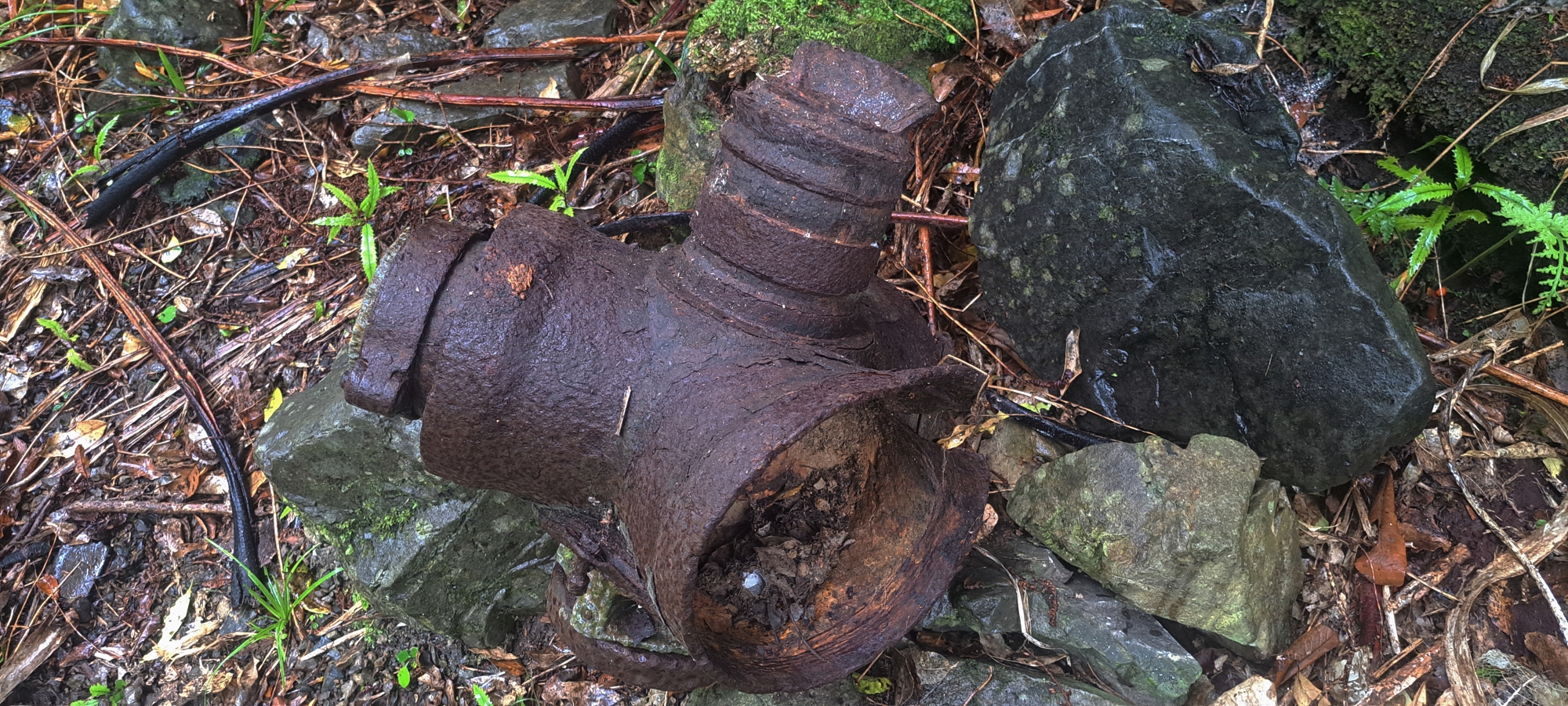
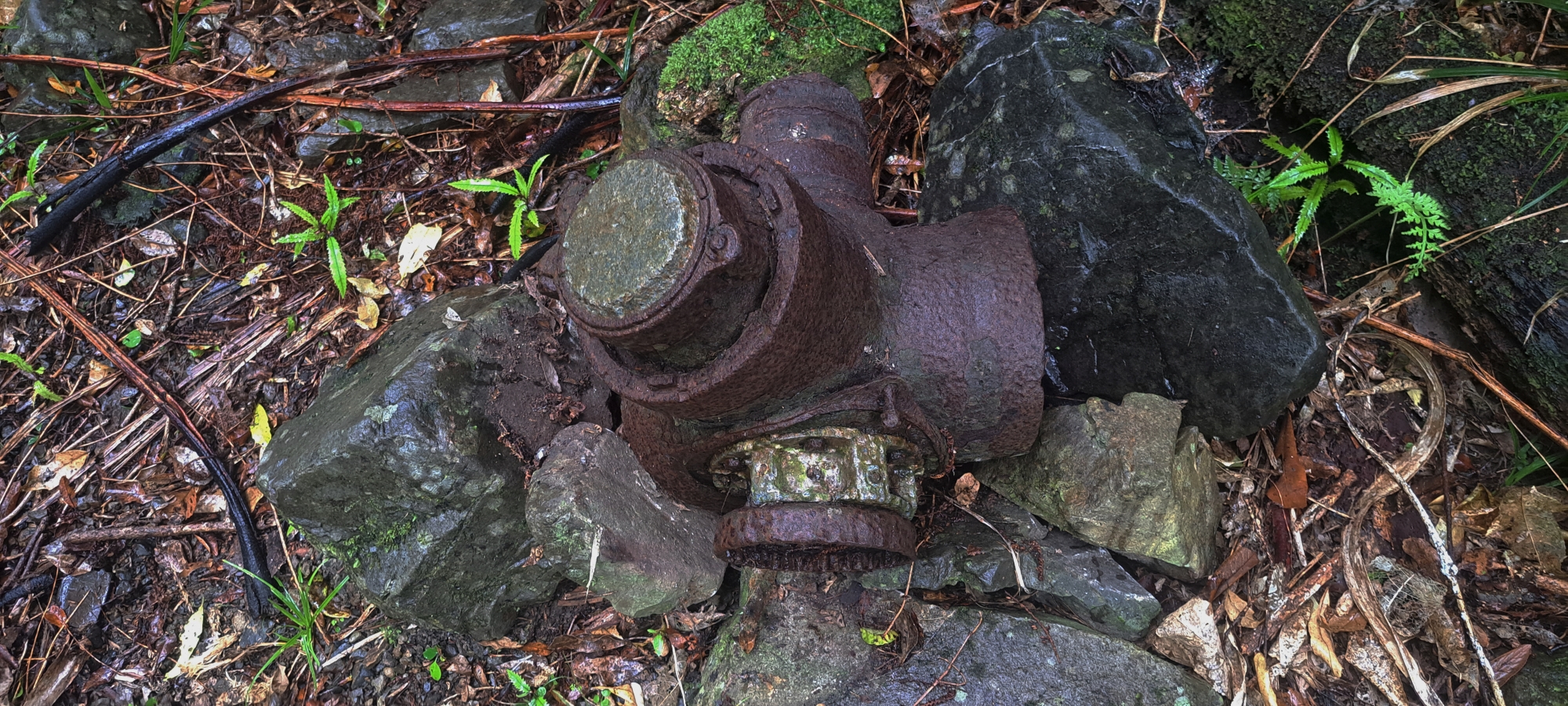
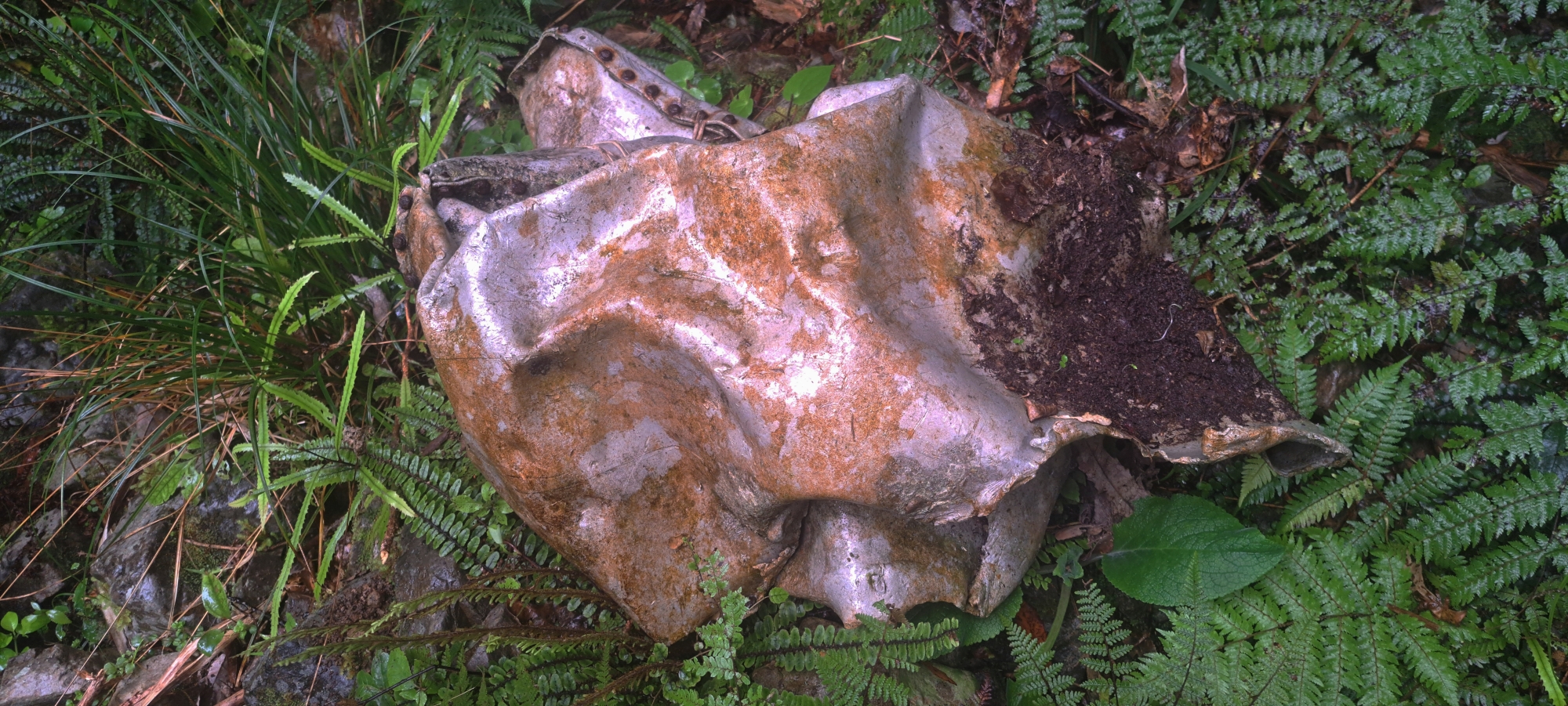
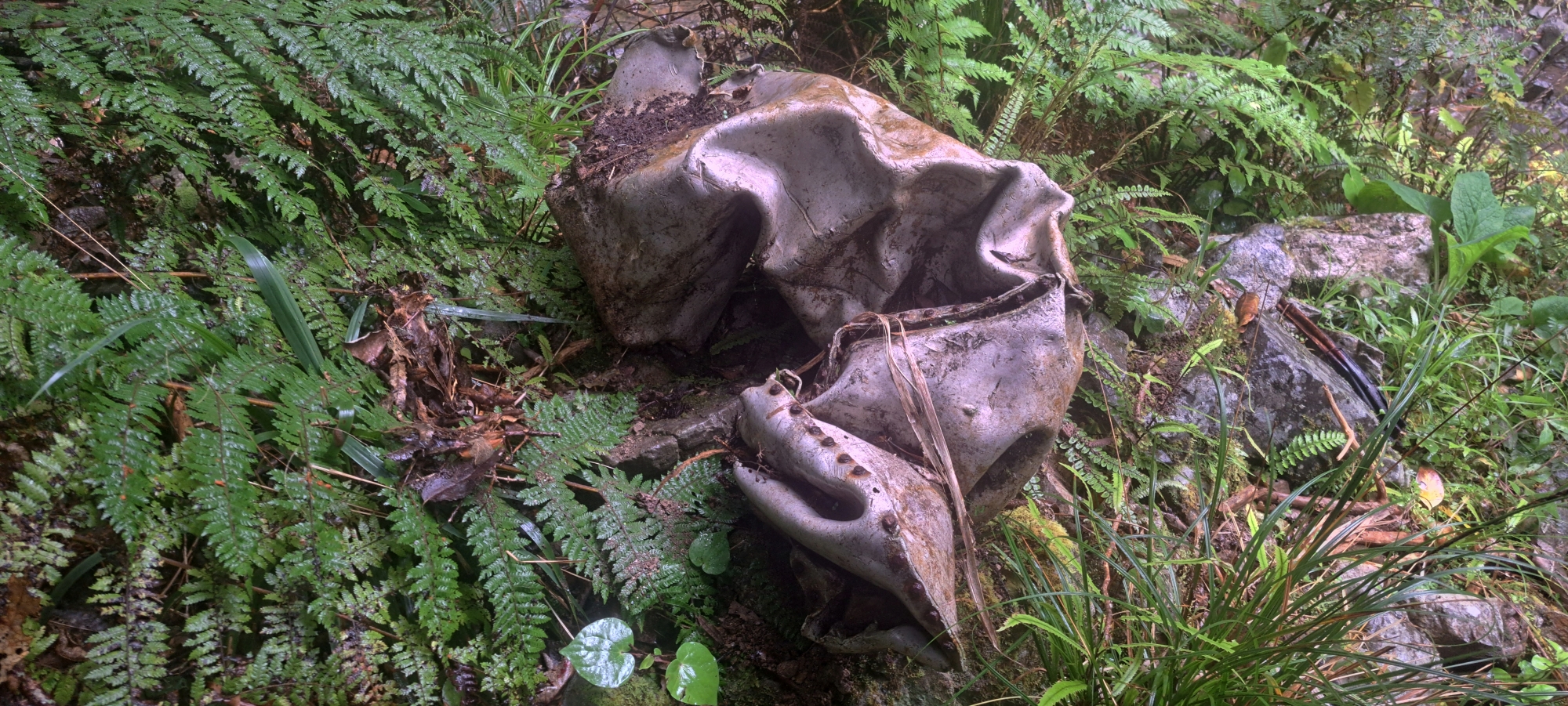
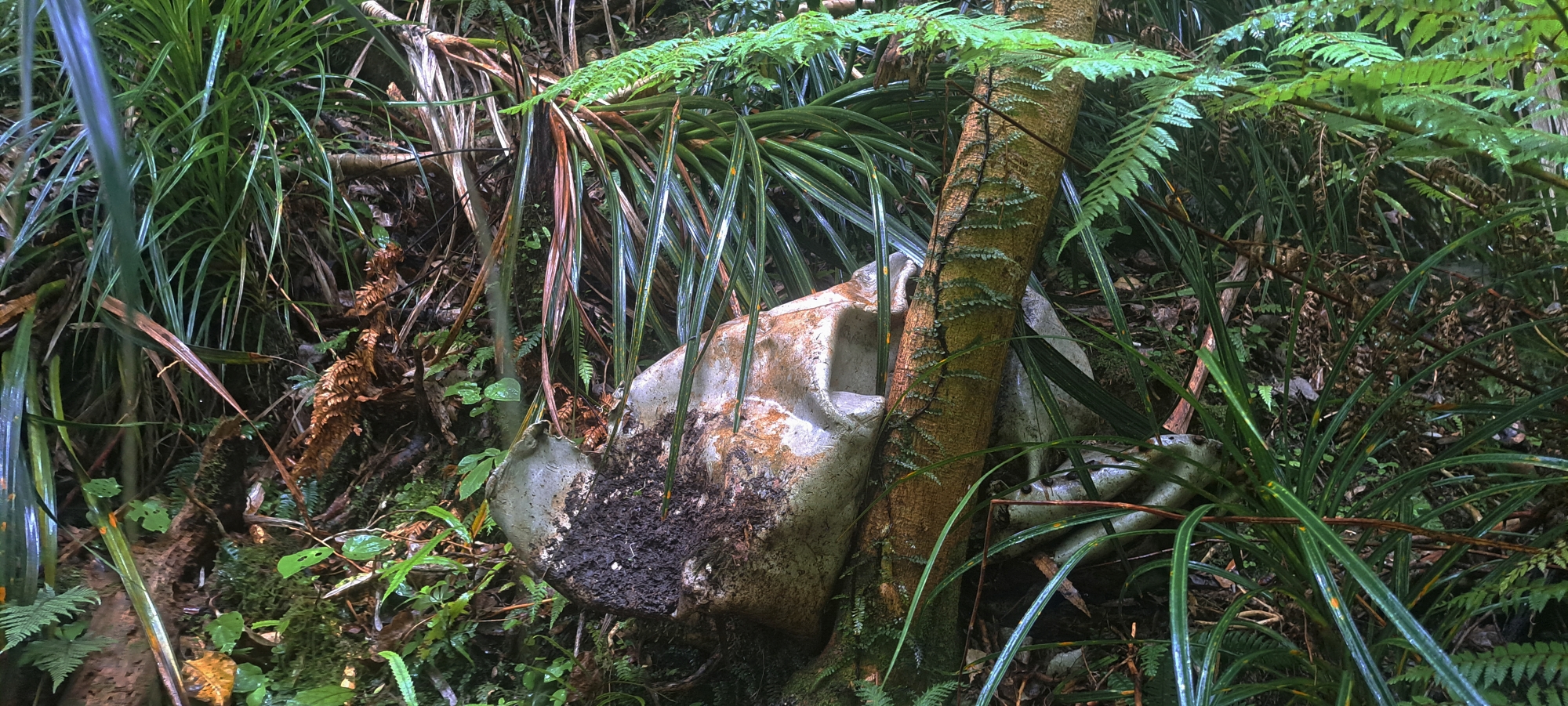
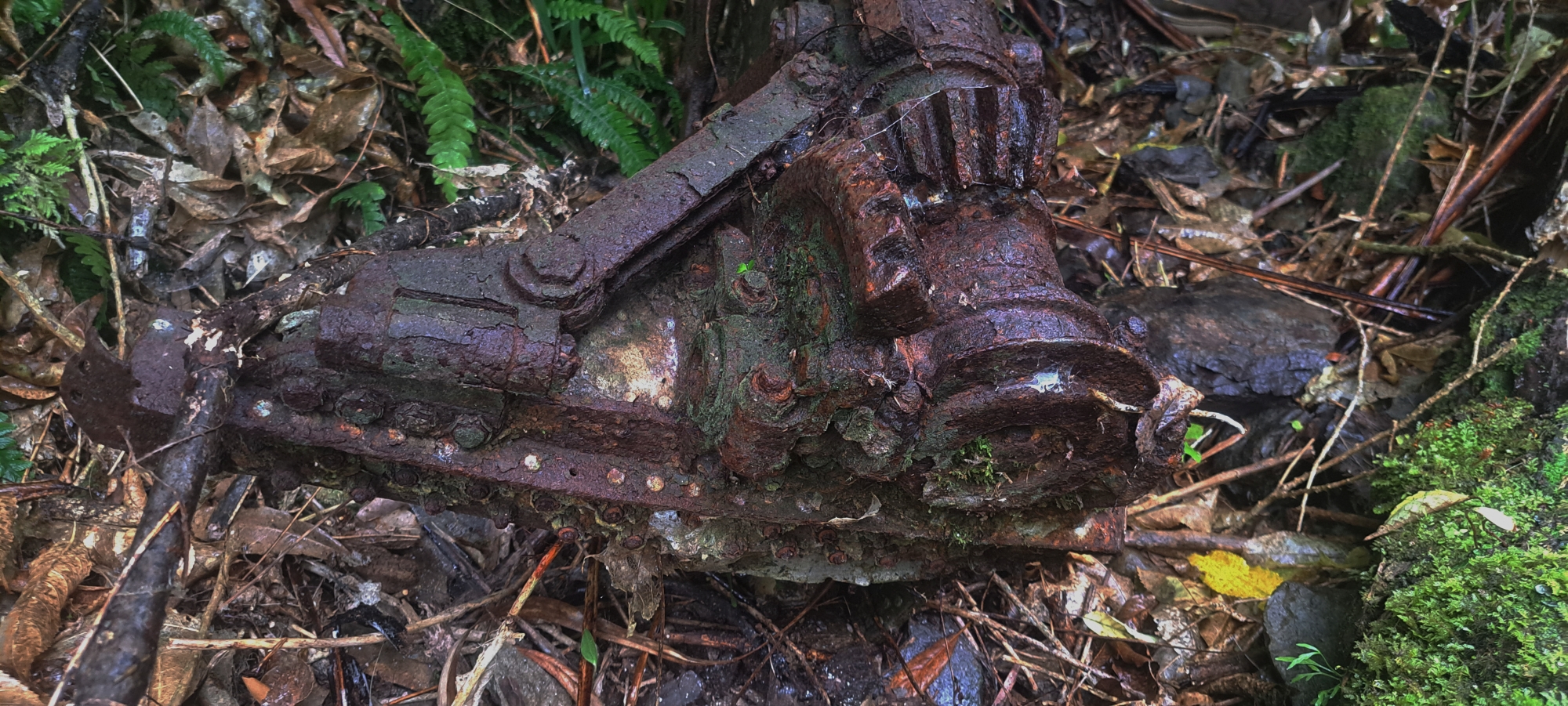
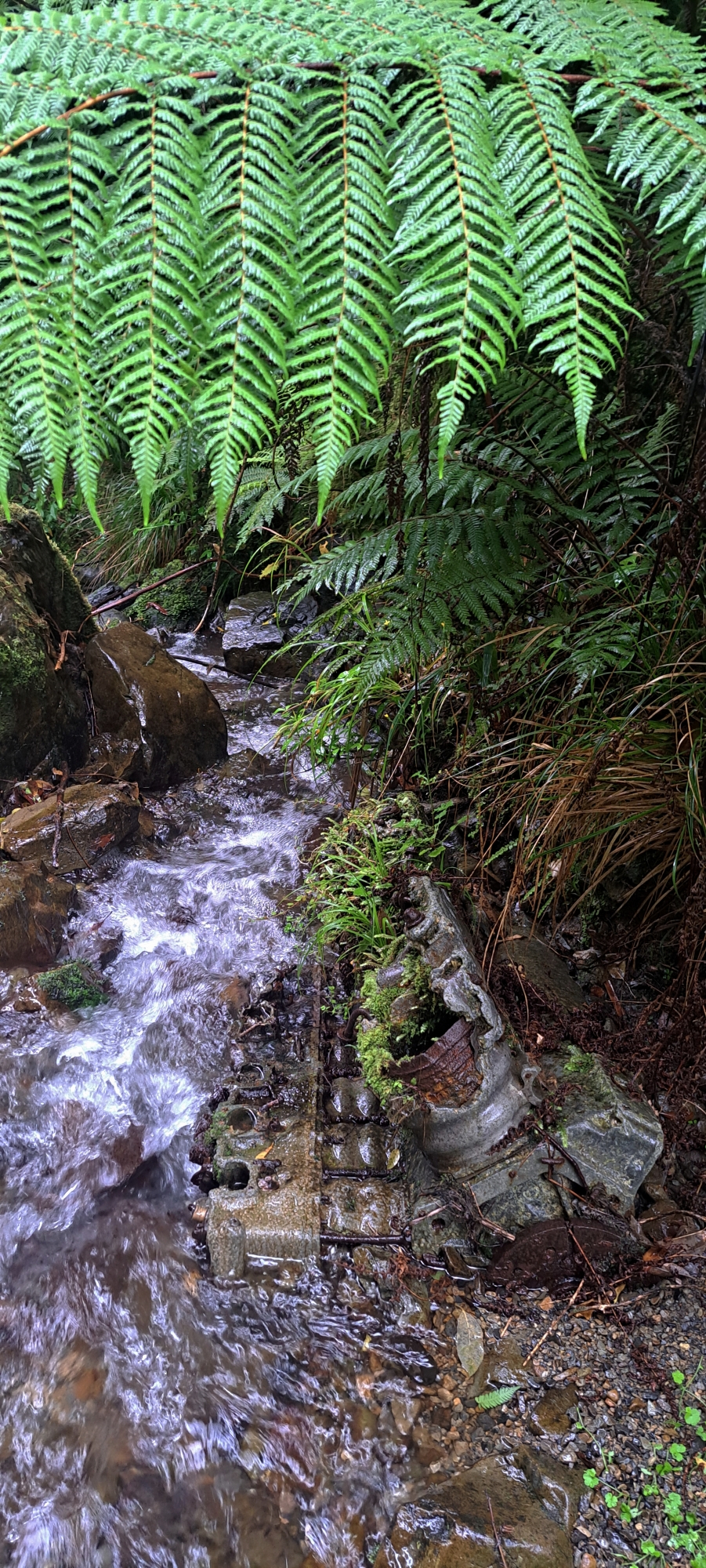 Reaching the section where pipes are visible in the creek, we moved above the catchment and continued upstream. After some time we came across the Kittyhawk engine, now far more exposed than it had been in recent years, with the creek having washed away a considerable amount of rocks and debris. We photographed the site, then located the propeller hub, followed by a metal tank and then a landing strut. After stopping for lunch, we began the return journey down the gully, expecting further rain that never eventuated. On the way back, one of the group found a piece of metal in the creek that was likely part of the aircraft wreckage. We also searched several areas where the same person believed a large artefact from the wreckage had once been buried beneath rocks, but nothing further was found.
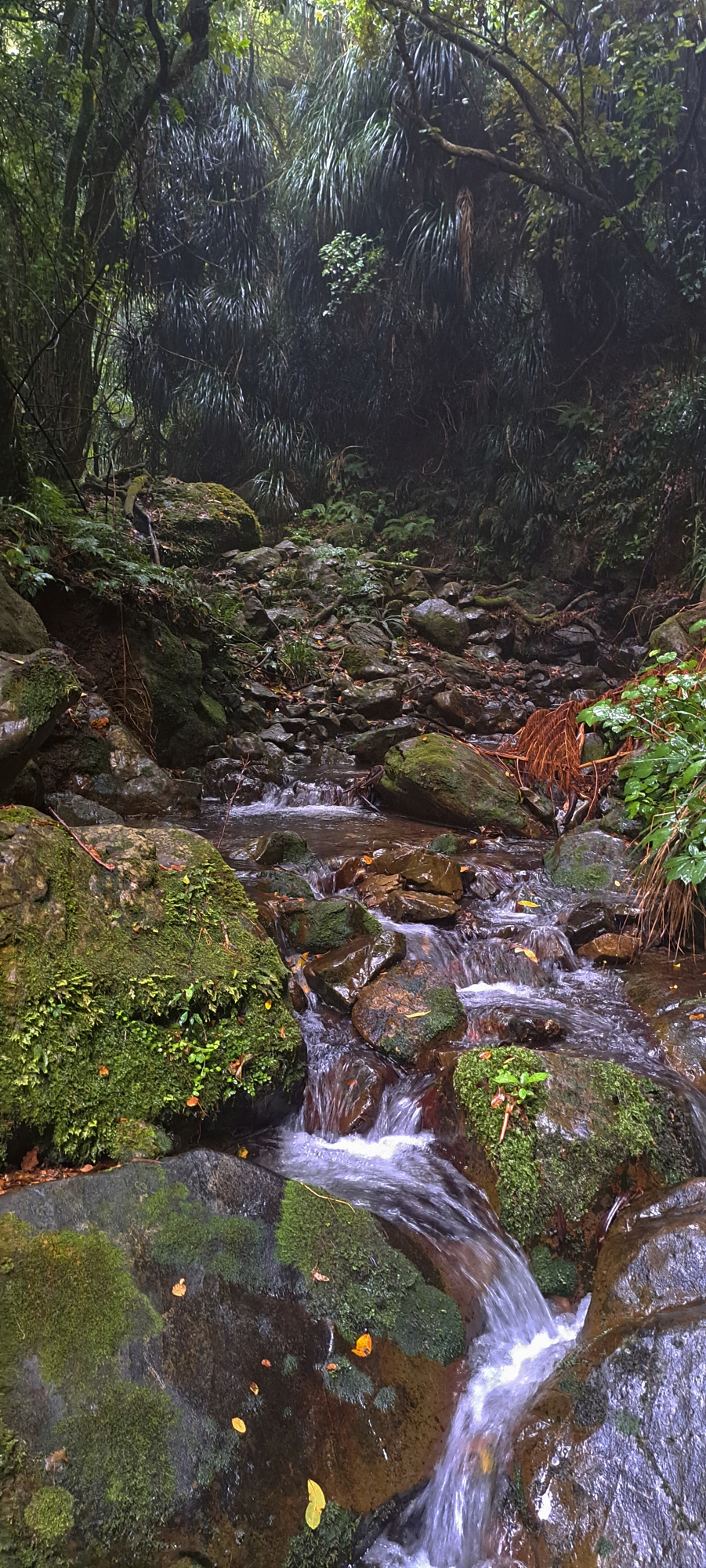
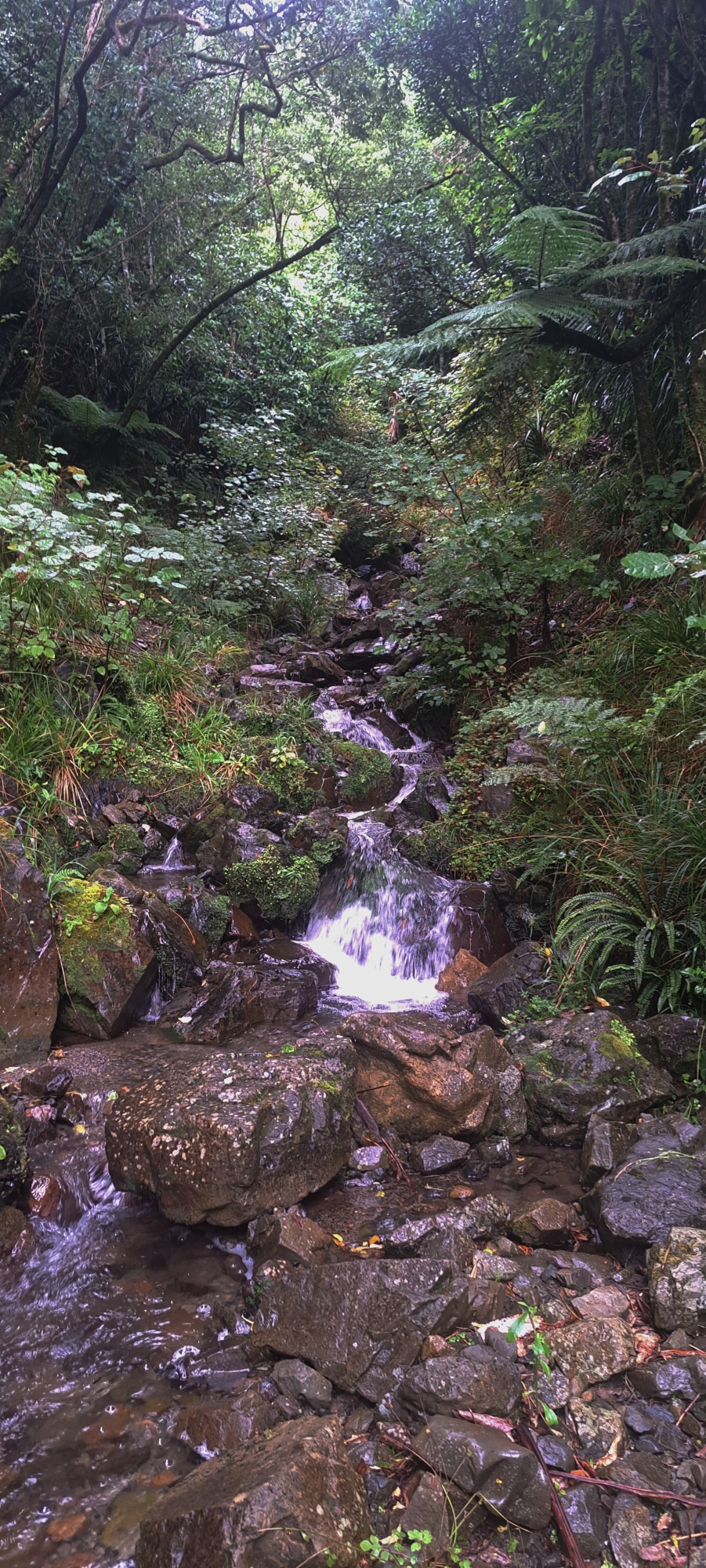
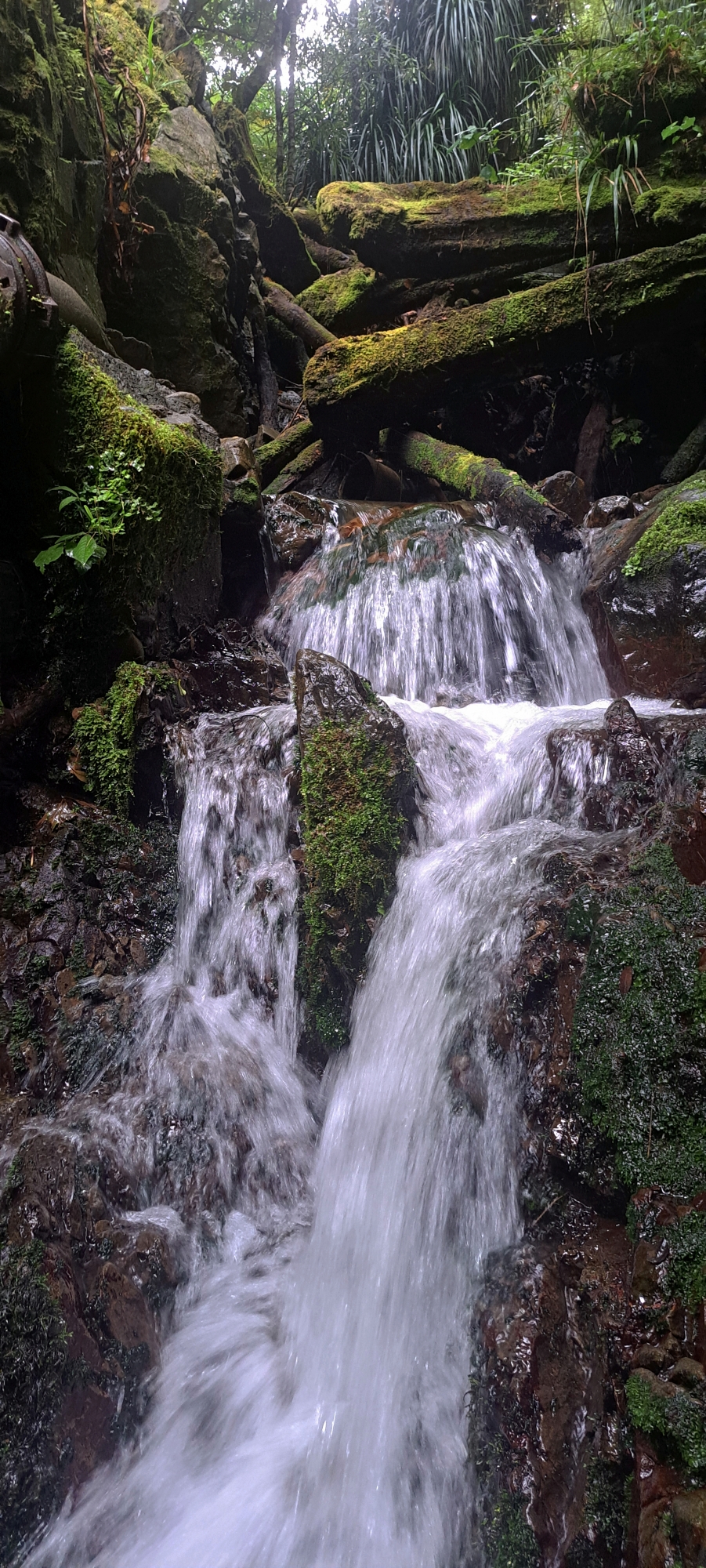 Just before we set off, the same member of the group mentioned that he had nearly trodden on a wasp nest. A few minutes later, in a different spot, I did exactly that and was stung twice on the back of my lower leg. Fortunately, a deep pool in Skerretts Creek was close by, and stepping into it quickly deterred any further attack. It also gave me the chance to photograph the small waterfall directly in front of me. The light rain likely softened the wasps’ response, certainly compared with the more severe encounter I experienced during Bush Bash 40, the drizzle tempering their aggression as they swarmed from the disturbed nest.
With this trek complete and having survived, we agreed that our next visit would take a top down approach to re examine the impact site, along with the fuselage remains, engine bearers and any additional fragments that may still lie in the top section of the gully.
My primary objective will be to confirm whether the location I have identified as the probable impact point aligns with the recollection of one of today’s party. He visited the site as a youth multiple times in the early 1960s and retains a clear memory of both the wreckage and the surrounding terrain. Naturally, the landscape has altered significantly over the intervening decades, with denser bush cover across the slopes and fresh slips reshaping sections of the gully. So confirming the impact site might still be a challenge.