
Wainuiomata’s rich pioneering history brings with it fascinating homes, huts, and buildings.
Wainuiomata’s history is deeply intertwined with its pioneering past, reflected in its unique homes, huts, and buildings. The area, originally a dense forested valley, was first settled in the mid-19th century by families seeking to establish a new life in the rugged landscape. Early settlers constructed simple timber huts and cottages from the abundant native trees, often utilising totara and rimu. These humble beginnings laid the foundation for a community that would evolve over decades, preserving elements of its pioneer roots.
In addition to homes, Wainuiomata is known for its historic communal buildings, such as old schools, churches, and halls. These structures were often built through the combined efforts of settlers, reflecting the strong sense of community. For example, the Wainuiomata Pioneer Church, built in 1866, remains a cherished landmark. It serves as a testament to the resilience and faith of the valley’s early residents.
Throughout the 20th century, Wainuiomata experienced significant development, particularly during the post-war housing boom. The valley became a sought-after location for families, leading to the construction of state housing and modern suburban dwellings. Despite this growth, the area has retained elements of its historical charm. Walking through Wainuiomata today, one can still find a blend of old pioneer cottages and mid-century homes, each with its own story to tell.
Town Central
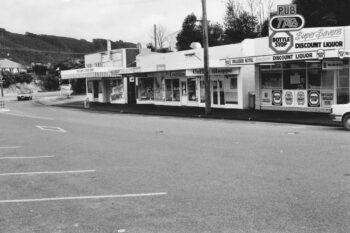 Before Queen Street was built, Wainuiomata’s main shops were in The Village at Homedale. In the 1950s, rapid growth led to Queen Street’s development as the new commercial centre, complete with a mall and surrounding shops. Over time the mall declined, and Progressive Enterprises redeveloped part of the site with a Woolworths supermarket and large car park on The Strand. McDonald’s stayed on, and The Strand became the main retail hub, drawing other large stores.
Housing
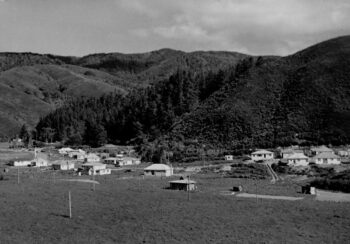 In the 1920s, Wainui-o-Mata Development Ltd bought 1,600 hectares for housing and began work on a tunnel to the Hutt, though the Depression halted progress. After WWII, state housing drew young families, and the valley became known as “Nappy Valley”. Many of those houses are now being replaced by modern units.
Historic Homes
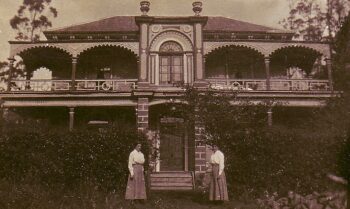 The oldest homes in Wainuiomata include cottages, houses, and even a mansion. Settlers built houses crafted in traditional colonial styles. Often simple, they were functional, with gabled roofs and wide verandas to suit the valley’s wet climate. Some of these homes still stand today, offering a glimpse into Wainuiomata’s early days. One notable feature of these residences is their use of native timber, which not only provided structural integrity but also showcased the beauty of local materials.
Huts
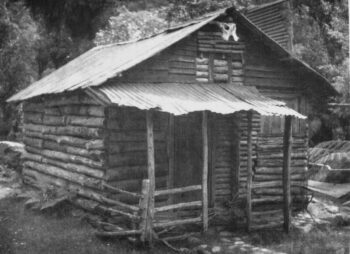
The oldest homes in Wainuiomata include cottages, houses, and even a mansion. Settlers built houses crafted in traditional colonial styles. Often simple, they were functional, with gabled roofs and wide verandas to suit the valley’s wet climate. Some of these homes still stand today, offering a glimpse into Wainuiomata’s early days. One notable feature of these residences is their use of native timber, which not only provided structural integrity but also showcased the beauty of local materials.
Camps
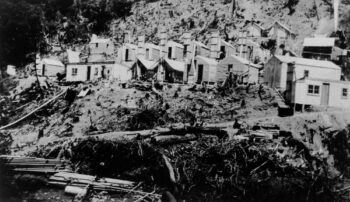
Work camps in Wainuiomata were established to support major public works, especially water supply projects. Set in remote bush locations, they housed labourers building dams, tunnels, and pipelines. These camps were most active from the 1920s to the 1950s..




DISCUSSION