
Wainuiomata’s History of Workers’ Camps and Recreation Camps
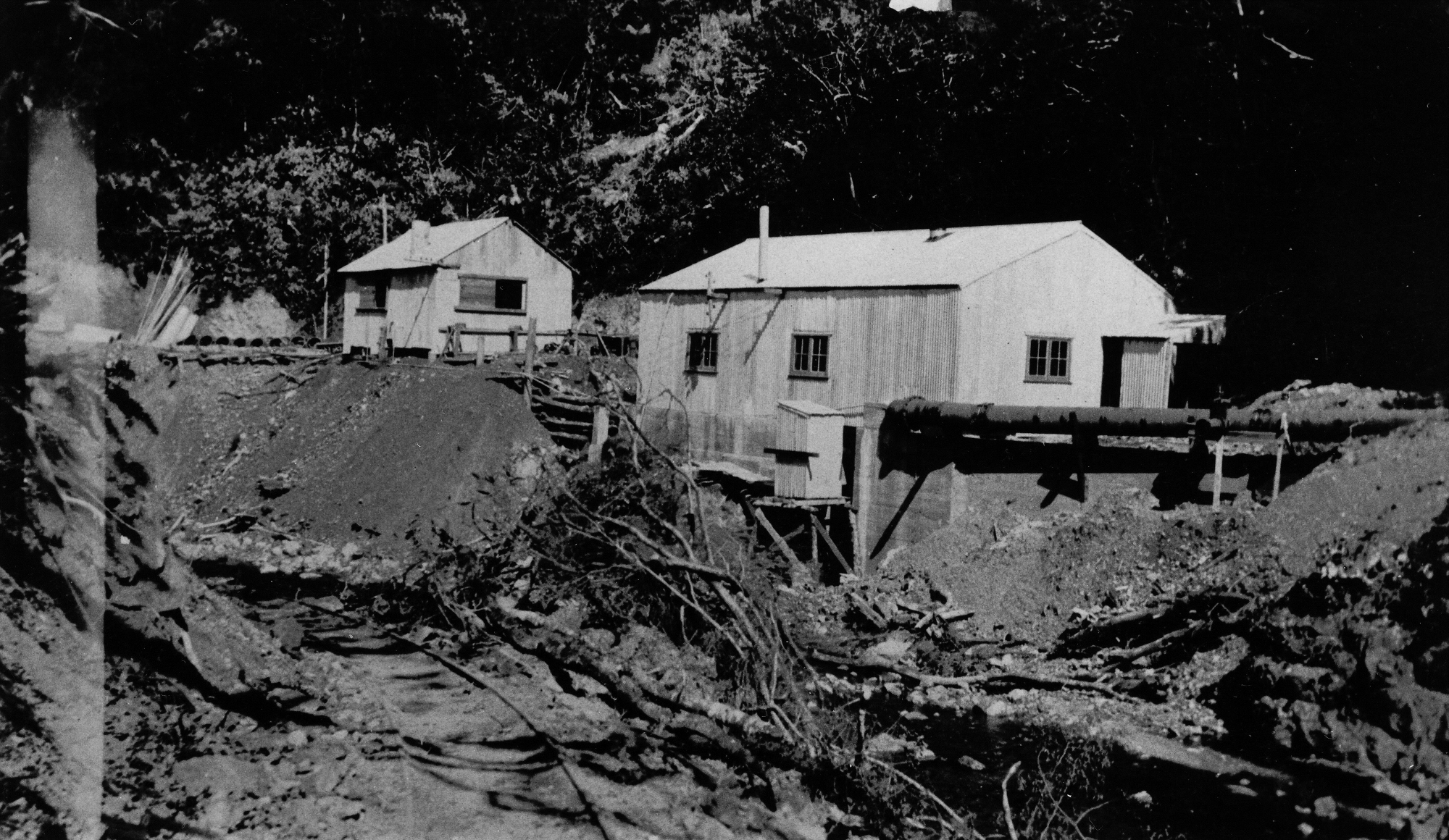
Workers Camps
The history of work camps in Wainuiomata is closely tied to major infrastructure projects that were essential to Wellington’s development, particularly in water supply. These camps were often set up in remote bush locations to house labourers working on large-scale public works such as dams, tunnels, and pipelines. The most notable period for these camps was the early 20th century, especially the 1920s to the 1950s.
Navvy-town
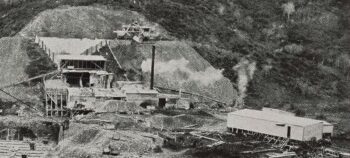 Navvytown was a rugged bush settlement established in the 1880s to accommodate workers constructing the Lower Wainuiomata Dam, the valley’s first major water supply reservoir. Situated in what is now the Waterworks Reserve, the camp comprised timber and corrugated iron huts along with other temporary structures. Conditions were primitive and frequently muddy, but it housed a substantial workforce of navvies who played a vital role in the early development of Wellington’s water infrastructure.
Semple’s Camp
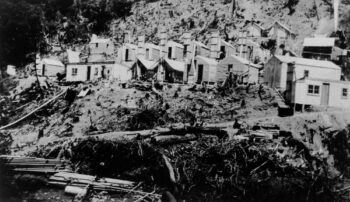 Semple’s Camp was established in 1920 in the bush near the Orongorongo Tunnel to support the construction of the tunnel, laying of pipes, creation of the road, cutting of the bridle track, and to work at the Orongorongo Water Catchment on the other side of the tunnel. This major project connected the Orongorongo and Wainuiomata valleys for Wellington’s water supply. Led by Robert Semple and built on co-operative labour principles, the camp housed up to 60 workers in well-maintained huts with a communal kitchen and dining room. It was praised for its cleanliness, morale, and efficient organisation, with visiting councillors noting its high standards and the quality of food provided. A steep bridle track was later cut through dense forest to connect the camp to a second site on the Orongorongo side, allowing tunnelling from both ends.
Recreation Camps
Wainuiomata has a long history of recreation and holiday camps, especially from the mid-20th century onwards, when its secluded bush setting and
proximity to Wellington made it an ideal location for outdoor education, church camps, and youth retreats.
Brookfield
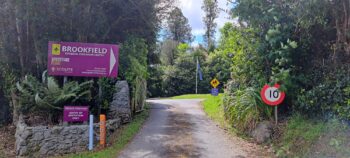 Brookfield Scout Camp, now known as the **Brookfield Outdoor Education Centre**, is a premier Scouts NZ facility situated at the upper end of Moores Valley Road in Wainuiomata, roughly a 40‑minute drive from Wellington. Originally bequeathed in 1958 by Mary Crowther, it spans over 260 hectares of native bush and parkland and provides cabins, lodges, indoor spaces, and extensive camping grounds for Scouts, school groups, and community organisations ([brookfield.scouts.nz][1]). Its history of hosting youth camps is long-standing, with the Centre having hosted major events such as the 25th and 38th National Rover Moots in 1967 and 1980, underscoring its enduring importance in outdoor education and Scouting culture.
Camp Wainui
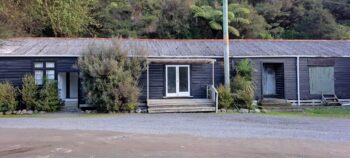
Camp Wainuiomata, formerly the Boys’ Brigade Camp, is set in a sheltered valley. It offers native bush walks with tracks that lead into the nearby Remutaka Forest Park. There are open grassy fields for sports and camping, and a lagoon for swimming or canoeing. Accommodation includes the Peter Burgess Lodge, Grattan Bushline Hut, and powered sites for caravans and tents. The camp has been operated by the Boys’ Brigade Camp Wainui Trust since the 1940s. Facilities also include meeting pavilions, amenity blocks, and a ropes course.
Grace’s Stream Campsite
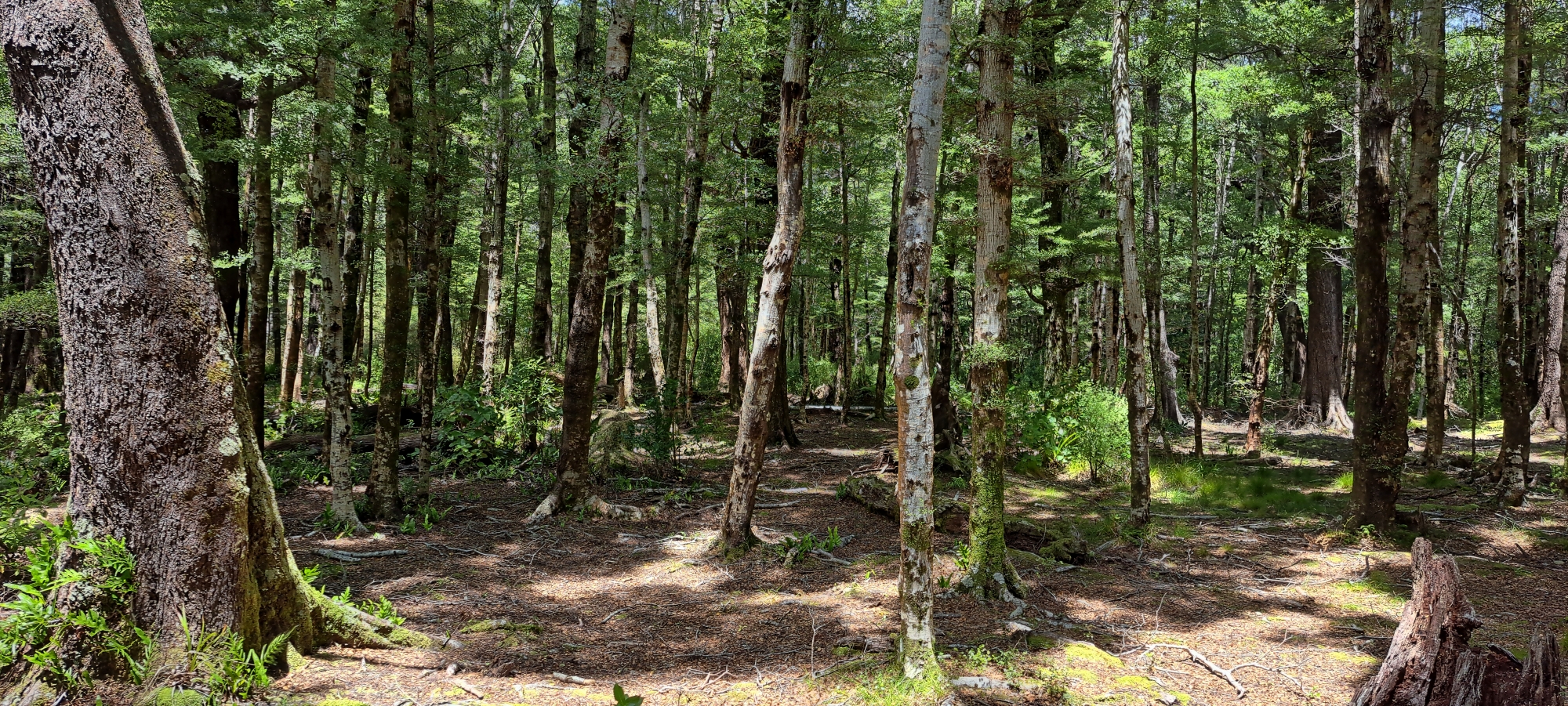 Grace’s Camp, also known as Graces Stream Campsite, was a small, backcountry-style camp in the Catchpool Valley near Wainuiomata. Popular for bushcraft training and wild camping, it offered a simple, secluded setting with only a long-drop toilet and untreated stream water. Reached by foot and set along a quiet stream, it was cherished for its rustic charm and use in outdoor education. In 2022, the Department of Conservation permanently closed the site due to tree hazards, soil damage, and increasing visitor pressure.




DISCUSSION