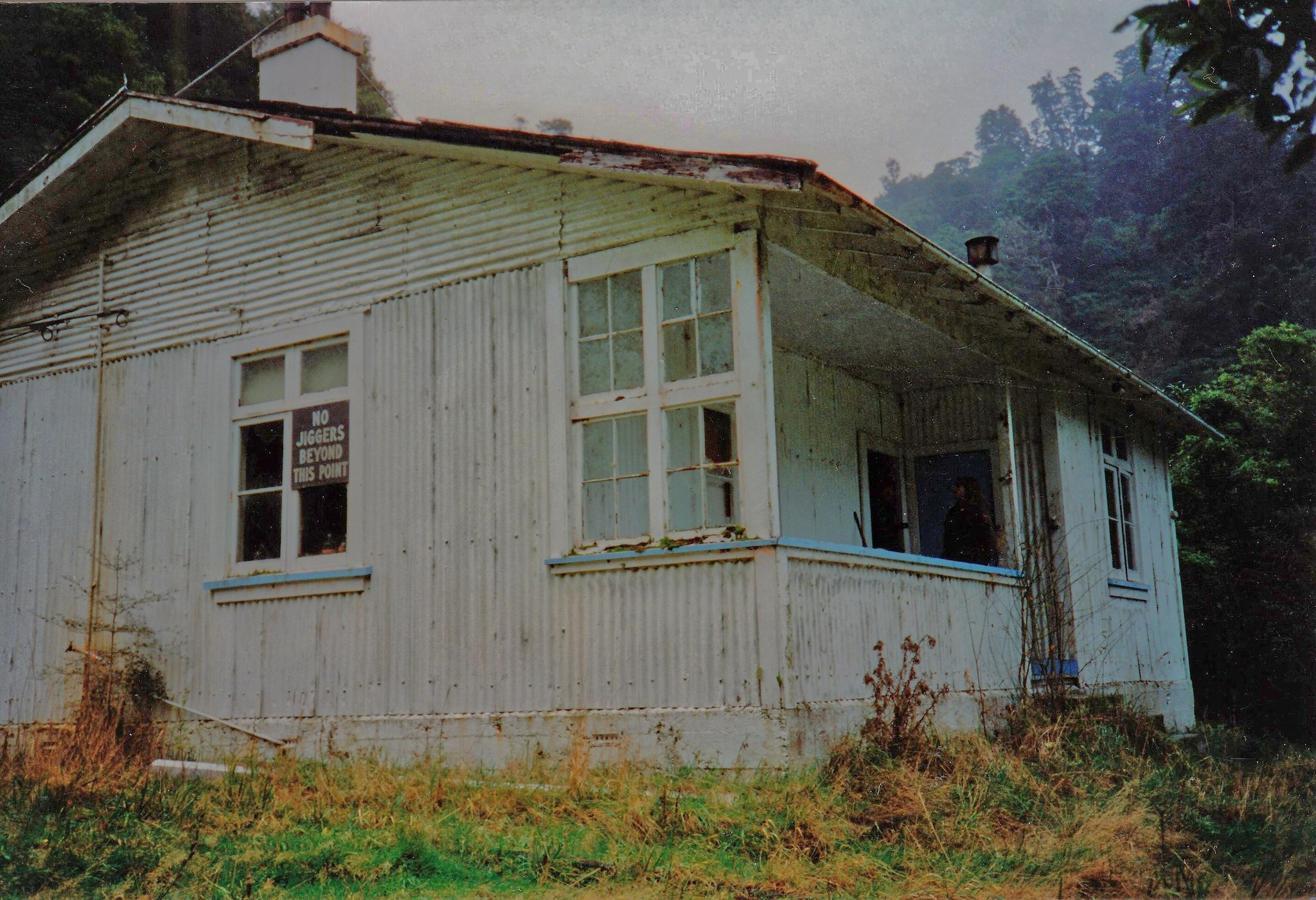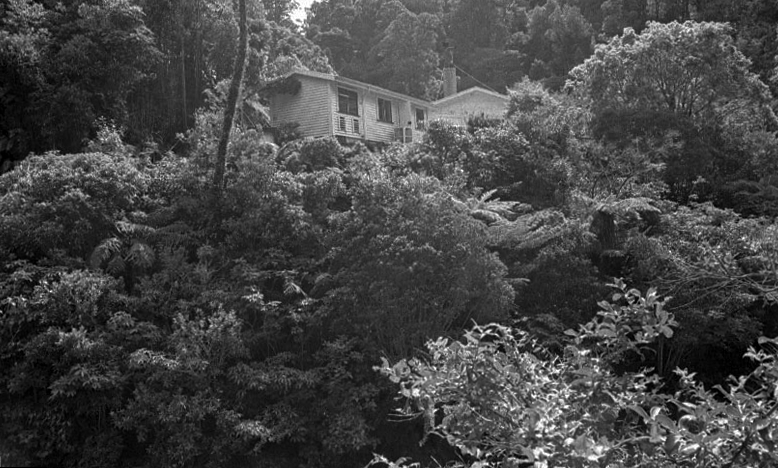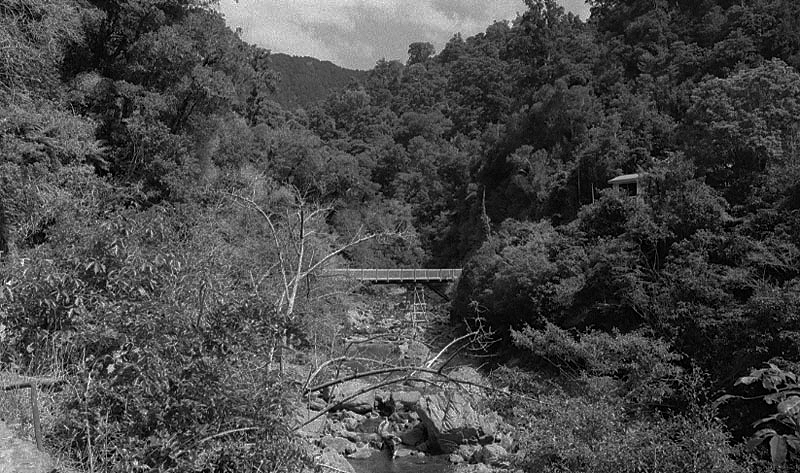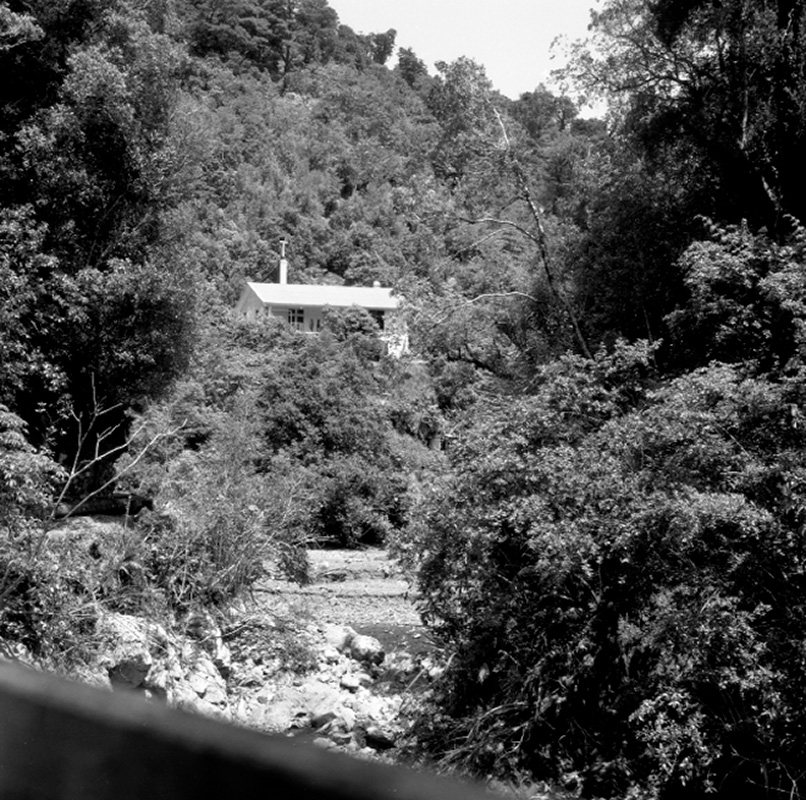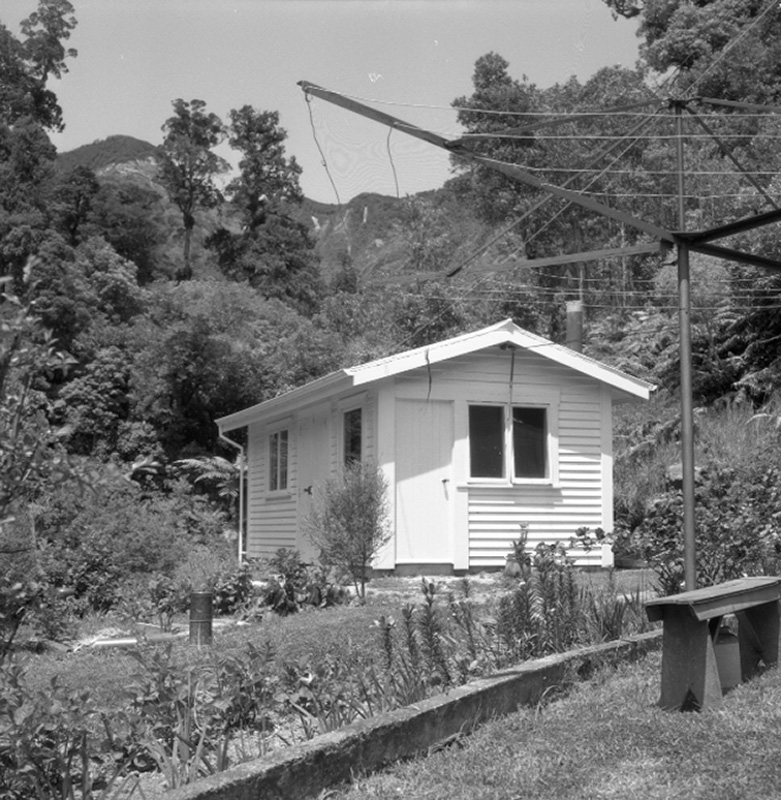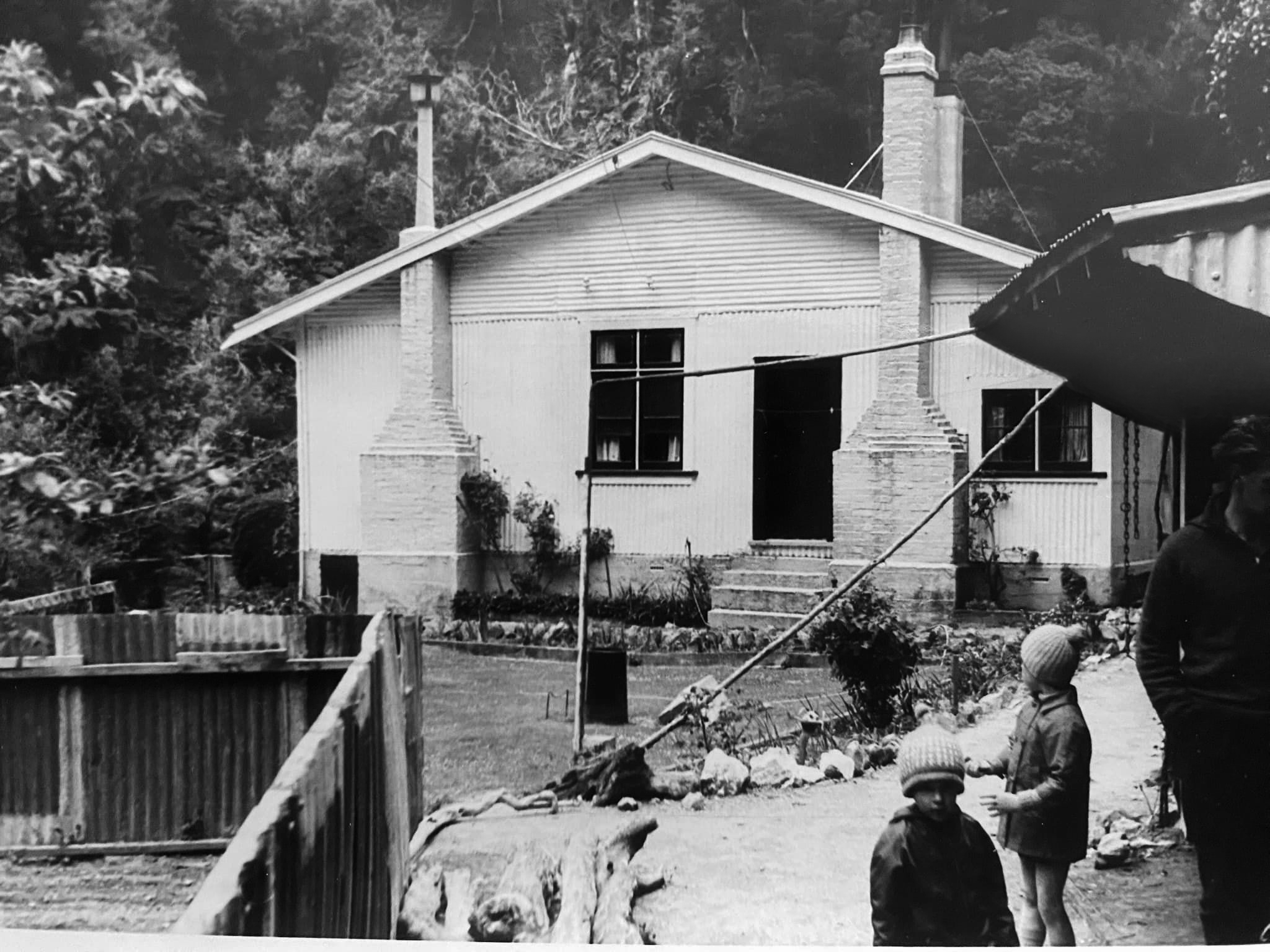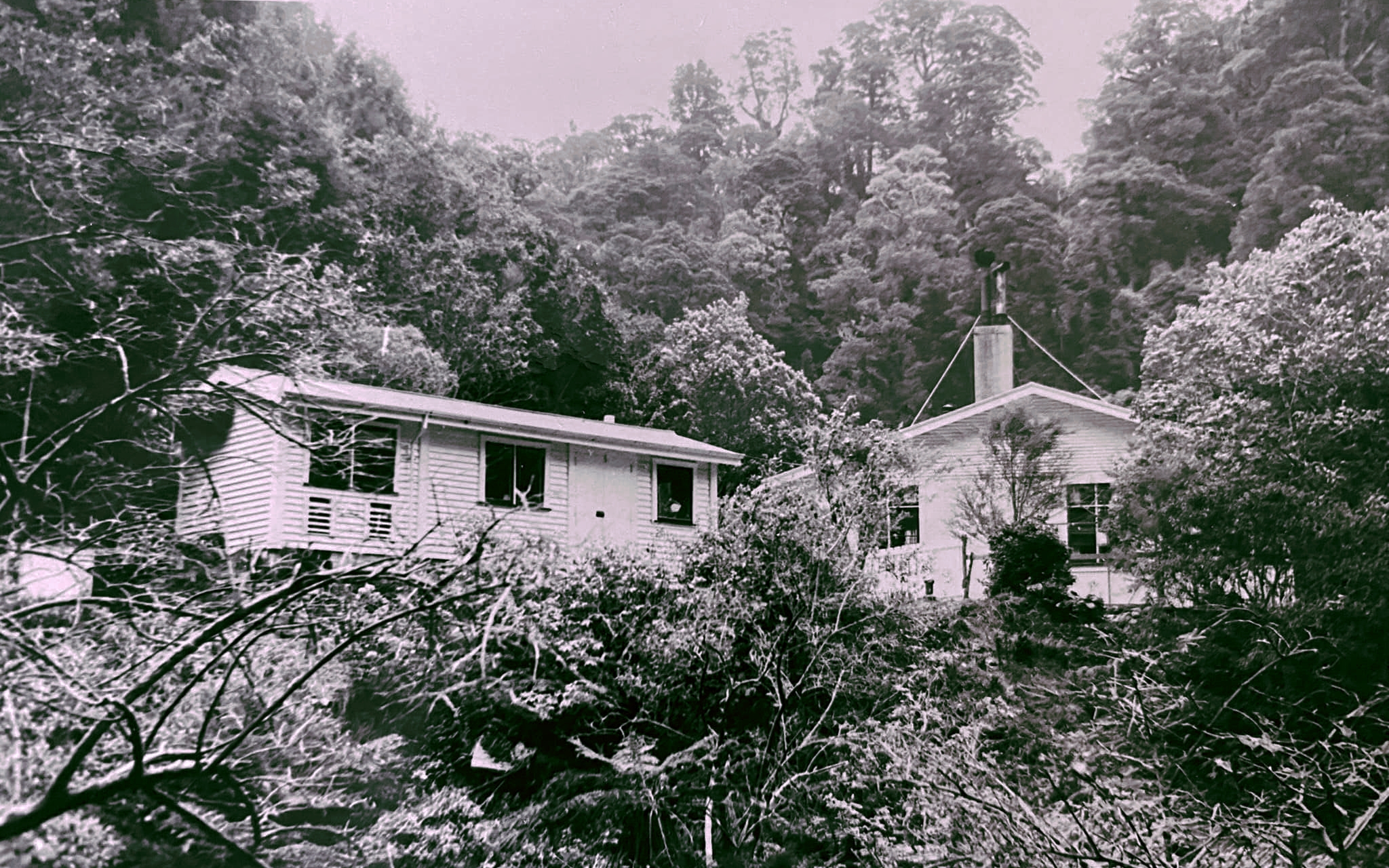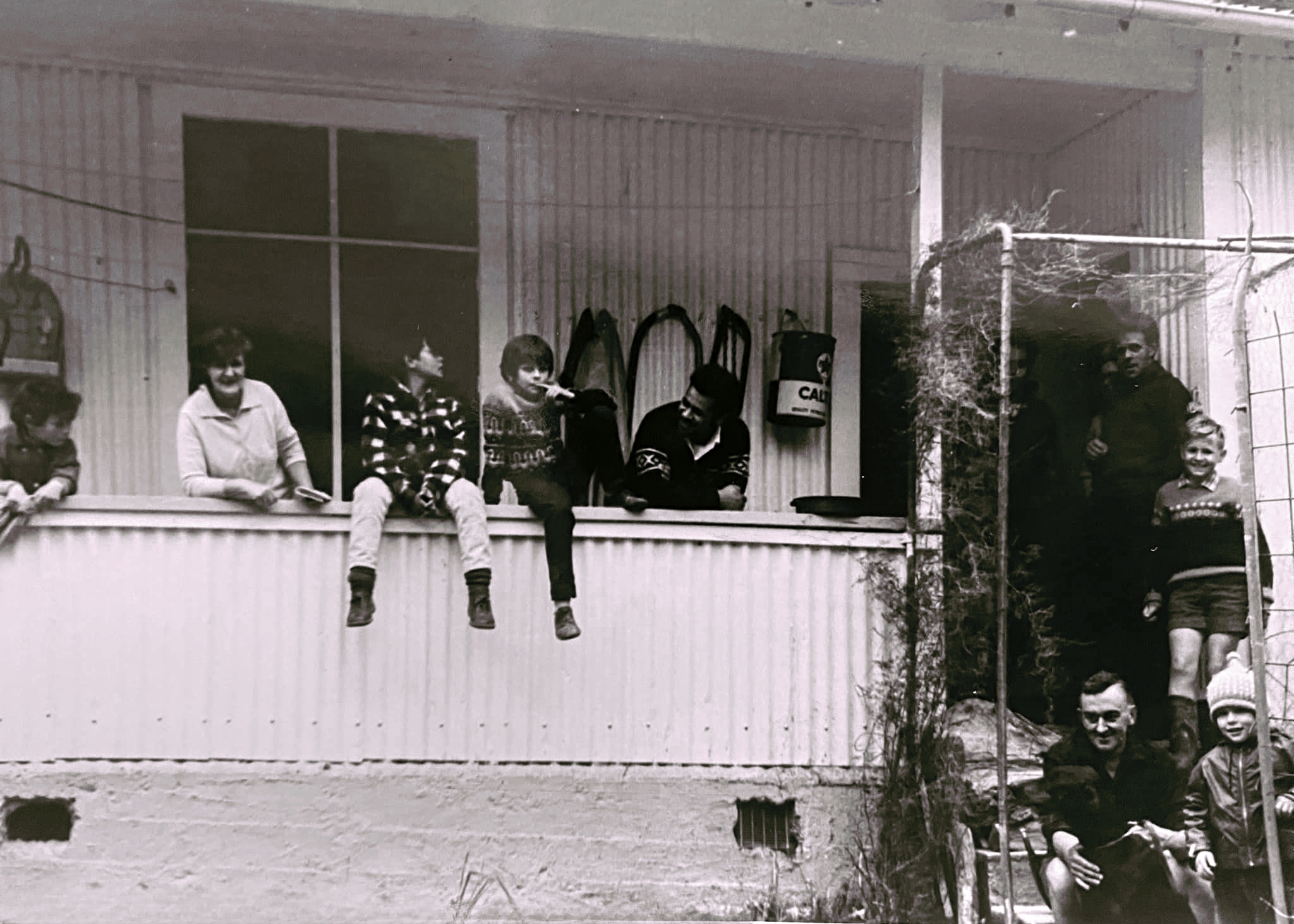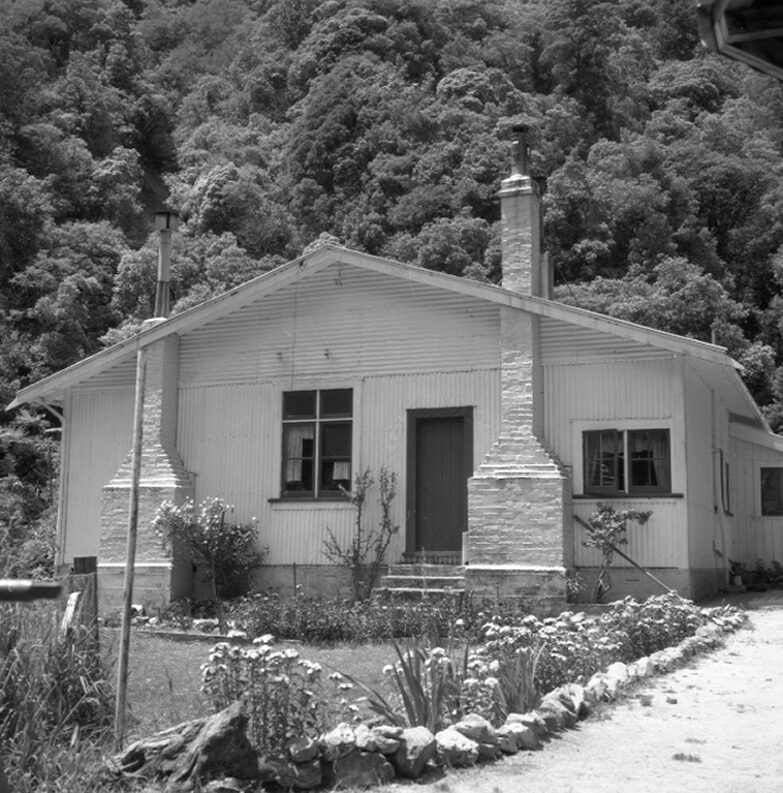
The caretaker’s house in the Orongorongo Valley was built around 1922 to 1923 during construction of the Orongorongo Tunnel, Little Tunnel, and the Orongorongo Pipeline. The house was built to accommodate staff responsible for monitoring rainfall, tracking river levels, and maintaining the intakes. Beside it stood a smaller structure known as the generator shed, which supplied power to both the house and the monitoring equipment. The shed still stands today, now boarded up with sheets of iron.
The house remained in use for several decades but became obsolete with the introduction of remote monitoring technology. Described as derelict by the 1970s, it was dismantled and burned in the late 1970s or early 1980s, with some material partly salvaged by helicopter. A doorway inscription revealed one of its original builders, Thomas Nesbitt, a tunnel builder from England who had helped construct both the Orongorongo tunnels and the house itself.
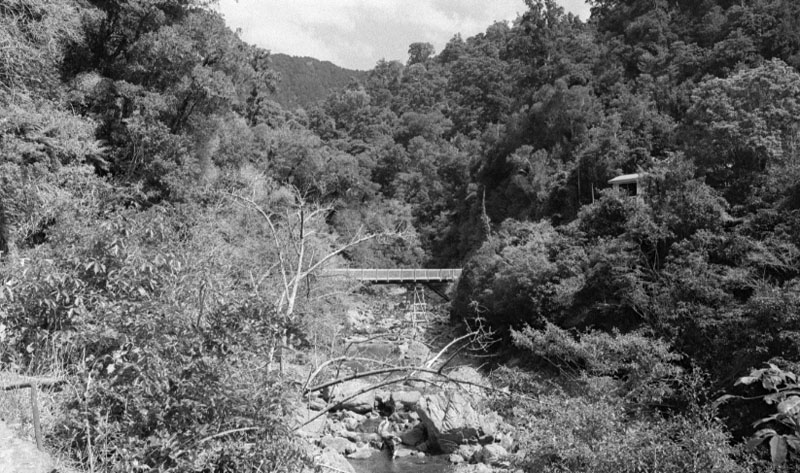
For many decades, the house served as a remote outpost for generations of waterworks staff who lived and worked in isolation to keep Wellington’s water supply running. Access was by way of a jigger line that began at the Orongorongo Tunnel entrance and continued through a smaller passage known as Little Tunnel. With the advent of electronic monitoring and remote telemetry, however, the need for a resident caretaker disappeared. The once vital home was left to deteriorate, later described by visitors as looking abandoned.
Its removal marked the end of an era. One of the workers involved recalled dismantling the house piece by piece, with iron sheets flown out by helicopter and the remaining timber partly salvaged before the structure was burned. Fires were lit in the kitchen, lounge, and a bedroom, and once the home was gone, the land was used as a helipad.
Credits
Special thanks to Carl Smith and Jason Voller, and Tony Weir, for some information in this article.