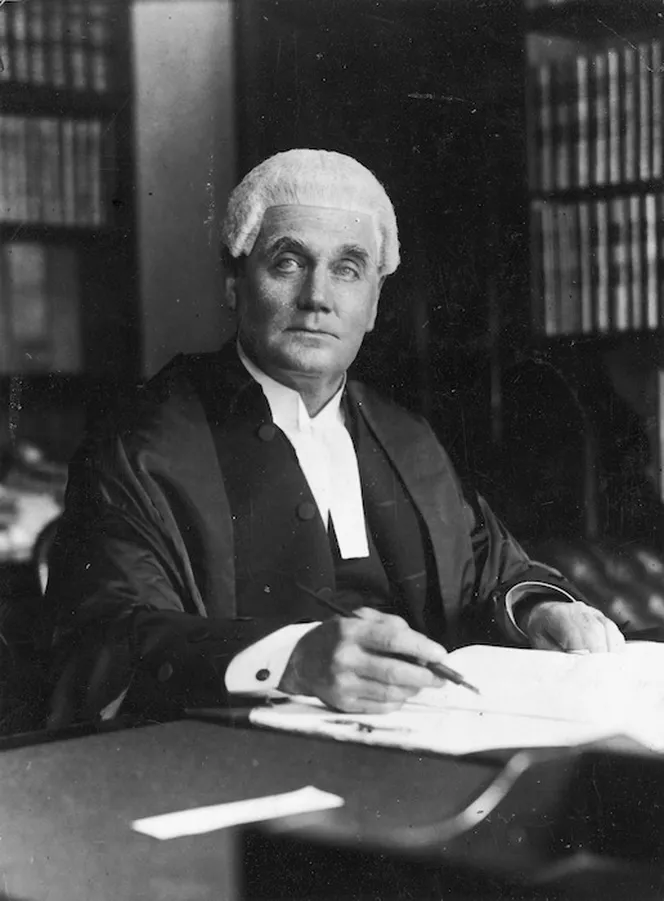
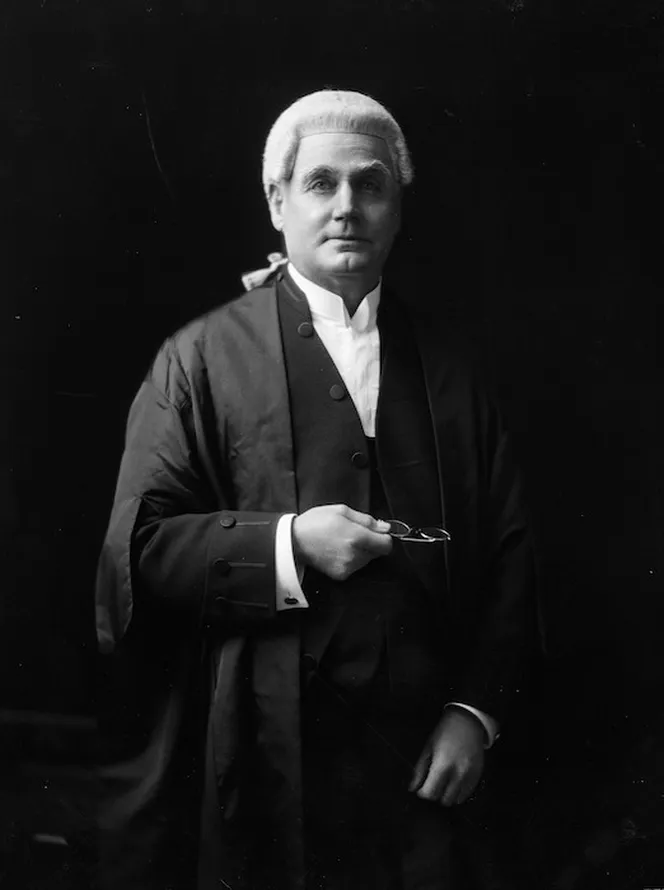
Charles Perrin Skerrett was born in India on 2 September 1863. His father, Peter Perrin Skerrett, was born in Ireland and descended from the Skerretts of Finavera in County Clare. The Skerrett family was originally one of the fourteen Tribes of Galway. Peter served as a sergeant in the Army in India, a position below commissioned officer rank, as he did not have the private income usually required of officers at that time.
When Charles was 12, the family moved to New Zealand. He was educated at Wellington College before beginning his working life in government service. He first joined the Post Office, then moved to the Treasury, and later worked for the Department of Justice as a clerk in the Wellington Magistrates’ Court.
Skerrett then entered the legal profession. He was articled to Buller, Lewis and Gully, and was admitted to the bar in 1884. He went into private practice and became associated with several Wellington law firms, including Skerrett and Wyllie and Chapman Tripp. By 1887, he had become a partner in legal practice.
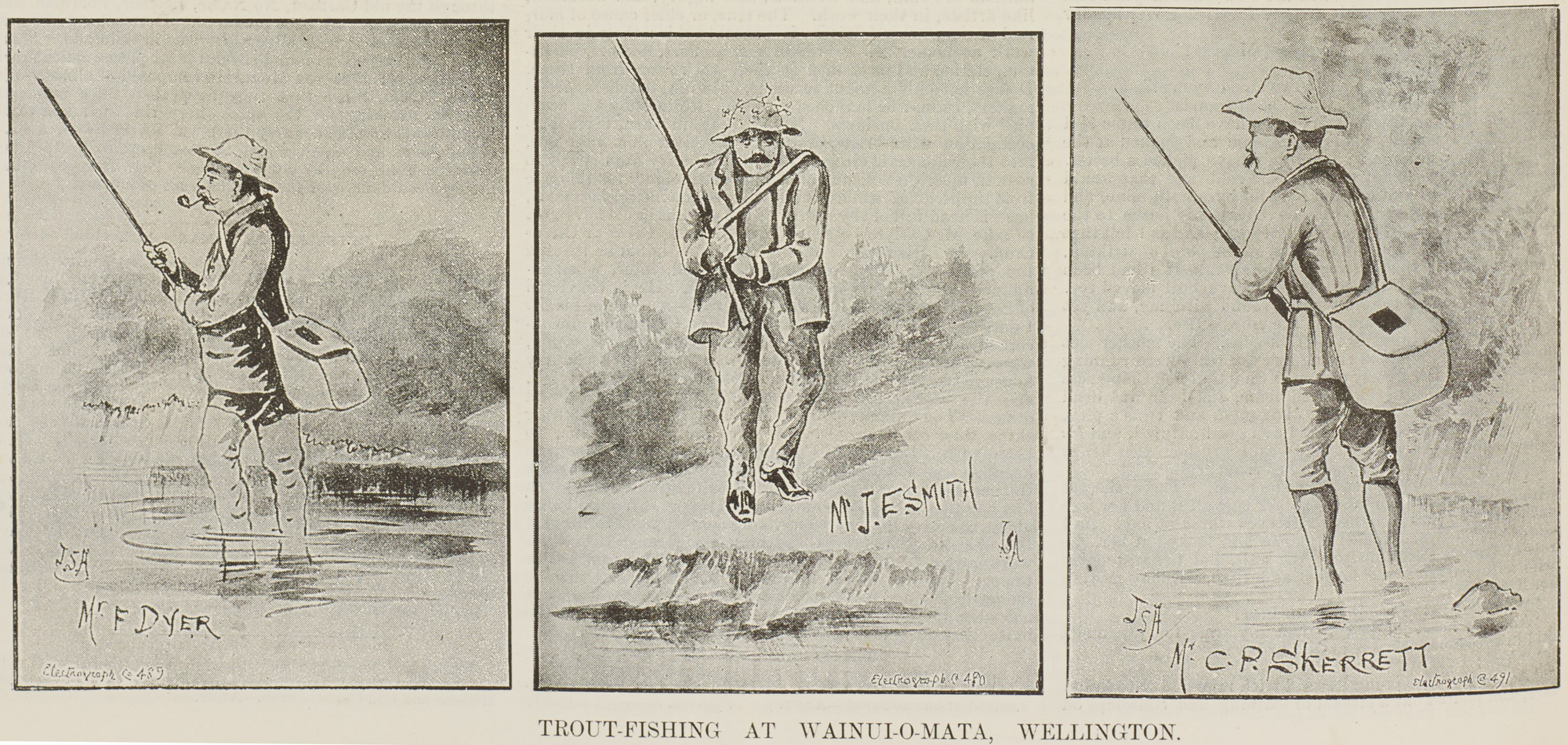
Although Skerrett later became a major figure in New Zealand’s legal history, his connection with Wainuiomata comes through trout fishing. During the 1880s and 1890s, he regularly visited the Wainuiomata area to fish, using a hut known as Smith’s Whare, named after Dyer Smith. This hut was located near the meeting of Skerretts Creek and the Wainuiomata River.
Skerrett was also known as a keen outdoorsman. As well as fishing, he enjoyed golf, deerstalking, polo, horse racing, and football administration. His association with Wainuiomata therefore fits well with his wider life, showing that this high-profile Wellington legal figure also spent time in the bush and along the rivers outside the city.
In 1907, when the first King’s Counsel were appointed in New Zealand, Skerrett was one of the first to take silk. From 1918 to 1926, he served as President of the New Zealand Law Society. On 1 February 1926, he was appointed Chief Justice of New Zealand, and in 1927 he was created KCMG, becoming Sir Charles Perrin Skerrett.
In 1929, Skerrett left New Zealand for London, but died at sea aboard the Port Denison on 13 February 1929. He was unmarried.
Skerretts Creek carries his name because of his association with the area. For many years the creek was recorded as Skerrets Creek, but in 2022 the official spelling was corrected to Skerretts Creek, restoring the double “t” in Skerrett’s name. The creek’s name now preserves a link between Wainuiomata’s waterways, early trout fishing, and one of New Zealand’s notable legal figures.