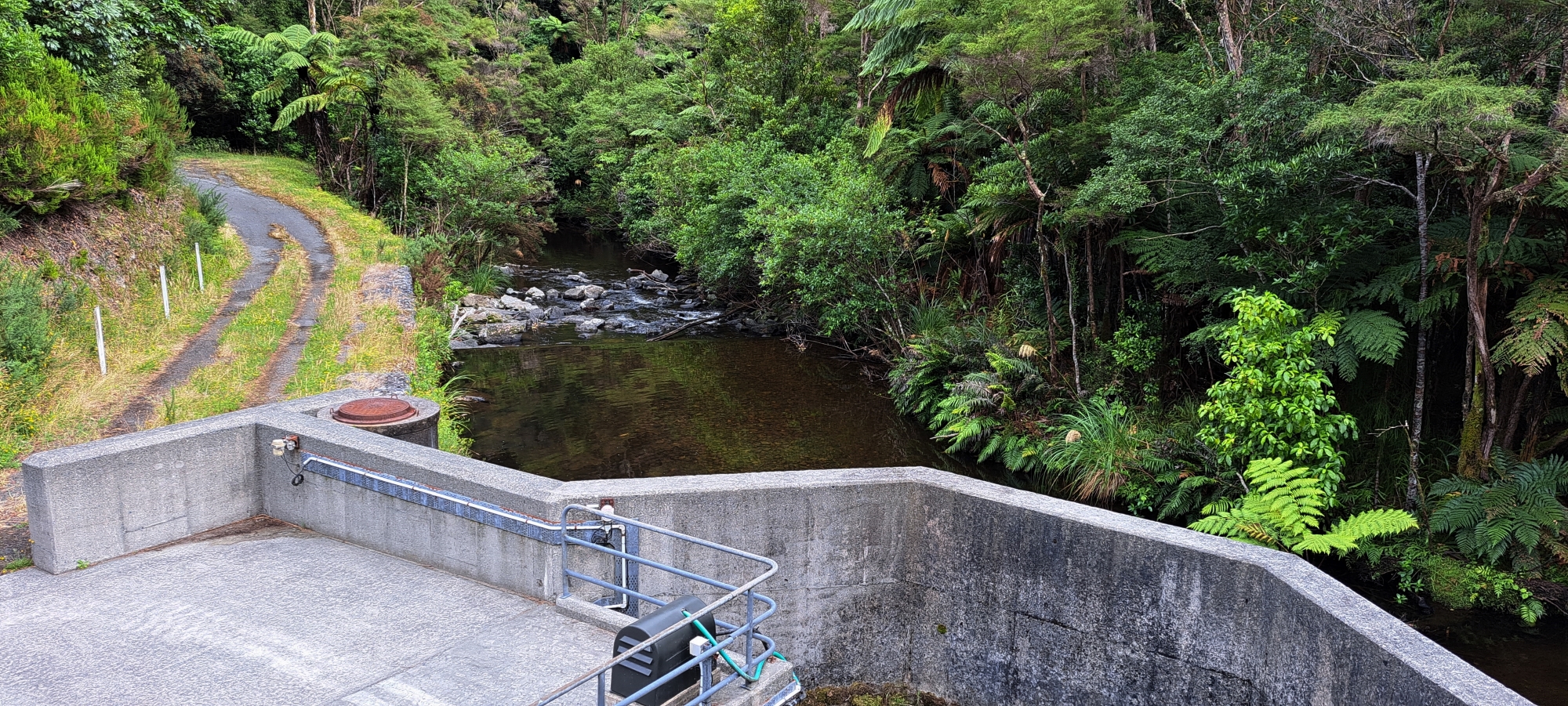
For more than 140 years, Wainuiomata has played a crucial role in keeping Wellington supplied with fresh drinking water. Even today, a surprisingly large proportion of the region’s water begins its journey in the forested valleys behind Wainuiomata.
The Wainuiomata and neighbouring Orongorongo water catchments cover around 7,600 hectares of protected land in the Remutaka Ranges. Together, water collected from these valleys can provide around 20 per cent of the Wellington metropolitan region’s annual water supply, although the actual proportion varies depending on rainfall, river conditions and demand.
That means approximately one litre in every five supplied to the metropolitan network can originate from the Wainuiomata and Orongorongo valleys.
Up to 60 million litres a day
 Water from the catchments is processed at the Wainuiomata Water Treatment Plant, which is capable of producing up to 60 million litres of drinking water a day. Its average production has historically been around 30 million litres a day.
Five waterways contribute to the system.
The Wainuiomata River and George Creek provide around 15 per cent of the region’s annual water supply, while the Orongorongo River, Big Huia Creek and Little Huia Creek provide approximately another five per cent.
Water from the Orongorongo Valley travels through the historic 3.2-kilometre Orongorongo Tunnel into the Wainuiomata Valley before eventually reaching the treatment plant.
Once treated, the water enters Greater Wellington’s interconnected bulk water network. On a typical day, water from Wainuiomata helps supply Wellington’s southern and eastern suburbs, together with water from the Waterloo treatment plant in Lower Hutt. Because the major pipelines are interconnected, water can also be transferred through the network when required.
Wellington has relied on Wainuiomata since 1884
Wainuiomata’s importance to Wellington is nothing new.
During the 1870s, Wellington was struggling to provide its rapidly growing population with enough clean water with the Karori Reservoir not be adequate. The seriousness of the problem became particularly apparent in 1878, when Wellington’s railway station caught fire while there was insufficient water available to properly fight the blaze.
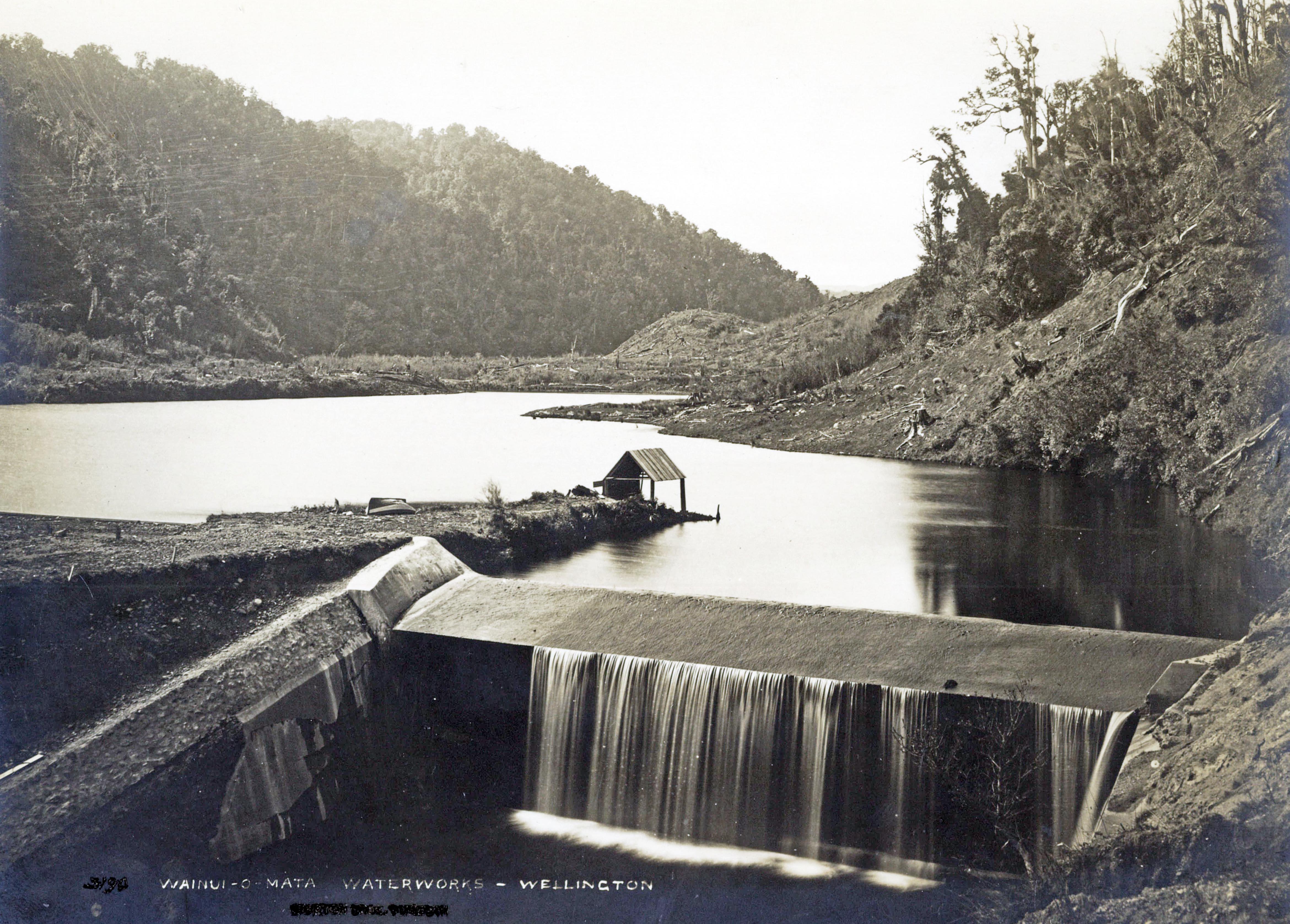 Attention turned to the Wainuiomata Valley.
A dam and pipeline were constructed to carry water approximately 27 kilometres from Wainuiomata to Wellington, with the new supply becoming operational in 1884. It marked the beginning of a relationship between Wainuiomata and Wellington’s drinking water supply that continues today.
As Wellington grew, so did its demand for water.
 The much larger Morton Dam was completed in Wainuiomata in 1911, followed by another pipeline to increase the amount of water that could be sent to Wellington.
But even this eventually proved insufficient.
After several exceptionally dry years between 1915 and 1919, attention turned further east to the largely untouched Orongorongo Valley.
The Orongorongo scheme
Beginning in 1921, one of Wellington’s most ambitious early water projects was constructed through the Remutaka Ranges.
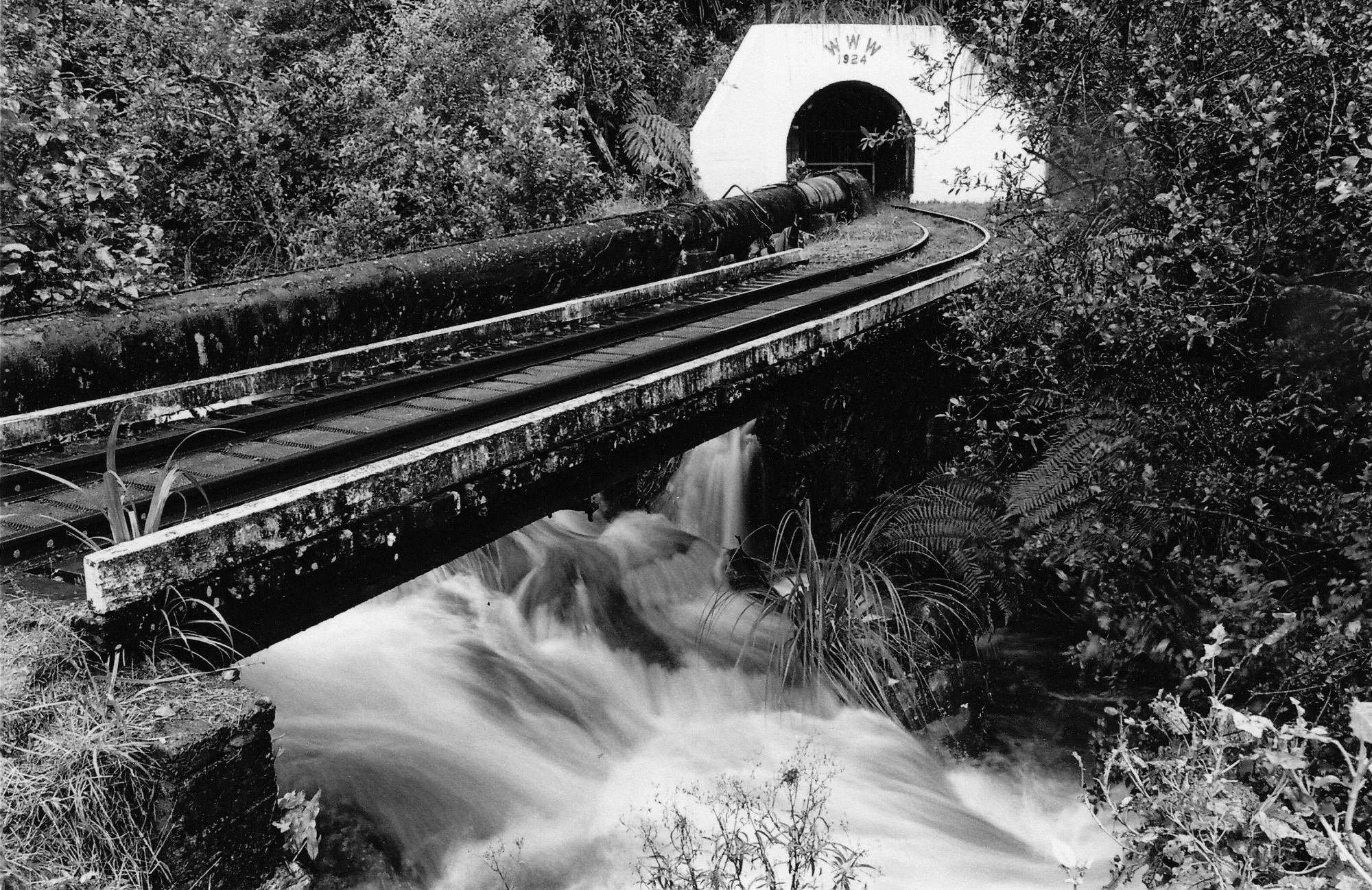 Weirs were built on the Orongorongo River and its tributaries, together with a tunnel through the ranges to bring the water into the Wainuiomata Valley. From there, a new pipeline carried it towards Wellington.
The Orongorongo scheme was completed in 1926, adding around 27 million litres a day to Wellington’s potential water supply.
The upper Orongorongo catchment has remained closed to general public access for around a century, helping protect the quality of the water flowing from its largely undisturbed native forest.
A natural reservoir
Unlike the huge storage lakes at Te Marua, Wainuiomata does not have a large reservoir storing untreated water today.
The Morton Dam was taken out of service in 1988 and its reservoir drained. Water is now taken directly from the rivers and streams through a series of low weirs before being treated at the modern Wainuiomata Water Treatment Plant, which opened in 1993.
This means the protected forests themselves play an important role.
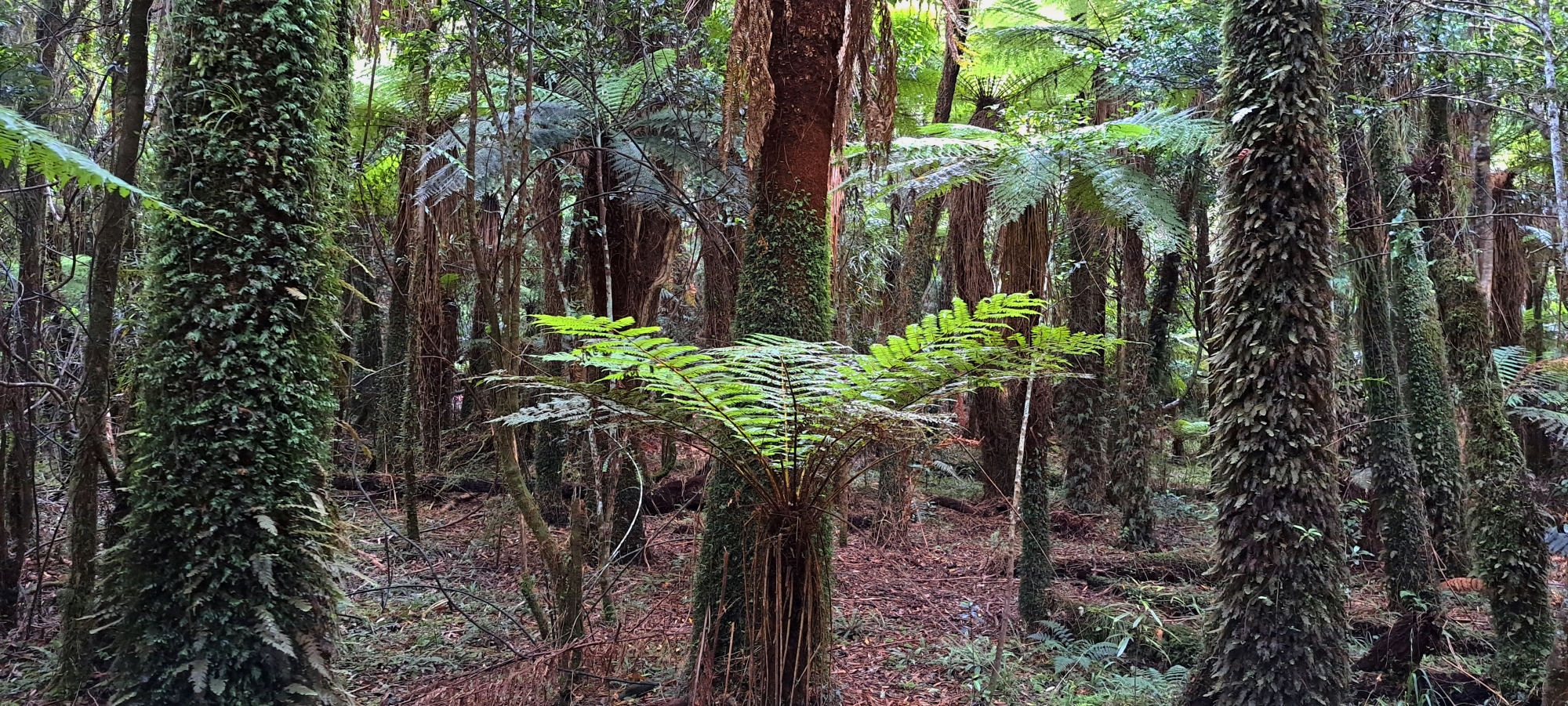 Thousands of hectares of native bush help protect the streams and rivers from contamination and erosion, effectively forming an enormous natural water collection system above Wainuiomata.
There is one disadvantage. Because there is little raw-water storage, Wainuiomata cannot always operate. During very low river flows, floods or periods when water quality deteriorates, the treatment plant can temporarily shut down and other parts of Wellington’s interconnected water network have to make up the difference.
More important than many realise
Today Wellington’s metropolitan water supply comes from several major sources, including the Hutt River at Kaitoke, the Waiwhetū aquifer beneath the Hutt Valley, and the Wainuiomata and Orongorongo catchments.
But Wainuiomata remains one of the foundations of that system.
For generations, millions of litres of water have flowed every day from the forested valleys behind Wainuiomata towards the homes and businesses of the Wellington region.
It is an extraordinary legacy for a relatively small valley.
More than 140 years after Wellington first turned to Wainuiomata for water, the area remains every bit as important to the region’s water supply as its early planners hoped it would be.