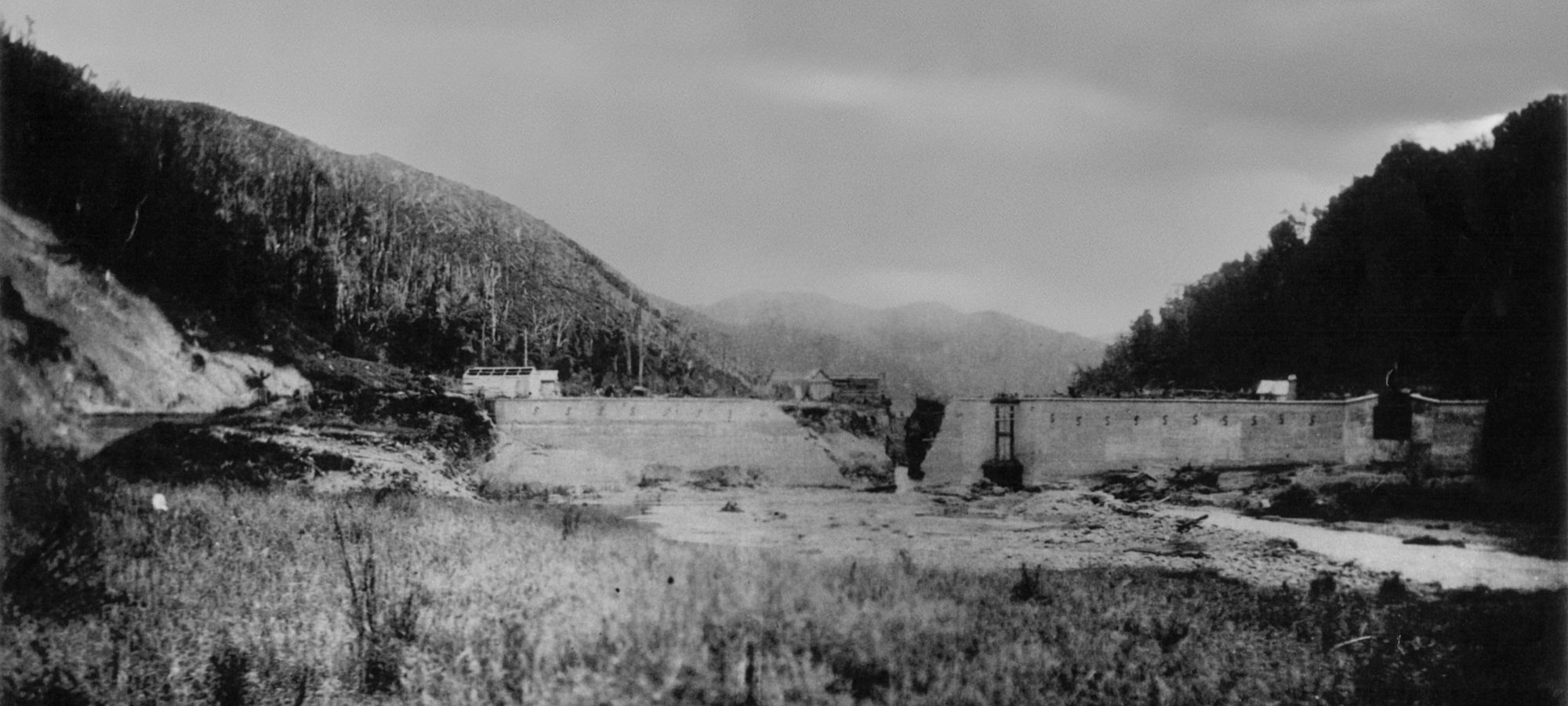
On 22 January 1884, Wellington was due to officially turn on its new water supply from Wainuiomata. The dam had been finished less than a week earlier and the reservoir was full. But as Wellington prepared for its Anniversary Day celebrations, a storm swept through the valley. The Wainuiomata River rose overnight, and by Tuesday morning water was pouring over the dam.
Floods before opening day
Wellington had turned to Wainuiomata because its existing supply at Karori was struggling to keep up with demand. The new scheme would take water from the Wainuiomata River in Sinclair Valley and carry it through a water race, tunnels and pipes to the city. Getting the dam finished, however, proved more difficult than expected.
In September 1883, heavy rain sent water over an unfinished retaining wall. A log jammed the tunnel that diverted the river around the works, and workers had to cut it out in pieces. Then, on 19 October, after about two weeks of heavy rain, the river washed out earth fill and tore a gap in the dam’s concrete face. Repairs were still under way when another flood struck on 4 November.
The river cuts a new course
The January flood was worse. Water rose about 3.3 metres above the crest of the dam and stripped away much of the material between its retaining walls, though the walls themselves remained standing. The river also broke through the site of a temporary overflow channel that had been filled in when construction finished. The torrent carved a new channel roughly nine metres wide and seven and a half metres deep. Nearby workers’ huts narrowly escaped being swept away, and bridges downstream were lost.
Getting water to Wellington
With repairs expected to take months, contractor Joseph Saunders put in a temporary flume to carry river water into the water race without relying on the damaged dam. Even then, burst pipes caused further delays. On 13 May, the Evening Post reported that Wainuiomata water had finally reached the city. A regular supply followed by mid-year, and the waterworks were completed later in 1884.
Who Would Pay for the Repairs?
George Henry Baylis, the contractor who built the dam, was already in dispute with Wellington City Council before the January 1884 flood. He asked the council for £380 to cover losses from the September and October floods, arguing that the damage was not his fault. When the backing of the dam washed away again in November, he told councillors that rebuilding it without a better outlet for floodwater would only see it washed away once more. City engineer James Baird pointed to the clause making the contractor responsible for damage while work was under way. The committee unanimously rejected the claim.
After the January flood, Baylis had a different argument. The engineer had certified the work as complete, and the council had taken charge of the waterworks. The council had held back £100 for two months’ maintenance, but Baylis disputed that this made him liable for the flood repairs. Baird took the opposite view, arguing that the maintenance obligation still applied. In March, the council called for tenders to repair the dam.
On 8 July 1885, Baylis accepted £50 from the council and signed a deed giving up his claims relating to the waterworks. The deed records what the council paid him to relinquish those claims, but it does not say whether he ultimately contributed to the cost of the January repairs.
The Dam Repair Contracts
The newspaper reports describe what the floods washed away. The surviving contracts show what it took to put the waterworks back together. Among the records are the 1884 repair specifications and plans for a timber flume, which helped keep water flowing to Wellington while work on the dam continued.