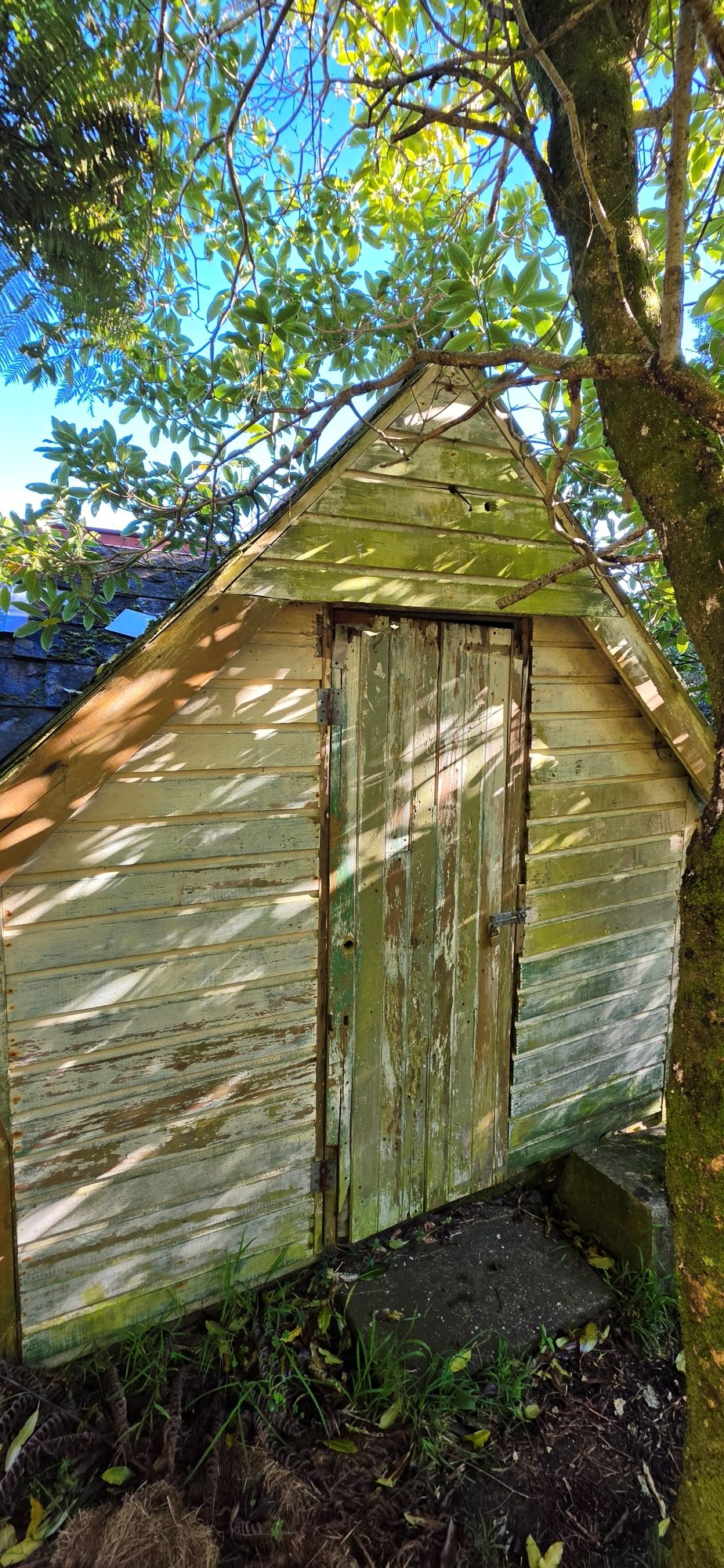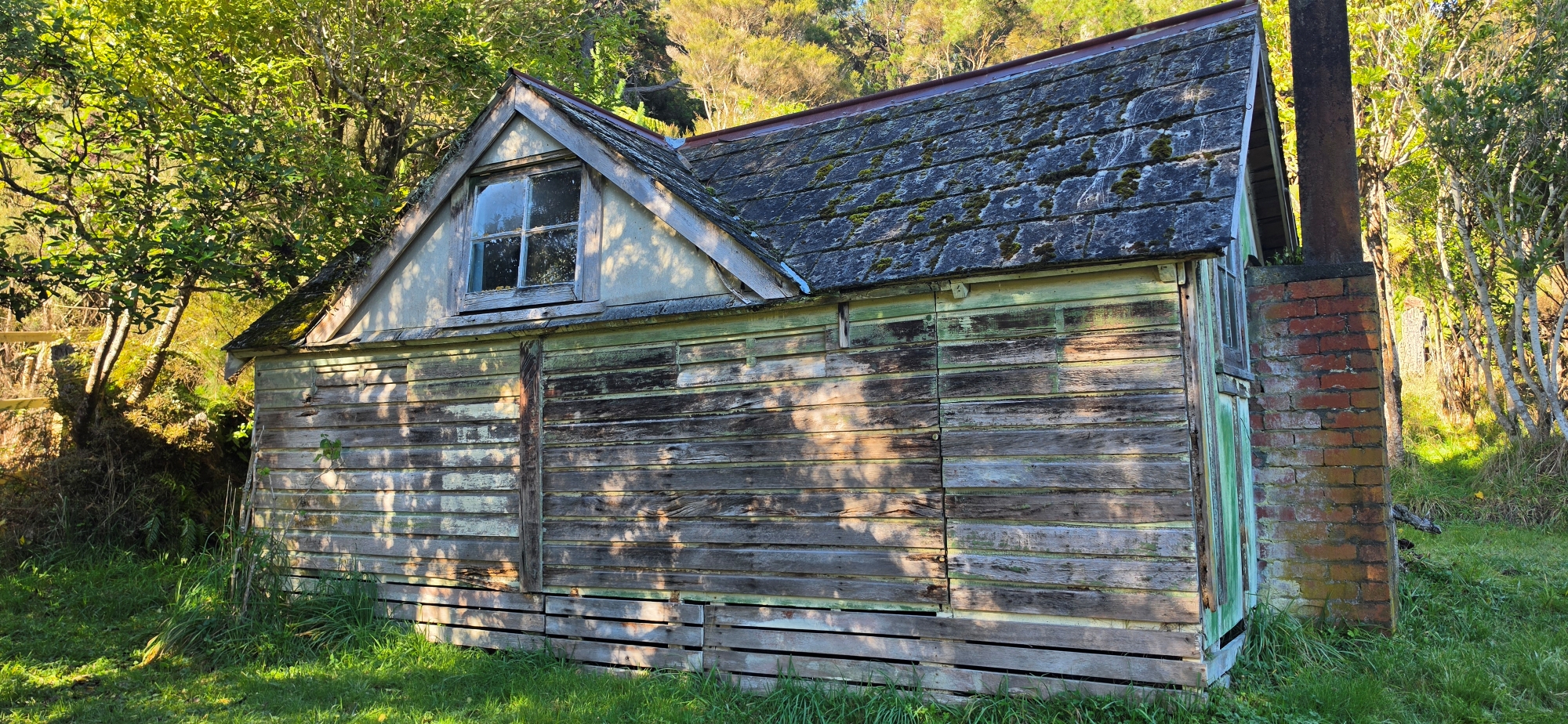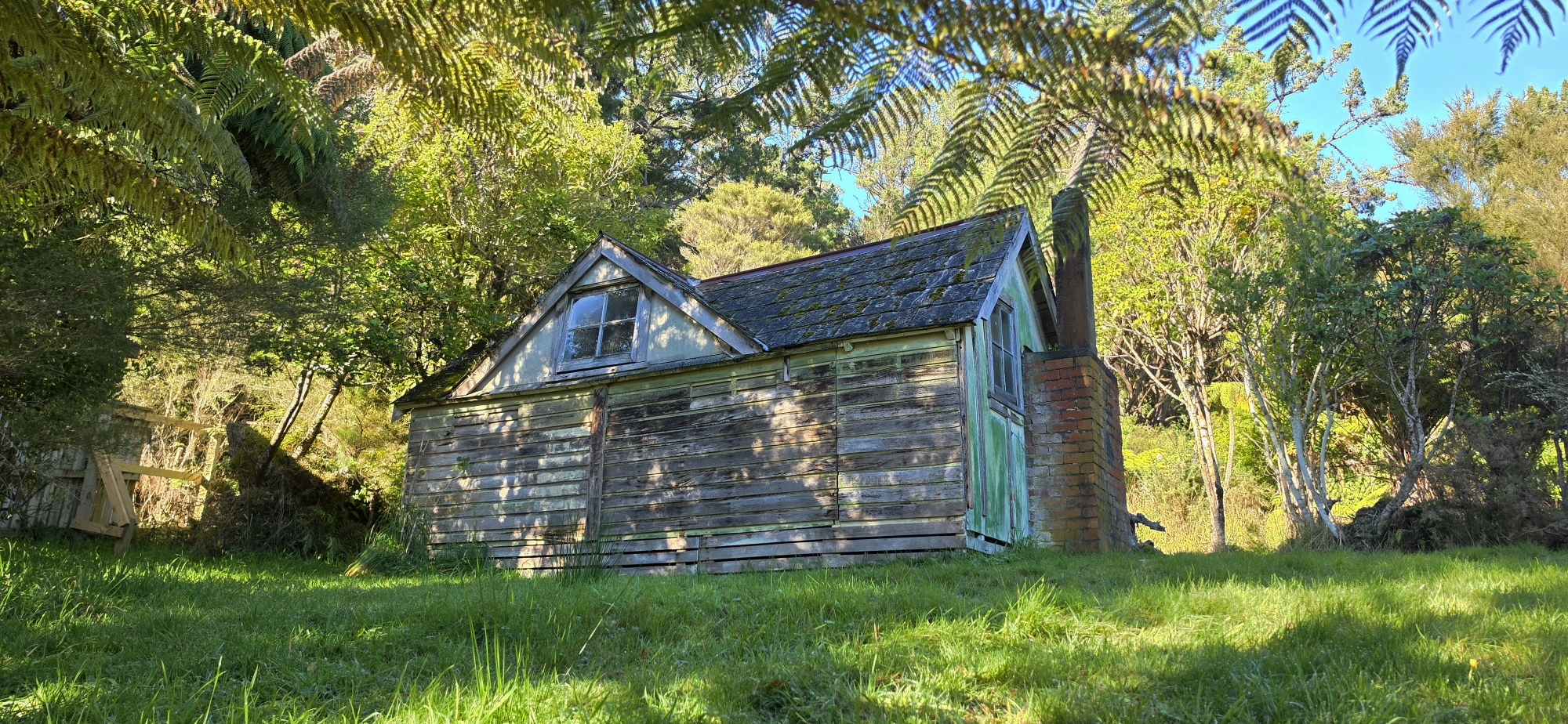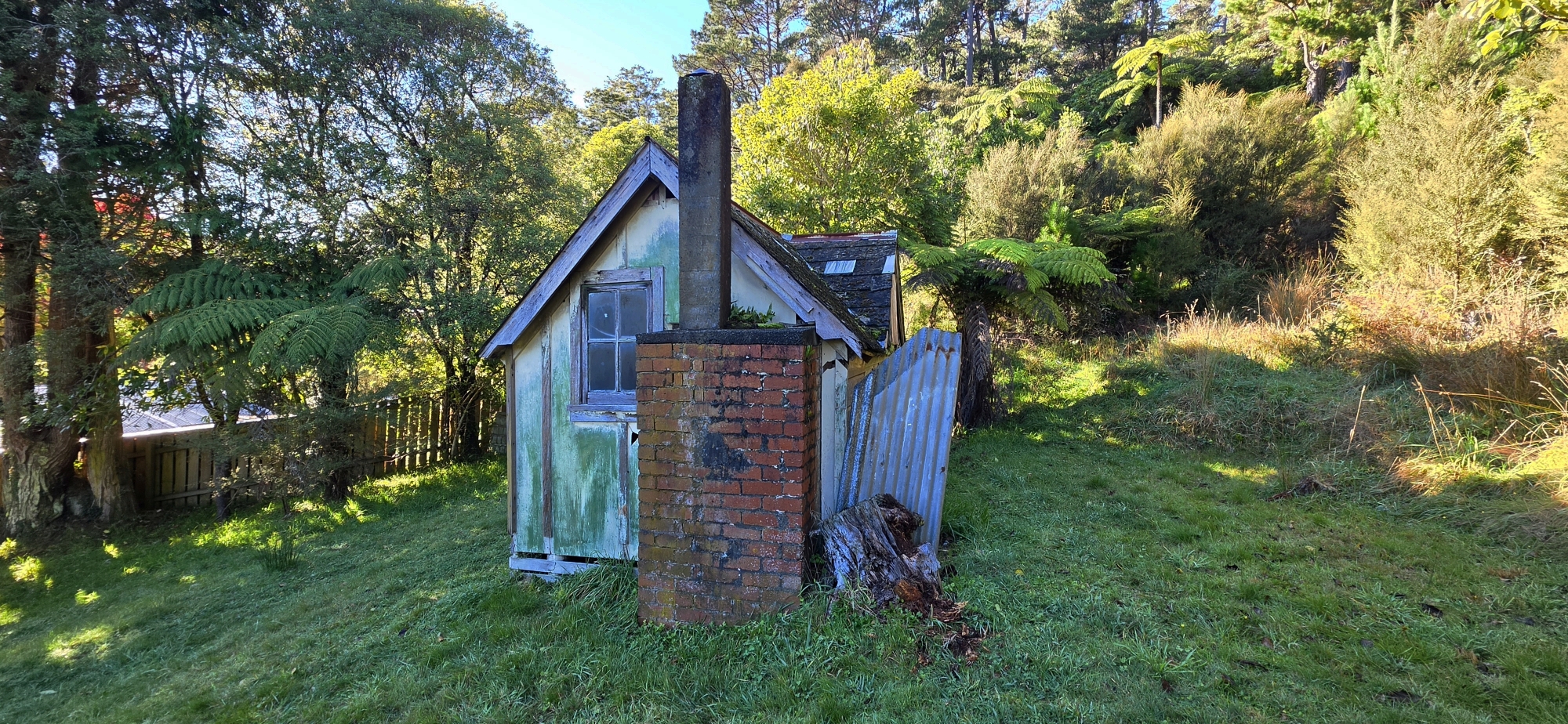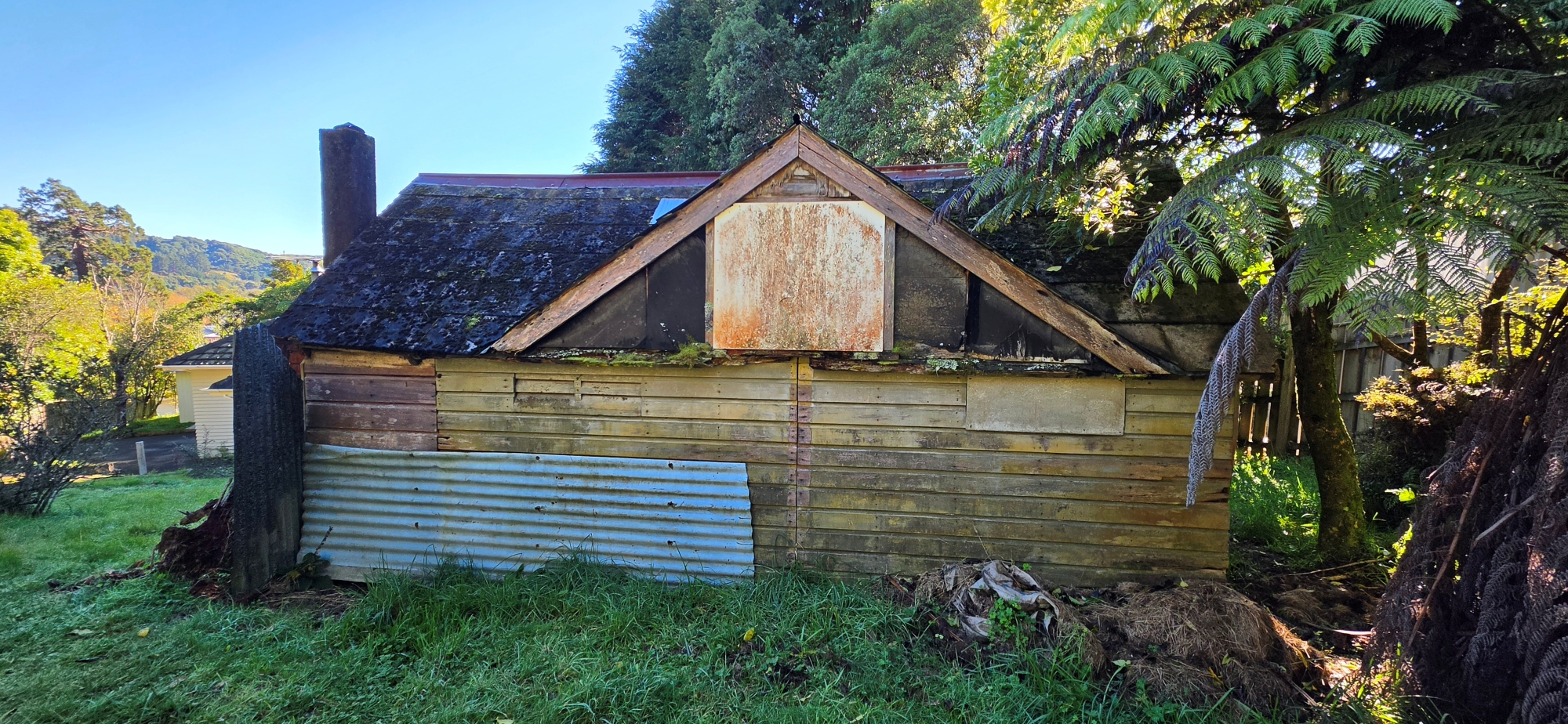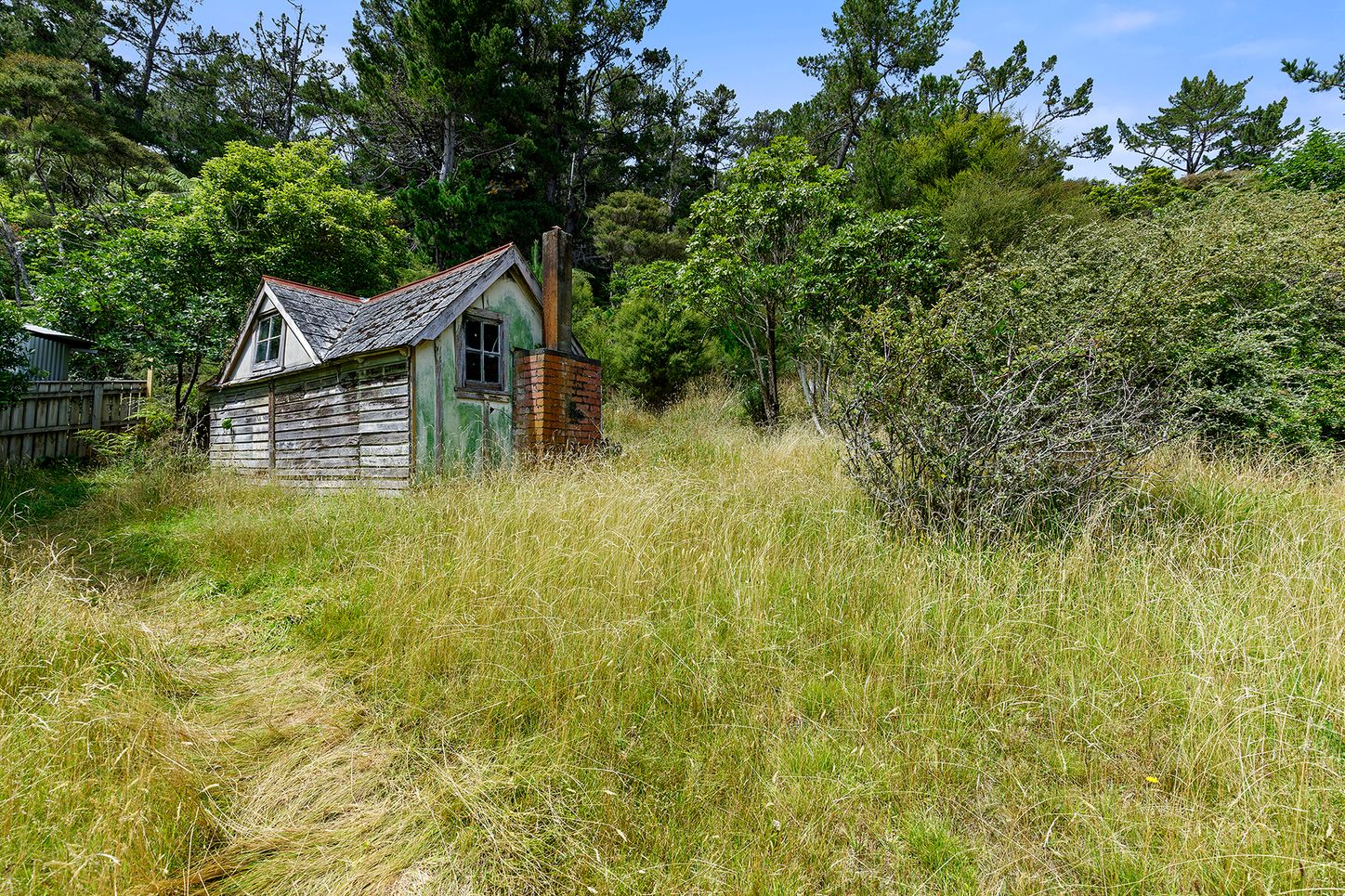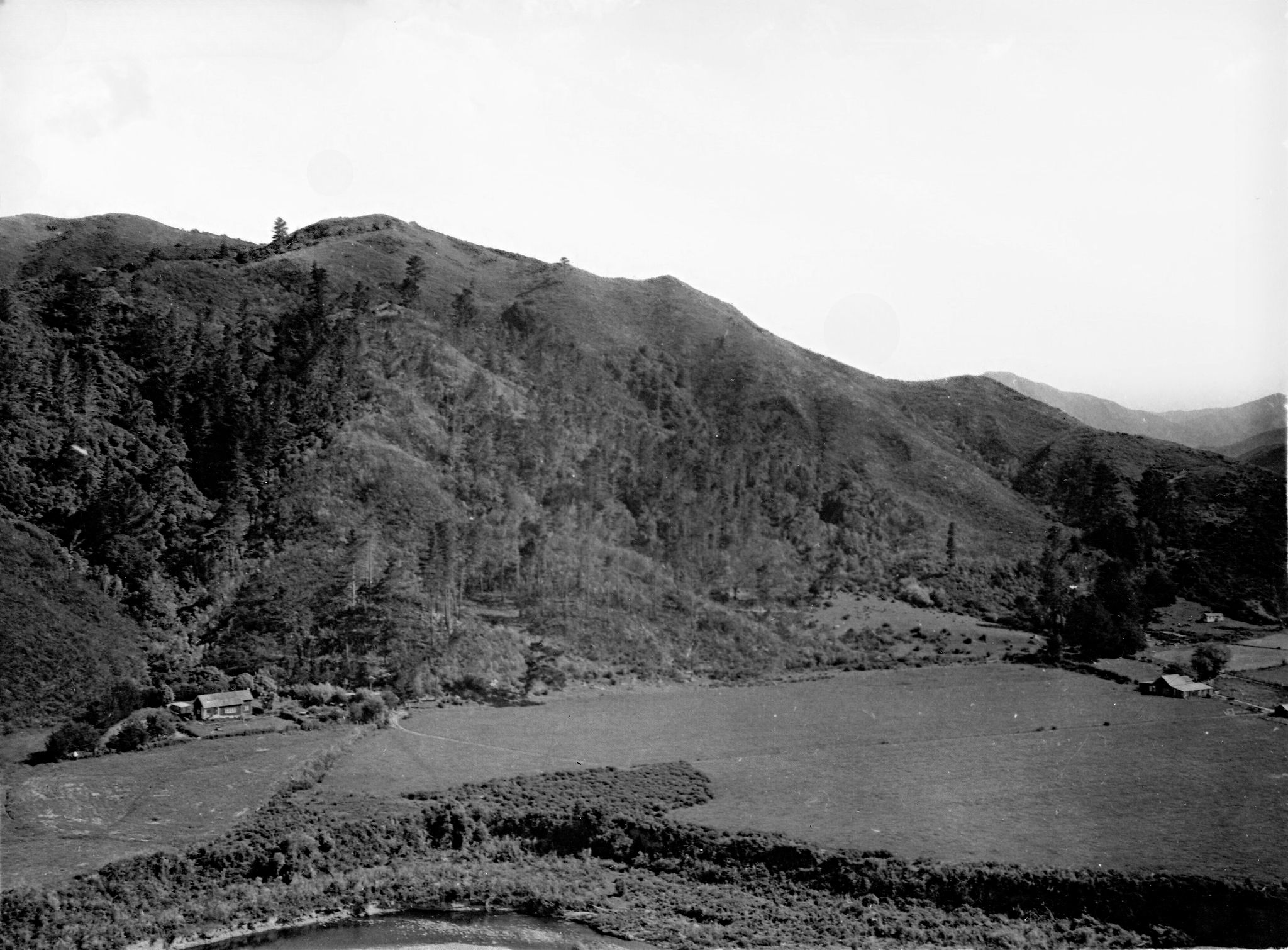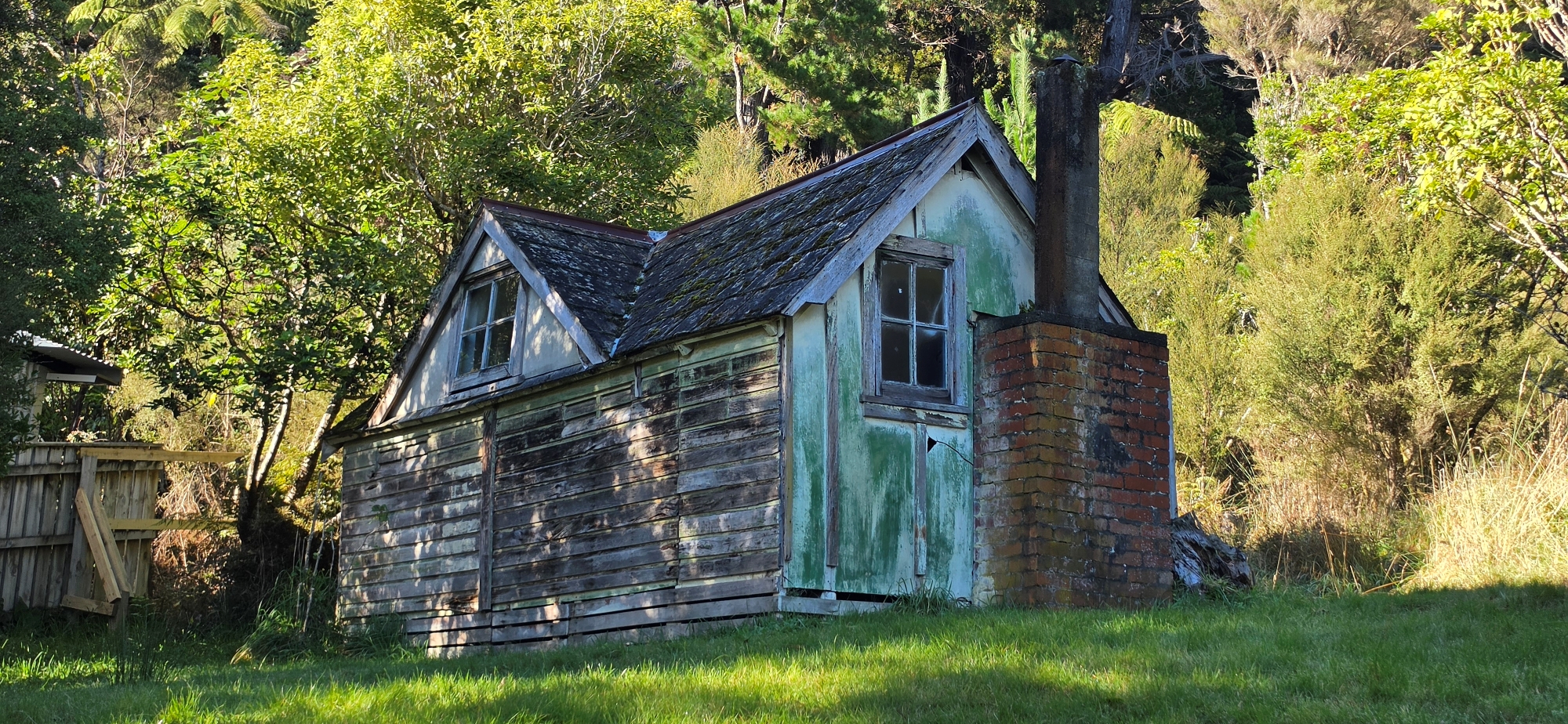
By 1950, a man named Neil Keith was living in a hut behind 36 Hine Road. In 1963, a new two bedroom house was approved for construction at the front of the section, with building plans already showing an existing structure on the property. The new house became Neil’s permanent residence, while the older bach remained at the rear and still survives today.
Additional details about the site were recorded in a 1992 interview carried out by Vicky Alexander. During the interview, Norman Payne of nearby Homedale Road recalled that in the early 1950s a large vacant section existed north of 32 Hine Road, then linked with the Ankers family. According to Norman, standing on the property was an army hut occupied by Ian Francis and his wife before Neil Keith later moved in. Ian Francis worked as a carpenter and was the son of builder Laurence Earnest Francis (1893 to 1962), who lived opposite the section.
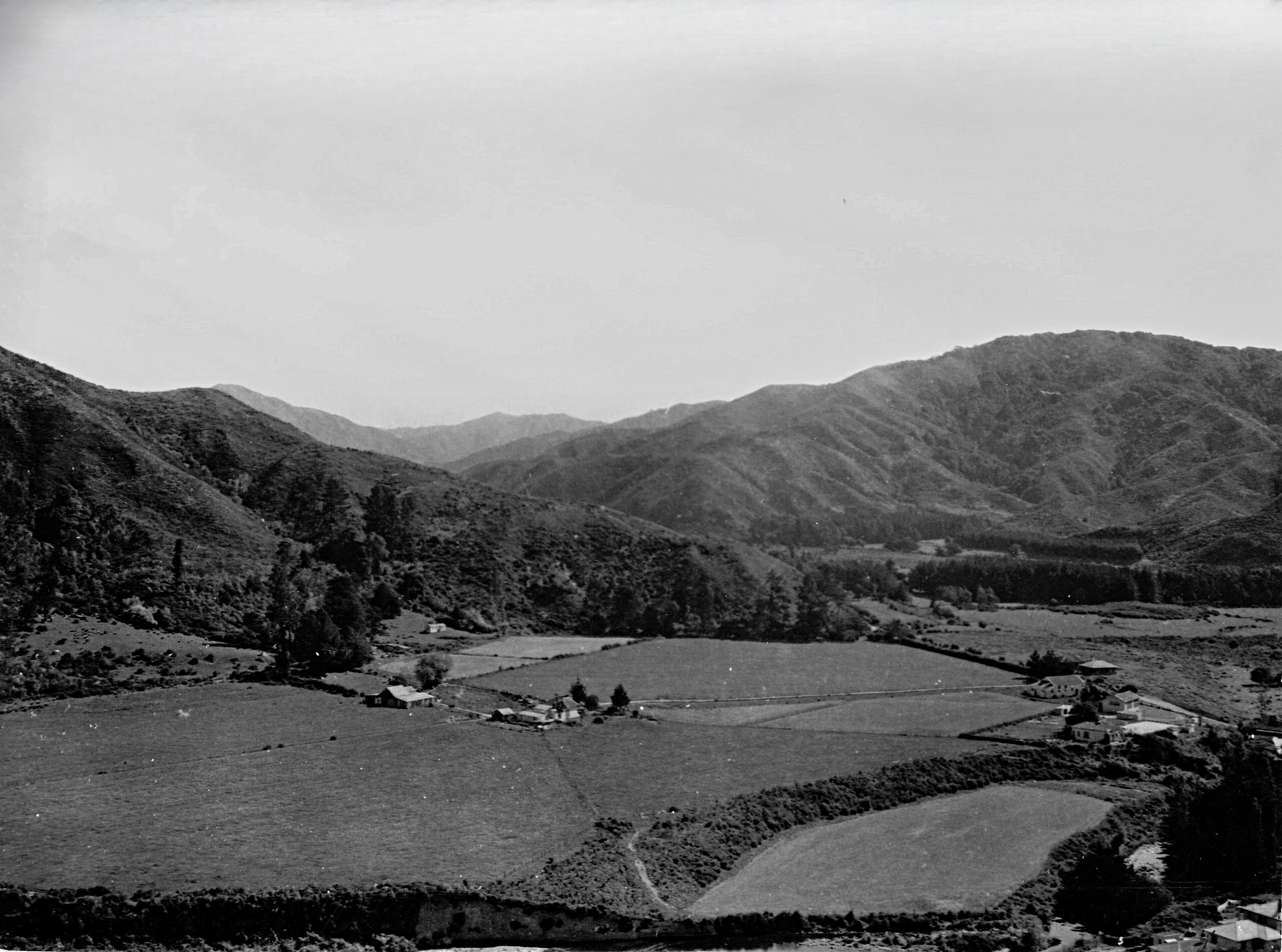
Before the area was subdivided for housing, the land formed part of Francis Twomey’s Pinewood farm. Wainuiomata Development Limited later acquired the property on 27 January 1944 and divided it into 103 residential lots. Present day 36 Hine Road is identified as Lot 76 on Deposited Plan 13255. Valuation records from 1936 to 1949 show that Lots 75 and 76 were owned by John Archibald James MacFarlane. Following his death in 1947, ownership passed to Sigmund and Gwenyth Emily Weihart.
Despite local recollections, the true origin of the hut remains uncertain, including whether it was genuinely an army hut or simply referred to as one because of its appearance. A 1957 newspaper article records an army hut being dismantled and rebuilt in Wainuiomata for residential use. Another article dated Nov 1956 advertises a bach for sale on an elevated section in Wainuiomata which fits the description too. A third article dated 16 November 1960 has the following advertisement: “WAINUIOMATA, £850: Magnificent 35p section with Army hut”.
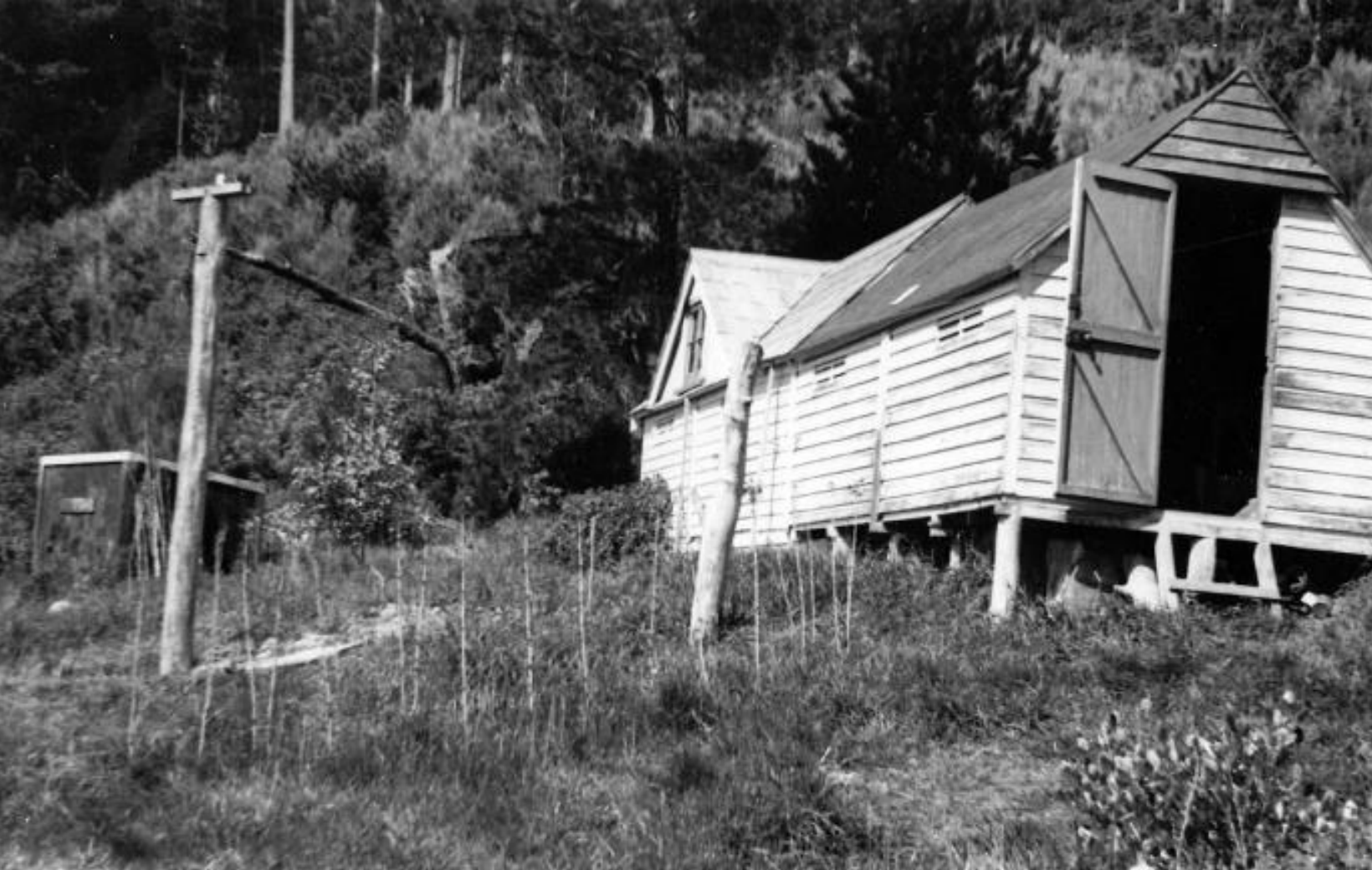
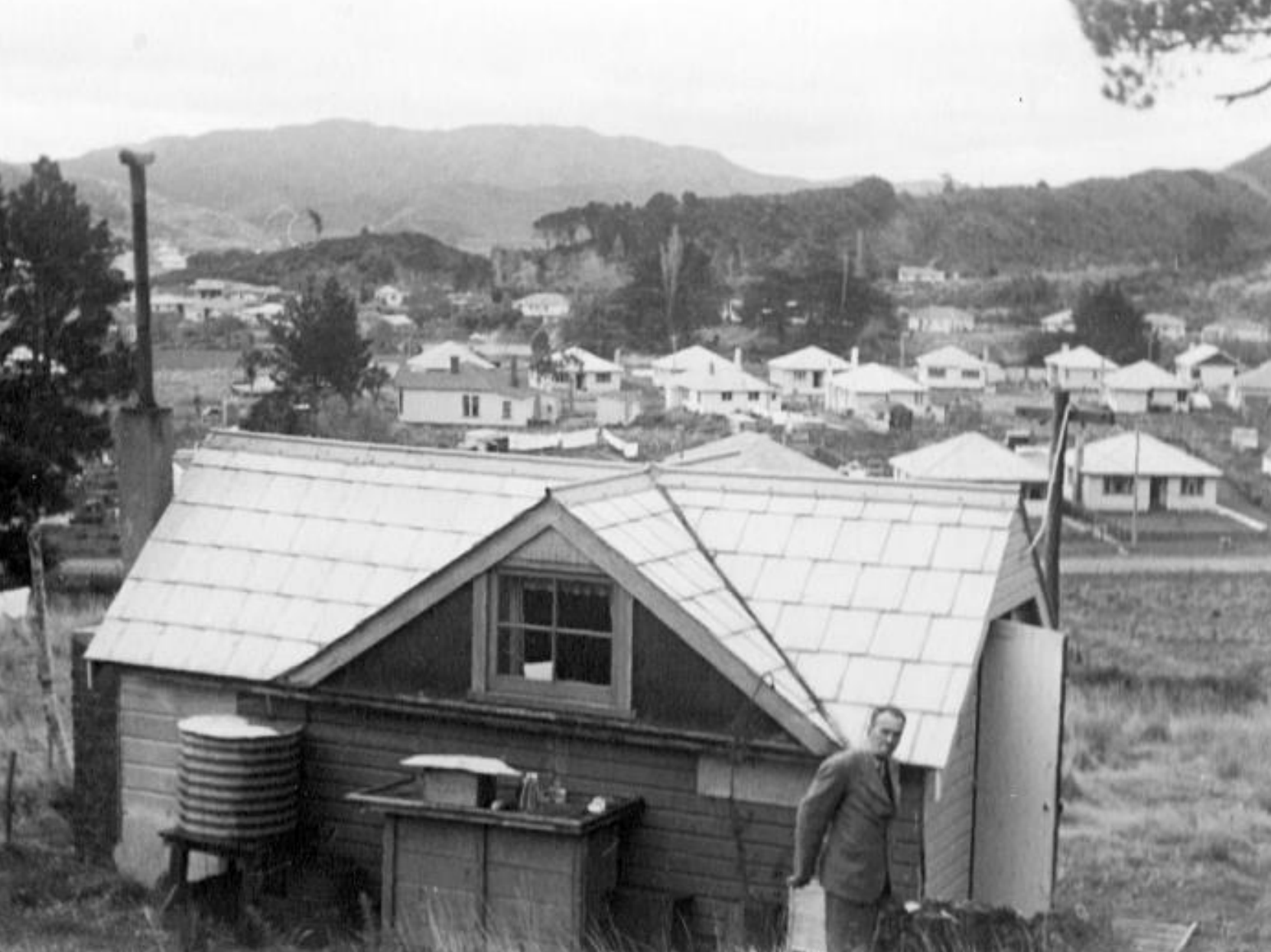
Although the structure has changed over the years, this 1950s photo shows several features that support the idea that it may have been a reused military or camp hut. Its long, narrow rectangular form, raised timber piles, simple weatherboard cladding, plain gable roof, and basic end door are all consistent with a hut that could have been moved or repurposed after wartime use.
After World War II, New Zealand was flooded with surplus military buildings during a period of severe housing shortages. Prefabricated huts from army camps, radar stations, training depots, and other wartime facilities were commonly relocated and repurposed as farm buildings, temporary homes, hunting huts, and workers accommodation.