Overview
On Monday, 13 June 2005, 62-year-old Margaret Kaye Stewart disappeared during what was intended to be a short walk in the Catchpool area of Rimutaka Forest Park, now known as Remutaka Forest Park. Despite major searches involving police, Land Search and Rescue volunteers, helicopters, dogs, divers and Army personnel, an extensive investigation and years of further inquiries, no confirmed trace of her has ever been found.
Known as Kaye, she was a retired Wellington physiotherapist who had treated a number of prominent sportspeople, including former All Blacks. Her family described her as fit, active and an experienced bush walker. She regularly walked alone and attended the gym several times a week. Police later said she was in good health and good spirits at the time of her disappearance.
Kaye had driven her daughter Tanya to Wainuiomata that morning and was expected to collect her again at about 12.30 pm. Contemporary reporting described Tanya as attending a business meeting, while a later account said she was teaching a painting class at the Time Out Community Centre. What is clear is that Kaye had approximately two hours to fill and decided to use the time for a short walk at Catchpool.
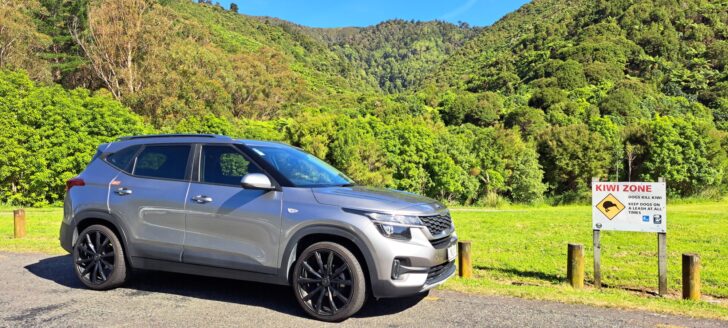
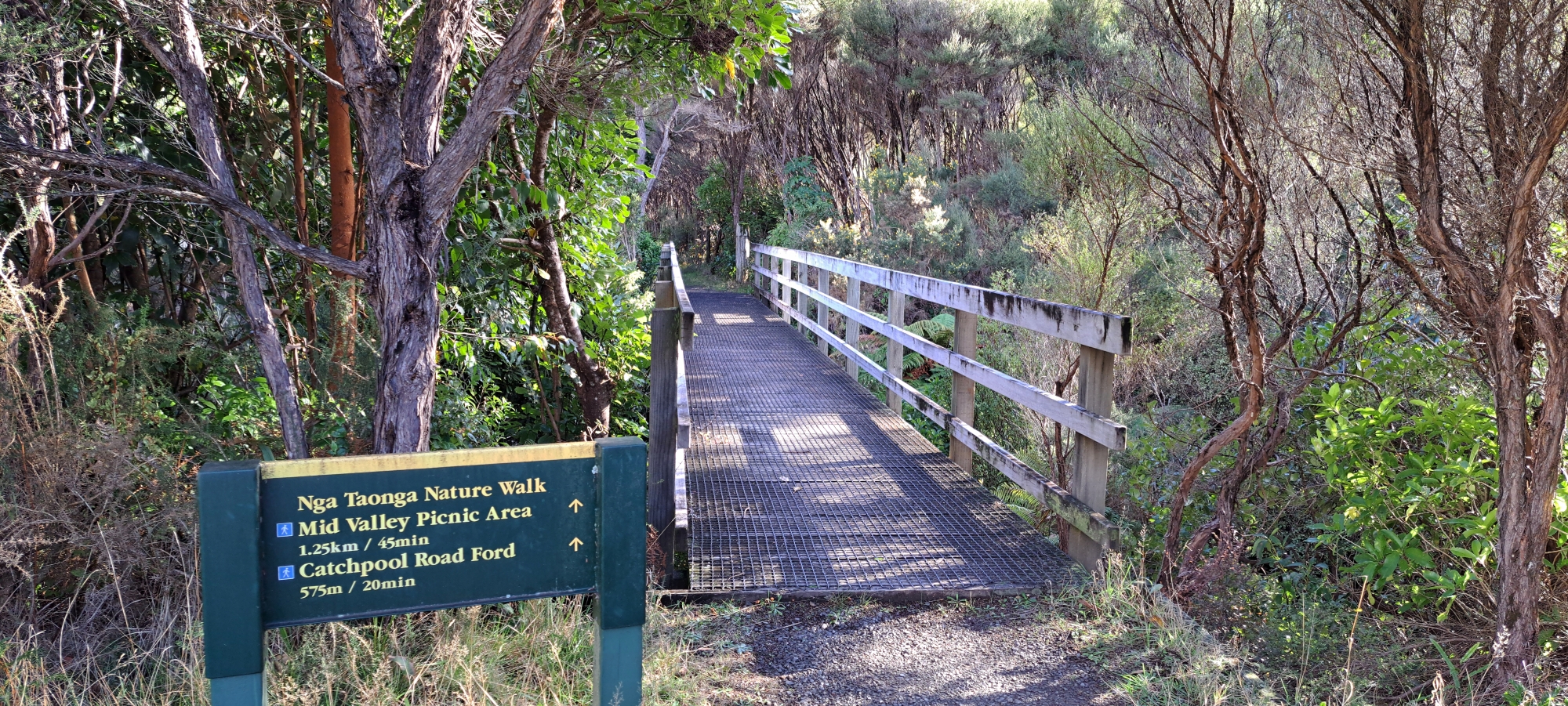
At about 10.45 am, she spoke with Department of Conservation worker Shane Hatwell at the park information centre. Kaye apparently did not know the area particularly well and asked about walks she could complete before returning to Wainuiomata. Hatwell told her that flooding had affected some tracks and recommended short, relatively easy walks, like the Ngā Taonga Nature Walk also known as the Nature Trail. He saw her again a short time later parking her silver Toyota Corolla hatchback near the ford and entrance to the walk.
What Kaye did during the following two hours has never been satisfactorily established.
At around 1 pm she appeared near Hunter’s Bach, close to Coast Road and roughly two kilometres from her car. There she spoke with another DOC worker, Gary Bak, who was temporarily living at the bach with his family. Kaye asked him how to get back to her car.
This was the last confirmed sighting of her.
The precise time is uncertain. Early police reporting placed the conversation at about 12.30 pm. A 2007 police release gave the time as approximately 1.05 pm, while a police interview conducted in 2009 recorded Bak as saying the conversation occurred at around 1.15 pm. Later inquest reporting generally referred to the sighting as being at about 1 pm. For that reason, the safest conclusion is that Kaye was last reliably seen at approximately 1 pm rather than at one precisely established minute.
The location of that final sighting is one of the most puzzling aspects of the case.
Neither of the walks Shane Hatwell had suggested should normally have taken Kaye to Hunter’s Bach. At the 2013 inquest it was also pointed out that if she had simply followed the road, she should have passed the area where her car was parked. Yet somehow Kaye had arrived at Hunter’s Bach and was sufficiently unsure of her location to ask for directions back to her car.
According to a later detailed reconstruction of the case, Gary Bak directed Kaye to walk down the driveway from Hunter’s Bach to Coast Road, continue for roughly 300–400 metres to the entrance of the forest park, and then follow the sealed Catchpool Valley Road for about two kilometres back to the ford and carpark where her vehicle was parked.
If this account is accurate, the route Kaye was given was relatively straightforward and followed established roads rather than bush tracks. This makes her subsequent disappearance all the more puzzling, as she should have been able to follow a clearly defined route back towards her car.
By this time Kaye was already late to meet her daughter. Yet she never made it back to her car.
When Kaye failed to appear as arranged, her daughter became concerned and went to Catchpool. Kaye’s silver Toyota Corolla was still parked near the ford and was locked. Family members initially searched tracks around the car before police were contacted.
Reports differ over the exact timing of these first events. Some later reconstructions place Tanya and friends at Catchpool at approximately 1.45 pm and police being notified shortly after 2 pm, while a 2013 newspaper timeline placed Tanya’s arrival at about 2 pm and the police call closer to 3 pm. The official contemporary police accounts did not give precise times, stating simply that the family went to the park after Kaye failed to meet them, found the car and searched nearby tracks before contacting police.
A large-scale search began that afternoon.
More than 40 specialist Police and Land Search and Rescue personnel eventually searched tracks, bush, logging areas, roadsides, road banks, streams and surrounding properties. Police dogs were used, helicopters searched from the air and forward-looking infrared equipment was deployed. The Police National Dive Squad searched Catchpool Stream and sections of the Wainuiomata River, while aerial searches extended towards the Wainuiomata coast.
The weather was extremely poor. Conditions were cold, wet and windy, and Kaye was dressed only for a short daytime walk. Police described her clothing as a lightweight dark-blue nylon anorak-style jacket, dark tracksuit trousers, a pink ribbed jersey and white sandshoes. Later descriptions also referred to prescription glasses, a gold watch and an emerald ring.
After four days without finding any sign of her, the initial search was suspended on 16 June. Search coordinator Sergeant Jo Holden said that if Kaye had remained conscious and responsive in the area being searched, police were confident she would have been found. Even if she had been injured or disorientated and unable to respond, Holden believed there was still a high likelihood searchers would have located her.
The physical search had been suspended, but the investigation was only beginning.
About 20 Lower Hutt detectives were joined by 25 recruits from the Royal New Zealand Police College to canvass the approximately 20-kilometre stretch between Wainuiomata and the coast. Police attempted to identify residents, visitors, fishermen, loggers, contractors, rural delivery drivers and other people who had been in the area on 13 June. They also attempted to account for vehicles travelling along Coast Road, Catchpool Road and through the forest park.
One vehicle became a continuing focus of the investigation.
At approximately 1.50 pm on the afternoon Kaye disappeared, a quad bike was seen travelling down Forest Park Road towards Wainuiomata Coast Road. Police later described it as possibly red and perhaps towing a trailer. Despite repeated public appeals, the rider was never conclusively identified. Kaye’s family believed the rider could potentially hold important information about what happened.
Police were also attempting to identify the driver of a grey car seen travelling in the opposite direction. Two campervans that had initially been of interest were identified after publicity prompted their drivers to contact police, but the quad-bike rider and the driver of the grey car remained of interest during the 2005 investigation.
On 22 June, detectives carried out a detailed examination of the area around the Catchpool road-end carpark. Police stressed at the time that the examination had not been prompted by new information and that there was still nothing establishing that anything sinister had happened to Kaye.
Less than a week later, the forest park was closed to the public for another major search.
Between 28 and 30 June, up to 80 people took part, including police search and rescue personnel, LandSAR volunteers, police divers, the Police Specialist Search Group and around 20 members of the New Zealand Army. The object was to make certain that nothing had been overlooked during the first operation.
During this renewed search a pair of glasses and a watch found near falls in the park initially attracted attention. They were examined but were established not to belong to Kaye. No confirmed item of her clothing, jewellery or personal property was found.
The absence of any physical trace became one of the defining features of the mystery.
Kaye’s family continued searching for approximately ten months and police continued investigating too. At the 2013 inquest, Detective Sergeant Mike Sears referred to three searches of the forest park, including searches using police cadaver dogs. He told the coroner that he believed if Kaye had remained within the areas that had been searched, her body, clothing or jewellery would have been located. Some later secondary accounts refer to four searches, but the inquest reporting specifically records three, while the two large searches undertaken in June 2005 are documented in contemporary police records.
As months and then years passed without anything being found, police became increasingly suspicious that Kaye had not simply become lost.
By March 2007, Detective Senior Sergeant Ross Levy said the passage of almost two years, combined with the intensity of the searches and the complete absence of evidence, had produced a strongly held belief that Kaye may have been the victim of foul play. Police and her family announced a reward of up to $50,000 for information leading to the recovery of her body or a conviction connected with her disappearance.
The reward contained an unusual additional provision: consideration could be given to indemnity from prosecution for an accomplice who was not the principal offender, provided that person was the first accomplice to come forward with information or evidence. The reward remained open until 13 July 2007 but did not produce the breakthrough investigators hoped for.
In September 2008 the case was featured on the television programme “Sensing Murder”. Detective Senior Sergeant Ross Levy participated at the family’s request. At the time, police were reported as being about 80 per cent certain Kaye had been murdered. More than 100 people associated with the area had been questioned. The television programme generated around a dozen further calls to police, but none publicly resulted in Kaye being found.
Police continued to re-examine the evidence.
One aspect of the investigation only became public years later. An Official Information Act request resulted in details of a 2009 police interview with Gary Bak, the DOC worker who had last seen Kaye, becoming public in 2015.
During that interview, detectives tested a theory that Bak might have accidentally struck Kaye while riding his quad bike. Bak emphatically denied this. The interview also dealt with his movements earlier in the day. He said he had been cutting firewood at Kereru Corner between approximately 11.45 am and 12.15 pm and maintained that his only encounter with Kaye occurred later, when she approached Hunter’s Bach asking for directions to her car. His wife and daughter were reportedly inside the bach at the time and heard the conversation.
Police investigated Bak extensively. He provided DNA, gave formal statements and participated in a reconstruction of his movements. His clothing and Hunter’s Bach were subjected to forensic examination, including testing for possible traces of blood.
No evidence establishing that Bak had harmed Kaye was found. Bak and the other witnesses or persons of interest were ultimately eliminated from the inquiry after extensive police investigation. The theory raised during the interview was an investigative hypothesis, not an established explanation for Kaye’s disappearance.
His quad bike should also not be confused with the unidentified quad bike seen travelling towards Coast Road at about 1.50 pm. They were separate strands of the investigation.
A comprehensive review of the case was undertaken more than six years after Kaye disappeared. Police stated in 2013 that a Detective Inspector had completed a review in 2011 to determine whether further lines of inquiry were available. Evidence presented at the inquest also referred to a review by Detective Inspector Mike Johnson in March 2012. That assessment considered four broad explanations.
The possibilities were:
- Kaye had been the victim of foul play.
- She had become lost or disorientated and travelled beyond the areas that were searched.
- She had taken her own life.
- She had deliberately staged her disappearance.
The investigative review regarded foul play as the most likely explanation, followed by Kaye becoming disoriented and walking outside the search area. Suicide and a deliberately staged disappearance were considered unlikely.
The case came before Coroner Garry Evans in May 2013.
The inquest heard about the unusual circumstances of Kaye’s arrival at Hunter’s Bach, the extensive searches and the competing explanations for her disappearance. The coroner questioned whether Kaye might already have been disorientated when she asked Gary Bak for directions and whether she could subsequently have walked beyond the areas searched before dying from exposure or hypothermia.
Detective Sergeant Mike Sears said that possibility had been investigated and could not be dismissed.
Kaye’s husband, Bob Stewart, strongly rejected suggestions that she had deliberately disappeared or taken her own life. He and the couple’s daughters remained convinced she had encountered another person and had been the victim of foul play. Her family said that she had been happy and behaving normally on the day she disappeared.
Bob particularly believed the unidentified quad-bike rider could be important to solving the case.
On 30 May 2013, Coroner Evans found that Kaye had died on or about 13 June 2005 in Rimutaka Forest Park or the surrounding area. Her precise place and cause of death remained undetermined. Police said following the finding that the case remained open and that any new information would be investigated. They emphasised that, despite the earlier investigative assessment, there was not sufficient evidence to establish any particular scenario as fact.
A written coroner’s decision reported in September 2013 went somewhat further in assessing the possibilities. Coroner Evans said becoming lost in the bush and dying appeared to be the most likely explanation, but there was insufficient evidence to establish that this was actually what happened. He found no evidence proving foul play, suicide or a staged disappearance, and Kaye’s death therefore remained formally undetermined.
This produced three slightly different assessments of the case over time. The police review regarded foul play as the most likely explanation. The coroner ultimately considered becoming lost to be the most likely possibility. The official police position following the inquest was that the evidence was insufficient to establish any one scenario over another.
In 2015, approaching the tenth anniversary of the disappearance, the case again attracted widespread attention after a runner who became lost in Rimutaka Forest Park was successfully found. For the Stewart family, the rescue reinforced the question that had troubled them for a decade: if Kaye had simply become lost within the extensively searched area, why had neither she nor a single confirmed possession ever been found? Contemporary reporting said police were examining fresh information and planned to re-interview some people who had previously been spoken to.
The release of the 2009 Gary Bak interview during the same period generated considerable publicity. The coverage later became the subject of complaints to the New Zealand Press Council because of concern that readers could wrongly conclude that Bak was suspected anew. The Council’s account of the case confirmed that the police had raised the quad-bike accident theory during the 2009 interview, that Bak had denied it and that the new leads being investigated in 2015 were not evidence establishing his involvement.
One later reconstruction of the case contains another potentially important detail. It claims that about five minutes after Kaye left Hunter’s Bach, a third DOC employee drove through the area and did not see her. The same account gives a particularly detailed timeline for Tanya’s arrival and the first police response. However, this detail has not been independently confirmed in the surviving contemporary police releases or the principal reporting of the 2013 inquest.
More than two decades after Kaye Stewart disappeared, the central mystery remains unresolved.
But the mystery may actually contain two separate unanswered questions.
The first is how Kaye travelled from the Catchpool road-end area to Hunter’s Bach. Neither of the walks she had been advised to take should naturally have brought her there, and according to evidence at the inquest she should have encountered her parked car had she simply followed the road.
The second is what happened after she left Hunter’s Bach.
At approximately 1 pm Kaye was alive, walking and actively trying to return to her car. Less than an hour later an unidentified quad bike was seen travelling towards Coast Road. Her daughter arrived to find Kaye’s car still locked near the ford. An enormous search followed, yet Kaye, her clothing, her glasses, her jewellery and every other identifiable possession disappeared without a confirmed trace.
Whether she became disoriented and somehow travelled outside the search area, suffered an accident in a place repeatedly overlooked, encountered another person, or met with some entirely different fate has never been established.
That unanswered question has made the disappearance of Kaye Stewart one of the enduring mysteries of Wainuiomata and Remutaka Forest Park.
Do you have any information you’d like to share?
You can remain anonymous if you prefer.
Detailed Timeline
Monday, 13 June 2005
About 10.30 am: Kaye arrives in Wainuiomata
Kaye drives her daughter Tanya to Wainuiomata. She is expected to collect her again at approximately 12.30 pm.
Rather than wait in Wainuiomata, Kaye decides to go for a short walk in Rimutaka Forest Park. She is fit and accustomed to walking, but apparently has limited familiarity with the Catchpool area.
About 10.45–11.00 am: Catchpool information centre
Kaye speaks to DOC worker Shane Hatwell and asks what walks she could complete in the time available.
Hatwell explains that flooding has damaged some tracks and recommends short walks with relatively easy gradients, including the Ngā Taonga Track also known as the Nature Trail.
A short time later he sees Kaye parking her silver Toyota Corolla hatchback near the ford on Catchpool Road, where there is an entrance to the Ngā Taonga Track.
Approximately 11.00 am to 1.00 pm: Kaye’s movements are unknown
There is no confirmed reconstruction of exactly where Kaye walked during this period.
Somehow she travels from the Catchpool road-end area to the vicinity of Hunter’s Bach near Wainuiomata Coast Road.
The significance of this would later be raised at the inquest: neither of the tracks Hatwell recommended should have taken her to Hunter’s Bach, and following the road should have taken her past her parked car.
About 11.45 am–12.15 pm: Gary Bak at Kereru Corner
According to Bak’s account in a later police interview, he spends about half an hour at Kereru Corner cutting a tree for firewood.
Police would later examine whether his movements had intersected with Kaye’s, but Bak maintained that he did not speak to Kaye there.
12.30 pm: Kaye fails to meet Tanya
Kaye was supposed to return to Wainuiomata by about this time.
She does not arrive.
Curiously, one of the earliest police accounts also placed Kaye’s conversation with the second DOC worker at around 12.30 pm. Later police and inquest accounts moved that sighting closer to 1 pm.
Approximately 1.00 pm: Hunter’s Bach
Kaye approaches DOC worker Gary Bak outside Hunter’s Bach and asks how to get back to her car.
Bak is temporarily living at the bach with his family.
She is given directions back towards Catchpool.
The exact time varies between sources:
- early police reporting: about 12.30 pm
- 2007 Police account: about 1.05 pm
- Bak’s later account: about 1.15 pm
- 2013 inquest reporting: approximately 1 pm
This remains the last confirmed sighting of Kaye.
After approximately 1 pm: Kaye disappears
There is no confirmed sighting of Kaye after she leaves Hunter’s Bach.
A later secondary account claims that another DOC worker passed through approximately five minutes later without seeing her, but this has not been independently confirmed by the main reports from the time.
About 1.50 pm: Unidentified quad bike
A quad bike is seen travelling down Forest Park Road towards Wainuiomata Coast Road.
Police later describe it as possibly red and possibly towing a trailer.
The rider is repeatedly sought but never conclusively identified.
Kaye’s family later regard the rider as potentially important to the investigation.
That afternoon: Unidentified grey car
Police also seek the driver of a grey car seen travelling in the opposite direction.
Two campervans seen in the park that day are subsequently identified after their drivers respond to publicity.
Approximately 2.00 pm onwards: Tanya searches for Kaye
When Kaye does not return, Tanya goes to Catchpool.
Kaye’s Toyota is found locked near the ford.
Family and friends initially search nearby tracks.
Accounts differ over the exact timing of the family’s arrival and when police were contacted, so the contemporary police description is the most reliable: family members went to the park after Kaye failed to meet them, found the car, checked nearby tracks and then contacted police.
Afternoon and evening: Search operation begins
Police, search and rescue personnel, family members and volunteers begin searching.
The operation expands rapidly and eventually involves more than 40 specialist and LandSAR searchers.
Search dogs, helicopters, infrared equipment and police divers are used.
14–16 June 2005: Intensive search
Search teams cover tracks, trails, bush, logging areas, streambeds, roadsides and road banks.
Properties adjacent to Catchpool are searched.
The Police National Dive Squad searches Catchpool Stream and sections of the Wainuiomata River.
Helicopters carry out aerial searches, including sweeps towards the coast.
The weather remains cold, wet and windy. Kaye is considered unlikely to survive for long in the open given her light clothing.
16 June 2005: Initial search suspended
After four days with no sign of Kaye, police suspend the bush search.
Search coordinator Sergeant Jo Holden says police believe Kaye would probably have been found if she remained within the areas being searched, even if injured or disorientated.
Lower Hutt CIB continues investigating her disappearance.
17 June 2005: Large-scale canvassing operation
Twenty-five Police College recruits join about 20 Lower Hutt detectives.
Police attempt to speak with people along approximately 20 kilometres of Wainuiomata Coast Road and identify everyone who might have been travelling through the area on 13 June.
Residents, fishermen, loggers, contractors, rural-delivery workers and park visitors are among those police seek to identify.
22 June 2005: Catchpool carpark examined
Detectives closely examine the area around the Catchpool road-end carpark near where Kaye’s vehicle was found.
Police say the examination has not resulted from any new evidence and continue to describe the matter as an unexplained missing-person investigation.
27 June 2005: False lead
A pair of glasses and a watch are found near falls in the park.
Because Kaye wore prescription glasses and a watch, the discovery initially appears potentially significant.
Police establish that neither item belongs to her.
28–30 June 2005: Second major search
DOC closes Rimutaka Forest Park to the public.
Up to 80 searchers are involved, including:
- Police Search and Rescue staff
- Land Search and Rescue volunteers
- Police divers
- the Police Specialist Search Group
- approximately 20 New Zealand Army personnel.
The purpose is to thoroughly re-examine the area and make certain the first search did not miss Kaye, her clothing, glasses, jewellery or other evidence.
Nothing confirmed as belonging to Kaye is found.
2005 onwards: Family and police searches continue
Kaye’s family and volunteers continue searching long after the large official operations end.
Police keep investigating vehicles and people known to have been in the area.
At the 2013 inquest, Detective Sergeant Mike Sears refers to three searches of the forest park, including the use of cadaver dogs.
He says he believes Kaye’s remains or possessions would have been found had she remained in the areas searched.
15 March 2007: $50,000 reward announced
Police and Kaye’s family announce a reward of up to $50,000 for information leading to:
- the recovery of Kaye’s body, or
- a conviction relating to her disappearance.
Detective Senior Sergeant Ross Levy says the complete absence of evidence after two extensive searches and almost two years has produced a strongly held belief that Kaye may have been the victim of foul play.
Police again appeal for the unidentified quad-bike rider to come forward.
The offer also allows consideration of indemnity from prosecution for the first accomplice, other than a principal offender, to provide information or evidence.
The reward remains in force until 13 July 2007.
September 2008: “Sensing Murder”
Kaye’s disappearance features on the television programme “Sensing Murder”.
Detective Senior Sergeant Ross Levy participates at the request of Kaye’s family.
Police are reported at this point as being approximately 80 per cent certain that Kaye was murdered.
More than 100 people connected with the area have been questioned.
The programme prompts around a dozen calls to police, but no publicly known breakthrough results.
April 2009: Police interview Gary Bak
Police conduct a lengthy interview with Gary Bak, the DOC worker who last saw Kaye.
Detectives question his account and test various possibilities, including whether an accidental collision involving his quad bike could explain Kaye’s disappearance.
Bak denies having harmed Kaye.
The investigation includes his formal statements, DNA, a reconstruction of his movements and forensic examinations.
Police had also examined Hunter’s Bach and his clothing, including testing for possible blood evidence.
No evidence establishing the theory is found.
Bak and the other witnesses or persons of interest are ultimately eliminated from the inquiry.
2011–2012: Major review of investigation
Police conduct a comprehensive review of the investigation.
The four principal possibilities considered are:
Foul play: assessed by the investigative review as the most likely.
Becoming lost or disorientated: considered the next most likely, particularly if Kaye walked beyond the search area.
Suicide: considered unlikely.
Deliberately staging her disappearance: also considered unlikely.
30 May 2013: Coroner’s inquest
Coroner Garry Evans formally considers Kaye’s death.
The inquest hears evidence about the searches, the final sighting at Hunter’s Bach, the inability to reconstruct Kaye’s route and the four principal explanations.
Detective Sergeant Mike Sears says the possibility that Kaye became disorientated and moved outside the search area cannot be dismissed.
Bob Stewart tells the coroner he remains convinced that his wife was killed.
The coroner finds that Kaye died on or about 13 June 2005 in Rimutaka Forest Park or the surrounding area.
Her cause of death remains undetermined.
30 May 2013: Police response
Police say the missing-person case remains open.
They describe the investigation as thorough and comprehensive but say there is insufficient evidence to support one scenario over another.
Police promise to investigate any significant new information.
24 September 2013: Coroner’s written findings reported
The coroner’s decision is publicly reported in greater detail.
Coroner Evans regards Kaye becoming lost in the bush and dying as the most likely explanation but says there is insufficient evidence to establish this conclusively.
Her death remains officially undetermined.
May–June 2015: Renewed interest
The successful rescue of another person lost in Rimutaka Forest Park renews public interest in Kaye’s disappearance.
Her family again speaks publicly about the case and questions how repeated searches could have failed to find any trace of Kaye if she had simply become lost.
Fresh information is passed to police and investigators indicate that they will revisit some previous inquiries and interviews.
July 2015: 2009 police interview becomes public
Material obtained through an Official Information Act request reveals details of the 2009 questioning of Gary Bak.
The resulting news coverage focuses heavily on the police theory that an accidental quad-bike collision had been considered.
Bak had denied the suggestion and had already been extensively investigated.
The way the story was presented later becomes the subject of complaints to the New Zealand Press Council, in part because of concern that readers could incorrectly conclude that Bak was again a suspect.
The later leads being examined by police did not establish that Bak was involved, and he had previously been eliminated from the inquiry.
Do you have any information you’d like to share?
You can remain anonymous if you prefer.
The unresolved questions
No confirmed remains of Kaye Stewart have been recovered.
No confirmed piece of her clothing, jewellery or personal property has established where she went.
No person has been charged in connection with her disappearance.
The unidentified quad-bike rider has never been publicly established as having anything to do with Kaye’s disappearance, but the person’s identity remained of interest to investigators and to Kaye’s family.
The route Kaye took between her parked car and Hunter’s Bach has never been publicly established, although my own exploration of the area suggests there may be a surprisingly straightforward explanation.
The greater mystery is what happened afterwards. After leaving Hunter’s Bach at approximately 1 pm on 13 June 2005, Kaye disappeared without a confirmed trace. What happened to her from that point remains unknown.
Online rumours, theories and speculation
Over the years, Kaye Stewart’s disappearance has generated considerable discussion online, including on Facebook, Reddit, podcasts and websites devoted to unsolved cases. Some of these discussions contain additional claims, theories and recollections that do not appear in contemporary police statements or established news reporting.
While some may be of interest, particularly when they come from people familiar with the Catchpool area, they should not be treated as established facts unless independently verified.
1. Kaye became lost or disorientated and died from exposure
This was one of the principal explanations considered during the investigation and was later regarded as one of the more likely possibilities, although there was insufficient evidence to establish exactly what happened.
Online commenters have made similar arguments, noting that dense New Zealand bush can conceal a person extremely well, particularly as vegetation, leaf litter and fallen timber accumulate over time.
2. She died within the searched area but her remains were missed
A commonly discussed theory online is that Kaye may have fallen into a depression, streambed, thick vegetation or another difficult-to-see location within the search area.
Some commenters familiar with New Zealand bush have suggested that decomposition, vegetation growth and accumulated forest debris could eventually make remains very difficult to locate.
This theory attempts to explain how Kaye could have remained within the area despite extensive searches, although search personnel expressed doubt that she could have remained there without being found.
3. She became confused before reaching Hunter’s Bach
Some online discussions suggest that Kaye may have become temporarily disorientated, dehydrated or confused before reaching Hunter’s Bach.
Others have speculated about an undiagnosed medical or cognitive problem. There is no established evidence supporting such claims, and contemporary accounts described Kaye as fit, active and in good health.
4. She encountered someone and was killed
Foul play became a serious possibility during the investigation after extensive searches failed to find any trace of Kaye.
Police publicly stated that they believed she may have encountered another person after leaving Hunter’s Bach. A substantial reward was later offered for information leading to a conviction, along with the possibility of immunity for an accomplice who came forward.
Members of Kaye’s family also believed that another person may have been involved.
5. The unidentified quad-bike rider was involved
A quad bike, possibly red and possibly towing a trailer, was reportedly seen travelling down Forest Park Road towards Coast Road at about 1.50 pm.
Police sought information about the rider, who was never publicly identified.
Online discussion has gone further, with some suggesting that the rider may have encountered Kaye or that a trailer could have been used to remove her from the area. There is no evidence establishing that the quad-bike rider was involved in her disappearance.
6. Kaye was accidentally struck by a quad bike and the accident was concealed
Police considered whether Kaye may have been accidentally struck by a quad bike and whether the incident was subsequently concealed.
This possibility was investigated, including forensic examinations, interviews and a reconstruction. Those investigated were later reported to have been eliminated as suspects.
The theory nevertheless continued to circulate online, where some commenters questioned aspects of the known timeline.
7. The final sighting at Hunter’s Bach did not occur as described
Some online commenters have questioned whether the reported encounter at Hunter’s Bach happened exactly as described.
People familiar with the valley have argued that it seems unusual for Kaye to have reached Hunter’s Bach if she had intended only a short walk elsewhere in the park.
If this theory were correct, whatever happened to Kaye may have occurred earlier than generally believed, possibly closer to the road-end or walking-track area.
There is no established evidence showing that the reported Hunter’s Bach sighting was false.
8. The unidentified grey car was involved
Police also sought information about a grey car seen travelling through the area around the time Kaye disappeared.
Other vehicles seen that day were eventually identified, but the grey car remained one of the vehicles police wanted information about.
It has attracted far less online speculation than the quad bike, but remains part of the known investigation.
9. The local pig-farmer theory
One of the more specific rumours circulating online concerns a local pig farmer who was allegedly investigated in connection with Kaye’s disappearance.
Online claims have included allegations involving searches of a rural property, Kaye’s jewellery, missing clothing and possible disposal of her body.
Some versions of the story claim that the property was searched and areas of the pig farm were dug up, but nothing was found.
No reliable police, court or contemporary mainstream news source has been located that confirms these allegations. The story should therefore be regarded as an unverified internet rumour.
10. A person identified through a television investigation was responsible
A television programme examining Kaye’s disappearance presented a possible suspect identified through psychic impressions.
The name was reportedly passed to police, and the programme has continued to influence online discussion of the case.
Some later commenters have claimed that the programme effectively identified the person responsible, while others have focused on a location shown during the episode.
Contemporary reporting was inconsistent over whether the person identified by the programme had been completely ruled out at the time. No arrest resulted from the programme and Kaye was not located.
11. Kaye disappeared only minutes after leaving Hunter’s Bach
A later reconstruction of the case claimed that another vehicle travelled through the area approximately five minutes after Kaye was said to have left Hunter’s Bach and that nobody was seen walking along the road.
If accurate, this would create a very narrow disappearance window and could suggest that Kaye left the road quickly, entered a vehicle, moved into the bush or that some part of the timeline was incorrect.
The five-minute claim does not appear prominently in contemporary police statements or major reporting of the inquest, so it remains a later and less certain part of the story.
12. Kaye was picked up or attacked while walking back towards the park entrance
Some online discussions suggest that Kaye successfully followed the directions she had been given and began walking back towards the main park area.
Under this theory, she may have encountered someone while walking along the road, accepted a ride or been attacked and removed from the area.
This could explain why no trace of her was found despite intensive searches, although there is no direct evidence showing that such an encounter occurred.
13. Suicide or a deliberately staged disappearance
Police considered whether Kaye may have deliberately disappeared or taken her own life.
Her family strongly rejected those possibilities, and no evidence was found establishing either explanation.
Contemporary accounts described Kaye as being in good health and spirits, and her disappearance was regarded as completely out of character.
14. Paranormal or “Missing 411” explanations
A small amount of online discussion has attempted to connect Kaye’s disappearance with wider claims about unexplained disappearances in forests and wilderness areas.
These suggestions are speculative and are not supported by evidence connected specifically with Kaye’s case.
Closing perspective
Taken together, the theories surrounding Kaye Stewart’s disappearance range from credible investigative possibilities to unsupported internet speculation. Among the more plausible explanations are foul play and accidental death after becoming lost or disorientated. The unidentified quad bike remains a significant unresolved element, although there is no evidence establishing that its rider was involved.
If Kaye did reach Hunter’s Bach, she had already moved well beyond the short walk she originally intended to take. That raises the possibility that, while attempting to return to her car, she may once again have left the route she was expected to follow.
The location of her parked car may be important. Kaye had parked near the ford rather than at the larger main car park. If she returned via the Nature Walk intending to emerge close to her vehicle, she may have missed the turn-off and instead continued to the main entrance near the larger car park. On emerging there, she could have become confused about where she was in relation to her car.
From that point, it is possible she headed north in an attempt to locate it, entering an extensive area of bush and forestry. Such a route could have taken her through areas of exotic forest planted for logging and eventually into native bush, well away from the established walking tracks.
Much of the surrounding Catchpool area is crossed by well-used tracks, while other sections contain very steep terrain that Kaye would have been less likely to enter deliberately. The large area of bush and forestry to the north, however, contains sections with no public walking tracks at all. If Kaye became disorientated and entered this area while trying to find her car, it remains one possible explanation for why extensive searches elsewhere failed to locate her.
Ultimately, there is still no physical evidence establishing what happened after Kaye was last seen. The lack of such evidence has allowed theories and rumours to persist for more than two decades, but repetition does not make them fact. Unless new evidence emerges, the central question remains unanswered: did Kaye encounter someone after leaving Hunter’s Bach, or did she become lost while trying to find her way back to her car?
Kaye Stewart Articles
Do you have any information you’d like to share?
You can remain anonymous if you prefer, as the name and contact fields are optional.